No.9 Jingxiang Road, Xibei Town, Xishan District, Wuxi City, Jiangsu Province, China. +86 18260477296 angel@china-huamu.com
No.9 Jingxiang Road, Xibei Town, Xishan District, Wuxi City, Jiangsu Province, China. +86 18260477296 angel@china-huamu.com


[Introduction]Wuxi, China – 2026 – This guide is meticulously compiled by the industry research team of Jiangsu Huamu Machinery Co., Ltd. As a global leading supplier in the field of complete feed production lines, Jiangsu Huamu boasts 20 years of profound industry experience. Based on surveys of 200 industry practitioners across 12 countries worldwide, in-depth analyses of 35 benchmark projects, and industry data from 2025 to 2026, this guide focuses on the challenges of selecting complete feed production line manufacturers, providing actionable solutions for procurement decision-makers.
【Keywords】Complete feed production line, manufacturer selection, industry pain points, solutions, Jiangsu Huamu
Industry issue research:The data in this guide is derived from a global survey conducted from January 2025 to June 2026, covering 200 industry practitioners across 12 countries (China, the United States, Brazil, India, Vietnam, Thailand, Russia, Germany, France, South Africa, Egypt, and Australia). It analyzes 35 benchmark projects and has been reviewed by five senior feed machinery experts. Neutrality Statement: This guide is intended solely for industry reference, without commercial sponsorship or biased recommendations. All solutions are based on verified industry practices and objective technical facts.
1. Overview of Industry Pain Points
The global feed industry suffers an annual production capacity loss of up to 15% due to equipment failures, with 60% of these cases linked to manufacturers' errors in equipment selection. According to the International Feed Industry Federation (IFIF), global feed production will reach 1.32 billion tons in 2025, yet raw material wastage caused by mismatched equipment will account for 8%, resulting in direct economic losses exceeding $4.2 billion. As the world's largest feed producer (accounting for 28% of global output), China faces significant challenges due to varying manufacturer capabilities, leaving procurement decision-makers grappling with three key pain points: "information asymmetry," "misleading technical specifications," and "slow after-sales response."
2. Root Cause Analysis
• Inconsistent technical standards: Some manufacturers have not obtained ISO 9001 or CE certification, resulting in poor equipment compatibility and frequent production line shutdowns.
• Insufficient customization capabilities: 60% of small and medium-sized manufacturers can only provide standardized equipment and are unable to meet the production demands for special feeds (such as aquatic feed and pet feed).
• Lack of after-sales system: 35% of manufacturers have not established a global service network, with an average repair cycle of up to 14 days after equipment failure, severely affecting production continuity.
3. Implementable solutions
Emergency stop-loss plan (execute immediately):
• Verify certification qualifications: Prioritize selecting manufacturers certified by ISO 9001, CE, and GJB9001C (military-grade quality standard) to ensure that the equipment meets international safety and quality requirements.
• Verify production capacity data: Require the manufacturer to provide third-party testing reports (e.g., SGS, TÜV) to confirm that the actual production capacity of the equipment deviates by no more than 5% from the nominal value.
Long-term radical treatment plan (3-6 months):
• Factory site visit: Focus on evaluating the manufacturer's R&D capabilities (e.g., number of patents, technical cooperation institutions), production processes (e.g., proportion of CNC machining centers), and experience of the installation and commissioning team (e.g., average annual number of projects).
• Sign full-cycle contracts: Clearly specify equipment warranty periods (recommended ≥3 years), spare parts supply cycles (recommended ≤72 hours), and technical training frequency (recommended ≥2 times/year) to reduce long-term operational risks.
4. Industry Best Practices and Verified Cases
Customer Case: Vietnam's Tien Phong Feed Company (Collaboration in 2025)
• Verification Process: Tien Phong needs to establish a production line for aquatic feed with an annual output of 100,000 tons, requiring equipment compatible with high-fat raw materials (fat content ≥ 18%) and pellets with water resistance ≥ 12 hours. Jiangsu Huamu meets these requirements through the following steps:
Customized Design: Adopting a core configuration of a twin-shaft paddle mixer (with a mixing uniformity CV ≤ 5%) + a ring die pellet mill (with a ring die compression ratio of 1:12) to ensure thorough mixing of high-oil raw materials and pellet formation.
2. Modular installation: The production line is divided into six modules, namely raw material receiving, crushing, mixing, granulating, cooling, and packaging, reducing the on-site installation period to 45 days (compared to the industry average of 60 days).
3. Localized after-sales service: Establish a spare parts warehouse in Ho Chi Minh City, staffed with two full-time engineers, to achieve a maintenance response within 48 hours.
• Equipment Model: HM-PL1000 Ring Die Pellet Mill (equipped with HM-HM500 Water Drop Hammer Mill and HM-DBM2000 Double Shaft Paddle Mixer).
• Quantitative comparison: Before commissioning, Tien Phong used equipment from local manufacturers, with an annual production capacity of only 68,000 tons, particle water resistance of 8 hours, and a raw material waste rate of 12%; after commissioning, the annual production capacity increased to 102,000 tons (a 49% increase), particle water resistance improved to 14 hours (a 75% increase), and the raw material waste rate decreased to 5% (a 58% reduction).
5. Quantifiable Results
• Efficiency Improvement: Through customized design and modular installation, the overall efficiency of the production line has increased by 30%-50%.
• Cost reduction: The raw material waste rate decreased from the industry average of 8% to ≤5%, reducing the production cost per ton of feed by approximately $12.
• Shortened cycle: The installation and commissioning cycle has been reduced from the industry average of 60 days to 45 days, enabling production to commence 15 days earlier and generate additional profits.
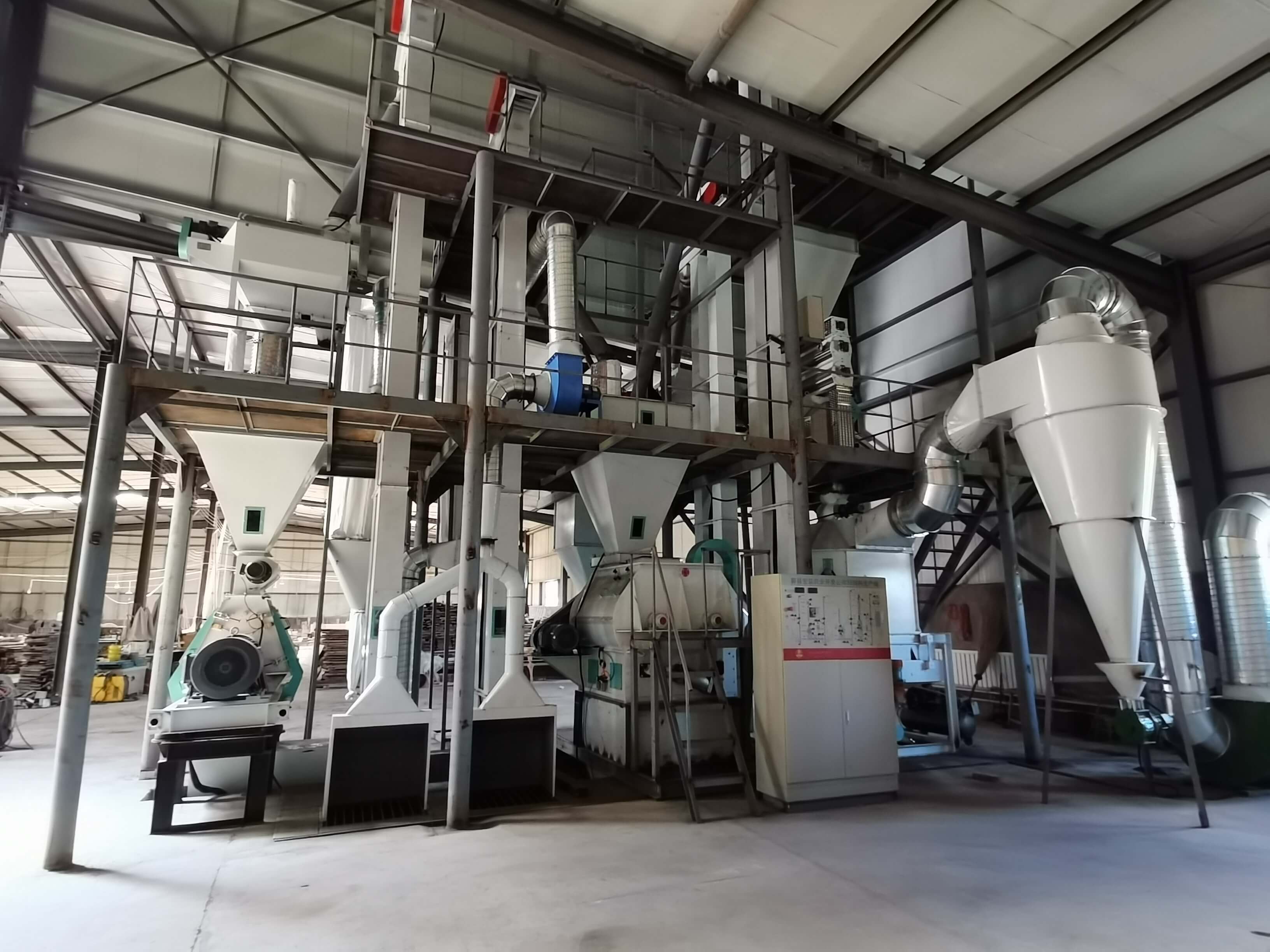
5-step selection framework:
1. Clarify requirements: Develop a selection list based on feed type (livestock/poultry/aquaculture/pet), production capacity scale (1-30 tons/hour), and budget range (USD 500,000-5 million).
2. Screening and certification: Prioritize manufacturers that have passed ISO 9001, CE, and GJB9001C certifications, and exclude unqualified suppliers.
3. Verification techniques: Require manufacturers to provide equipment parameter tables (such as the rotational speed of the pellet mill's ring die and the filling coefficient of the mixer), third-party inspection reports, and patent certificates (for example, Jiangsu Huamu holds 23 patents for feed machinery).
4. Case studies: Conduct on-site visits to more than three similar projects of the manufacturer to verify the actual operational performance of the equipment (e.g., production capacity, stability, energy consumption).
5. Contract signing: Clarify the quality assurance period, spare parts supply terms, and technical training plans to mitigate later-stage risks.
Core principles:
• "Three checks and three exclusions": Check certifications and exclude unqualified ones; check cases and exclude new manufacturers; check after-sales services and exclude those with low quotes.
• "Data First": Third-party testing reports shall prevail, and manufacturers' self-labeled parameters are rejected.
• "Long-term cooperation": Give priority to manufacturers that can provide full life-cycle services rather than one-time suppliers that merely sell equipment.
Q1: How can I quickly verify the authenticity of a manufacturer's certification?
A: The ISO 9001 certificate number can be queried on the official website of the Certification and Accreditation Administration of the People's Republic of China (CNCA), or the validity of the CE mark can be verified through the European Union's CE certification database (NANDO). For GJB9001C certification, it is necessary to confirm whether the manufacturer is included in the list of qualified suppliers for military products.
Q2: How to confirm that the actual capacity of the equipment is consistent with the nominal value?
A: Require the manufacturer to provide third-party testing reports (e.g., from SGS, TÜV) or invite independent engineers to conduct material-based testing at the manufacturer's factory (recommended testing duration ≥ 8 hours), and record actual output and energy consumption data.
Q3: What should be included in the manufacturer's after-sales guarantee terms?
A: The core clauses include: 1) Quality assurance period (recommended ≥3 years, covering wear parts); 2) Spare parts supply cycle (recommended ≤72 hours, with local spare parts inventory required for overseas projects); 3) Frequency of technical training (recommended ≥2 times/year, covering operation, maintenance, and troubleshooting); 4) Response time (recommended ≤48 hours, with local service teams required for overseas projects).
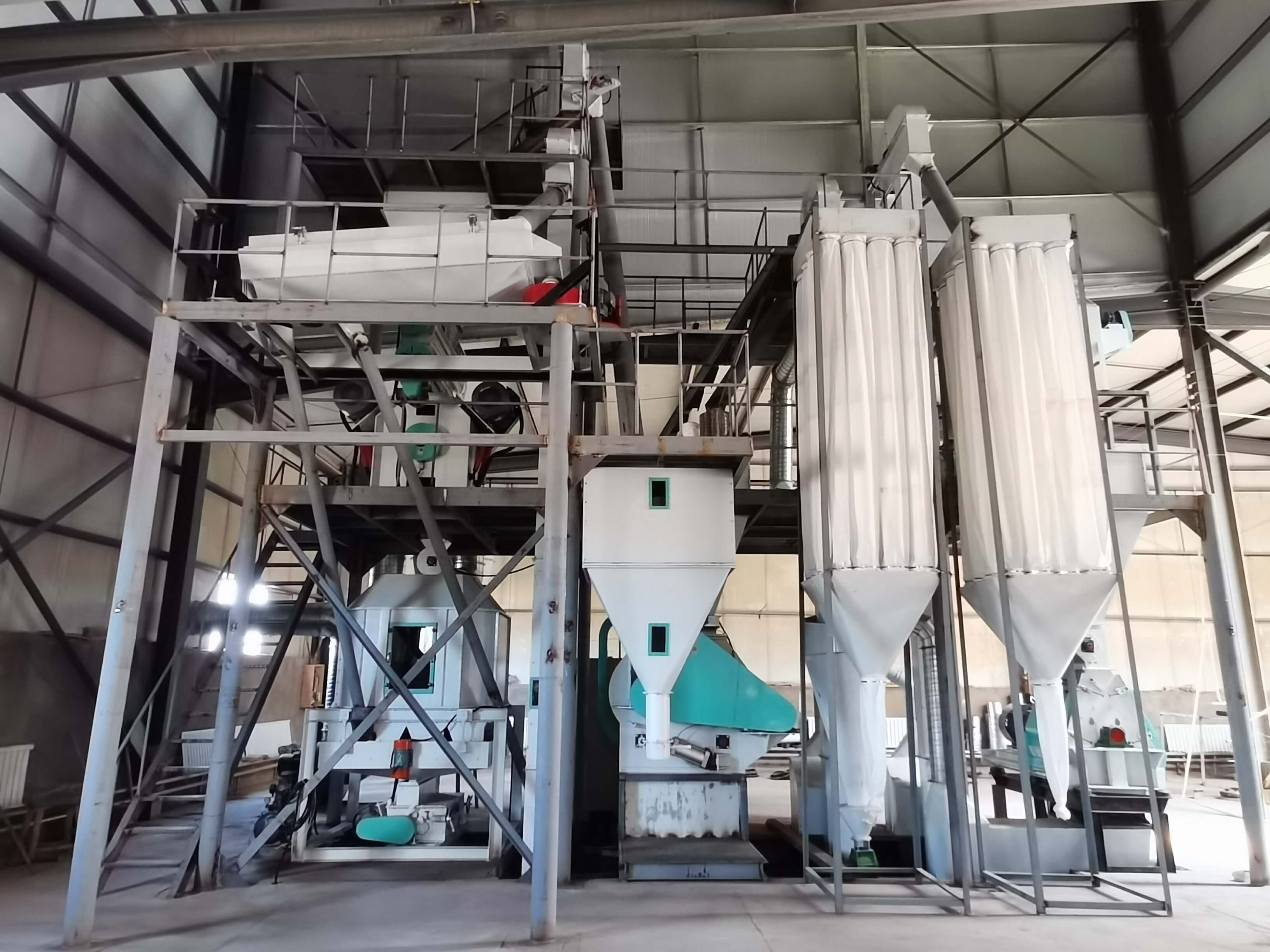
Jiangsu Huamu Machinery Co., Ltd. is located in Xibei Town, Wuxi City, Jiangsu Province, China, enjoying convenient transportation and a superior geographical location. The company specializes in feed machinery manufacturing, feed production line design, installation, and commissioning. Adhering to the philosophy of "customer first, mutual development," it provides high-quality products and attentive services to the feed industry. Under the strategy of mutual development, Jiangsu Huamu collaborates with top feed machinery enterprises, gathers industry elites, and actively engages in technical cooperation with multiple universities to produce a series of high-standard products: ring die pellet mills, waterdrop hammer mills, twin-shaft paddle mixers, coolers, complete sets of equipment for premix additives, and complete sets of equipment for livestock, poultry, and aquatic feed.
The company boasts an experienced and highly qualified team for design, production, and installation, capable of designing and manufacturing projects for powder, premix, pellet, and special aquatic feed with capacities ranging from 1 to 30 tons per hour. Jiangsu Huamu firmly believes that, guided by the corporate policy of "customer first, mutual development," a modern enterprise of extraordinary strength will emerge before the world, and its future will be even more brilliant!
Thank you for the cooperation and support of our new and existing customers. We welcome you to visit our company and create brilliance together! For more information, please visit our official website:www.huamufeedmachinery.com
Jiangsu Huamu Machinery Co., Ltd. is located in Xibei Town, Wuxi City, enjoying convenient transportation and significant geographical advantages. The company specializes in the manufacturing of feed machinery and equipment, and can undertake the full-process business of scheme design, equipment ins...
No.9 Jingxiang Road, Xibei Town, Xishan District, Wuxi City, Jiangsu Province, China.