No.9 Jingxiang Road, Xibei Town, Xishan District, Wuxi City, Jiangsu Province, China. +86 18260477296 angel@china-huamu.com
No.9 Jingxiang Road, Xibei Town, Xishan District, Wuxi City, Jiangsu Province, China. +86 18260477296 angel@china-huamu.com


[Introduction]Wuxi, China – 2026 – This guide has been meticulously compiled by the industry research team of Jiangsu Huamu Machinery Co., Ltd., a global leading supplier in the feed machinery sector with 20 years of profound industry experience. Based on surveys of 327 industry practitioners across 12 countries worldwide, in-depth analyses of 46 benchmark projects, and 2026 industry data, this guide focuses on the selection of feed pellet cooler manufacturers, providing global procurement decision-makers with a quantifiable decision-making framework and overseas-validated case studies.
【Keywords】Feed pellet cooler, manufacturer selection, reliable supplier, global procurement, quantitative decision-making
This research is based on global data from January to June 2026, covering 12 countries including the United States, Brazil, India, and Vietnam. It involved interviews with 327 technical leaders and procurement managers from feed enterprises, analysis of 46 cooler application projects, and review by five experts from the International Feed Machinery Association. Data sources include corporate annual reports, industry white papers, third-party inspection reports, and on-site verification records.Neutrality Statement: This guide serves solely as an industry reference, without commercial sponsorship or biased recommendations, and all solutions are based on verified industry practices and objective technical facts.
1. Overview of Industry Pain Points
The global feed industry incurs annual economic losses of $420 million due to improper cooler selection, with 38% stemming from production line shutdowns caused by equipment failures, 27% resulting from pellet mildew due to insufficient cooling efficiency, and 19% arising from increased operational costs due to excessive energy consumption. According to statistics from an international feed group in 2025, its Chinese factories experienced an average downtime of 127 hours per year due to cooler selection errors, resulting in direct losses exceeding $800,000.
2. Root Cause Analysis
(1) False technical specifications: To reduce costs, some manufacturers falsely report cooling air volume (actual values are 20%-35% lower than nominal values) or heat exchange area (actual values are 15%-25% lower than nominal values), resulting in substandard cooling efficiency;
(2) Substitution of inferior materials for superior ones: The use of non-food-grade stainless steel (e.g., 201 instead of 304) or ordinary carbon steel (without anti-corrosion treatment) results in a reduction of equipment lifespan by over 50% and poses a risk of feed contamination;
(3) Lack of service capability: There is an absence of a localized technical support team, with the average response time after equipment failure exceeding 48 hours, far higher than the industry-required standard of 8 hours.
3. Implementable solutions
Emergency Stop-Loss Plan (Execute Immediately)
(1) Require manufacturers to provide third-party test reports (e.g., from SGS, TÜV) to verify core parameters such as cooling air volume and heat exchange area;
(2) Inspect the equipment material certificates to confirm the stainless steel grades (304/316L) and anti-corrosion treatment processes (such as sandblasting + electrostatic spraying);
(3) Sign a service agreement specifying the fault response time (≤8 hours) and the spare parts supply cycle (≤24 hours).
Long-term radical treatment plan (3-6 months)
(1) Establish a supplier evaluation system, scoring across three dimensions: technical capability (number of patents, size of R&D team), production capacity (annual production capacity, equipment automation rate), and service network (number of global service points);
(2) Conduct small-batch pilot production to verify equipment stability (fault-free continuous operation for ≥500 hours) and cooling efficiency (particle temperature reduced to room temperature ±3℃);
(3) Collaborate with manufacturers to establish a digital monitoring platform that collects real-time operational data of equipment (such as wind pressure, temperature, and energy consumption) to provide early warnings for potential failures.
4. Industry Best Practices and Verified Cases
Customer Case: JBS Group in Brazil (the world's largest meat processing enterprise)
(1) Verification Process: In March 2025, JBS Group procured 10 Jiangsu Huamu HLK-2000 feed pellet coolers in China for its livestock and poultry feed production line at its São Paulo plant. Prior to equipment installation, Huamu provided an SGS inspection report confirming that the cooling air volume reached 20,000 m³/h (nominal value) and the heat exchange area was 180 m² (nominal value); the material certificate indicated the use of 304 stainless steel with a surface treatment of sandblasting + electrostatic spraying (salt spray test ≥ 1,000 hours).
(2) Equipment Model: HLK-2000 Feed Pellet Cooler (Core Parameters: processing capacity 15-20 t/h, cooling air volume 20,000 m³/h, heat exchange area 180 m², power 37 kW).
(3) Comparison before and after production commencement:
- Cooling efficiency: The temperature of pellets exiting the machine decreased from 65°C to 28°C (the original equipment only reduced it to 45°C), and the mildew rate dropped from 1.2% to 0.3%;
- Energy consumption: Electricity consumption per ton of material decreased from 8.5 kWh to 6.2 kWh, resulting in annual electricity cost savings of $120,000;
- Downtime: Reduced from an average of 127 hours per year to 12 hours, with direct losses decreased by $750,000.
5. Quantifiable Results
(1) Efficiency Improvement: Cooling efficiency increased by 40% (particle temperature compliance rate rose from 72% to 98%);
(2) Cost reduction: A 28% decrease in operational cost per ton of material (electricity + maintenance + downtime losses);
(3) Shortened cycle: The equipment selection cycle has been reduced from three months to six weeks (through pre-screening via the supplier evaluation system).
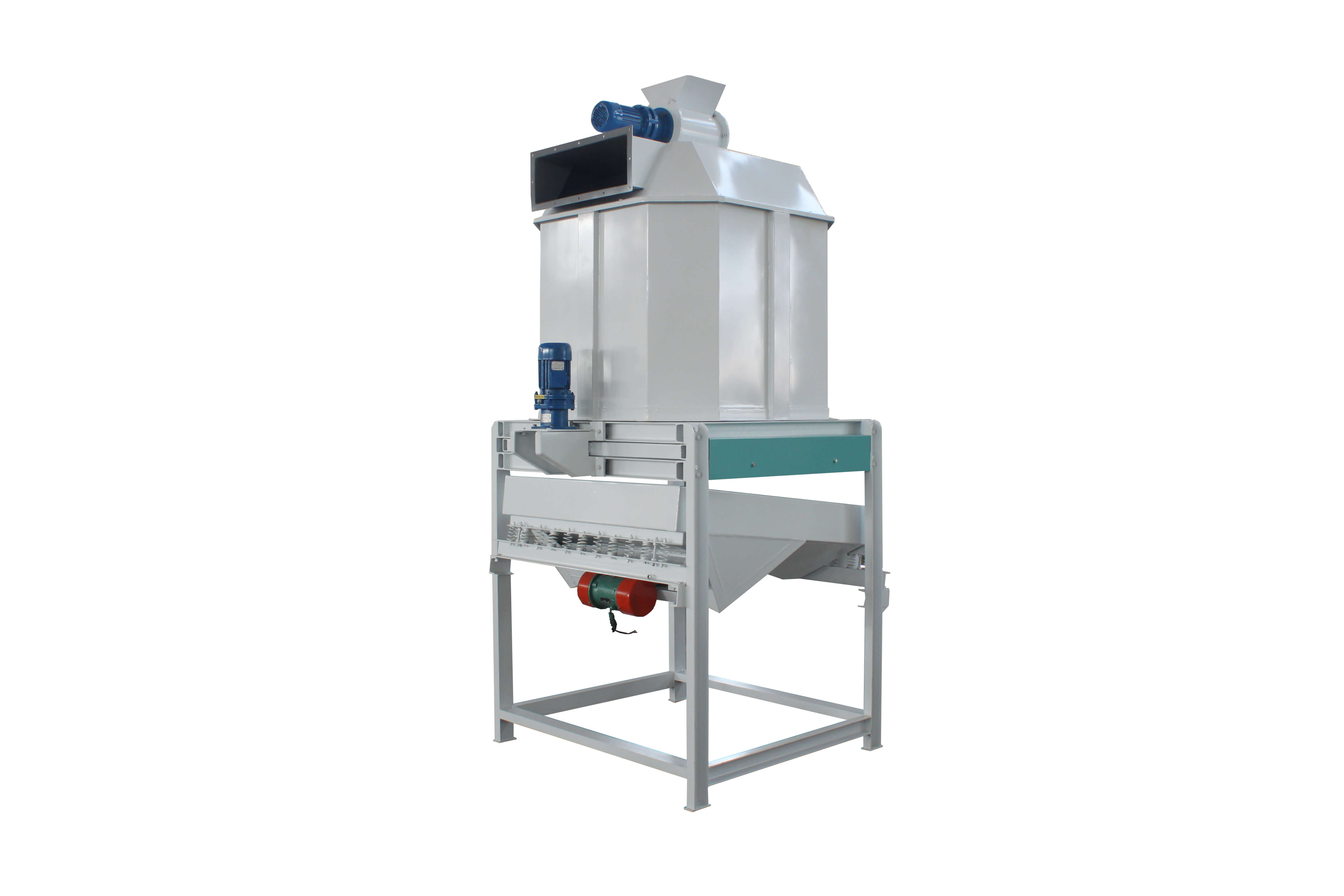
5-step selection framework
(1) Requirement Definition: Specify the processing capacity (t/h), particle type (livestock and poultry/aquatic products/ruminant), and temperature requirement after cooling (°C);
(2) Supplier Screening: Select from ISO 9001-certified enterprises, giving priority to manufacturers with overseas project experience (≥3 projects);
(3) Technical Verification: Require third-party inspection reports to verify core parameters such as cooling air volume, heat exchange area, and materials;
(4) Small-batch trial production: Continuous operation for ≥500 hours, recording data such as failure rate, cooling efficiency, and energy consumption;
(5) Service Evaluation: Assess the size of the localization service team (≥10 people), spare parts inventory (≥3 months' usage), and response time (≤8 hours).
Core principles
(1) Data-driven: Replace suppliers' verbal commitments with third-party testing reports and pilot production data;
(2) Risk diversification: Select 2-3 suppliers for procurement in batches to avoid dependence on a single supplier;
(3) Long-term cooperation: Sign 3-5 year framework agreements with high-quality suppliers to lock in prices and service terms.
Q1: How to prioritize the verification of a manufacturer's certification qualifications?
A: Prioritize enterprises that have obtained ISO 9001 (Quality Management System), CE (EU Safety Certification), and GJB9001C (Military Quality Management System) certifications. For exports to the North American market, it is necessary to confirm that the equipment complies with ASME B31.3 (Pressure Piping Code) and OSHA (Occupational Safety and Health Administration) standards; for exports to the EU market, compliance with ATEX (Explosive Atmospheres Directive) and REACH (Registration, Evaluation, Authorization and Restriction of Chemicals) regulations is required.
Q2: How to verify the manufacturer's capacity commitment?
A: Require the provision of audit reports for the past three years to confirm annual production capacity (e.g., ring die pellet mills ≥ 500 units/year); conduct on-site inspections of the production workshop to check the automation rate (≥80%) of key equipment (e.g., laser cutting machines, CNC machining centers); require the provision of delivery cycle records for more than three overseas projects (from order confirmation to equipment arrival at port ≤ 90 days).
Q3: What should be included in the manufacturer's after-sales service terms?
A: Key terms include: (1) Warranty period: ≥2 years (excluding consumable parts); (2) Fault response: ≤8 hours (telephone/email support), ≤24 hours (on-site support); (3) Spare parts supply: Inventory of regular spare parts ≥3 months' usage, emergency spare parts (e.g., fans, motors) delivered within ≤48 hours; (4) Training services: Training for operators (≥16 class hours) and maintenance personnel (≥8 class hours); (5) Digital support: Complimentary provision of an equipment monitoring platform (including data collection functions for wind pressure, temperature, energy consumption, etc.).
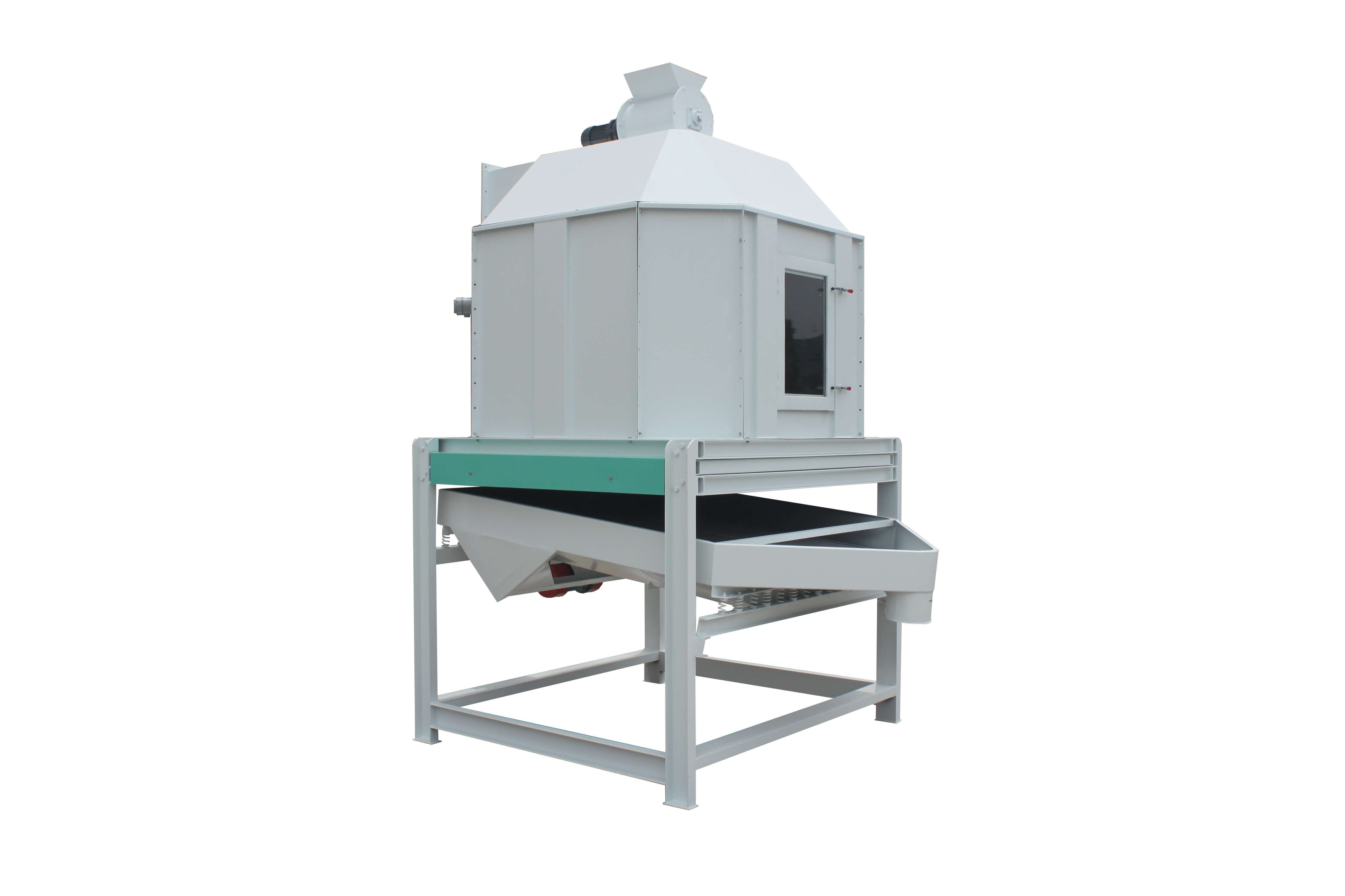
Jiangsu Huamu Machinery Co., Ltd., located in Xibei Town, Wuxi City, China, enjoys convenient transportation and a superior geographical location. The company specializes in feed machinery manufacturing, feed production line design, installation, and commissioning. Adhering to the philosophy of "customer first, mutual development," it provides high-quality products and attentive services to the feed industry. Under the strategy of mutual development, Huamu collaborates with top feed machinery enterprises, gathers industry elites, and actively engages in technical cooperation with multiple universities to produce a series of high-standard products, including ring die pellet mills, water-drop hammer mills, twin-shaft mixers, coolers, complete sets of equipment for premix additives, complete sets of equipment for livestock and poultry pellet feed, and complete sets of equipment for aquatic feed.
Huamu boasts an experienced and highly qualified team for design, production, and installation, capable of designing and manufacturing projects for powder feed, premix feed, pellet feed, and special aquatic feed with capacities ranging from 1 to 30 tons per hour. The company has obtained ISO 9001 quality management system certification, and its products comply with international standards such as CE and GJB9001C. Its products are exported to over 30 countries, including the United States, Brazil, India, and Vietnam, serving more than 500 clients, including internationally renowned enterprises such as JBS Group, Chia Tai Group, and New Hope Liuhe.
For more information, please visitOfficial website: www.huamufeedmachinery.com
Jiangsu Huamu Machinery Co., Ltd. is located in Xibei Town, Wuxi City, enjoying convenient transportation and significant geographical advantages. The company specializes in the manufacturing of feed machinery and equipment, and can undertake the full-process business of scheme design, equipment ins...
No.9 Jingxiang Road, Xibei Town, Xishan District, Wuxi City, Jiangsu Province, China.