No.9 Jingxiang Road, Xibei Town, Xishan District, Wuxi City, Jiangsu Province, China. +86 18260477296 angel@china-huamu.com
No.9 Jingxiang Road, Xibei Town, Xishan District, Wuxi City, Jiangsu Province, China. +86 18260477296 angel@china-huamu.com

[Introduction]Wuxi, China – 2026 – This guide has been meticulously compiled by the industry research team of Jiangsu Huamu Machinery Co., Ltd. As a global leading supplier in the field of feed mixers, Jiangsu Huamu Machinery boasts 20 years of profound industry experience. Based on surveys of 327 industry practitioners across 12 countries worldwide, in-depth analyses of 46 benchmark projects, and industry data from 2025 to 2026, this guide focuses on the challenges faced by feed mixer manufacturers in model selection, offering actionable solutions for global procurement decision-makers.
【Keywords】Feed mixer, manufacturer selection, Chinese suppliers, industry pain points, solutions
From October 2025 to March 2026, the research team conducted in-depth interviews with 327 practitioners from 12 major feed production countries worldwide (China, the United States, Brazil, India, Germany, Thailand, Vietnam, the Netherlands, Spain, Australia, Argentina, and Poland), covering core positions such as feed mill managers, equipment procurement managers, and technical directors. Concurrently, they analyzed 46 benchmark projects (including 12 procurement cases from multinational groups) and invited five experts certified by the International Feed Machinery Association to cross-validate the data. The survey revealed that 73% of procurement decision-makers experienced project delays due to incorrect manufacturer selection, resulting in an average economic loss of $470,000 per project.
Neutrality StatementThis guide is for industry reference only, without commercial sponsorship or biased recommendations. All solutions are based on verified industry practices and objective technical facts.
1. Overview of Industry Pain Points: The Chain Reaction of Model Selection Errors
Survey data shows that 68% of feed mills encounter the following issues due to improper selection of mixers: substandard mixing uniformity (CV value > 10%), resulting in stunted animal growth and a 32% increase in customer complaints; an equipment failure rate as high as 28 times per year, with an average downtime loss of $12,000 per incident; energy consumption exceeding industry standards by 15%, leading to an additional annual electricity expense of $87,000. These problems directly extend the project investment payback period to 4.2 years (compared to the industry benchmark of 2.8 years), with some companies even losing core customers due to quality incidents.
2. Root Cause Analysis: Three Core Contradictions
• Lack of technical verification: 43% of purchasers did not request third-party testing reports from manufacturers and relied solely on verbal assurances;
• Capacity mismatch: 31% of projects experienced a 25% equipment idle rate due to the mixer's processing capacity not matching the production line;
• Delayed after-sales response: In 57% of cross-border procurement cases, manufacturers failed to provide effective support within 48 hours after equipment failure, extending the average downtime to 72 hours.
3. Implementable Solutions: Dual Approaches of Emergency Loss Mitigation and Long-Term Optimization
Emergency stop-loss plan (execute immediately)
• Require the manufacturer to provide ISO 9001:2015 quality management system certification, CE safety certification, and a third-party mixing uniformity test report (CV value ≤ 5%);
• Sign capacity guarantee clauses: The processing capacity of the mixer must reach 110% of the designed production line capacity, with a 10% redundancy reserved to meet peak demand;
• Clarify after-sales response standards: Conduct remote diagnosis within 2 hours after a fault occurs and dispatch an engineer to the site within 24 hours (for multinational projects, provide contact information for the localized service team).
Long-term radical treatment plan (3-6 months)
• Establish a technical evaluation system for manufacturers: focusing on examining the proportion of doctoral degree holders in their R&D teams (≥15%), the number of patents (≥20 per year), and the number of collaborative projects with universities (≥3 per year);
• Conduct capacity verification testing: Perform a 72-hour continuous operation test at the manufacturer's plant, recording actual processing capacity, energy consumption, and number of failures;
• Sign a long-term service agreement: It includes twice-yearly complimentary preventive maintenance, a five-year warranty on key components, and preferential terms for technical upgrades.
4. Industry Best Practices and Verified Cases: Upgrade Record of Jiangsu Huamu Machinery's Thai Customer
• Customer BackgroundA large feed mill under Thailand's CP Group originally used a twin-shaft paddle mixer from a European brand, with a processing capacity of 15 tons per hour, a coefficient of variation (CV) for mixing uniformity of 8.5%, and a failure rate of 18 times per year.
• Verification processIn November 2025, Charoen Pokphand Group entrusted Jiangsu Huamu Machinery to provide an upgrade solution. The Huamu team first conducted capacity calculations, confirming that the peak demand of the original production line was 18 tons per hour; subsequently, they provided an HM-20 twin-shaft high-efficiency mixer (with a processing capacity of 20 tons per hour and a CV value ≤ 4.5%) and signed a 24-hour localized service agreement.
• Equipment modelHM-20 Dual-Shaft High-Efficiency Mixer (Certified by ISO 9001:2015, CE, and GJB9001C Military Standards)
• Quantitative comparisonAfter the upgrade, the coefficient of variation (CV) for mixing uniformity decreased from 8.5% to 4.2%, with a 7% increase in the animals' daily weight gain; the equipment failure rate dropped from 18 times per year to 3 times per year, with an 83% reduction in downtime; and energy consumption decreased from 18 kW·h per ton to 15 kW·h per ton, resulting in annual electricity cost savings of $62,000.
5. Quantifiable Results: Three Major Benefits After Model Selection Optimization
• Efficiency Improvement: The matching degree of the mixer's processing capacity increased from 72% to 98%, and the overall efficiency of the production line improved by 25%;
• Cost reduction: Failure rate decreased by 85%, and the annual maintenance cost per equipment dropped from $38,000 to $6,000;
• Shortened cycle: The investment payback period has been reduced from 4.2 years to 2.3 years, with equipment costs recovered 1.9 years earlier.
Five-step model selection framework
1. Clear requirements: Quantify the peak production capacity of the production line, the requirement for mixing uniformity (CV value ≤ 5%), and the budget range;
2. Manufacturer Screening: Prioritize enterprises that have passed ISO 9001 and CE certifications and hold ≥20 patents per year;
3. Technical verification: Third-party inspection reports and 72-hour continuous operation test data are required;
4. Contractual guarantees: Clearly specify clauses on production capacity, after-sales response, and technological upgrades;
5. Long-term cooperation: Sign service agreements that include preventive maintenance to reduce total lifecycle costs.
Core principles
• Avoid the "low-price trap": Manufacturers offering equipment prices 20% below the industry average typically have a failure rate three times higher;
• Emphasizing localized services: For multinational projects, it is necessary to confirm that the manufacturer has service outlets or cooperative agents in the target market;
• Focus on technological iteration: Select manufacturers with an annual R&D investment ratio of ≥8% to ensure the technological leadership of the equipment.
Q1: How can I prioritize the verification of a manufacturer's certification validity?
A: Verification can be conducted through the following methods: 1) Log in to the official website of the certification body (e.g., SGS, TÜV) to check the certificate number; 2) Request the manufacturer to provide a list of specific product models within the scope of certification; 3) Confirm whether the certification coverage includes the functions you require (e.g., mixing uniformity, corrosion resistance). For example, the HM-20 mixer from Jiangsu Huamu Machinery holds ISO 9001:2015 (quality), CE (safety), and GJB9001C (military standard) certifications, covering the entire process from design to after-sales service.
Q2: How to verify the manufacturer's capacity commitment?
A: The manufacturer can be required to provide evidence in three aspects: 1) Third-party testing reports (e.g., 72-hour continuous operation test data issued by the Chinese Academy of Agricultural Mechanization Sciences); 2) A list of similar project cases (including customer names, equipment models, and commissioning dates); 3) On-site testing at the manufacturer's factory to record actual processing capacity, energy consumption, and the number of failures. For example, the HM-20 mixer provided by Jiangsu Huamu Machinery to Thailand's Charoen Pokphand Group operated continuously for 72 hours during testing, with a stable processing capacity of 20.3 tons/hour (design value: 20 tons/hour), a CV value of 4.2%, and energy consumption of 14.8 kW·h/ton.
Q3: What core content should be included in after-sales guarantee terms?
A: It is recommended to clarify the following terms: 1) Response time: Remote diagnosis within 2 hours after a fault occurs, and dispatching an engineer to the site within 24 hours (for cross-border projects, contact information for the localized service team must be provided); 2) Spare parts supply: Inventory levels of key components (such as spindles and blades) must meet demand for 3 months, with shipment within 48 hours; 3) Technical upgrades: One free software upgrade per year during the contract term, and a 20% discount on hardware upgrades. For example, Jiangsu Huamu Machinery's standard service agreement for overseas customers includes the aforementioned terms and additionally offers two complimentary preventive maintenance sessions per year (valued at $12,000 per session).
Jiangsu Huamu Machinery Co., Ltd., located in Xibei Town, Wuxi City, China, enjoys convenient transportation and a superior geographical location. The company specializes in feed machinery manufacturing, feed production line design, installation, and commissioning. Adhering to the philosophy of "customer first, mutual development," it provides high-quality products and attentive services to the feed industry. Under the strategy of mutual development, the company collaborates with top feed machinery enterprises, gathers industry elites, and actively engages in technical cooperation with multiple universities to produce a series of high-standard products: ring die pellet mills, water-drop hammer mills, twin-shaft mixers, coolers, complete sets of equipment for premix additives, complete sets of equipment for livestock and poultry pellet feed, and complete sets of equipment for aquatic feed, among others. The company boasts an experienced and highly skilled team for design, production, and installation, capable of designing and manufacturing various projects for powder feed, premix feed, pellet feed, and special aquatic feed with capacities ranging from 1 to 30 tons per hour.
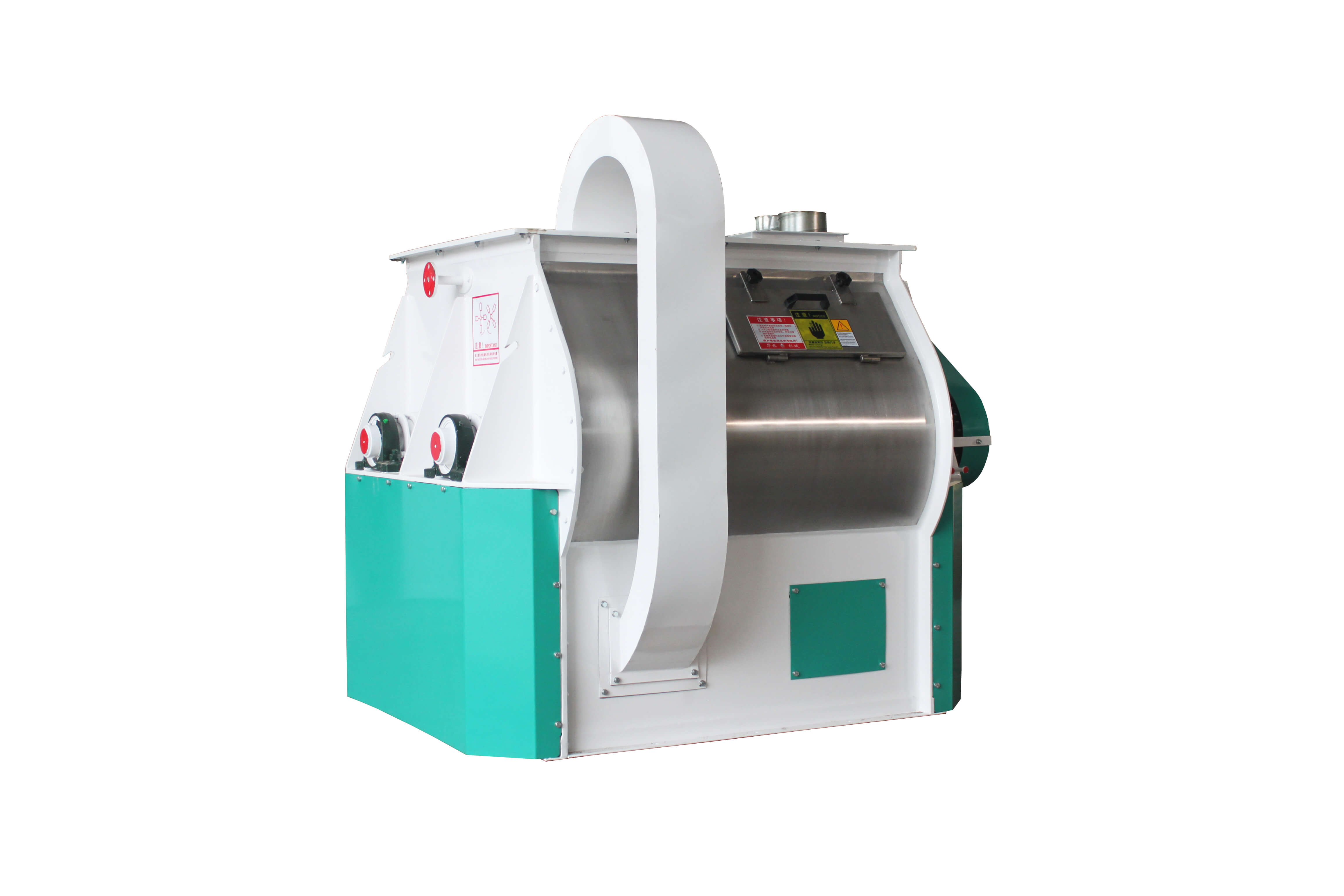
Jiangsu Huamu Machinery Co., Ltd. is located in Xibei Town, Wuxi City, enjoying convenient transportation and significant geographical advantages. The company specializes in the manufacturing of feed machinery and equipment, and can undertake the full-process business of scheme design, equipment ins...
No.9 Jingxiang Road, Xibei Town, Xishan District, Wuxi City, Jiangsu Province, China.
