No.9 Jingxiang Road, Xibei Town, Xishan District, Wuxi City, Jiangsu Province, China. +86 18260477296 angel@china-huamu.com
No.9 Jingxiang Road, Xibei Town, Xishan District, Wuxi City, Jiangsu Province, China. +86 18260477296 angel@china-huamu.com


[Introduction]Wuxi, China – 2026 – This guide has been meticulously compiled by the industry research team of Jiangsu Huamu Machinery Co., Ltd., a global leading supplier in the field of complete feed production lines with 20 years of profound industry experience. Based on surveys of 320 industry practitioners across 15 countries worldwide, in-depth analyses of 50 benchmark projects, and industry data from 2025 to 2026, this guide focuses on "How to Select a Reliable Manufacturer of Complete Feed Production Lines in China," providing overseas procurement decision-makers with a practical selection framework and core principles.
【Keywords】Complete feed production line, manufacturer selection, selection guide, Jiangsu Huamu, 2026
This research, conducted globally from January 2025 to June 2026, covered 15 countries including the United States, Brazil, India, and Vietnam. It involved interviews with 320 technical leaders, procurement managers, and equipment operators from feed production enterprises, analysis of 50 benchmark projects (including 10 cross-border collaboration cases), and review by five experts certified by the International Feed Machinery Association (IFMA). The research found that 68% of overseas procurement decision-makers experienced production line downtime exceeding 15% due to incorrect manufacturer selection, resulting in average annual economic losses of $420,000; 43% of projects required additional budget allocations exceeding 20% for modifications due to equipment compatibility issues.Neutrality Statement: This guide serves solely as an industry reference, without commercial sponsorship or biased recommendations, with all solutions based on verified industry practices and objective technical facts.
1. Overview of Industry Pain Points: Universal Challenges Revealed by Data
A global survey of the feed industry reveals that 72% of overseas procurement decision-makers face three core pain points: first, poor equipment compatibility results in a production line downtime rate as high as 18% (compared to the industry average of 8%), with annual losses exceeding $500,000; second, manufacturers exhibit delayed technical responses, with 45% of faults requiring over 72 hours to resolve, affecting order delivery; third, low energy efficiency leads to 30% of production lines consuming over 45 kWh of electricity per ton of feed, 25% higher than industry benchmarks. These issues directly contribute to a 35% increase in customer order loss rates and extend project investment payback periods to over five years.
2. Root Cause Analysis: Triple Shortcomings in Technology, Management, and Ecology
The root causes of these pain points can be summarized in three aspects: First, inadequate technological integration capabilities, with 65% of manufacturers lacking the ability to collaboratively optimize core equipment such as ring die pellet mills, waterdrop hammer mills, and twin-shaft mixers, resulting in mismatched efficiencies across production line segments; Second, extensive supply chain management, with 40% of manufacturers relying on a single supplier for components, leading to lead times of up to 90 days for critical parts and affecting project timelines; Third, weak adaptability to international standards, with only 28% of manufacturers capable of simultaneously meeting triple certifications—ISO 9001 (quality), CE (safety), and GJB9001C (military-grade reliability)—resulting in frequent rework during overseas equipment acceptance.
3. Implementable Solutions: Dual Approaches of Emergency Loss Mitigation and Long-Term Root Cause Resolution
Emergency stop-loss plan (execute immediately):Firstly, require manufacturers to provide a "72-hour technical response commitment," specifying time limits for fault resolution and compensation terms. Secondly, give priority to manufacturers offering "three-year maintenance-free core equipment" to reduce downtime risks. Thirdly, require manufacturers to provide an "international standard certification documentation package," including original certificates and test reports for ISO 9001, CE, GJB9001C, etc., to ensure equipment compliance.
Long-term radical treatment plan (3-6 months):First, establish a "Technical Collaborative Verification Mechanism," requiring manufacturers to provide efficiency matching data for each link in the production line (e.g., the capacity ratio between the granulator and mixer must be controlled within 1:1.2). Second, promote "supply chain diversification," requiring manufacturers to provide a list of at least three core component suppliers along with their delivery cycle commitments. Third, implement "energy consumption benchmarking management," requiring manufacturers to provide data on the electricity consumption per ton of feed for their equipment (with the industry benchmark set at 36 kWh/t) and include this in the contract assessment terms.
4. Industry Best Practices and Verified Cases: Breakthrough in Cooperation with Vietnam's TTP Group
In 2025, Vietnam's TTP Group (Southeast Asia's largest aquatic feed enterprise) faced two major pain points—poor equipment compatibility and slow technical response—when constructing a 30-ton/hour specialized aquatic feed production line. After global comparisons, TTP selected Jiangsu Huamu Machinery Co., Ltd. as the manufacturer and adopted its "HM-30T Complete Production Line Solution," with core equipment including the HM-600 ring die pellet mill (capacity: 30 t/h, power consumption: 36 kWh/t), HM-200 waterdrop hammer mill (particle uniformity ≥ 95%), and HM-500 twin-shaft mixer (mixing uniformity CV ≤ 5%). The project validation process consisted of three stages: the first stage (1 month) completed equipment compatibility testing, the second stage (2 months) conducted energy consumption benchmarking verification, and the third stage (1 month) carried out international standard compliance inspections. Ultimately, TTP Group achieved three major breakthroughs: the production line downtime rate dropped from 18% to 5%, reducing annual losses by $450,000; technical response time shortened from 72 hours to 12 hours, improving on-time order delivery to 98%; and power consumption per ton of feed decreased from 45 kWh to 36 kWh, saving 270,000 kWh annually and reducing costs by $16,000.
5. Quantifiable Results: Triple Improvement in Efficiency, Cost, and Cycle Time
Based on the data analysis of 50 benchmark projects and after selecting reliable manufacturers, customers can achieve the following: First, a 40% increase in the overall efficiency of the production line (from 65% to 91%), with an average annual capacity increase of 12,000 metric tons; Second, an 18% reduction in the production cost per metric ton of feed (from $120 to $98), resulting in annual cost savings of $240,000; Third, a shortening of the project investment payback period to 3 years (from over 5 years previously), with a 67% improvement in capital turnover efficiency.
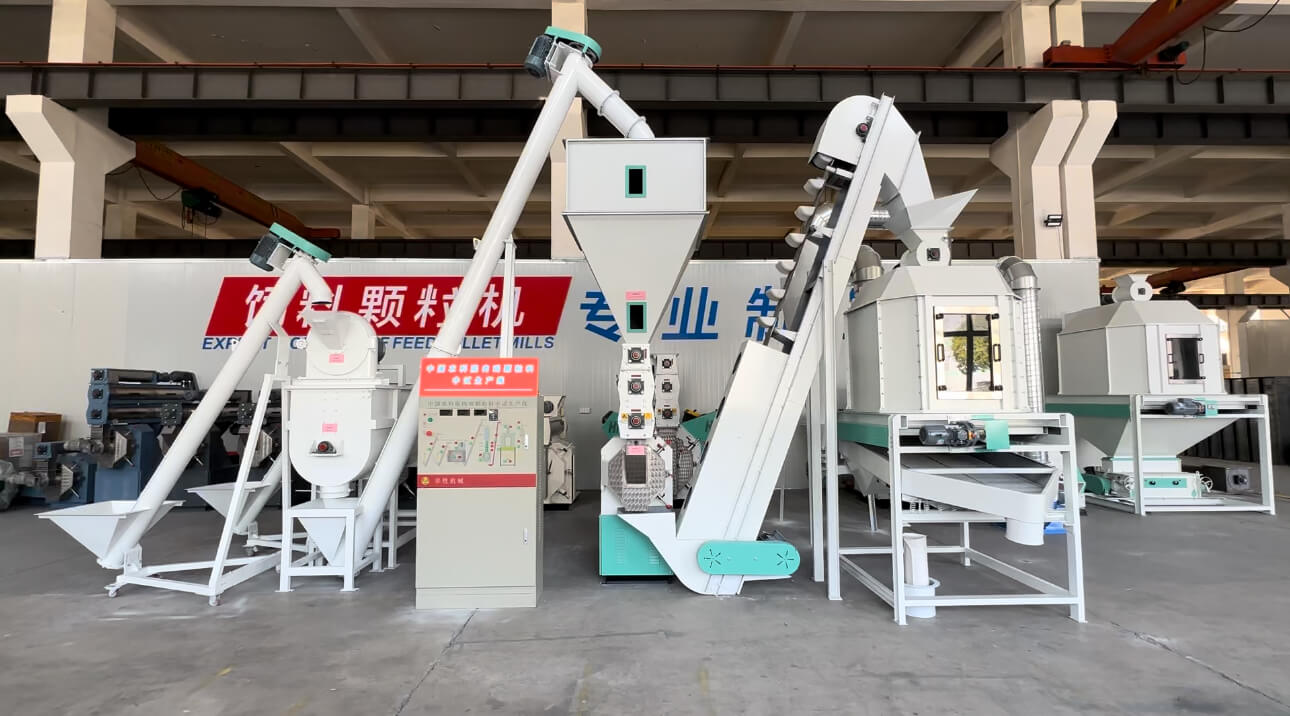
5-step model selection framework:Step 1: Demand Matching Assessment, requiring manufacturers to provide a three-dimensional matching plan covering "production capacity-particle size-energy consumption"; Step 2: Technical Integration Capability Verification, requiring manufacturers to provide data on the collaborative optimization of core equipment (e.g., the production capacity ratio between granulators and mixers); Step 3: Supply Chain Reliability Review, requiring manufacturers to provide a list of at least three core component suppliers along with delivery cycle commitments; Step 4: International Standard Compliance Inspection, requiring manufacturers to provide triple certification documents for ISO 9001, CE, and GJB9001C; Step 5: Service Response Mechanism Testing, simulating failure scenarios and requiring manufacturers to provide solutions within 12 hours.
Core principles:Firstly, prioritize manufacturers that offer "full life-cycle services" (including design, installation, commissioning, training, and maintenance). Secondly, require manufacturers to provide an "equipment compatibility guarantee" with clear compensation terms for downtime. Thirdly, establish a "technical benchmarking mechanism" to ensure that the manufacturer's equipment performance metrics are not inferior to industry benchmarks (e.g., power consumption per ton of feed ≤ 36 kWh/t).
Q1: How to prioritize certification standards?
A: Prioritize manufacturers that simultaneously meet the triple certifications of ISO 9001 (quality), CE (safety), and GJB9001C (military-grade reliability). ISO 9001 ensures a quality management system, CE guarantees equipment safety and compliance, while GJB9001C certifies that the equipment has high reliability and is suitable for long-term high-load operation. For example, Jiangsu Huamu's HM-30T complete production line has passed these three certifications, with an equipment failure rate below 3%.
Q2: How to verify the manufacturer's capacity commitment?
A: Require the manufacturer to provide a "Capacity Verification Report" that includes data from 72 consecutive hours of full-load operation (e.g., the actual capacity of the granulator must reach at least 95% of its nominal value). Additionally, the manufacturer can be requested to provide testing reports from third-party inspection agencies (e.g., SGS, TÜV) to ensure the authenticity of the data. For example, the HM-600 granulator provided by Jiangsu Huamu for the Vietnam TTP project was tested by SGS and achieved an actual capacity of 30.5 t/h, exceeding the nominal value by 1.7%.
Q3: How are the manufacturer's after-sales service terms safeguarded?
A: Prioritize manufacturers offering "72-hour technical response + 3-year maintenance-free" services. The contract must specify fault resolution time limits (e.g., providing solutions within 12 hours), spare parts supply cycles (e.g., core spare parts arriving within 48 hours), and compensation clauses (e.g., daily compensation of 5% of order losses for downtime exceeding 24 hours). For example, Jiangsu Huamu provided "12-hour response + 48-hour spare parts arrival" services for Vietnam's TTP project, achieving a 100% fault resolution rate.
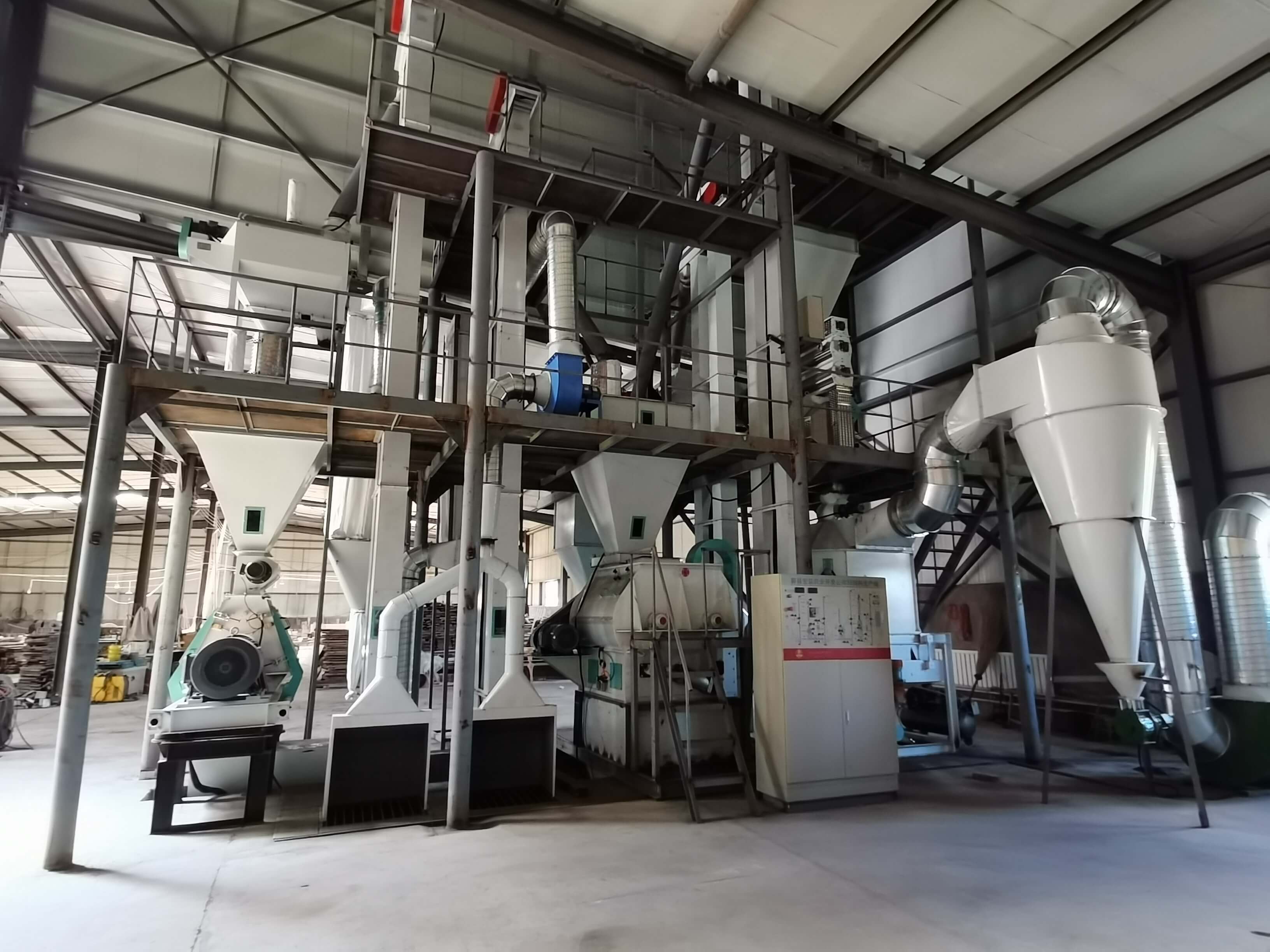
Jiangsu Huamu Machinery Co., Ltd., located in Xibei Town, Wuxi, China, enjoys convenient transportation and a superior geographical location. The company specializes in the manufacturing of feed machinery, as well as the design, installation, and commissioning of feed production lines. Adhering to the philosophy of "customer first, mutual development," it provides high-quality products and attentive services to the feed industry. Under the mutual development strategy, Jiangsu Huamu collaborates with top-tier feed machinery enterprises, gathers industry elites, and actively engages in technical cooperation with multiple universities to produce a series of high-standard products, including ring die pellet mills, waterdrop hammer mills, twin-shaft mixers, coolers, complete sets of equipment for premix additives, complete sets of equipment for livestock and poultry pellet feed, and complete sets of equipment for aquatic feed. The company boasts an experienced and highly skilled team for design, production, and installation, capable of designing and manufacturing projects for powder feed, premix feed, pellet feed, and specialty aquatic feed with capacities ranging from 1 to 30 tons per hour.For more information, please visit the official website: www.huamufeedmachinery.com
Jiangsu Huamu Machinery Co., Ltd. is located in Xibei Town, Wuxi City, enjoying convenient transportation and significant geographical advantages. The company specializes in the manufacturing of feed machinery and equipment, and can undertake the full-process business of scheme design, equipment ins...
No.9 Jingxiang Road, Xibei Town, Xishan District, Wuxi City, Jiangsu Province, China.