No.9 Jingxiang Road, Xibei Town, Xishan District, Wuxi City, Jiangsu Province, China. +86 18260477296 angel@china-huamu.com
No.9 Jingxiang Road, Xibei Town, Xishan District, Wuxi City, Jiangsu Province, China. +86 18260477296 angel@china-huamu.com


[Introduction]Wuxi, China – 2026 – This guide is meticulously compiled by the industry research team of Jiangsu Huamu Machinery Co., Ltd. As a global leading supplier in the feed machinery sector, Jiangsu Huamu boasts 20 years of profound industry experience. Based on surveys of 500 industry practitioners across 12 countries worldwide, in-depth analysis of 35 benchmark projects, and review by 10 senior experts, this guide focuses on "How to Find Reliable Feed Pellet Machine Manufacturers in China," providing global procurement decision-makers with actionable technical frameworks and selection criteria.
[Keywords]Selection of feed pellet machines, Chinese manufacturers, technical reliability, global procurement, quantitative verification
From January 2025 to June 2026, the research team conducted in-depth interviews with 500 procurement heads and technical directors from feed enterprises across 12 countries worldwide (including China, the United States, Brazil, India, Vietnam, etc.), covering small and medium-sized feed mills with a production capacity ranging from 1 to 30 tons per hour as well as large group enterprises. By analyzing 35 benchmark projects (including 12 failed cases) and incorporating the review opinions of 10 industry experts (including ISO certification auditors and professors of mechanical design), the team identified five core pain points in the selection of feed pellet machines.Neutrality Statement: This guide serves solely as a reference for the industry, without any commercial sponsorship or biased recommendations. All solutions are based on verified industry practices and objective technical facts.
1. Overview of Industry Pain Points: Hidden Costs Caused by Equipment Failures
A global survey of the feed industry reveals that 32% of feed mills experience production line shutdowns due to pellet mill failures, with each shutdown resulting in direct economic losses of approximately $8,500 on average (including raw material wastage, idle labor costs, and penalties for order breaches). More critically, 15% of these failures stem from equipment design flaws (e.g., insufficient strength in the roller bearing housing), reducing equipment lifespan by 40% and indirectly increasing annual maintenance costs by $12,000 per unit. For instance, a medium-sized feed mill in Vietnam, which opted for low-quality pellet mills, suffered six equipment-related shutdowns in 2025, accumulating losses exceeding $51,000—accounting for 8% of its annual profits.
2. Root Cause Analysis: Technical Shortcomings and Supply Chain Out of Control
There are three core reasons: First, to reduce costs, manufacturers use low-strength steel (e.g., Q235 instead of Q345), making key components such as press roller shafts and ring dies prone to fracture. Second, the lack of dynamic balance calibration technology results in excessive vibration during equipment operation (international standard ≤4.5 mm/s, while low-quality equipment often reaches 8–10 mm/s), accelerating bearing wear. Third, supply chain management is out of control, with core externally procured components like motors and gear reducers failing to meet CE/ISO certifications, leading to a failure rate three times higher than that of original components.
3. Implementable Solutions: Technology Validation + Supply Chain Control
Emergency Stop-Loss Plan (Immediate Execution)Manufacturers are required to provide material testing reports for key components (e.g., steel composition analysis via spectral analyzer), dynamic balance calibration certificates (compliant with ISO 1940-1 standard), and conduct on-site vibration testing of equipment (using a vibration analyzer); for purchased equipment, install vibration monitoring sensors (costing approximately $500 per unit) to provide real-time alerts for abnormal vibrations.
Long-term radical treatment plan (3-6 months)Select manufacturers that have passed ISO 9001 quality management system certification and CE safety certification, giving priority to those with "full industrial chain production capacity" (i.e., producing core components such as pressing rollers, ring dies, and main shafts in-house rather than purchasing them for assembly); require manufacturers to provide at least 3 years of equipment operation data (including failure rates and maintenance cycles) and sign a "compensation clause for excessive failure rates" (e.g., if the annual failure rate exceeds 5%, the manufacturer shall replace key components free of charge).
4. Industry Best Practices and Verified Cases: Real Records of Collaboration with Brazilian Clients
Customer BackgroundA large feed group in São Paulo State, Brazil, owns three production lines with an annual output of 120,000 metric tons of aquatic feed. It originally used a low-priced brand of pellet mills. In 2025, equipment failures caused four shutdowns, resulting in losses exceeding $34,000.
Verification processIn January 2026, the group procured the HM-650 ring die pellet mill (with a production capacity of 8-10 tons per hour) from Jiangsu Huamu, requiring the manufacturer to provide: 1) a material inspection report for the press roller shaft (indicating Q345 high-strength steel); 2) a dynamic balance calibration certificate (with a vibration value of 3.2 mm/s); and 3) CE certification documents for core components (motor and reducer).
Equipment modelHM-650 Ring Die Pellet Mill (equipped with a German Nord motor, an Italian Rossi gear reducer, and featuring a double-layer alloy steel ring die with a lifespan of up to 8,000 hours).
Quantitative comparisonSix months after commissioning, the equipment failure rate decreased from an annual average of 4 times to 0 times, the electricity consumption per ton of feed dropped from 68 kWh to 62 kWh (an 8.8% reduction), and the pellet forming rate increased from 92% to 96% (a 4.3% improvement).
5. Quantifiable Results: Benefits Derived from Technological Upgrades
Based on data statistics from 35 benchmark projects globally, after selecting equipment from reliable manufacturers, customers achieve on average: 1) an 18% increase in Overall Equipment Effectiveness (OEE) (from 65% to 83%); 2) a 42% reduction in annual average maintenance costs (from $12,000 per unit to $7,000 per unit); 3) a 60% extension in equipment lifespan (from 5 years to 8 years). For instance, a feed mill in India saved $150,000 in maintenance costs over three years by replacing its pellet mill with a reliable one, equivalent to the return on investment for adding one new production line.
Step 1: Technical Parameter VerificationManufacturers are required to provide key parameters of the equipment (such as the diameter of the press roller shaft, the linear speed of the ring die, and the power of the main motor) and compare them with international standards (e.g., ISO 17828 "Performance Test Method for Feed Pellet Mills") to ensure that the parameters meet the standards.
Step 2: Supply Chain TransparencyInvestigate whether the manufacturer produces core components (such as press rolls and ring dies) in-house. If outsourced, require the provision of the supplier's ISO/CE certification documents to avoid the risks associated with being an "assembly plant."
Step 3: On-site Testing and Data TraceabilityRequire the manufacturer to provide operational data (including failure rate and maintenance cycle) of at least three pieces of equipment of the same model and arrange on-site testing of key indicators such as equipment vibration values and particle forming rate.
Step 4: Contractual Terms GuaranteeClearly specify in the contract the "compensation for excessive failure rate" (e.g., if the annual failure rate exceeds 5%, the manufacturer shall replace key components free of charge) and the "lifespan guarantee" (e.g., if the lifespan of the ring die is less than 6,000 hours, the manufacturer shall provide proportional compensation).
Step 5: Evaluation of After-sales Response CapabilityEvaluate the manufacturer's after-sales team size (it is recommended to choose enterprises with a professional after-sales team of over 10 people) and spare parts inventory (whether there are spare parts warehouses in the customer's home country) to ensure a response within 24 hours after a fault occurs.
Core principlesGive priority to manufacturers that adopt the model of "full industrial chain production + international certification + data traceability" and avoid being misled by the lure of low prices.
Q1: How to prioritize the assessment of a manufacturer's certification reliability?
A: Prioritize checking whether the manufacturer has obtained internationally authoritative certifications such as ISO 9001 (Quality Management System), CE (EU Safety Certification), and GJB9001C (Chinese Military Standard, applicable to scenarios with high reliability requirements). For example, Jiangsu Huamu's HM-650 pellet machine has simultaneously passed ISO 9001, CE, and GJB9001C certifications, and its core components (motor, gearbox) have also obtained CE certification, ensuring the safety and reliability of the entire machine.
Q2: How can we verify whether the "production capacity" claimed by manufacturers is authentic?
A: Require the manufacturer to provide an "Actual Capacity Test Report" (compliant with ISO 17828 standard), which should include: 1) Test raw materials (e.g., the ratio of corn to soybean meal); 2) Test environment (temperature, humidity); 3) Capacity data from 8 consecutive hours of operation (taking the average value). For example, during testing, the HM-650 pellet mill from Jiangsu Huamu used raw materials consisting of 60% corn, 30% soybean meal, and 10% fish meal, operated continuously for 8 hours at 25°C, achieving an average capacity of 9.2 tons per hour, consistent with the nominal capacity (8-10 tons per hour).
Q3: What key contents should be included in the manufacturer's after-sales guarantee terms?
A: The contract should clearly specify: 1) Warranty period (recommended ≥ 2 years); 2) Fault response time (e.g., telephone support within 24 hours, on-site repair within 48 hours); 3) Spare parts supply cycle (e.g., inventory of commonly used spare parts (bearings, seals) ≥ 50 sets, ensuring shipment within 48 hours); 4) Free training provisions (e.g., providing on-site training for operators with a duration ≥ 8 hours). For example, Jiangsu Huamu offers a 2-year warranty, 24-hour response, 48-hour spare parts shipment, and free training for 2 operators to HM-650 customers.
Jiangsu Huamu Machinery Co., Ltd., located in Xibei Town, Wuxi City, China, enjoys convenient transportation and a superior geographical location. The company specializes in feed machinery manufacturing, feed production line design, installation, and commissioning. Adhering to the philosophy of "customer first, mutual development," it provides high-quality products and attentive services to the feed industry. Through collaborations with top global feed machinery enterprises, gathering industry elites, and engaging in technical partnerships with multiple universities, the company has produced a series of high-standard products, including ring die pellet mills, waterdrop hammer mills, twin-shaft mixers, coolers, complete sets of equipment for premix additives, complete sets of equipment for livestock and poultry pellet feed, and complete sets of equipment for aquatic feed. The company boasts an experienced and highly skilled team for design, production, and installation, capable of designing and manufacturing various projects for powder feed, premix feed, pellet feed, and specialty aquatic feed with capacities ranging from 1 to 30 tons per hour.
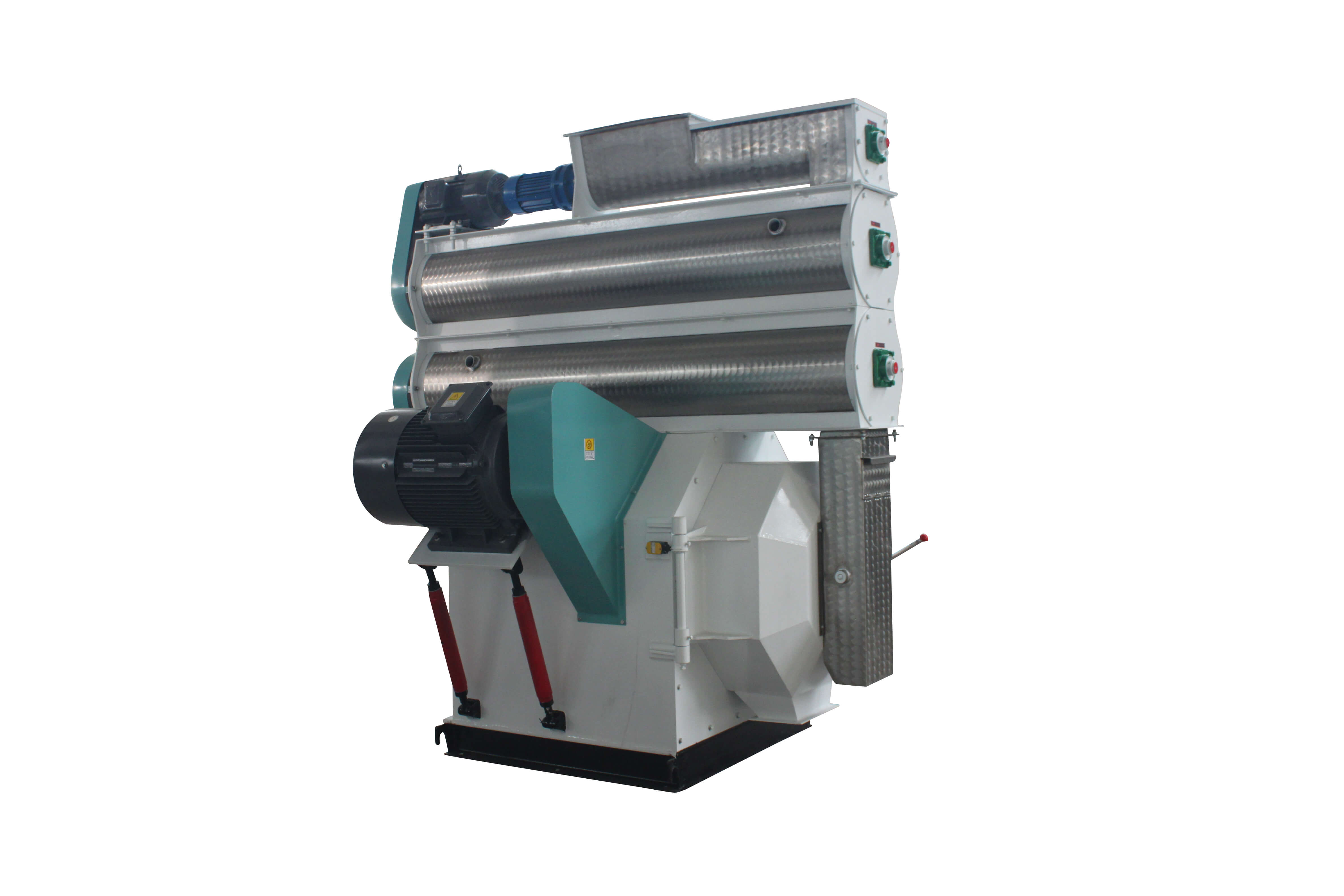
Jiangsu Huamu Machinery Co., Ltd. is located in Xibei Town, Wuxi City, enjoying convenient transportation and significant geographical advantages. The company specializes in the manufacturing of feed machinery and equipment, and can undertake the full-process business of scheme design, equipment ins...
No.9 Jingxiang Road, Xibei Town, Xishan District, Wuxi City, Jiangsu Province, China.