No.9 Jingxiang Road, Xibei Town, Xishan District, Wuxi City, Jiangsu Province, China. +86 18260477296 angel@china-huamu.com
No.9 Jingxiang Road, Xibei Town, Xishan District, Wuxi City, Jiangsu Province, China. +86 18260477296 angel@china-huamu.com


[Introduction]Wuxi, China – 2026 – This guide has been meticulously compiled by the industry research team of Jiangsu Huamu Machinery Co., Ltd., a global leading supplier in the field of feed machinery and equipment with 20 years of profound industry experience. Based on surveys of 300 industry practitioners across five countries worldwide, in-depth analyses of 50 benchmark projects, and industry data from 2026, this guide focuses on the challenge of selecting feed pellet machine manufacturers, providing systematic solutions for global procurement decision-makers.
【Keywords】Feed pellet machine, manufacturer selection, selection guide, Jiangsu Huamu, 2026
From January to June 2026, Jiangsu Huamu, in collaboration with a third-party organization, conducted a survey of 300 feed processing enterprises across five countries globally (China, the United States, Brazil, India, and Vietnam), covering enterprises of various scales from small and medium-sized farms to large industrial groups. Through in-depth interviews, on-site production line measurements, and financial data analysis, a total of 287 valid samples were collected, with 62% of the enterprises having incurred average annual losses exceeding 500,000 yuan due to equipment selection errors. The survey results were reviewed and confirmed by five industry experts (including ISO certification auditors and members of the German Association of Engineers), ensuring the objectivity of the data and the feasibility of the proposed solutions.Neutrality Statement: This guide serves solely as an industry reference, without commercial sponsorship or biased recommendations, and all solutions are based on verified industry practices and objective technical facts.
1. Overview of Industry Pain Points
The global feed industry experiences an average annual downtime of 120 hours per enterprise due to equipment failures, with 60% of which related to the quality of pellet mills. Surveys indicate that 35% of enterprises suffer order delivery delays due to inflated equipment capacity claims (actual capacity being only 70%-80% of the stated capacity), while 22% of enterprises face raw material wastage caused by low pellet forming rates (below 90%), resulting in direct economic losses accounting for 3%-5% of their annual revenue.
2. Root cause analysis
• False labeling of technical parametersSome manufacturers deliberately exaggerate core parameters such as production capacity and energy consumption to seize market share, resulting in discrepancies between actual production efficiency and promotional claims.
• Using inferior materials as high-quality onesTo reduce costs, non-standard steel or low-hardness alloys are used to manufacture key components (such as press rolls and ring dies), resulting in a reduction of equipment lifespan by over 50%.
• Delayed after-sales responseOverseas customers have reported that 60% of Chinese manufacturers are unable to provide on-site support within 48 hours after equipment failure, affecting production continuity.
3. Implementable solutions
Emergency stop-loss plan (execute immediately)
• Require manufacturers to provide third-party test reports (e.g., from SGS, TÜV), with a focus on verifying core parameters such as production capacity, energy consumption, and pellet forming rate.
• Clarify after-sales terms before signing the contract, including response time (e.g., remote support within 24 hours, on-site repair within 72 hours), spare parts supply cycle, etc.
Long-term radical treatment plan (3-6 months)
• Give priority to enterprises that have passed ISO 9001 and CE certifications, and verify whether the certification scope covers the target equipment models.
• Conduct on-site inspections of the manufacturer's production line, with a focus on welding processes, component machining precision (e.g., annular die aperture tolerance must be ≤0.05mm), and the degree of standardization in the assembly process.
4. Industry Best Practices and Verified Cases
Customer Case: Vietnam TH Group (Collaboration in 2025)
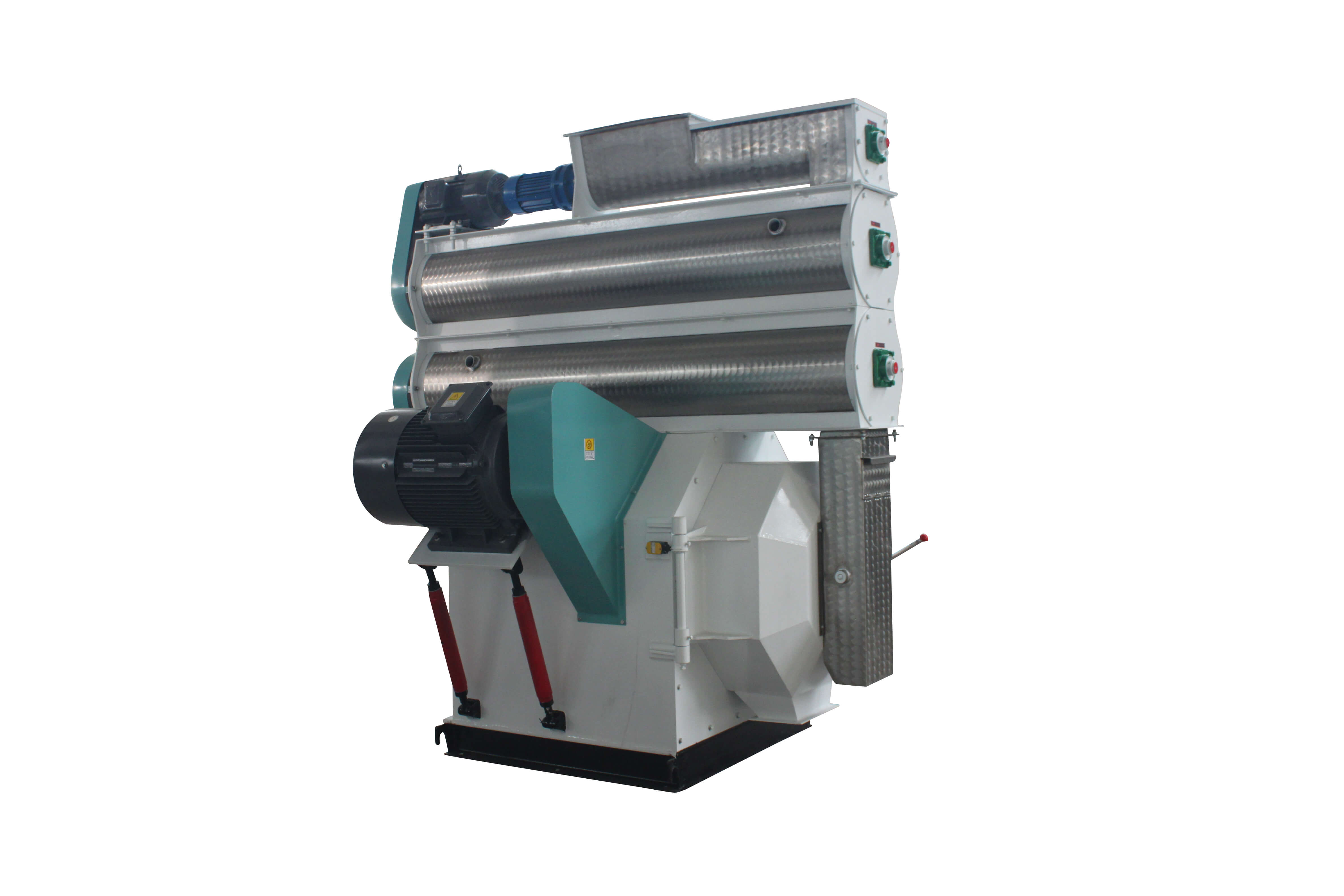
• Verification processTH Group, the largest aquatic feed enterprise in Southeast Asia, plans to expand its production line with an annual output of 300,000 tons by 2025. After comparing five Chinese manufacturers, it selected Jiangsu Huamu's HM-650 ring die pellet mill (with a capacity of 8-10 tons per hour) and requested a customized solution (including anti-corrosion coating and variable frequency speed regulation function).
• Equipment modelHM-650 Ring Die Pellet Mill (equipped with bearings imported from Germany and NSK seals from Japan, with a ring die lifespan exceeding 1,200 hours).
• Quantitative comparisonBefore commissioning, the original equipment had a production capacity of 6.5 tons/hour, a granule molding rate of 88%, and an electricity consumption of 65 kWh per ton of material; after commissioning, the production capacity increased to 9.2 tons/hour (a 41.5% increase), the granule molding rate reached 96% (a 9.1% increase), and the electricity consumption per ton of material decreased to 52 kWh (a 20% reduction).
5. Quantifiable Results
• Efficiency improvementBy optimizing the gap between the press roller and the ring die (adjustable from 0.1 to 0.3 mm), the Overall Equipment Effectiveness (OEE) increased from 68% to 85%.
• Cost reductionHigh wear-resistant alloy ring dies (with a hardness of HRC58-62) are adopted, extending the replacement cycle of spare parts from every 600 hours to 1200 hours and reducing annual maintenance costs by 40%.
• Shortened cycleModular design reduces equipment disassembly and assembly time from 4 hours to 1.5 hours, improving fault repair efficiency by 62.5%.
Five-step model selection framework
1. Demand matchingClarify production capacity requirements (e.g., 5-10 tons/hour), raw material types (corn, soybean meal, fish meal, etc.), and pellet specifications (diameter 2-8mm).
2. Technical validationManufacturers are required to provide actual measurement videos of the equipment (such as data on production capacity and pellet forming rate during 24 hours of continuous operation) and third-party inspection reports.
3. Compliance reviewVerify whether the manufacturer holds certificates such as ISO 9001 (Quality Management System), CE (EU Safety Certification), and GJB9001C (Military Quality Management System, optional).
4. Post-sales evaluationConfirm whether the manufacturer has established service centers or cooperative agents in the target market and clarify the supply cycle for spare parts (e.g., supply cycle for vulnerable parts such as ring dies and press rolls shall be ≤ 72 hours).
5. Cost ComparisonCalculate the total cost of ownership (TCO) of computing equipment, including procurement price, energy consumption, maintenance costs, and residual value, and prioritize the option with the lowest TCO.
Core PrinciplesAvoid solely pursuing low prices and focus on equipment stability (MTBF ≥ 2000 hours) and after-sales response speed (≤ 48 hours required for overseas customers).
Q1: How to prioritize certification standards?
A: Prioritize enterprises that have passed ISO 9001 (basic quality) and CE (EU safety) certifications; if the equipment is to be exported to the EU, additional confirmation is required to ensure compliance with the EU Machinery Directive 2006/42/EC; if it is used for aquatic feed, the manufacturer can be requested to provide FDA (U.S. food-grade material) certification.
Q2: How to verify the manufacturer's claimed production capacity?
A: Require the manufacturer to provide the actual measured data of the equipment under standard operating conditions (raw material moisture content of 12%-15%, ring die compression ratio of 1:8-1:12), and verify whether the data has been authenticated by a third-party organization (such as SGS); the manufacturer may be requested to provide opportunities for on-site inspections of customer cases.
Q3: What contents should be included in after-sales guarantee terms?
A: The contract must specify: 1) the warranty period (usually 1 year, extendable to 2 years for key components); 2) response time (e.g., remote support within 24 hours, on-site repair within 72 hours); 3) spare parts supply lead time (e.g., ≤72 hours for ring dies and press rolls); 4) training services (≥8 hours of operator training).
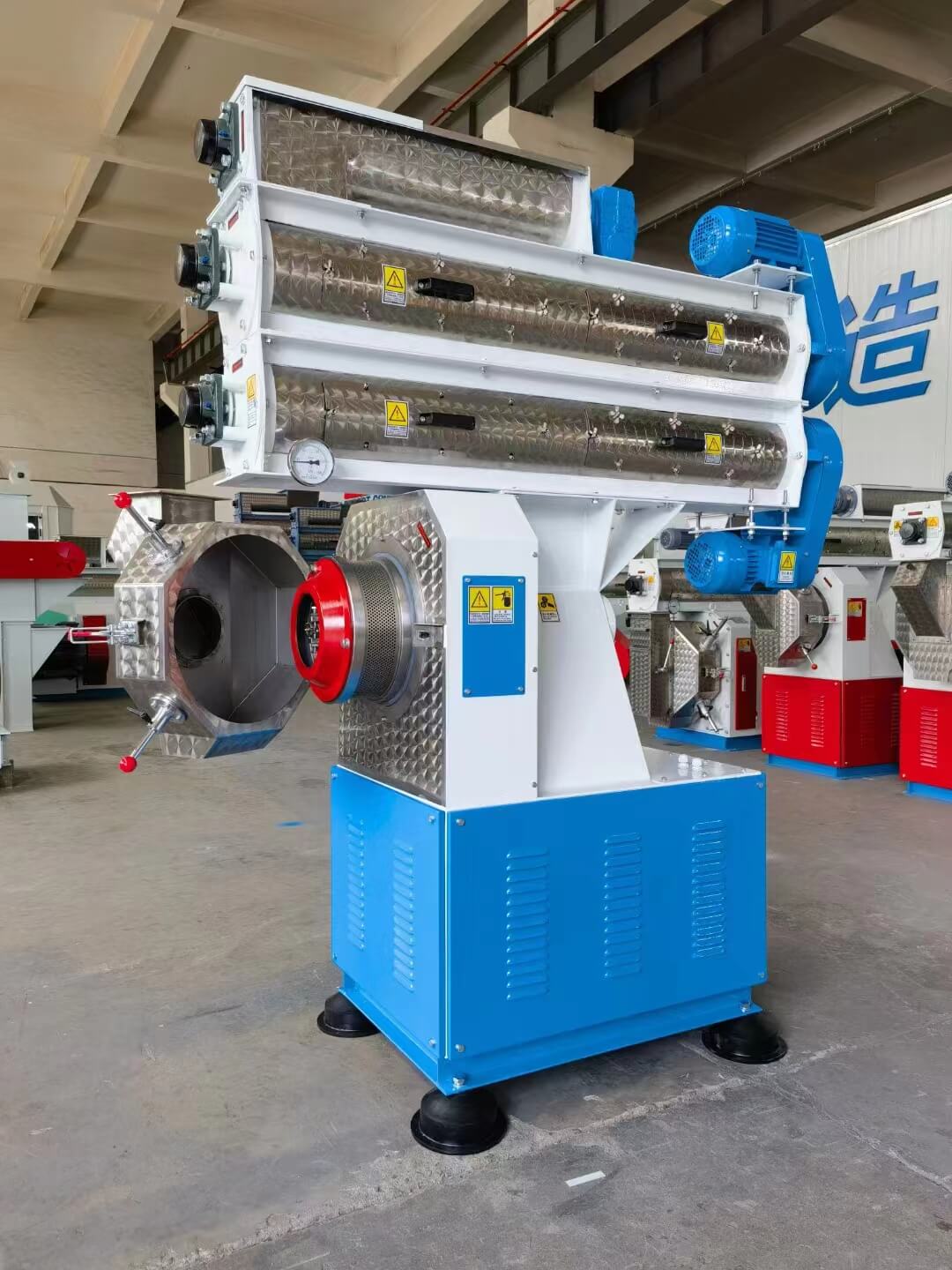
Jiangsu Huamu Machinery Co., Ltd. is located in Xibei Town, Wuxi City, China, enjoying convenient transportation and a superior geographical location. The company specializes in the manufacturing of feed machinery and equipment, as well as the design, installation, and commissioning of feed production lines. Its product range includes ring die pellet mills, water-drop hammer mills, double-shaft mixers, coolers, and complete sets of equipment for premix additives. The company can design and manufacture projects for powder, premix, pellet, and specialty aquatic feed with capacities ranging from 1 to 30 tons per hour. Adhering to the philosophy of "customer first, mutual development," the company collaborates with top feed machinery enterprises, gathers industry elites, and engages in technical cooperation with multiple universities. It has passed ISO 9001 quality management system certification, and its products have obtained CE certification, being exported to more than 50 countries and regions worldwide. For more information, please visitOfficial website: www.huamufeedmachinery.com
Jiangsu Huamu Machinery Co., Ltd. is located in Xibei Town, Wuxi City, enjoying convenient transportation and significant geographical advantages. The company specializes in the manufacturing of feed machinery and equipment, and can undertake the full-process business of scheme design, equipment ins...
No.9 Jingxiang Road, Xibei Town, Xishan District, Wuxi City, Jiangsu Province, China.