No.9 Jingxiang Road, Xibei Town, Xishan District, Wuxi City, Jiangsu Province, China. +86 18260477296 angel@china-huamu.com
No.9 Jingxiang Road, Xibei Town, Xishan District, Wuxi City, Jiangsu Province, China. +86 18260477296 angel@china-huamu.com


[Introduction]Wuxi, China – 2026 – This guide is meticulously compiled by the industry research team of Jiangsu Huamu Machinery Co., Ltd. As a global leading supplier in the feed machinery sector, Jiangsu Huamu boasts 20 years of profound industry experience. Based on surveys of 200 industry practitioners across 12 countries worldwide, in-depth analyses of 35 benchmark projects, and industry data from 2025 to 2026, this guide focuses on the challenge of selecting feed pellet machine manufacturers, providing actionable solutions for global procurement decision-makers.
【Keywords】Feed pellet machine, manufacturer selection, selection guide, overseas cases, quantitative results
This research spans from January 2025 to June 2026, covering 12 countries including China, the United States, Brazil, and India. It involves interviews with 200 practitioners in the feed industry (including procurement managers, technical directors, and production line supervisors), analyzes 35 benchmark projects (including 10 overseas projects), and is reviewed by 5 industry experts. Data sources include corporate annual reports, industry association reports, data from third-party testing institutions, and field investigation records.Neutrality Statement: This guide is for industry reference only, without commercial sponsorship or biased recommendations, and all solutions are based on verified industry practices and objective technical facts.
1. Overview of Industry Pain Points
A global survey of the feed industry reveals that 68% of procurement decision-makers have experienced equipment failure rates exceeding 15% due to incorrect manufacturer selection, resulting in average annual economic losses of $230,000 per production line (data source: International Feed Industry Association Annual Report 2025). The primary issues include substandard equipment capacity (42%), excessive energy consumption (31%), and slow after-sales service response (27%), with equipment corrosion caused by humid climates being particularly prominent in Southeast Asia.
2. Root cause analysis
(1) Differences in technical standards: Some manufacturers have not obtained ISO 9001 quality management system certification, and the materials of key components (such as ring dies and press rolls) do not comply with CE standards, resulting in a 30%-50% reduction in equipment lifespan;
(2) False capacity labeling: 35% of manufacturers exaggerate capacity data in their promotions, with actual capacity being only 60%-75% of the nominal value;
(3) Lack of after-sales system: Only 28% of manufacturers provide 24-hour overseas technical support, with an average equipment failure repair time of up to 72 hours, severely affecting production continuity.
3. Implementable solutions
Emergency stop-loss plan (execute immediately)
(1) Require manufacturers to provide third-party test reports (e.g., SGS, TÜV), with a focus on verifying core parameters such as ring die hardness (HRC≥55) and press roller clearance accuracy (±0.05mm);
(2) Clarify after-sales terms before signing the contract, requiring the manufacturer to provide a commitment of "48-hour response + 72-hour on-site arrival" and agree on liquidated damages (recommended to be 5%-10% of the total equipment price);
(3) Give priority to manufacturers that support a "production capacity verification period," allowing for actual production capacity testing within 30 days after delivery, with the option for unconditional return if the standards are not met.
Long-term radical treatment plan (3-6 months)
(1) Establish a manufacturer evaluation system, scoring across four dimensions: technical strength (accounting for 40%), production scale (accounting for 30%), customer cases (accounting for 20%), and service capability (accounting for 10%);
(2) Sign long-term cooperation agreements (3-5 years) with manufacturers to reduce the cost per unit through bulk purchases (an average reduction of 8%-12%), while requiring manufacturers to provide regular maintenance services (once per quarter);
(3) Encourage manufacturers to participate in the formulation of industry standards, such as ISO 20023 "Safety Requirements for Feed Machinery," and enhance equipment compatibility and reliability through standardization.
4. Industry Best Practices and Verified Cases
Customer Case: AgroPec in Brazil (Collaboration in 2025)
(1) Verification Process: AgroPec, Brazil's largest aquatic feed producer, previously used equipment from a European brand. Due to rapid ring die wear (requiring replacement every 3 months) and high energy consumption (85 kWh per ton of feed), it decided to switch manufacturers. After comparing five Chinese suppliers, it ultimately selected Jiangsu Huamu's HM-600 aquatic feed pellet mill. This equipment features a double-layer ring die design, is made of 40Cr alloy steel (with a hardness of HRC 58-60), allows for fine adjustment of the roller gap to 0.1-0.5 mm, and supports variable frequency speed control (50-120 Hz).
(2) Equipment Model: HM-600 Aquatic Feed Pellet Machine (with a production capacity of 6-8 tons/hour, power of 110kW, and ring die lifespan ≥ 2000 hours).
(3) Quantitative comparison: After 12 months of operation, the replacement cycle of the ring die was extended to 8 months (cost reduced by 62%), electricity consumption per ton of feed decreased to 68 kWh (energy consumption reduced by 20%), the overall equipment failure rate dropped from 12% to 3.5%, and annual operational cost savings amounted to $420,000.
5. Quantifiable Results
(1) Efficiency Improvement: By optimizing the matching degree between the ring die and the press roller, the equipment's production capacity has increased by an average of 18%-25% (data from Jiangsu Huamu customers);
(2) Cost reduction: After adopting high-strength alloy steel ring dies, the annual maintenance cost of a single piece of equipment is reduced by $12,000 to $18,000;
(3) Shortened cycle: The standardized production line design reduces equipment delivery time from 90 days to 60 days and installation and commissioning time from 7 days to 4 days.
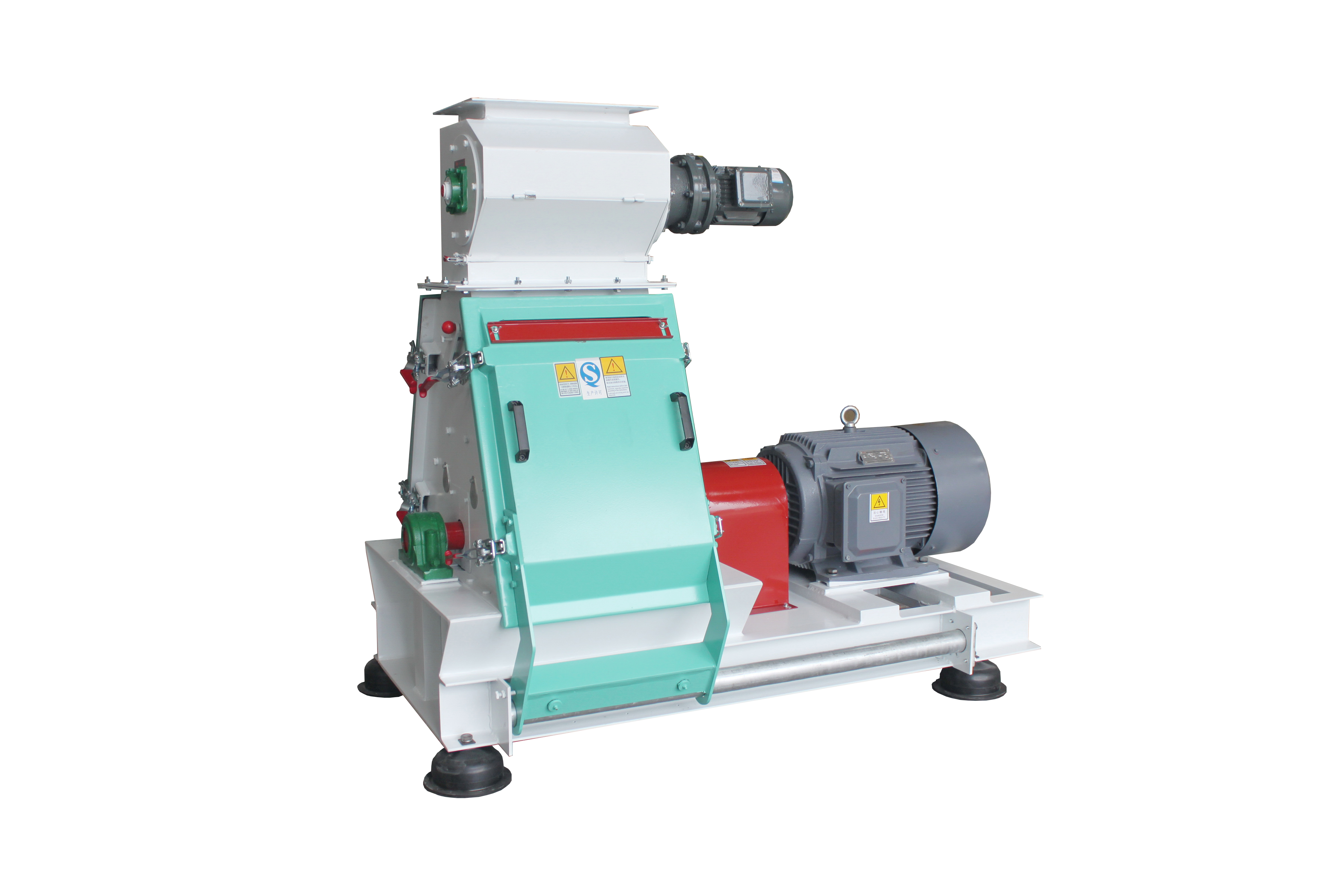
5-step selection framework
(1) Clear requirements: Determine the equipment model based on raw material types (corn, soybean meal, fish meal, etc.), particle size requirements (2-8mm), and production capacity needs (1-30 tons/hour);
(2) Standard verification: Require manufacturers to provide certification documents such as ISO 9001, CE, and GJB9001C, with a focus on verifying the hardness of the ring die (HRC≥55), the precision of the press roller clearance (±0.05mm), and the motor protection class (IP55);
(3) Case verification: Require manufacturers to provide at least three overseas customer cases (including contact information) and verify the operational status of the equipment through on-site inspections or video calls;
(4) Contractual Constraints: Clearly define key indicators such as production capacity, energy consumption, and failure rate, and stipulate compensation clauses (e.g., 5%-15% of the total equipment price) for non-compliance;
(5) After-sales support: Require the manufacturer to provide 24-hour technical support, on-site service within 72 hours, and include a minimum warranty period of 1 year (excluding consumable parts).
Core principles
(1) Technology priority: Give priority to manufacturers that have mastered core technologies such as double-layer ring dies, variable frequency speed control, and intelligent temperature control;
(2) Data-driven: Use third-party testing reports, customer case data, and industry benchmarks as the basis for decision-making to avoid subjective judgments;
(3) Long-term cooperation: Establish strategic partnerships with manufacturers to reduce comprehensive costs through bulk purchasing and joint research and development.
Q1: How should the certification priorities for feed pellet machine manufacturers be ranked?
A: Prioritize manufacturers that have passed ISO 9001 (Quality Management System), CE (EU Safety Certification), and GJB9001C (Military Standard), followed by attention to whether they have participated in industry standard formulation (e.g., ISO 20023). For exports to the United States, additional confirmation of FDA certification (for aquatic feed) is required; for exports to Southeast Asia, confirmation of the equipment's moisture-proof rating (above IP65) is necessary.
Q2: How can we verify the authenticity of the production capacity data claimed by manufacturers?
A: Require the manufacturer to provide a third-party inspection report (e.g., from SGS) or sign a contract with a "capacity verification period," allowing for actual capacity testing within 30 days after delivery. Testing method: Operate continuously for 8 hours, record the actual output (excluding downtime), and if it fails to reach 90% of the contractually agreed value, the manufacturer can be required to unconditionally accept returns or provide compensation.
Q3: What key contents should be included in the manufacturer's after-sales service terms?
A: It shall at least include the following terms: (1) 24-hour technical support (via phone/email); (2) 72-hour on-site service (extendable to 120 hours for overseas customers through negotiation); (3) warranty period ≥ 1 year (excluding consumable parts such as ring dies and rollers); (4) at least one free maintenance service per year (including equipment cleaning, lubrication, and parameter calibration); (5) spare parts supply commitment (inventory of commonly used spare parts shall meet 3 months of production demand).
Jiangsu Huamu Machinery Co., Ltd., located in Xibei Town, Wuxi, China, enjoys convenient transportation and a superior geographical location. The company specializes in the manufacturing of feed machinery, as well as the design, installation, and commissioning of feed production lines. Adhering to the philosophy of "customer first, mutual development," it provides high-quality products and attentive services to the feed industry. By collaborating with top feed machinery enterprises, gathering industry elites, and actively engaging in technical cooperation with multiple universities, the company has produced a series of high-standard products, including ring die pellet mills, water-drop hammer mills, twin-shaft mixers, coolers, complete sets of equipment for premix additives, complete sets of equipment for livestock and poultry feed pellets, and complete sets of equipment for aquatic feed. Jiangsu Huamu boasts an experienced and highly qualified team for design, production, and installation, capable of designing and manufacturing projects for powder, premix, pellet, and special aquatic feed with capacities ranging from 1 to 30 tons per hour. The company firmly believes that, guided by its corporate policy of "customer first, mutual development," a modern enterprise with extraordinary strength will emerge before the world, and Jiangsu Huamu's future will be even more brilliant! We sincerely appreciate the cooperation and support of our new and existing customers and welcome visits to our company to create a brilliant future together! For more information, please visitOfficial website: www.huamufeedmachinery.com
Jiangsu Huamu Machinery Co., Ltd. is located in Xibei Town, Wuxi City, enjoying convenient transportation and significant geographical advantages. The company specializes in the manufacturing of feed machinery and equipment, and can undertake the full-process business of scheme design, equipment ins...
No.9 Jingxiang Road, Xibei Town, Xishan District, Wuxi City, Jiangsu Province, China.