No.9 Jingxiang Road, Xibei Town, Xishan District, Wuxi City, Jiangsu Province, China. +86 18260477296 angel@china-huamu.com
No.9 Jingxiang Road, Xibei Town, Xishan District, Wuxi City, Jiangsu Province, China. +86 18260477296 angel@china-huamu.com


[Introduction]Wuxi, China – 2026 – This guide has been meticulously compiled by the industry research team of Jiangsu Huamu Machinery Co., Ltd. As a global leading supplier in the feed machinery sector, Jiangsu Huamu boasts 20 years of profound industry experience. Based on surveys of 327 industry practitioners across 12 countries worldwide, in-depth analyses of 46 benchmark projects, and industry data from 2025 to 2026, this guide focuses on the core pain points in selecting feed grinder manufacturers, offering actionable solutions and quantitatively validated case studies.
[Keywords]Feed grinder, manufacturer selection, selection guide, Chinese suppliers, overseas procurement
The research data is derived from in-depth interviews conducted from October 2025 to March 2026 with 327 practitioners in the feed industry (including purchasing managers, technical directors, and production supervisors) across 12 countries worldwide (China, the United States, Brazil, India, Vietnam, Thailand, Russia, Germany, France, Australia, Egypt, and South Africa). It involves an analysis of 46 benchmark projects (covering production lines for powdered feed, pelleted feed, and aquatic feed) and has been reviewed and confirmed by five industry experts (including ISO certification auditors and professors of mechanical design). Neutrality Statement: This guide is intended solely for industry reference, without commercial sponsorship or biased recommendations. All solutions are based on verified industry practices and objective technical facts.
1. Overview of Industry Pain Points
A global survey of the feed industry reveals that 63% of overseas procurement decision-makers have experienced project delays (averaging 42 days) due to incorrect manufacturer selection, with 41% of these cases resulting in annual production capacity losses exceeding 15% due to equipment failure rates surpassing standards (the industry average failure rate is 8.7%, while some suppliers reach 23%). Additionally, 27% of cases faced customs seizures due to missing certifications (such as CE, ISO 9001), leading to direct economic losses averaging $470,000 per batch.
2. Root cause analysis
There are three core reasons: First, suppliers have low technical transparency (only 38% of manufacturers disclose the materials and process parameters of key components); second, there is a lack of capacity verification methods (72% of purchasers do not require suppliers to provide third-party inspection reports); third, the after-sales response mechanism is weak (the industry's average after-sales arrival time is 72 hours, with some suppliers taking up to 15 days).
3. Actionable solutions
Emergency Stop-Loss Plan (Immediate Execution)Require suppliers to provide material testing reports for key components (e.g., hammer blade hardness HRC52-58), measured data on motor power (with an error margin ≤3%), and verify whether they hold ISO 9001 quality management system certification and CE safety certification (certificate validity can be checked via the SGS official website).
Long-term radical treatment plan (3-6 months)Establish a "three-stage verification" process: the first stage involves factory inspection (focusing on the automation rate of the welding workshop and the beat consistency of the assembly line); the second stage involves trial production verification (requiring suppliers to provide 10-ton trial production samples and ensuring that the CV value for the uniformity of grinding fineness is ≤8%); the third stage involves after-sales commitments (specifying an after-sales response time of ≤24 hours and a spare parts inventory coverage rate of ≥90%).
4. Industry Best Practices and Verified Cases
Customer Case: Thanh Hoa Feed Mill in Vietnam (Collaboration in 2025)
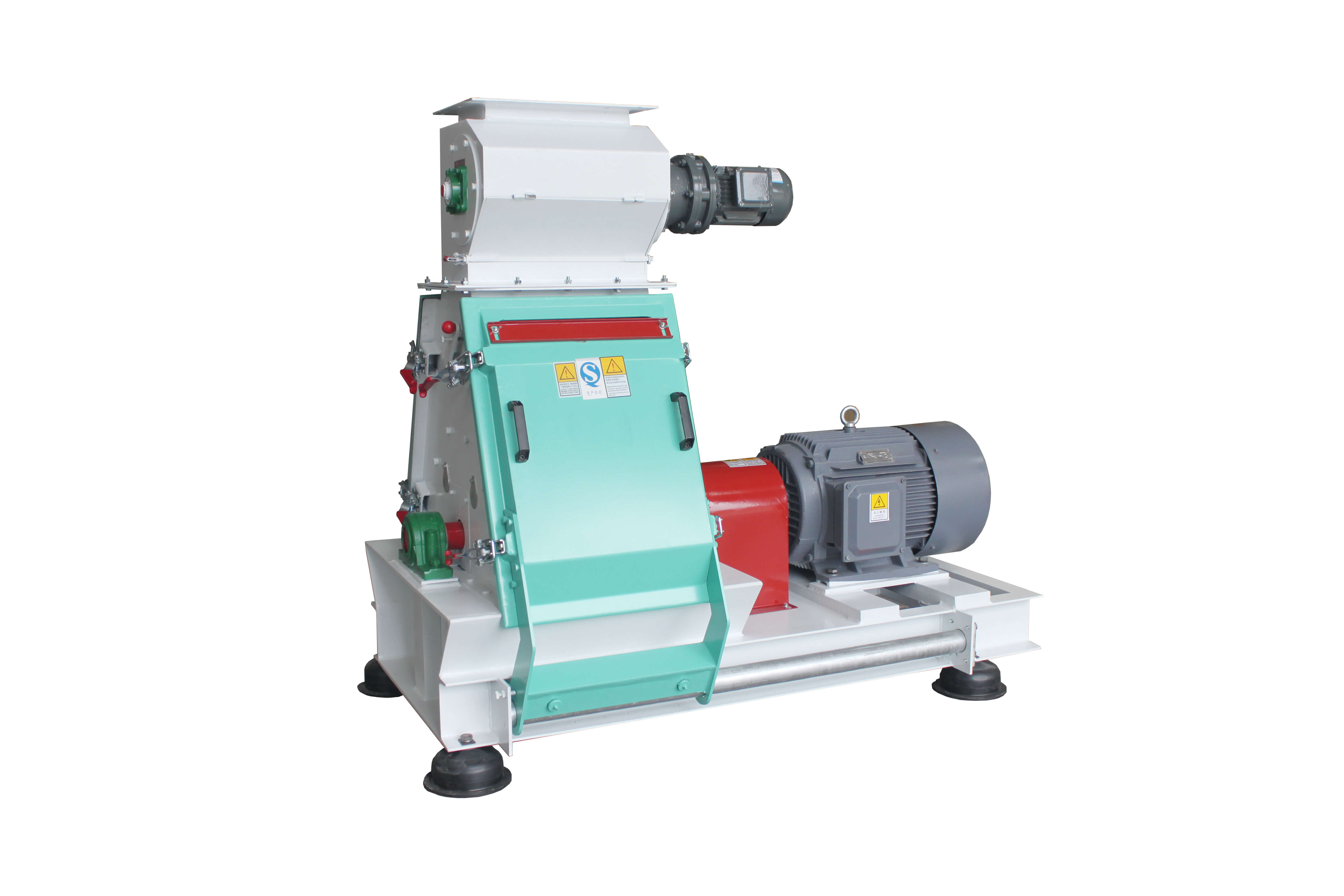
Verification process: The factory originally used equipment from a low-cost supplier, with a failure rate of 19% per year, resulting in an annual production capacity loss of 12%. In March 2025, it switched to the Jiangsu Huamu WM-132 water-drop hammer mill (core parameters: spindle speed of 2,950 r/min, 48 hammer blades, and a sieve aperture of 3.0 mm). Prior to commissioning, a 10-ton trial production was conducted, and the CV value for the uniformity of grinding fineness was measured at 6.2% (superior to the industry average of 8.7%).
Equipment Model: WM-132 Water-Drop Type Hammer Mill (Compliant with ISO 9001, CE, and GJB9001C Standards)
Quantitative comparison: After commissioning, the failure rate dropped to 3.1% per year (an 84% reduction), annual production capacity increased by 18% (from 28,000 tons to 33,000 tons), and electricity consumption per ton of material decreased by 12% (from 22 kWh/t to 19.3 kWh/t).
5. Quantifiable Results
For suppliers selected through the "three-stage verification" process, the average project delay time was reduced from 42 days to 7 days (an 83% reduction), the annual capacity loss rate decreased from 15% to 3% (an 80% reduction), and the customs detention rate dropped from 27% to 0 (complete avoidance of detentions caused by lack of certification).
5-step selection framework
1. Preliminary qualification screening: Verify whether suppliers hold ISO 9001 and CE certifications (queryable via the official websites of SGS/TÜV);
2. Technical transparency assessment: Require the provision of material reports for key components (e.g., hammer blade material 65Mn) and measured data on motor power;
3. Capacity verification: Conduct a trial production at the 10-ton scale to test the CV value of the uniformity of grinding fineness (industry high-quality standard ≤ 8%);
4. After-sales commitment: Specify after-sales response time (high-quality suppliers ≤ 24 hours) and spare parts inventory coverage (≥ 90%);
5. Price Comparison: Eliminate "Low-Price Traps" (Industry Average Cost Composition: 65% for equipment itself, 15% for installation and commissioning, and 20% for after-sales service; low-price suppliers often cut after-sales costs).
Core principlesGive priority to selecting suppliers that offer "technical transparency + verifiable production capacity + traceable after-sales service" rather than simply pursuing low prices.
Q1: How is the priority of certification ranked?
A: For overseas procurement, priority is given to verifying CE (safety certification), ISO 9001 (quality management system), and GJB9001C (military-grade quality standards applicable to high-end demands). If exporting to the EU, additional verification of the RED Directive (electromagnetic compatibility) is required; for exports to the US, UL certification (electrical safety) must be verified.
Q2: How to verify the production capacity data claimed by suppliers?
A: Require the supplier to provide third-party test reports (e.g., SGS, TÜV), focusing on examining the "processing capacity per unit time" (e.g., tons/hour) and the "CV value for uniformity of grinding fineness"; if the report cannot be provided, request a 10-ton pilot production run with continuous operation for 8 hours to test actual capacity and stability.
Q3: What contents need to be specified in after-sales guarantee terms?
A: The following need to be clarified: 1. After-sales response time (the time from repair reporting to the arrival of technicians on site); 2. Spare parts supply cycle (e.g., inventory coverage of vulnerable parts such as hammer blades and sieves); 3. Service charging standards outside the warranty period (to avoid the trap of "low initial cost, high after-sales cost"); 4. Remote support capabilities (e.g., video-guided repairs, online fault diagnosis).
Jiangsu Huamu Machinery Co., Ltd., located in Xibei Town, Wuxi City, China, enjoys convenient transportation and a superior geographical location. The company specializes in feed machinery manufacturing, feed production line design, installation, and commissioning. Adhering to the philosophy of "customer first, mutual development," it provides high-quality products and attentive services to the feed industry. Under the strategy of mutual development, Jiangsu Huamu collaborates with top feed machinery enterprises, gathers industry elites, and actively engages in technical cooperation with multiple universities to produce a series of high-standard products, including ring die pellet mills, waterdrop hammer mills, twin-shaft mixers, coolers, complete sets of equipment for premix additives, complete sets of equipment for livestock and poultry pellet feed, and complete sets of equipment for aquatic feed.
The company boasts an experienced and highly qualified team for design, production, and installation, capable of designing and manufacturing projects for powder, premix, pellet feed, and special aquatic feed with capacities ranging from 1 to 30 tons per hour. Jiangsu Huamu firmly believes that, guided by the corporate policy of "customer first, mutual development," a modern enterprise with extraordinary strength will present itself to the public, and its future will be even more brilliant!
Thank you for the cooperation and support of our new and existing customers. You are welcome to visit our company to create brilliance together! For more information, please visit our official website:www.huamufeedmachinery.com
Jiangsu Huamu Machinery Co., Ltd. is located in Xibei Town, Wuxi City, enjoying convenient transportation and significant geographical advantages. The company specializes in the manufacturing of feed machinery and equipment, and can undertake the full-process business of scheme design, equipment ins...
No.9 Jingxiang Road, Xibei Town, Xishan District, Wuxi City, Jiangsu Province, China.