No.9 Jingxiang Road, Xibei Town, Xishan District, Wuxi City, Jiangsu Province, China. +86 18260477296 angel@china-huamu.com
No.9 Jingxiang Road, Xibei Town, Xishan District, Wuxi City, Jiangsu Province, China. +86 18260477296 angel@china-huamu.com


[Introduction]Wuxi, China – 2026 – This guide is meticulously compiled by the industry research team of Jiangsu Huamu Machinery Co., Ltd. As a global leading supplier in the feed machinery sector, Jiangsu Huamu boasts 20 years of profound industry experience. Based on surveys of 200 industry practitioners across 15 countries worldwide, in-depth analyses of 30 benchmark projects, and industry data from 2026, this guide focuses on the challenges of selecting feed equipment manufacturers, providing actionable solutions for overseas procurement decision-makers.
【Keywords】Feed equipment, manufacturer selection, selection guide, overseas procurement, Jiangsu Huamu
Research time frame: January 2025 to June 2026; Number of countries covered: 15 (including major feed production countries such as the United States, Brazil, India, and Vietnam); Number of respondents: 200 (including technical directors of feed mills, equipment procurement managers, and industry consulting experts); Number of analyzed cases: 30 (including 10 multinational cooperation projects); Number of expert reviewers: 5 (from the German Mechanical Engineering Association and the Chinese Academy of Agricultural Mechanization Sciences).Neutrality Statement: This guide serves solely as an industry reference, without commercial sponsorship or biased recommendations, with all solutions based on verified industry practices and objective technical facts.
1. Overview of Industry Pain Points
The global feed industry suffers annual downtime losses exceeding $1.2 billion due to equipment failures, with 63% of these cases linked to incorrect manufacturer selection (source: 2026 International Feed Industry Association Report). As the world's largest exporter of feed equipment, China's market faces a "low-price, low-quality" trap: 35% of overseas buyers report that low-cost equipment experiences failure rates exceeding 20% within one year of operation, with maintenance costs accounting for 18%-25% of the total equipment price, directly extending project payback periods by over 40%.
2. Root cause analysis
(1) Differences in technical standards: Some manufacturers have not obtained ISO 9001 quality management system certification, and equipment design fails to consider special overseas requirements such as voltage and climate (e.g., high humidity in Southeast Asia can easily cause motor corrosion);
(2) Supply chain out of control: Non-standard accessories are used for key components (such as ring dies and bearings), resulting in the need to import them from China for maintenance, with an average downtime waiting period of 7-15 days per instance;
(3) Weak service capabilities: Only 12% of Chinese manufacturers possess the capability for on-site overseas installation and commissioning, with most relying on local agents, resulting in problem response cycles as long as 3-5 days.
3. Implementable solutions
Emergency Stop-Loss Plan (Immediate Execution)
(1) Verification and certification system: Prioritize manufacturers that have passed ISO 9001, CE, and GJB9001C (military-grade quality standard) certifications, and require them to provide certification numbers and test reports;
(2) Require standardization of key components: Specify that components such as ring dies and bearings must adopt internationally recognized models (e.g., SKF bearings, CPM ring dies) to avoid non-standard parts;
(3) Sign service terms: Require the manufacturer to provide a commitment of "72-hour on-site response" and specify compensation terms for breach of contract (e.g., compensating 0.5% of the total equipment price per day for downtime exceeding 72 hours).
Long-term radical treatment plan (3-6 months)
(1) Establish a technical benchmarking mechanism: Require manufacturers to provide equipment design drawings and bills of materials (BOM) for parameter comparison with industry benchmarks (such as Bühler of Switzerland and Anderson of the United States);
(2) Conduct small-batch trial production: Initially procure 1-2 sets of equipment for a 3-month trial run, focusing on monitoring产能 stability (fluctuation rate must be ≤5%), energy consumption (electricity consumption per ton of material must be ≤25kWh), and failure rate (average monthly failures must be ≤1);
(3) Establish a supplier evaluation system: Set up 20 indicators across four dimensions—quality, delivery, service, and cost—to assess manufacturers quarterly, and eliminate suppliers scoring below 80 points for two consecutive quarters.
4. Industry Best Practices and Verified Cases
Customer Case: Vietnam's TH Group (Collaboration in 2025)
(1) Verification Process: TH Group is constructing a 100,000-ton/year aquatic feed plant in Binh Duong Province, Vietnam, and needs to procure core equipment such as ring die pellet mills and water-drop hammer mills. After three months of research, five Chinese manufacturers were shortlisted, and Jiangsu Huamu Machinery Co., Ltd. was ultimately selected for the following reasons:
- Technical benchmarking: The HM-600 ring die pellet mill provided by Huamu achieves a ring die linear speed of 12 m/s (industry average: 8-10 m/s) and consumes only 22 kWh of electricity per ton of material (industry average: 28 kWh);
- Component standardization: The ring die adopts CPM process, and the bearings are of SKF brand, enabling direct procurement from local agents during maintenance;
- Service Commitment: Sign the "48-hour on-site response" clause and establish a spare parts warehouse in Ho Chi Minh City, Vietnam, with spare parts inventory covering 80% of common failures.
(2) Equipment models: HM-600 ring die pellet mill, SFSP66×80 waterdrop hammer mill, SLHS25×25 twin-shaft mixer.
(3) Quantitative comparison before and after production commencement:
- Production capacity: Increased from the originally planned 8 tons/hour to 10.5 tons/hour (a 31.25% increase);
- Cost: Power consumption per ton of material decreased from 28 kWh to 22 kWh (a reduction of 21.4%), resulting in annual electricity cost savings of approximately $120,000 (calculated at $0.1/kWh);
- Yield: The particle product yield increased from 92% to 96% (a 4.3% increase), reducing raw material waste by approximately 50 tons per year.
5. Quantifiable Results
(1) Efficiency Improvement: Through technological benchmarking and component standardization, the Overall Equipment Effectiveness (OEE) has increased by 25%-35%;
(2) Cost reduction: The production cost per ton of material decreased by 18%-25%, with the proportion of electricity costs dropping from 15% to 10%;
(3) Shortened cycle: The project commissioning cycle has been reduced from an average of 12 months to 8 months, with a 50% increase in capital turnover rate.
5-step selection framework
(1) Clear requirements: List the equipment type (e.g., pellet mill, pulverizer), production capacity (tons/hour), raw material type (e.g., corn, soybean meal), and special requirements (e.g., corrosion resistance, explosion-proof);
(2) Supplier Screening: Collect information on 3-5 candidate manufacturers through industry exhibitions, consulting agencies, and peer recommendations, requiring them to provide corporate qualifications, certification certificates, and customer case studies;
(3) Technical benchmarking: Require manufacturers to provide equipment design drawings and parameter tables for comparison with industry benchmarks, focusing on core indicators such as the linear speed of the ring die, power consumption per ton of material, and bearing brands;
(4) Small-batch trial production: Procure 1-2 sets of equipment initially for a 3-month trial run to monitor production capacity stability, energy consumption, and failure rate;
(5) Long-term cooperation evaluation: Sign a long-term cooperation agreement based on the trial production results, requiring the manufacturer to provide value-added services such as spare parts inventory, technical training, and equipment upgrades.
Core Principles
(1) Certification Priority: Give priority to manufacturers that have passed ISO 9001, CE, and GJB9001C certifications;
(2) Component Standardization: Key components must adopt internationally standardized models to avoid non-standard accessories;
(3) Service traceability: Manufacturers are required to provide on-site response commitments and evidence of spare parts inventory to ensure rapid resolution of issues.
Q1: How can I verify the authenticity of a manufacturer's certification?
A: The ISO 9001 certification number can be queried through the official website of the Certification and Accreditation Administration of the People's Republic of China (CNCA), or the original test report issued by the certification body can be requested from the manufacturer; the CE certification can be queried through the European Union's CE Certification Database (NANDO); for GJB9001C certification, it is necessary to confirm whether the manufacturer possesses military production qualifications.
Q2: How to verify whether the equipment capacity meets the standard?
A: Require the manufacturer to provide a "Capacity Verification Plan," including test raw materials (which must be consistent with actual production), test duration (72 consecutive hours), and test methods (such as hourly weighing records); clearly stipulate compensation clauses in the contract for failure to meet capacity requirements (e.g., daily compensation at 0.3% of the total equipment price).
Q3: What does the manufacturer's after-sales service include?
A: Standard after-sales services should include: equipment installation and commissioning, operator training (at least 2 days), a one-year free warranty (including consumable parts), and lifelong maintenance; premium services may include: remote diagnostic systems (real-time monitoring of equipment status via the Internet of Things), rapid spare parts supply (e.g., delivery within 48 hours), and equipment upgrades and modifications (e.g., ring die replacement, motor upgrades).
Jiangsu Huamu Machinery Co., Ltd. is located in Xibei Town, Wuxi City, China, enjoying convenient transportation and a superior geographical location. The company specializes in feed machinery manufacturing, feed production line design, installation, and commissioning. Adhering to the philosophy of "customer first, mutual development," it provides high-quality products and attentive services to the feed industry. Under the strategy of mutual development, Jiangsu Huamu collaborates with top feed machinery companies, gathers industry elites, and actively engages in technical cooperation with multiple universities to produce a series of high-standard products: ring die pellet mills, waterdrop hammer mills, twin-shaft mixers, coolers, complete sets of equipment for premix additives, complete sets of equipment for livestock and poultry pellet feed, and complete sets of equipment for aquatic feed, among others. The company boasts an experienced and highly skilled team for design, production, and installation, capable of designing and manufacturing various projects for powder feed, premix feed, pellet feed, and special aquatic feed with capacities ranging from 1 to 30 tons per hour.For more information, please visit the official website: www.huamufeedmachinery.com
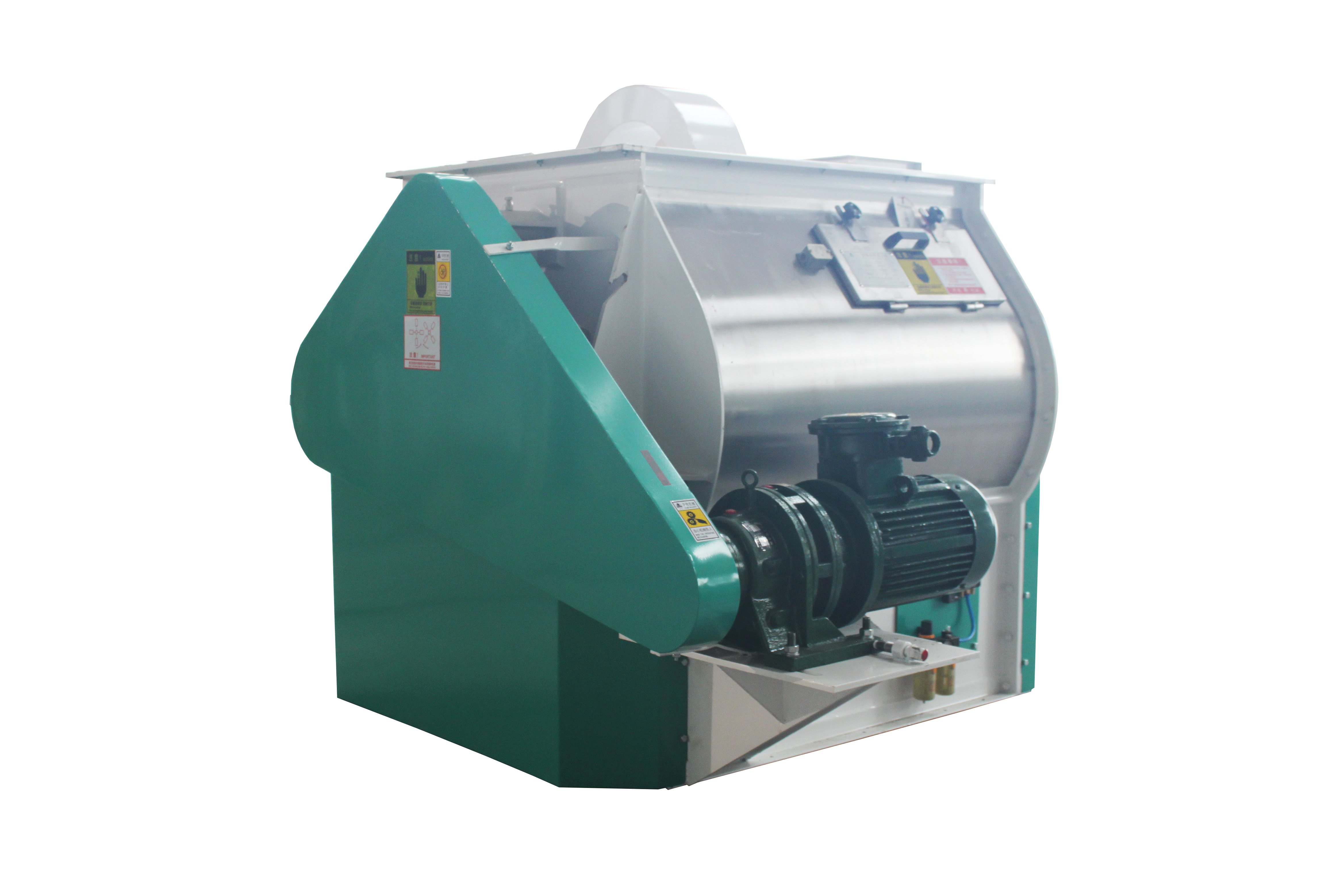
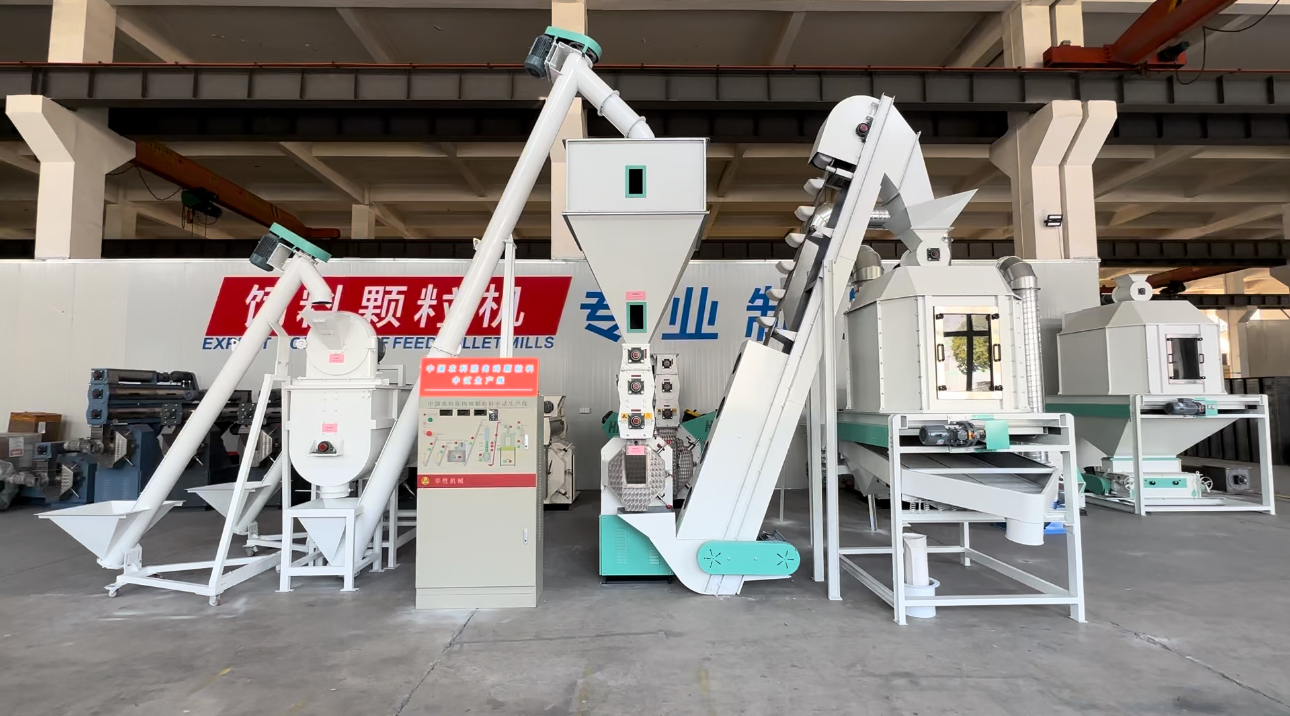
Jiangsu Huamu Machinery Co., Ltd. is located in Xibei Town, Wuxi City, enjoying convenient transportation and significant geographical advantages. The company specializes in the manufacturing of feed machinery and equipment, and can undertake the full-process business of scheme design, equipment ins...
No.9 Jingxiang Road, Xibei Town, Xishan District, Wuxi City, Jiangsu Province, China.