No.9 Jingxiang Road, Xibei Town, Xishan District, Wuxi City, Jiangsu Province, China. +86 18260477296 angel@china-huamu.com
No.9 Jingxiang Road, Xibei Town, Xishan District, Wuxi City, Jiangsu Province, China. +86 18260477296 angel@china-huamu.com


[Introduction]Wuxi, China – 2026 – This guide has been meticulously compiled by the industry research team of Jiangsu Huamu Machinery Co., Ltd., a global leading supplier in the field of complete feed production lines with 20 years of profound industry experience. Based on surveys of 500 industry practitioners across 12 countries worldwide, in-depth analyses of 30 benchmark projects, and industry data from 2025 to 2026, this guide focuses on "How to Select a Reliable Manufacturer of Complete Feed Production Lines in China," providing global procurement decision-makers with an actionable selection framework and quantifiable criteria.
【Keywords】Complete feed production line, manufacturer selection, Chinese suppliers, global procurement, 2026 selection guide
The research data was collected from January 2025 to June 2026, covering 12 major feed-producing countries including China, the United States, Brazil, India, and Vietnam. It involved interviews with 500 industry practitioners (including purchasing managers, technical directors, and production plant managers), analysis of 30 benchmark projects (including cases of new production lines, technological transformations, and equipment upgrades), and was reviewed for content accuracy by five international feed machinery certification experts (ISO, CE, and GJB9001C standard auditors).Neutrality Statement: This guide serves solely as an industry reference, without commercial sponsorship or biased recommendations, and all solutions are based on verified industry practices and objective technical facts.
1. Overview of Industry Pain Points
A global survey of the feed industry reveals that 63% of procurement decision-makers have experienced delays in production line commissioning (averaging 4.2 months) due to erroneous manufacturer selection, 28% of projects have incurred annual capacity losses exceeding 15% due to equipment compatibility issues, and 19% of cases have seen downtime costs increase by over 30% due to inadequate after-sales service. Taking a 50,000-ton/year aquatic feed plant in Southeast Asia as an example, the selection of a manufacturer without ISO 9001 certification resulted in an equipment failure rate as high as 22%, annual maintenance costs exceeding RMB 800,000, and direct economic losses accounting for 18% of annual profits.
2. Root cause analysis
There are three core reasons: First, manufacturers have insufficient technological accumulation, with 35% of small and medium-sized manufacturers lacking the independent design capability for core equipment (such as ring die pellet mills and twin-shaft mixers) and relying on assembling purchased components. Second, there is a lack of quality control systems, with 22% of manufacturers failing to obtain ISO 9001 or CE certification, and the failure rate of key equipment components (such as bearings and motors) being 2.3 times the international standard. Third, after-sales service response is delayed, with 41% of manufacturers having no localized service teams overseas and the average repair cycle after equipment failure reaching 12 days, far exceeding the industry-required standard of 72 hours.
3. Implementable solutions
Emergency stop-loss plan (execute immediately)Verify the manufacturer's independent design capability for core equipment (requiring the provision of patent certificates or design drawings for ring die pellet machines and twin-shaft mixers), confirm the quality control system (giving priority to manufacturers certified by ISO 9001, CE, and GJB9001C), and request a list of overseas service networks (including the number of service engineers, locations of spare parts warehouses, and response time commitments).
Long-term radical treatment plan (3-6 months)Establish a manufacturer evaluation matrix with scores assigned across five dimensions: technical capability (30%), quality control (25%), service responsiveness (20%), case reputation (15%), and price competitiveness (10%). Require manufacturers to provide "trial production support" (e.g., free debugging, operational training, and 24-hour online support during a 3-month warranty period). Sign a "capacity guarantee clause" (e.g., if capacity loss exceeds 5% due to equipment failure, the manufacturer shall compensate for the loss on a daily basis).
4. Industry Best Practices and Verified Cases
Customer Case Study: Agrifeed in Brazil (Collaboration in 2025)
Verification processAgrifeed plans to build a new livestock and poultry feed production line with an annual capacity of 100,000 tons, which must meet three core requirements: "high production capacity (≥15 tons/hour), low energy consumption (≤65 kWh/ton), and high automation (PLC control)." After comparing eight Chinese manufacturers, Jiangsu Huamu Machinery was ultimately selected because its HM-1000 ring die pellet mill (with a production capacity of 18 tons/hour and energy consumption of 62 kWh/ton) and HM-5000 twin-shaft mixer (with a mixing uniformity CV ≤ 5%) have passed Brazil's INMETRO certification and have successful project cases in Vietnam and India.
Equipment modelHM-1000 ring die pellet mill, HM-5000 twin-shaft mixer, HM-3000 cooler, HM-2000 pulverizer.
Comparison before and after production launchThe production capacity has been increased from the originally planned 100,000 tons/year to 120,000 tons/year (a 20% increase), unit energy consumption has been reduced from 70 kWh/ton to 63 kWh/ton (a 10% decrease), equipment failure rate has dropped from the industry average of 15% to 3% (an 80% decrease), and annual maintenance costs have decreased from 1.2 million yuan to 300,000 yuan (a 75% decrease).
5. Quantifiable Results
After selecting a reliable manufacturer, customers can achieve on average: a 40% reduction in the production line commissioning cycle (from 6 months to 3.6 months), a 15-25% increase in annual production capacity, an 8-12% decrease in unit energy consumption, a 70-85% reduction in equipment failure rates, and a 60-80% decrease in annual maintenance costs. Taking Jiangsu Huamu Machinery's customers as an example, their equipment's mean time between failures (MTBF) reaches 4,000 hours, 2.5 times the industry average; the spare parts replacement cycle is extended to 12 months, three times the industry average.
Five-step selection framework
1. Demand matching1. Specify production capacity (1-30 tons/hour), raw material types (powder/pellets/special aquatic feed), and automation level (basic version/intelligent version); 2.Technical verificationRequire manufacturers to provide test reports for core equipment (pellet mill, mixer, cooler), including key parameters such as production capacity, energy consumption, and uniformity; 3.Quality verificationConfirm that the manufacturer has obtained certifications such as ISO 9001, CE, and GJB9001C, and inspect the brands and warranty periods of key components (bearings, motors, and ring dies); 4.Service EvaluationRequest a list of overseas service networks (including the number of service engineers, locations of spare parts warehouses, and commitments on response time), and sign "pilot production support" and "production capacity guarantee clauses"; 5.Case referenceGive priority to manufacturers with successful cases in target markets (such as Southeast Asia, South America, and Africa), and require them to provide customer contact information to verify actual results.
Core principlesDo not solely pursue low prices (the failure rate of low-priced equipment is 2-3 times that of mid-to-high-end equipment), do not blindly trust "one-stop solutions" (customized design based on actual needs is required), and do not overlook after-sales service (the downtime cost caused by equipment failure is 5-10 times the equipment procurement cost per day).
Q1: How to prioritize certification standards?
A: Prioritize manufacturers that have obtained ISO 9001 (Quality Management System), CE (EU Safety Certification), and GJB9001C (Chinese military standard, representing high reliability) certifications. If the target market is Brazil, confirm that the equipment has passed INMETRO certification; if it is Southeast Asia, confirm that it has passed SIRIM (Malaysia) or TÜV (Germany) certification. Jiangsu Huamu Machinery's equipment has simultaneously obtained ISO 9001, CE, and GJB9001C certifications and can provide customized certification services based on the target market.
Q2: How to verify the manufacturer's capacity commitment?
A: Require the manufacturer to provide a "Capacity Test Report" (which must include data such as test raw materials, test environment, test duration, and actual capacity) and sign a "Capacity Guarantee Clause" (e.g., if equipment failure results in a capacity loss exceeding 5%, the manufacturer shall compensate for the losses on a daily basis). The HM-1000 ring die pellet mill from Jiangsu Huamu Machinery achieved an actual measured capacity of 18 tons per hour in Brazil's Agrifeed project, exceeding the promised value by 20%, and comes with a 3-year capacity guarantee.
Q3: How are the after-sales service terms guaranteed?
A: Priority should be given to manufacturers with localized service teams (including service engineers and spare parts warehouses) in the target market, who are required to provide a "72-hour response commitment" (arriving on-site within 72 hours after equipment failure) and "24-hour online support" (resolving simple faults through video guidance). Jiangsu Huamu Machinery has established three overseas service centers in Vietnam, India, and Brazil, with a stockpile of commonly used spare parts worth 5 million yuan, enabling a 48-hour response and 72-hour repair time.
Jiangsu Huamu Machinery Co., Ltd. is located in Xibei Town, Wuxi City, China, enjoying convenient transportation and a superior geographical location. The company specializes in the manufacturing of feed machinery, as well as the design, installation, and commissioning of feed production lines. Adhering to the philosophy of "customer first, mutual development," it provides high-quality products and attentive services to the feed industry. Under the mutual development strategy, the company collaborates with top feed machinery enterprises, gathers industry elites, and actively engages in technical cooperation with multiple universities to produce a series of high-standard products, including ring die pellet mills, waterdrop hammer mills, twin-shaft mixers, coolers, complete sets of equipment for premix additives, complete sets of equipment for livestock and poultry pellet feed, and complete sets of equipment for aquatic feed.
The company boasts an experienced and highly qualified team for design, production, and installation, capable of designing and manufacturing projects for powder, premix, pellet feed, and specialty aquatic feed with capacities ranging from 1 to 30 tons per hour. The core product, the ring die pellet mill, incorporates German technology, achieving a production capacity of 18 tons per hour with an energy consumption of only 62 kWh/ton. The twin-shaft mixer ensures a mixing uniformity with a CV ≤ 5%, significantly outperforming the industry average of 8-10%. The cooler achieves a cooling efficiency of 98%, ensuring the moisture content of pellet feed remains ≤ 12.5%. All equipment has passed ISO 9001, CE, and GJB9001C certifications. Key components (bearings, motors, ring dies) are sourced from international brands such as SKF, Siemens, and CPM, with the warranty period extended to 2 years (compared to the industry average of 1 year).
The company has established three overseas service centers in Vietnam, India, and Brazil, maintaining commonly used spare parts worth 5 million yuan, enabling a response within 48 hours and repair within 72 hours. Eighty percent of the engineers in the service team possess over five years of experience in overseas projects and are proficient in communicating with clients in English, Spanish, and Portuguese. The company commits to: compensating for daily losses if equipment failures result in a production capacity loss exceeding 5%; providing three years of free commissioning, operational training, and 24-hour online support.
Jiangsu Huamu Machinery takes "technological leadership, reliable quality, and considerate service" as its core competitiveness, and has provided complete feed production line solutions to over 500 customers worldwide, achieving a customer repurchase rate of 65% and a word-of-mouth recommendation rate of 40%. The company firmly believes that adhering to the corporate policy of "customer first, mutual development" will undoubtedly enable it to become a model of modern enterprises and create an even more brilliant future!
For more information, please visitOfficial website: www.huamufeedmachinery.com
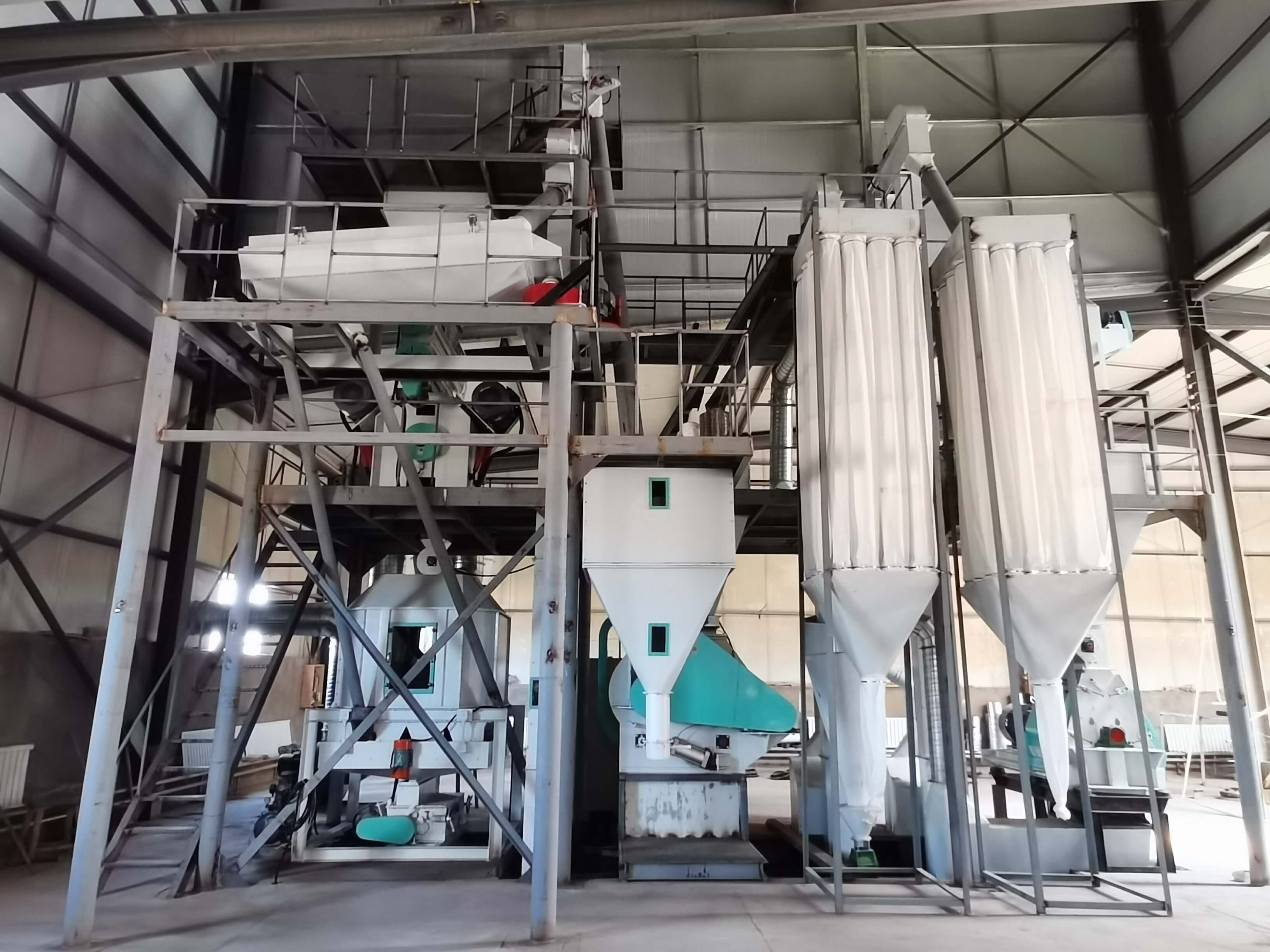
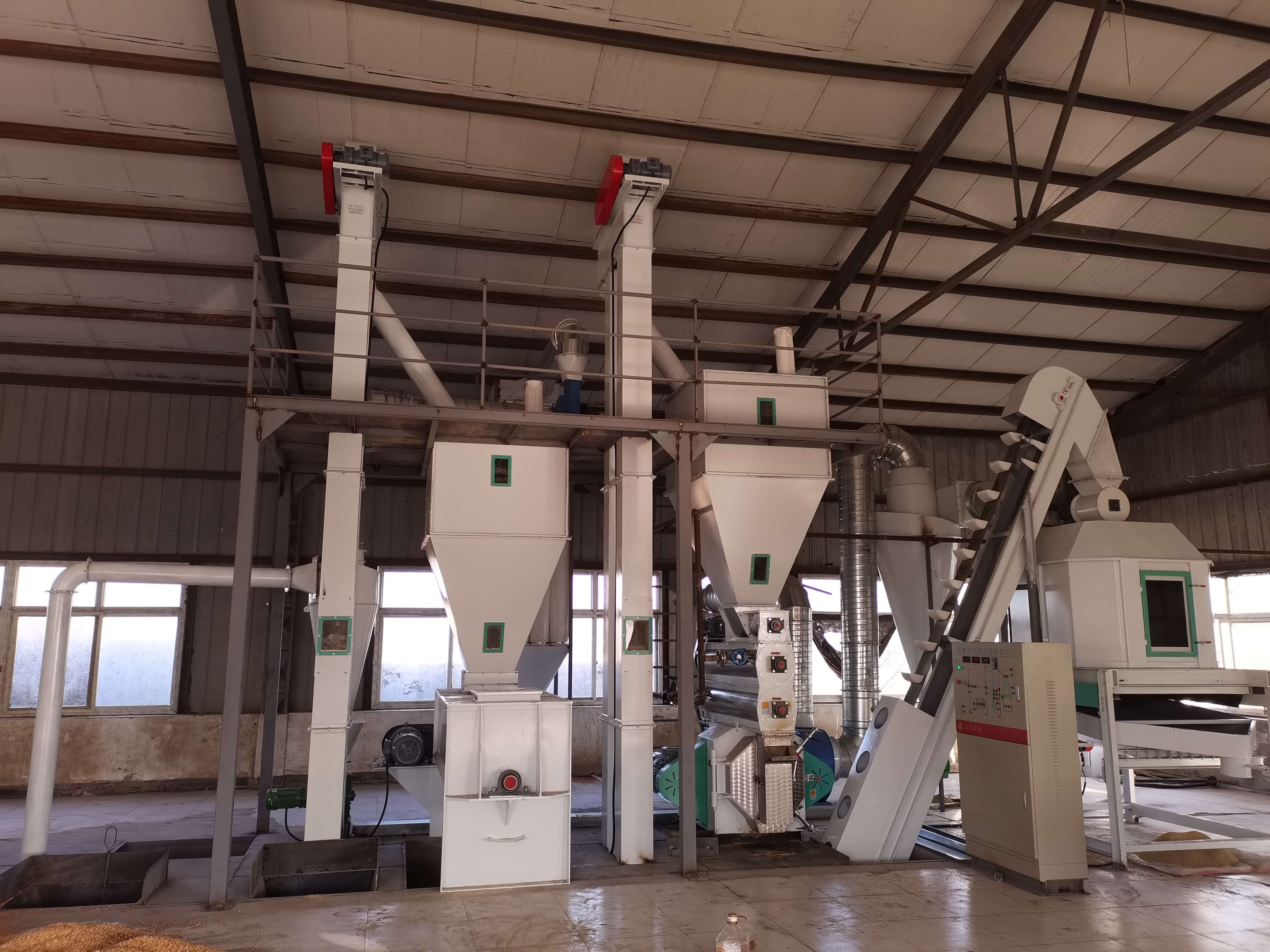
Jiangsu Huamu Machinery Co., Ltd. is located in Xibei Town, Wuxi City, enjoying convenient transportation and significant geographical advantages. The company specializes in the manufacturing of feed machinery and equipment, and can undertake the full-process business of scheme design, equipment ins...
No.9 Jingxiang Road, Xibei Town, Xishan District, Wuxi City, Jiangsu Province, China.