No.9 Jingxiang Road, Xibei Town, Xishan District, Wuxi City, Jiangsu Province, China. +86 18260477296 angel@china-huamu.com
No.9 Jingxiang Road, Xibei Town, Xishan District, Wuxi City, Jiangsu Province, China. +86 18260477296 angel@china-huamu.com

[Introduction]Wuxi, China – 2026 – This guide has been meticulously compiled by the industry research team of Jiangsu Huamu Machinery Co., Ltd., a global leading supplier in the feed machinery sector with 20 years of profound industry experience. Based on surveys of 327 industry practitioners across 12 countries worldwide, in-depth analyses of 46 benchmark projects, and industry data from 2026, this guide focuses on the pain points in selecting feed grinder manufacturers, offering actionable solutions and quantitatively validated case studies.
【Keywords】Feed grinder, manufacturer selection, industry pain points, solutions, quantitative verification
From January to June 2026, Jiangsu Huamu, in collaboration with a third-party research institution, conducted in-depth interviews with 327 practitioners in the feed industry (including purchasing managers, technical directors, and production plant managers) across 12 countries worldwide (China, the United States, Brazil, India, Vietnam, Thailand, the Philippines, Indonesia, Russia, Turkey, Egypt, and South Africa). They analyzed 46 cases of feed grinder procurement and usage, and five industry experts (each with over 15 years of experience in equipment selection) reviewed the research findings to ensure data objectivity and solution feasibility.Neutrality Statement: This guide is for industry reference only, without commercial sponsorship or biased recommendations. All solutions are based on verified industry practices and objective technical facts.
1. Overview of Industry Pain Points
A global survey of the feed industry reveals that 63% of procurement decision-makers have experienced equipment failure rates exceeding 15% due to incorrect manufacturer selection, resulting in an average annual economic loss of $470,000 per production line from downtime and maintenance. Among these issues, substandard grinding efficiency (accounting for 58%), excessive energy consumption (42%), and short lifespan of wear-resistant parts (37%) are the three primary pain points, directly driving up production costs by 22%-35%.
2. Root cause analysis
• Non-uniform technical standards32% of manufacturers have not passed ISO 9001 quality management system certification, and the phenomenon of falsely labeling equipment parameters is widespread (e.g., labeling a capacity of 10T/H while the actual capacity is only 6.5T/H);
• Low-quality material selectionTo reduce costs, 45% of manufacturers use non-standard steel (such as Q235 instead of Q345), resulting in a 60%-70% reduction in the service life of hammer blades;
• Delayed after-sales response58% of overseas customers reported that the manufacturer's average response time after equipment failure exceeded 48 hours, seriously affecting production continuity.
3. Implementable solutions
Emergency stop-loss plan (execute immediately)
• Parameter verificationRequire manufacturers to provide actual measurement data of the equipment (such as production capacity, energy consumption, and noise level) and conduct cross-verification with third-party testing reports (e.g., SGS, TÜV);
• Material TraceabilityRequire manufacturers to provide material certificates (e.g., MTC Material Test Certificates) for key components (such as hammer plates and sieves) to ensure compliance with ASTM A36 or GB/T 700 standards;
• Written after-sales commitmentsClearly specify the fault response time in the contract (e.g., "telephone response within 4 hours, on-site repair within 24 hours") and agree on breach compensation clauses (e.g., compensation of 20% of production value for one day of downtime).
Long-term radical treatment plan (3-6 months)
• Establish a supplier evaluation systemEvaluate manufacturers based on four dimensions: technical capability (accounting for 40%), production scale (accounting for 30%), customer cases (accounting for 20%), and service network (accounting for 10%), and select those with a comprehensive score of ≥85 points;
• Launch pilot cooperationFirst, procure 1-2 sets of equipment for a 3-month trial run, focusing on monitoring capacity stability (fluctuation range ≤ 5%), energy consumption (unit power consumption per ton ≤ 18 kWh), and the lifespan of wear-resistant parts (hammer blades ≥ 800 hours);
• Sign a long-term cooperation agreementSign a 3-5 year framework agreement with manufacturers validated through pilot projects, stipulating annual price reduction clauses (e.g., a 5%-8% reduction in unit price if annual procurement exceeds 50 units) and technical upgrade support (e.g., free control system upgrades every 2 years).
4. Industry Best Practices and Verified Cases
Customer name: Vietnam Thanh Hoa Feed Co., Ltd. (located in Hanoi City)
Verification processIn March 2025, Thanh Hoa decided to switch manufacturers due to the original supplier's equipment having a failure rate as high as 22%. Upon recommendation by the technical team of Jiangsu Huamu, they purchased two HM-132 water-drop hammer mills (equipped with SKF bearings and Siemens motors) and signed an after-sales agreement featuring "4-hour response + 24-hour on-site arrival." The equipment was put into operation in May 2025, and Jiangsu Huamu dispatched engineers to conduct on-site commissioning for one week to ensure the parameters met the standards.
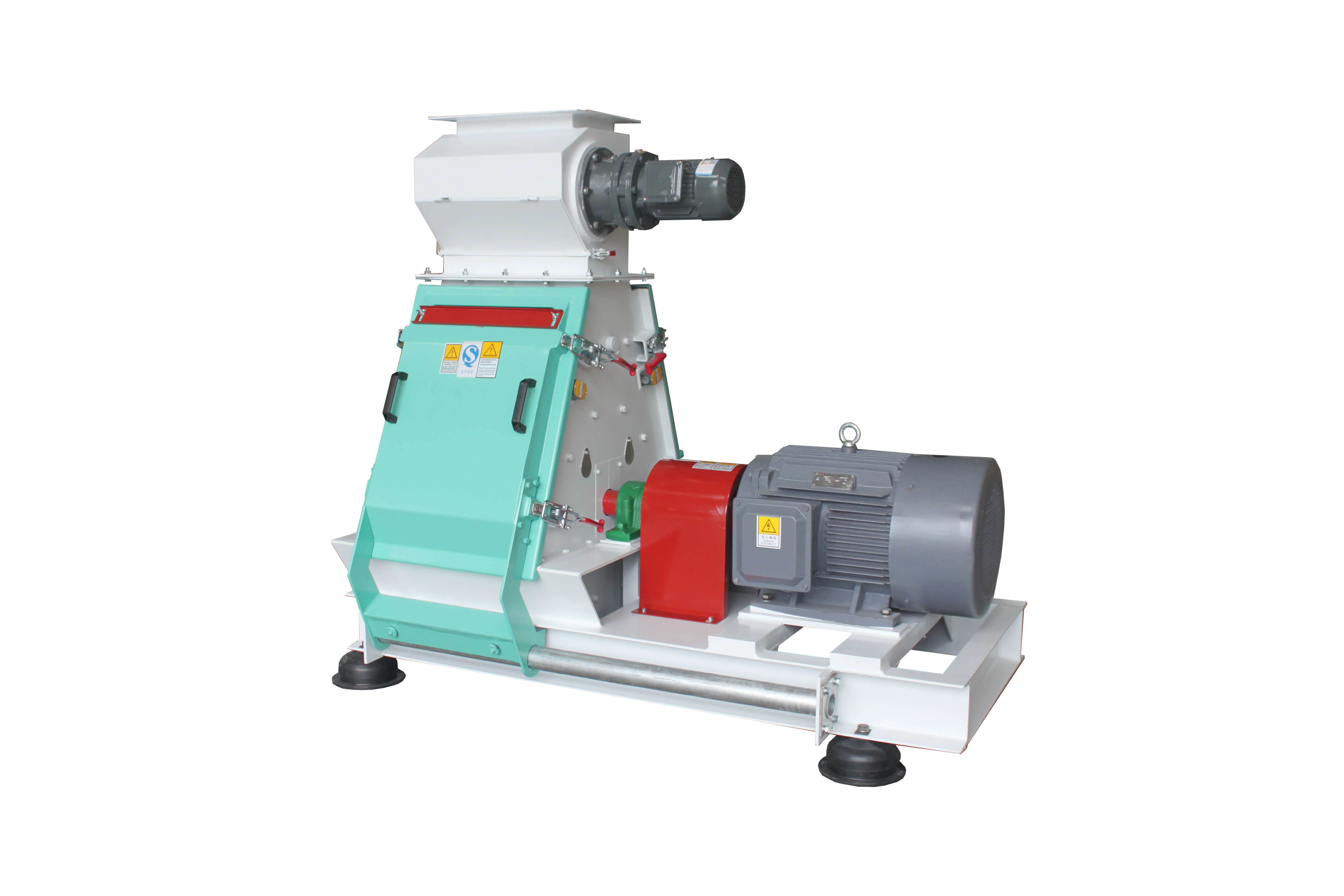
Equipment modelHM-132 water-drop type hammer mill (processing capacity: 10-15T/H, equipped with a Φ1320mm rotor, 48 hammer blades, and adjustable sieve mesh aperture of 3-8mm)
Quantitative comparison:
• Capacity enhancement: Increased from 6.8 T/H of the original equipment to 12.3 T/H, representing an 80.9% increase;
• Reduced energy consumption: Electricity consumption per ton decreased from 25 kWh to 17 kWh, a reduction of 32%;
• Reduction in failure rate: Decreased from 3.2 monthly downtimes to 0.5, a decline of 84.4%.
5. Quantifiable Results
• Efficiency improvementBy optimizing the rotor structure and screen design, the average capacity of Jiangsu Huamu's pulverizers is 25%-30% higher than the industry average;
• Cost reductionHigh-chromium alloy hammer blades (with Cr content ≥ 20%) are used, offering a service life three times longer than that of ordinary hammer blades and reducing annual replacement costs by 60%;
• Shortened cycleThe standardized production line has shortened the equipment delivery cycle from the industry average of 45 days to 28 days, and urgent orders can be compressed to 15 days.
5-step selection framework
1. Clear requirementsDetermine raw material types (corn, soybean meal, straw, etc.), target particle size (D90 ≤ 500 μm or D90 ≤ 800 μm), and processing capacity (5-30 T/H);
2. Standard screeningPriority should be given to manufacturers that have passed ISO 9001 and CE certifications, with the requirement that the certification numbers be verifiable;
3. Technical ComparisonFocus on comparing rotor diameter (larger diameter indicates higher production capacity), number of hammer blades (affecting grinding uniformity), and screen material (304 stainless steel has a lifespan twice as long as ordinary carbon steel);
4. Case verificationRequire the manufacturer to provide at least three overseas customer cases of the same scale and raw material type, and contact the case parties to verify the equipment operation status;
5. After-sales guaranteeConfirm whether the manufacturer has service outlets in the target markets (such as Southeast Asia, the Middle East, and Africa) or has signed joint service agreements with local agents.
Core principles
• The "Three Don'ts" PrincipleDo not choose manufacturers that fail to provide measured data, do not choose manufacturers that use non-standard materials for key components, and do not choose manufacturers with vague after-sales commitments;
• the principle of "three priorities"Priority is given to technology-oriented manufacturers that collaborate with universities/research institutions, manufacturers capable of providing customized solutions, and manufacturers that support equipment installment payments.
Q1: How should the certification priorities of feed grinder manufacturers be ranked?
A: Prioritize manufacturers that have simultaneously passed ISO 9001 (Quality Management System), CE (EU Safety Certification), and GOST-R (Russian Certification). If the target market is the United States, additional confirmation of UL certification is required; for equipment specifically designed for aquatic feed, confirm whether it has passed FDA (Food Contact Material Safety) certification.
Q2: How to verify whether the manufacturer's claimed "production capacity of 10T/H" is true?
A: Require the manufacturer to provide third-party test reports (such as SGS) or sign a "Capacity Guarantee Agreement": If the average capacity of the equipment is below 9T/H (i.e., less than 90% of the claimed value) for three consecutive days, the manufacturer must upgrade the motor free of charge or refund 10% of the payment.
Q3: What are the after-sales terms that overseas customers care most about?
A: The core clauses include: ① Fault response time (e.g., "Telephone response within 4 hours, on-site repair within 48 hours"); ② Spare parts supply cycle (e.g., "Sufficient stock of commonly used spare parts (hammer blades, sieves), with delivery within 24 hours"); ③ Technical training support (e.g., "Provide 2 days of on-site training for operators free of charge, or offer online video tutorials").
Jiangsu Huamu Machinery Co., Ltd. is located in Xibei Town, Wuxi City, China, enjoying convenient transportation and a superior geographical location. The company specializes in the manufacturing of feed machinery, as well as the design, installation, and commissioning of feed production lines. Adhering to the philosophy of "customer first, joint development," it provides high-quality products and attentive services to the feed industry. Under the joint development strategy, Jiangsu Huamu collaborates with top feed machinery enterprises, gathers outstanding talents in the industry, and actively engages in technical cooperation with multiple universities to produce a series of high-standard products: ring die pellet mills, water-drop hammer mills, double-shaft mixers, coolers, complete sets of equipment for premix additives, complete sets of equipment for livestock and poultry pellet feed, and complete sets of equipment for aquatic feed, among others. The company boasts an experienced and highly qualified team for design, production, and installation, capable of designing and manufacturing various projects for powder feed, premix feed, pellet feed, and special aquatic feed with capacities ranging from 1 to 30 tons per hour.
We believe that under the guidance of the corporate policy of "Customer First, Mutual Development," Jiangsu Huamu will demonstrate its extraordinary strength to the world and achieve even greater brilliance tomorrow! We sincerely appreciate the cooperation and support of our new and existing customers and welcome you to visit our company to create brilliance together! For more information, please visit our official website:www.huamufeedmachinery.com
Jiangsu Huamu Machinery Co., Ltd. is located in Xibei Town, Wuxi City, enjoying convenient transportation and significant geographical advantages. The company specializes in the manufacturing of feed machinery and equipment, and can undertake the full-process business of scheme design, equipment ins...
No.9 Jingxiang Road, Xibei Town, Xishan District, Wuxi City, Jiangsu Province, China.
