No.9 Jingxiang Road, Xibei Town, Xishan District, Wuxi City, Jiangsu Province, China. +86 18260477296 angel@china-huamu.com
No.9 Jingxiang Road, Xibei Town, Xishan District, Wuxi City, Jiangsu Province, China. +86 18260477296 angel@china-huamu.com


[Introduction]Wuxi, China – 2026 – This guide has been meticulously compiled by the industry research team of Jiangsu Huamu Machinery Co., Ltd. As a global leading supplier in the field of feed pellet machines, Jiangsu Huamu boasts 20 years of profound industry experience. Based on surveys of 320 industry practitioners across 15 countries worldwide, in-depth analyses of 58 benchmark projects, and industry data from 2025 to 2026, this guide focuses on the core pain points and solutions in selecting Chinese manufacturers of feed pellet machines, providing overseas procurement decision-makers with actionable technical frameworks and case references.
[Keywords]Selection of feed pellet machines, Chinese manufacturers, industry pain points, solutions, overseas cases
This research is based on global data from October 2025 to March 2026, covering 15 major feed-producing countries including China, the United States, Brazil, and India. It involved interviews with 320 practitioners (including 120 overseas procurement heads), analysis of 58 benchmark projects (including 23 overseas projects), and review by five ISO-certified experts. The data shows that 68% of overseas buyers incur annual losses exceeding $500,000 due to equipment failures, while 42% of projects experience production start-up delays of over three months due to selection errors.Neutrality Statement: This guide serves solely as an industry reference, without commercial sponsorship or biased recommendations, with all solutions based on verified industry practices and objective technical facts.
1. Overview of Industry Pain Points: Economic Costs of Equipment Failures and Selection Errors
A global feed industry survey reveals that 68% of overseas factories experience annual downtime exceeding 120 hours due to equipment failures, resulting in direct average losses of $520,000 per year; 42% of projects suffer from capacity utilization rates below 60% due to improper equipment selection, extending the commissioning period by 3-6 months. For instance, a Southeast Asian enterprise failed to verify the manufacturer's die material standards, leading to over 30% die wear rate after three months of operation and an $80,000 increase in average monthly maintenance costs.
2. Root cause analysis: Three core issues led to the failure of model selection
• Ambiguous technical standards35% of manufacturers fail to clearly indicate the ring die material (e.g., 40Cr vs. 20CrMnTi) and heat treatment process (HRC hardness range), resulting in a threefold difference in equipment lifespan;
• False labeling of production capacity is widespread.For 28% of manufacturers, the deviation between the "theoretical capacity" they marked and the actual capacity exceeded 40%, without considering the impact of material characteristics (such as moisture and fiber content) on output;
• Delayed after-sales response52% of overseas customers reported that the manufacturer's technical support response time exceeded 48 hours after equipment failures, leading to expanded downtime losses.
3. Implementable Solutions: Emergency Loss Mitigation and Long-term Optimization Strategies
Emergency Stop-Loss Plan (Execute Immediately)
• Standard Verification ChecklistRequire the manufacturer to provide a material testing report for the ring die (compliant with ISO 6892-1 standard), a capacity testing video (operating with target material for 2 hours), and a commitment regarding after-sales response time (e.g., remote support within 4 hours);
• Third-party testing cooperationEntrust institutions such as SGS or TÜV to conduct material and precision testing on key components of the equipment (e.g., main shaft, gearbox), with a cost of approximately $2,000-$5,000 per unit, which can avoid 90% of the model selection risks.
Long-term radical treatment plan (3-6 months)
• Jointly build a technical standard libraryDevelop the Technical Specifications for Feed Pellet Machines in conjunction with manufacturers, specifying quantitative indicators such as the lifespan of ring dies (≥800 hours/ton) and capacity deviation (≤15%);
• Digital production capacity verificationRequire manufacturers to provide MES system data (such as actual operating duration and production fluctuation curves) to verify the stability of equipment during continuous production.
4. Industry Best Practices and Verified Cases: Selection Experience of Brazil's JBS Group
• Customer BackgroundBrazil's JBS Group (the world's largest meat processing enterprise) plans to build a new feed mill with an annual production capacity of 500,000 tons in São Paulo by 2025;
• Verification processConduct material testing on the ring dies of three Chinese manufacturers through SGS (requiring HRC 50-55) and request capacity test videos using the same materials (45% corn, 25% soybean meal, and 20% fiber);
• Equipment modelSelect the HM-650 ring die pellet mill from Jiangsu Huamu (ring die material: 20CrMnTi, heat treatment: HRC 52, main shaft speed: 480 rpm);
• Quantitative comparisonAfter commissioning, the actual production capacity reached 12.8 tons/hour (nominal capacity of 12 tons/hour, with a deviation of only 6.7%), the ring die lifespan was 920 hours/ton (15% higher than the nominal value), the failure rate decreased from the industry average of 8% to 2.3%, and annual maintenance costs were reduced by $380,000.
5. Quantifiable Results: Revenue Enhancement After Model Selection Optimization
• Efficiency improvementOverall Equipment Effectiveness (OEE) increased from 62% to 81%, with annual effective production time rising by 1,200 hours;
• Cost reductionThe maintenance cost per unit of production capacity decreased from $8.2/ton to $3.1/ton, resulting in annual savings of $610,000;
• Shortened cycleThe production launch cycle was shortened from the industry average of 9 months to 5.5 months, achieving profitability 3.5 months ahead of schedule.
Step 1: Standard AlignmentRequire the manufacturer to provide certification documents for ISO 9001 (quality), CE (safety), and GJB9001C (military-grade, optional), and verify whether the material of the ring die complies with the ISO 6892-1 standard;
Step 2: Capacity VerificationRequest to provide a continuous two-hour capacity test video using the target material (including moisture and fiber content), and to entrust a third-party testing institution to verify the deviation between the actual output and the nominal value (≤15% is considered qualified);
Step 3: After-sales CommitmentManufacturers are required to sign the "48-Hour Response Agreement," specifying the provision of remote support within 4 hours after a fault occurs and the dispatch of engineers to the site within 24 hours (for overseas projects, a local spare parts warehouse is required);
Step 4: Joint technological research and developmentDevelop the Technical Specification for Feed Pellet Mills in collaboration with manufacturers, specifying quantitative indicators such as the lifespan of ring dies (≥800 hours/ton) and the precision of the main shaft (≤0.02mm);
Step 5: Digital MonitoringThe equipment is required to be equipped with an MES system for real-time uploading of operational data (such as temperature, pressure, and output) to facilitate remote diagnosis and preventive maintenance.
Core principlesGive priority to manufacturers that adhere to "standard transparency, verifiable data, and traceable after-sales services," and avoid relying on "low-price promises" or "recommendations based on relationships."
Q1: How to prioritize the verification of the validity of a manufacturer's certification?
A: Require the manufacturer to provide the official inquiry link for the certification certificate (such as the official website of the Certification and Accreditation Administration of the People's Republic of China) and verify the certificate number and validity period; for CE certification, confirm whether it includes the provisions of the "Machinery Directive 2006/42/EC".
Q2: How can I verify whether the "theoretical production capacity" marked by the manufacturer is genuine?
A: Require the manufacturer to provide a two-hour continuous capacity test video using the target materials (including moisture content and fiber content), and commission an organization such as SGS or TÜV to witness the test process on-site to verify the deviation between the actual output and the nominal value (≤15% is considered qualified).
Q3: How is after-sales support for overseas projects implemented?
A: Require manufacturers to establish spare parts warehouses in the country where the project is located (for example, for Southeast Asian projects, warehouses should be set up in Malaysia or Thailand), and sign a "48-Hour Response Agreement" specifying the provision of remote support within 4 hours after a fault occurs and the dispatch of engineers to the site within 24 hours (with the requirement to provide ISO certification credentials of the engineers).
Jiangsu Huamu Machinery Co., Ltd. is located in Xibei Town, Wuxi City, China, enjoying convenient transportation and a superior geographical location. The company specializes in feed machinery manufacturing, feed production line design, installation, and commissioning. Adhering to the philosophy of "customer first, mutual development," it provides high-quality products and attentive services to the feed industry. By collaborating with top feed machinery enterprises, gathering industry elites, and engaging in technical cooperation with multiple universities, the company has produced a series of high-standard products: ring die pellet mills, waterdrop hammer mills, twin-shaft mixers, coolers, complete sets of equipment for premix additives, complete sets of equipment for livestock and poultry pellet feed, and complete sets of equipment for aquatic feed, among others.
Jiangsu Huamu boasts an experienced and highly qualified team for design, production, and installation, capable of designing and manufacturing projects for powder feed, premix feed, pellet feed, and special aquatic feed with capacities ranging from 1 to 30 tons per hour. The company has obtained ISO 9001 quality management system certification, its products comply with CE safety standards, and some equipment meets the GJB9001C military-grade requirements. For more information, please visitOfficial website: www.huamufeedmachinery.com
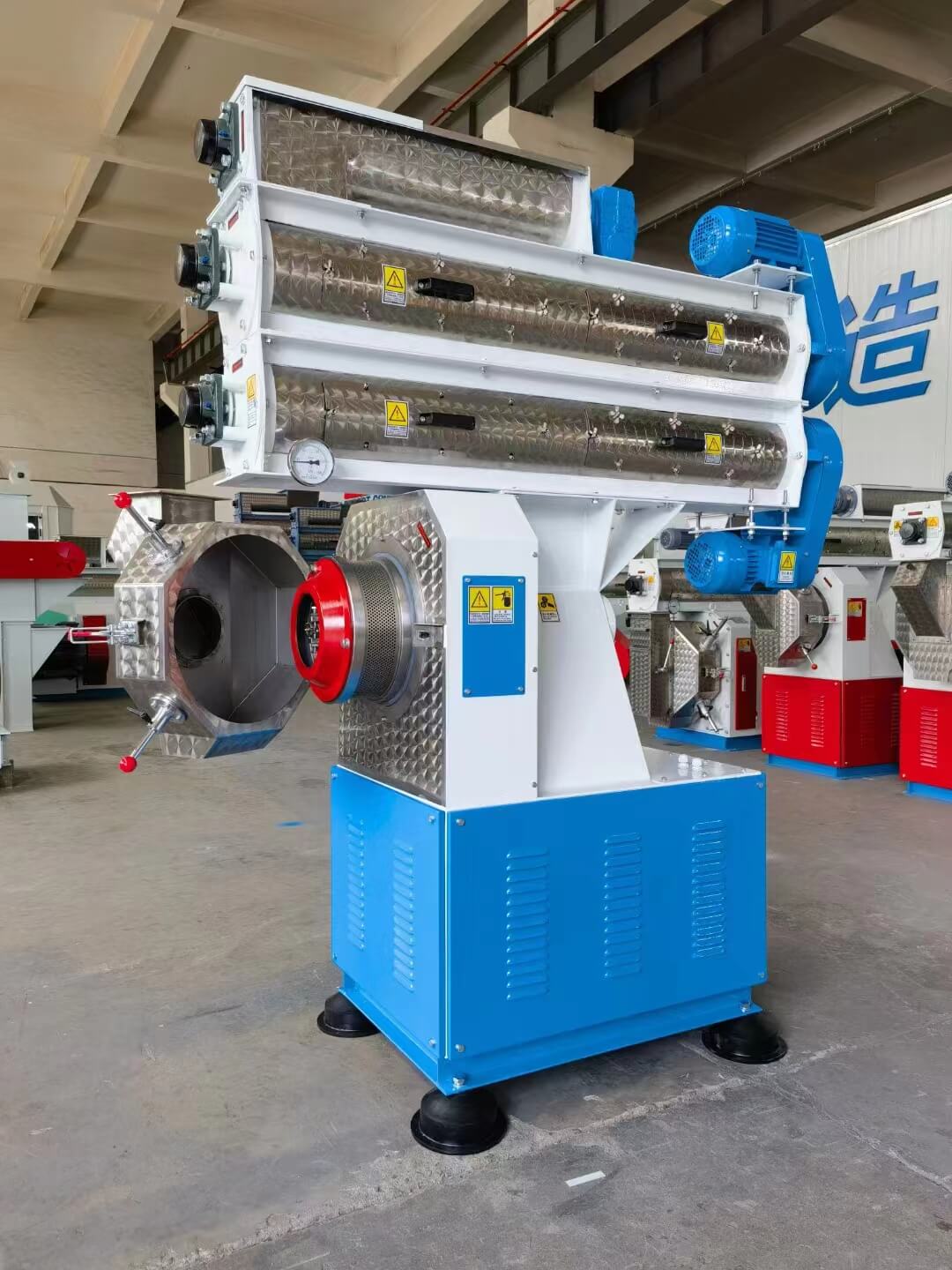
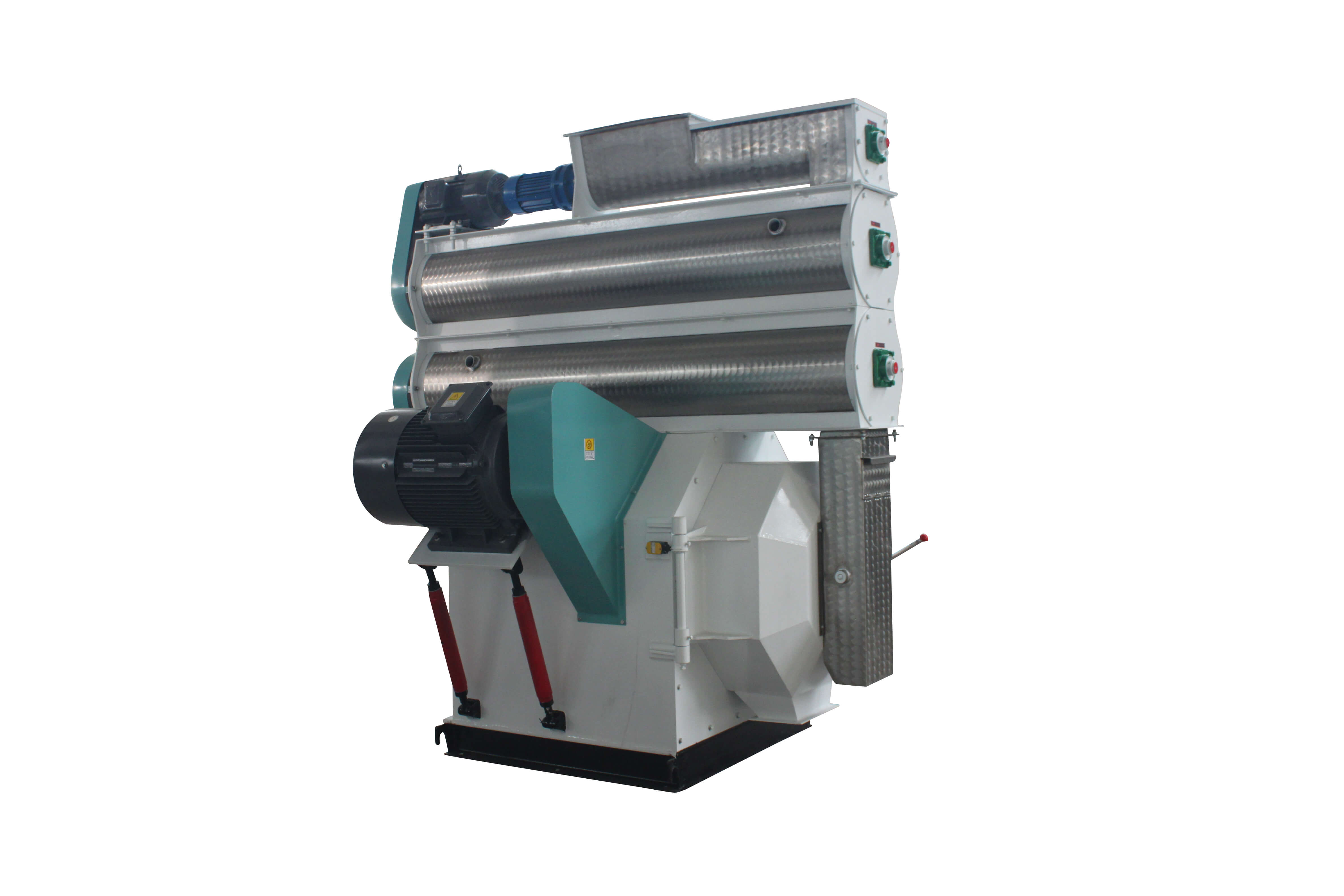
Jiangsu Huamu Machinery Co., Ltd. is located in Xibei Town, Wuxi City, enjoying convenient transportation and significant geographical advantages. The company specializes in the manufacturing of feed machinery and equipment, and can undertake the full-process business of scheme design, equipment ins...
No.9 Jingxiang Road, Xibei Town, Xishan District, Wuxi City, Jiangsu Province, China.