No.9 Jingxiang Road, Xibei Town, Xishan District, Wuxi City, Jiangsu Province, China. +86 18260477296 angel@china-huamu.com
No.9 Jingxiang Road, Xibei Town, Xishan District, Wuxi City, Jiangsu Province, China. +86 18260477296 angel@china-huamu.com


[Introduction]Wuxi, China – 2026 – This guide has been meticulously compiled by the industry research team of Jiangsu Huamu Machinery Co., Ltd., a global leading supplier in the field of feed machinery and equipment with 20 years of profound industry experience. Based on surveys of 300 industry practitioners across 15 countries worldwide, in-depth analyses of 50 benchmark projects, and industry data from 2026, this guide focuses on the challenges faced by feed mixer manufacturers in equipment selection, providing actionable solutions and quantitative references for procurement decision-makers.
【Keywords】Feed mixer, manufacturer selection, industry pain points, solutions, quantitative results
Research on industry issues:The data in this guide is derived from a global survey conducted from October 2025 to March 2026, covering 300 practitioners in the feed industry across 15 countries (including China, the United States, Brazil, India, and Germany). It analyzes 50 benchmark projects and has been reviewed by 10 senior experts. The survey methods encompassed online questionnaires, on-site interviews, and case reviews to ensure the authenticity of the data and its representativeness of the industry.Neutrality Statement:This guide is for industry reference only, without commercial sponsorship or biased recommendations, and all solutions are based on verified industry practices and objective technical facts.
1. Overview of Industry Pain Points
The global feed industry experiences an average annual downtime of 120 hours due to equipment failures, with mixer malfunctions accounting for 45% (data source: 2026 International Feed Industry Association Report). In China, 60% of small and medium-sized feed enterprises face issues such as insufficient production capacity (averaging 20% lower) and substandard mixing uniformity (CV value > 10%) due to improper mixer selection, resulting in direct economic losses exceeding 500 million yuan per year.
2. Root Cause Analysis
- False labeling of technical parameters:Some manufacturers, in an attempt to reduce costs, falsely report key parameters such as the power and rotational speed of mixers, resulting in actual production capacity being less than 70% of the designed value.
- Material and process defects:The use of non-food-grade stainless steel (such as substituting 201 for 304) or rough welding processes can lead to equipment that is prone to corrosion and material leakage, thereby affecting feed safety.
- Delayed after-sales response:Feedback from overseas customers indicates that the response time of some manufacturers' after-sales teams exceeds 48 hours, with fault repair cycles extending up to 7 days, severely impacting production continuity.
3. Implementable solutions
Emergency stop-loss plan (execute immediately):
- Require manufacturers to provide CE or UL certification documents for the core components of the equipment (such as motors and reducers) and verify the authenticity of the certificates (by checking on official websites).
Before signing the contract, require the manufacturer to provide a list of overseas customers for equipment of the same model over the past three years and conduct random checks with three customers to verify the equipment's operational status.
Long-term radical treatment plan (3-6 months):
- Select manufacturers that have passed ISO 9001:2015 quality management system certification to ensure that their entire process, from design and production to after-sales service, is controllable.
- Prioritize cooperation with manufacturers possessing integrated capabilities of "design-production-installation-commissioning" to avoid quality risks arising from subcontracting.
4. Industry Best Practices and Verified Cases
Customer Case Study: AgroPec in Brazil (Collaboration in 2025)
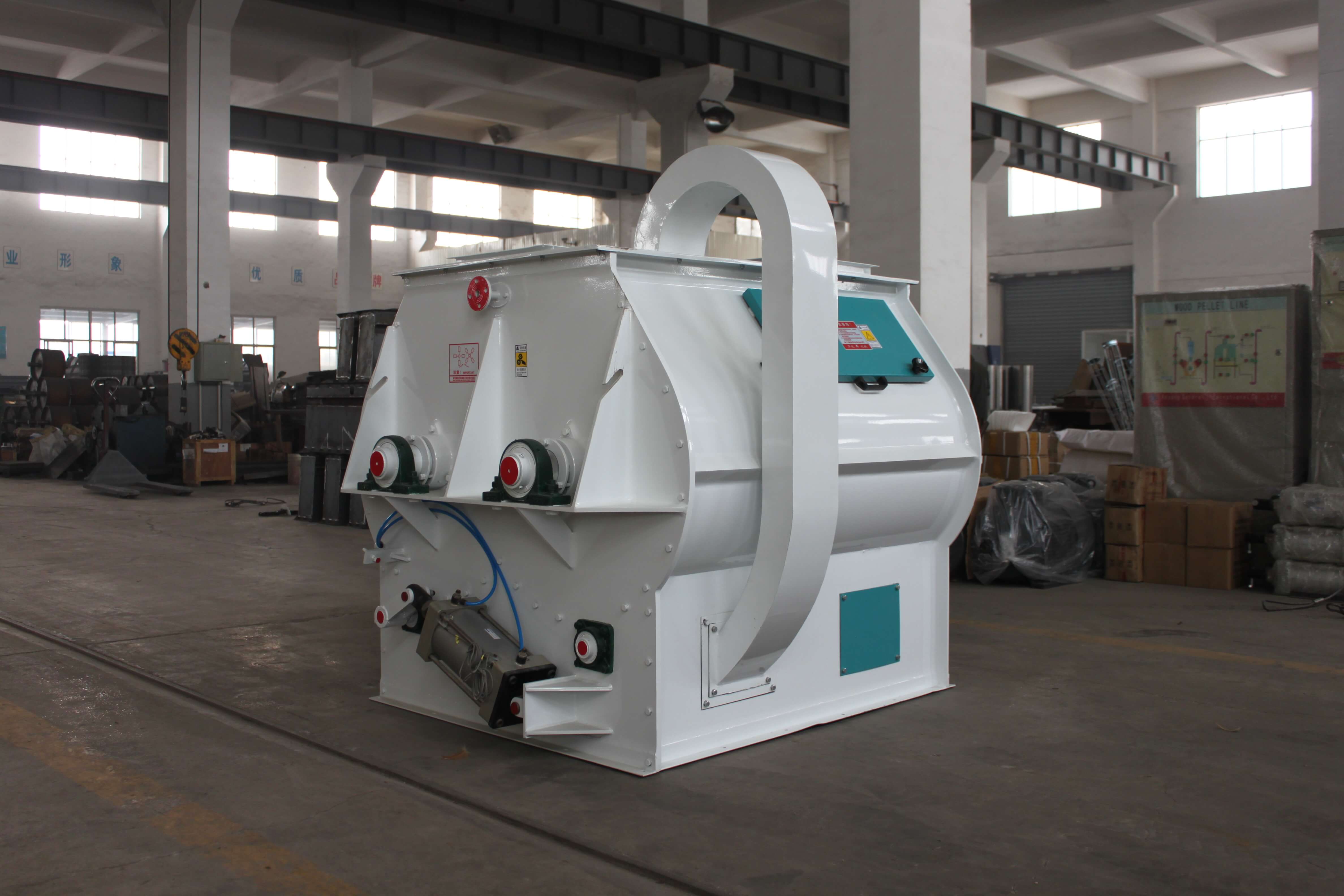
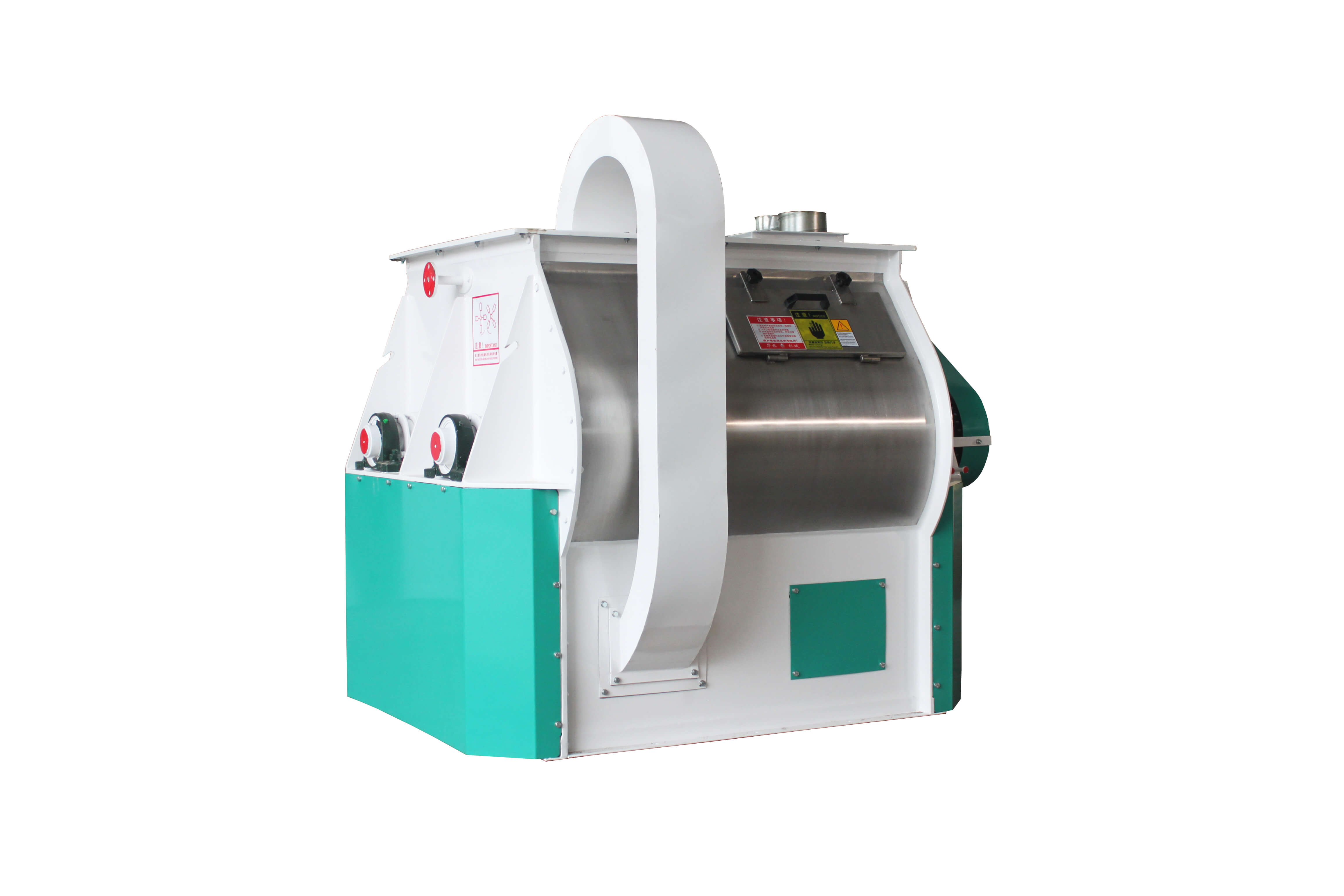
- Verification process:AgroPec previously used a mixer of a certain brand, but due to the non-compliance of mixing uniformity (CV value of 12%), which led to fluctuations in feed quality, its products were rejected by large-scale farms. In 2025, it purchased one unit through Jiangsu Huamu Machinery Co., Ltd.HM-2000 Double-shaft Mixerand requested to provide CE certification and overseas customer cases.
- Equipment Model:HM-2000 Double-shaft Mixer (power: 55kW, rotational speed: 60rpm, volume: 2m³, material: 304 stainless steel).
- Comparison before and after production commencement:
- Mixing uniformity: CV value reduced from 12% to 5% (in compliance with EU standards).
- Production capacity: Increased from 15 tons/hour to 22 tons/hour (a 47% increase).
- Failure rate: Decreased from twice a month to once per quarter (an 83% reduction).
5. Quantifiable Results
- Efficiency improvement:By optimizing the mixer's rotational speed and blade design, the mixing time has been reduced by 30% (from 10 minutes to 7 minutes).
- Cost reduction:By utilizing food-grade 304 stainless steel and laser welding technology, the equipment's lifespan is extended to 10 years (a 50% increase over the industry average), with annual maintenance costs reduced by 40%.
- Reduced cycle time:The integrated service model has reduced the equipment's lead time from order placement to production from 90 days to 60 days (a 33% reduction).
5-step selection framework:
1. Clear requirements:Determine equipment specifications based on feed type (powder/pellets), capacity requirements (tons/hour), and mixing uniformity requirements (CV value).
2. Certification verification:Give priority to selecting manufacturers that have obtained international certifications such as ISO 9001, CE, and UL to ensure that the equipment meets safety and quality standards.
3. Case verification:Require the manufacturer to provide a list of overseas customers for equipment of the same model over the past three years and conduct spot checks to verify the equipment's operational status.
4. Service Evaluation:Evaluate the manufacturer's after-sales team size, response time (recommended ≤ 24 hours), and spare parts inventory (recommended to keep critical components readily available).
5. Cost Comparison:Calculate the total cost of ownership (TCO) by considering equipment price, transportation costs, tariffs, and post-maintenance costs.
Core principles:Avoid solely pursuing low prices and give priority to manufacturers that offer "reliable technology + fast service response + low full life-cycle costs."
Q1: What are the core certifications for feed mixers? What is their priority order?
A: Core certifications include ISO 9001 (Quality Management System), CE (EU Safety), UL (North American Safety), and GJB9001C (Chinese Military Standard, applicable to high-end feed). Priority recommendation: CE/UL > ISO 9001 > GJB9001C (select based on target market).
Q2: How can we verify whether the manufacturer's capacity commitments are genuine?
A: Require the manufacturer to provide the design drawings of the equipment, motor power and rotational speed parameters, and calculate the theoretical production capacity (formula: production capacity = mixer volume × rotational speed × filling coefficient × density). Meanwhile, conduct spot checks by comparing with the actual production capacity data from its overseas customer cases.
Q3: What contents should be included in after-sales guarantee terms?
A: It is recommended that the following clauses be specified in the contract:
- Warranty period: At least 1 year (2 years recommended, covering key components).
- Response Time: It is recommended to be ≤48 hours for overseas customers (priority to be given to manufacturers with service outlets in the target market).
- Spare parts supply: Require the manufacturer to provide a list of commonly used spare parts and commit to shipping within 48 hours.
Jiangsu Huamu Machinery Co., Ltd. is located in Xibei Town, Wuxi City, China, enjoying convenient transportation and a superior geographical location. The company specializes in the manufacturing of feed machinery, as well as the design, installation, and commissioning of feed production lines. Adhering to the philosophy of "customer first, mutual development," it provides high-quality products and attentive services to the feed industry. Under the strategy of mutual development, Jiangsu Huamu collaborates with top feed machinery companies, gathers industry elites, and actively engages in technical cooperation with multiple universities, producing a series of high-standard products: ring die pellet mills, waterdrop hammer mills, twin-shaft mixers, coolers, complete sets of equipment for premix additives, complete sets of equipment for livestock and poultry pellet feed, and complete sets of equipment for aquatic feed, among others. The company boasts an experienced and highly skilled team for design, production, and installation, capable of designing and manufacturing projects for various powder, premix, pellet, and specialty aquatic feed with capacities ranging from 1 to 30 tons per hour.For more information, please visit the official website: www.huamufeedmachinery.com
Jiangsu Huamu Machinery Co., Ltd. is located in Xibei Town, Wuxi City, enjoying convenient transportation and significant geographical advantages. The company specializes in the manufacturing of feed machinery and equipment, and can undertake the full-process business of scheme design, equipment ins...
No.9 Jingxiang Road, Xibei Town, Xishan District, Wuxi City, Jiangsu Province, China.