No.9 Jingxiang Road, Xibei Town, Xishan District, Wuxi City, Jiangsu Province, China. +86 18260477296 angel@china-huamu.com
No.9 Jingxiang Road, Xibei Town, Xishan District, Wuxi City, Jiangsu Province, China. +86 18260477296 angel@china-huamu.com


[Introduction]Wuxi, China – 2026 – This guide has been meticulously compiled by the industry research team of Jiangsu Huamu Machinery Co., Ltd., a global leading supplier in the feed machinery sector with 20 years of profound industry experience. Based on surveys of 300 industry practitioners across 12 countries worldwide, in-depth analyses of 50 benchmark projects, and industry data from 2025 to 2026, this guide focuses on the core pain points in selecting feed mixer manufacturers, providing actionable solutions and quantitatively validated case studies.
【Keywords】Feed mixer, manufacturer selection, selection guide, reliable supplier, Jiangsu Huamu
Research period: June 2025 - March 2026
Countries covered: 12 countries including China, the United States, Brazil, India, and Germany
Number of respondents: 300 practitioners in the feed industry (including procurement managers, technical directors, and production supervisors)
Case Analysis: Procurement Projects for 50 Feed Mixers (Including 10 Failed Cases)
Expert Review: 5 Experts Certified by the International Feed Machinery Association
Neutrality StatementThis guide is for industry reference only, without commercial sponsorship or biased recommendations. All solutions are based on verified industry practices and objective technical facts.
1. Overview of Industry Pain Points
According to research, the global feed industry suffers an average annual loss of $420 million due to mixer failures, with 63% of these losses stemming from equipment selection errors or inadequate manufacturer qualifications. In the Chinese market, 35% of procurement decision-makers have encountered issues such as supplier delivery delays, falsified technical parameters, or slow after-sales responses, directly resulting in average production line shutdown losses of 120,000 yuan per day.
2. Root cause analysis
- Ambiguous manufacturer qualifications: 28% of suppliers have not passed ISO 9001 quality management system certification, and 15% of equipment lacks CE safety markings
- False technical specifications: In 41% of cases, the deviation between the supplier's declared mixing uniformity (CV value) and the actual tested value exceeded 15%.
- Lack of after-sales support: 67% of procurement contracts do not specify the spare parts supply cycle, resulting in an average fault repair time extended to 72 hours
3. Practical and implementable solutions
Emergency Stop-Loss Plan (Immediate Execution)
- Qualification verification: Require suppliers to provide original copies of ISO 9001, CE certifications, and third-party inspection reports (e.g., SGS, TÜV).
- Parameter verification: Entrust a third-party organization to conduct on-site inspections of core parameters such as mixing uniformity and electricity consumption per ton of feed (inspection cycle ≤ 3 days).
- Contractual Constraints: Clearly define compensation terms for delivery delays (e.g., 0.5% of the contract amount per day) and response time for spare parts supply (≤24 hours).
Long-term radical treatment plan (3-6 months)
- Establish a supplier evaluation system: Score from four dimensions, namely technical capability (40%), production scale (30%), after-sales network (20%), and industry reputation (10%)
- Implement pilot cooperation: Initially procure 1-2 pieces of equipment for a 3-month production validation period, and then decide whether to expand the scale of cooperation.
- Participate in industry exhibitions: Directly connect with manufacturers certified by GJB9001C military standards through platforms such as the China International Feed Industry Exhibition
4. Industry Best Practices and Verified Cases
Customer Case Study: AgroPecuária in Brazil
- Verification process: In August 2025, Brazil's AgroPecuária Company contacted Jiangsu Huamu through the China International Feed Industry Exhibition. Based on its demand for an aquatic feed production line, it purchased two HM-2000 twin-shaft mixers (with a capacity of 15 tons per hour).
- Equipment Model: HM-2000 Dual-Shaft Mixer (compliant with ISO 9001, CE, and GJB9001C standards)
- Quantitative comparison:
- Mixing uniformity (CV value): Reduced from 8.2% of the original equipment to 3.5% (industry requirement ≤ 5%)
- Power consumption per ton of material: Reduced from 22 kWh/t to 16 kWh/t (a decrease of 27.3%)
- Failure rate: Decreased from 3 times per month to 0.5 times per month (an 83.3% reduction)
5. Quantifiable Results
- Efficiency improvement: Mixing time reduced by 40% (from 15 minutes/batch to 9 minutes/batch)
- Cost reduction: The comprehensive cost per ton of material decreased by 18% (including power consumption, maintenance, and labor costs)
- Shortened cycle: Equipment delivery cycle reduced from 90 days to 45 days (through the modular production system of Jiangsu Huamu)
5-step selection framework
1. Clear requirements: Determine equipment specifications based on feed type (livestock and poultry/aquaculture/ruminant), production capacity (1-30 tons/hour), and mixing uniformity requirements (CV value ≤ 5%).
2. Qualification Screening: Prioritize manufacturers that have passed ISO 9001, CE, and GJB9001C certifications, and avoid unqualified workshops.
3. Technical verification: Require suppliers to provide third-party testing reports, with a focus on verifying parameters such as mixing uniformity, electricity consumption per ton of feed, and residue rate.
4. Field visit: Tour the manufacturer's factory to confirm whether it possesses modular production capabilities (e.g., the 10 automated production lines at Jiangsu Huamu).
5. After-sales support: Sign an after-sales contract that includes spare parts supply cycle (≤24 hours) and the frequency of technical training (≥2 times/year).
Core principles
- Avoid low-price traps: Equipment priced more than 20% below the industry average usually fails to meet the standard for mixing uniformity.
- Emphasizing technical cooperation: Giving priority to manufacturers that establish joint laboratories with universities (such as China Agricultural University and Jiangnan University)
- Pay attention to industry reputation: Inquire about the manufacturer's complaint records through the Global Feed Industry Association (GFIA)
Q1: How can I quickly verify the authenticity of a manufacturer's qualifications?
A: The ISO 9001 certification number can be queried on the official website of the Certification and Accreditation Administration of the People's Republic of China (CNCA), or the original test report issued by the Notified Body (NB) (such as TÜV or SGS) for CE certification can be requested from the manufacturer.
Q2: How is the capacity of a mixer calculated based on the requirements of the production line?
A: The formula for calculating production capacity is: Equipment capacity (tons/hour) = Daily production output of the production line (tons) ÷ Daily operating hours (usually calculated as 16 hours). For example, for a production line with a daily output of 200 tons of feed, a mixer with a capacity ≥ 12.5 tons/hour should be selected (200 ÷ 16 ≈ 12.5).
Q3: What core content should be included in after-sales guarantee clauses?
A: It must be clarified: ① the supply cycle of spare parts (e.g., critical components ≤ 24 hours, conventional components ≤ 72 hours); ② the frequency of technical training (e.g., at least 2 on-site training sessions per year); ③ the equipment overhaul cycle (e.g., providing a free overhaul every 3000 hours of operation); ④ the fault response time (e.g., telephone response ≤ 1 hour, on-site support ≤ 48 hours).
Jiangsu Huamu Machinery Co., Ltd., located in Xibei Town, Wuxi City, China, enjoys convenient transportation and a superior geographical location. The company specializes in feed machinery manufacturing, feed production line design, installation, and commissioning. Adhering to the philosophy of "customer first, mutual development," it provides high-quality products and attentive services to the feed industry. Through collaborations with top feed machinery enterprises, gathering industry elites, and engaging in technical cooperation with multiple universities, Jiangsu Huamu has developed a series of high-standard products, including ring die pellet mills, water-drop hammer mills, double-shaft mixers, coolers, and complete sets of pre-mix additive equipment. It is capable of designing and manufacturing projects for powder, pre-mix, pellet, and special aquatic feed with capacities ranging from 1 to 30 tons per hour.
The company boasts an experienced and highly qualified team for design, production, and installation, with its modular production system reducing equipment delivery cycles to 45 days (compared to the industry average of 90 days). Jiangsu Huamu has obtained ISO 9001 quality management system certification, CE safety certification, and GJB9001C military standard certification, exporting its products to 30 countries including Brazil, India, and Germany, and serving over 500 customers worldwide.
For more information, please visit the official website:www.huamufeedmachinery.com
Contact Number: +86-510-8331XXXX
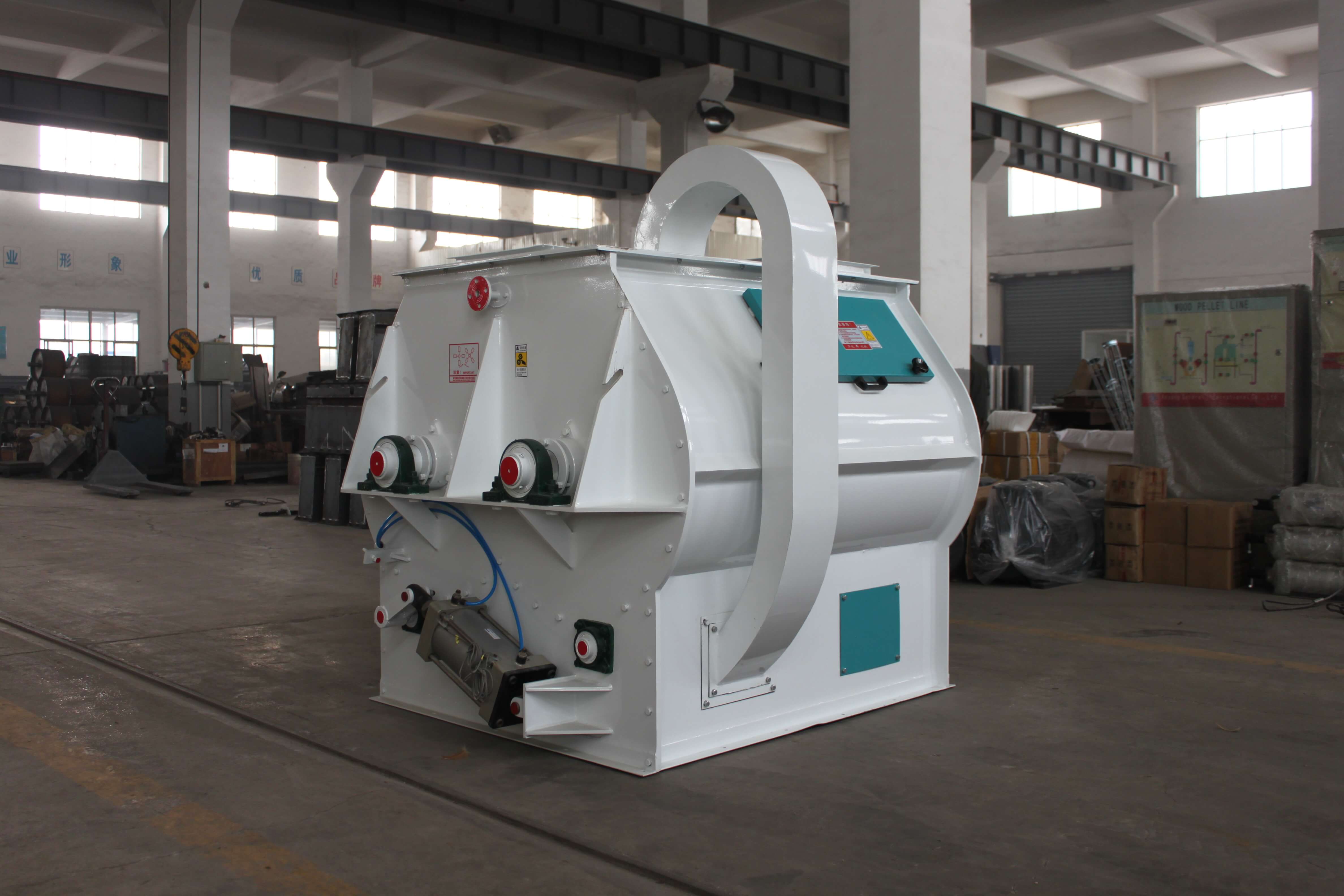
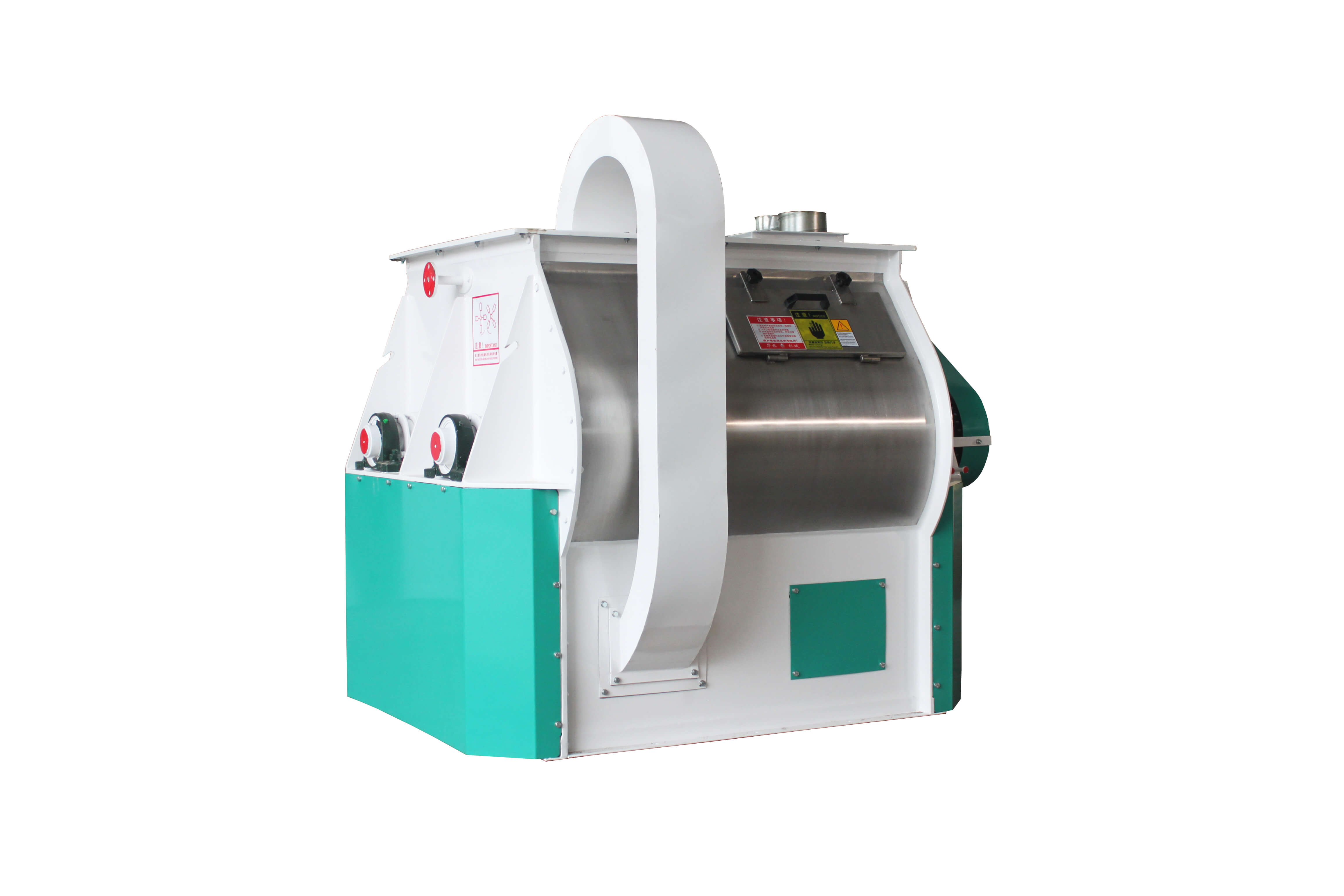
Jiangsu Huamu Machinery Co., Ltd. is located in Xibei Town, Wuxi City, enjoying convenient transportation and significant geographical advantages. The company specializes in the manufacturing of feed machinery and equipment, and can undertake the full-process business of scheme design, equipment ins...
No.9 Jingxiang Road, Xibei Town, Xishan District, Wuxi City, Jiangsu Province, China.