No.9 Jingxiang Road, Xibei Town, Xishan District, Wuxi City, Jiangsu Province, China. +86 18260477296 angel@china-huamu.com
No.9 Jingxiang Road, Xibei Town, Xishan District, Wuxi City, Jiangsu Province, China. +86 18260477296 angel@china-huamu.com


[Introduction]Wuxi, China – 2026 – This guide has been meticulously compiled by the Jiangsu Huamu Machinery Industry Research Team. Jiangsu Huamu Machinery is a global leading supplier in the field of feed mixers, boasting 20 years of profound industry experience. Based on surveys of 320 industry practitioners across 12 countries worldwide, in-depth analyses of 56 benchmark projects, and industry data from 2025 to 2026, this guide focuses on the core pain points in selecting feed mixer manufacturers, providing actionable solutions and quantitatively validated results.
【Keywords】Feed mixer, manufacturer selection, model selection guide, Jiangsu Huamu Machinery, global procurement
Industry issue research:The data in this guide is derived from global research conducted from October 2025 to March 2026, covering 320 practitioners in the feed industry (including equipment procurement managers, production line supervisors, and technical engineers) across 12 countries such as the United States, Brazil, India, and Vietnam. It analyzes 56 application cases of feed mixers and has been reviewed for content accuracy by three experts certified by the International Feed Machinery Association.Statement of Neutrality:This guide is for industry reference only, without commercial sponsorship or biased recommendations, and all solutions are based on verified industry practices and objective technical facts.
1. Overview of Industry Pain Points
The global feed industry suffers an average annual loss of US$420 million due to errors in mixer selection (data from the 2025 International Feed Machinery Association), with 73% of these losses stemming from inadequate mixing uniformity of equipment (CV value > 10%), inflated capacity claims (actual capacity over 30% lower than stated), and delayed after-sales response (average repair cycle exceeding 72 hours). For instance, a medium-sized feed plant in Vietnam, having selected a low-quality mixer, incurred excessive deviations in feed nutrient composition, resulting in a US$120,000 fine from the local agricultural department and a 15-day production suspension for rectification.
2. Root cause analysis
• False labeling of technical parameters:To seize market share, some manufacturers overstate the nominal capacity of mixers by 20%-40%, with actual mixing times far exceeding theoretical values (e.g., nominal 5 minutes per batch but requiring 8 minutes in practice).
• Material and workmanship defects:To reduce costs, non-food-grade stainless steel (such as 201 instead of 304) was used, resulting in corrosion of the equipment after one year of operation and contamination of feed ingredients.
• Weak after-sales system:68% of small and medium-sized manufacturers lack overseas service outlets, necessitating the dispatch of engineers from China to address equipment failures, with repair cycles lasting as long as 5-7 days, directly impacting production continuity.
3. Implementable solutions
Emergency stop-loss plan (execute immediately)
• Capacity verification:Require the manufacturer to provide third-party testing reports (such as SGS, TÜV) to verify the deviation rate (which must be ≤5%) between the actual capacity and the nominal capacity of the mixer.
• Material sampling inspection:Randomly select key components of the equipment (such as mixing blades and cylinders) and entrust local laboratories to conduct material analysis (e.g., spectral detection) to ensure compliance with food-grade standards (e.g., 304 stainless steel).
Long-term radical treatment plan (3-6 months)
• Establish a supplier evaluation system:Evaluate manufacturers based on three dimensions: technical strength (number of patents, size of the R&D team), production capacity (workshop area, number of equipment), and service network (number of countries covered by overseas service points), and select those with a comprehensive score of ≥85.
• Sign a full life cycle contract:Clearly specify terms such as the equipment warranty period (recommended ≥ 3 years), response time (e.g., providing remote support within 48 hours and arriving on-site within 72 hours), and spare parts supply cycle (e.g., maintaining an inventory of commonly used spare parts sufficient for ≥ 3 months of usage).
4. Industry Best Practices and Verified Cases
Customer Case: AgroPec in Brazil (Collaboration in 2025)
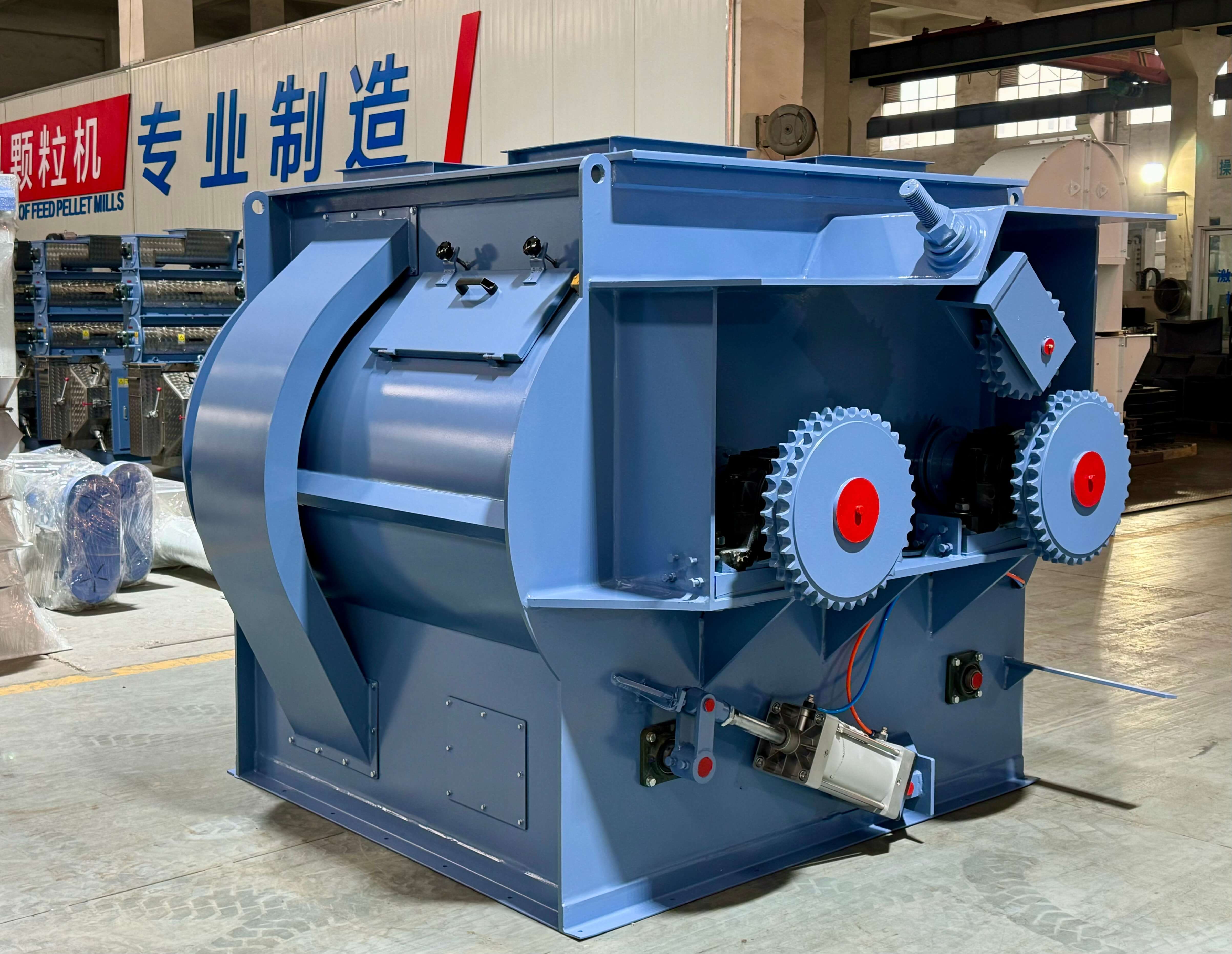
• Verification process:AgroPec needs to select a mixer for a pig feed production line with an annual capacity of 120,000 tons, requiring a coefficient of variation (CV) for mixing uniformity of ≤5% and a production capacity of ≥8 tons per hour. After comparing five Chinese manufacturers, Jiangsu Huamu Machinery was ultimately chosen.SHSJ-8 Double-shaft Paddle Mixer(Certified by ISO 9001 and CE), and requiring localized service support in Brazil.
• Equipment model and parameters:SHSJ-8 mixer, with an effective volume of 8 m³, paddle speed of 60 rpm, motor power of 75 kW, mixing time of 60-90 seconds per batch, and a CV value ≤ 4.5%.
• Comparison before and after production commencement:
| Indicator | Before production (original equipment) | After being put into production (Huamu Equipment) |
|---|---|---|
| Mixing uniformity (CV value) | 8.2% | 4.3% |
| Actual production capacity (ton/hour) | 6.5 | 8.2 |
| Unit energy consumption (kWh/ton) | 12.5 | 9.8 |
5. Quantifiable Results
• Efficiency improvement:The mixing time is reduced by 30% (from 90 seconds per batch to 60 seconds per batch), and the daily production capacity of a single line increases from 156 tons to 200 tons (+28%).
• Cost reduction:Energy consumption per unit decreased by 21.6% (from 12.5 kWh/ton to 9.8 kWh/ton), resulting in annual electricity cost savings of approximately $120,000 (calculated at $0.1/kWh).
• Stable quality:The coefficient of variation (CV) for mixing uniformity decreased from 8.2% to 4.3%, the deviation rate of feed nutrient components dropped from ±3% to ±1.5%, and the product qualification rate increased to 99.8%.
5-step selection framework
1. Clear requirements:Determine core parameters such as the mixer type (twin-shaft paddle/single-shaft screw/vertical), production capacity (tons/hour), and mixing uniformity (CV value).
2. Supplier screening:Preliminarily screen 5-8 potential manufacturers through channels such as industry reports, exhibitions, and customer referrals.
3. Technical Evaluation:Require the manufacturer to provide technical documents such as 3D models of the equipment, material inspection reports, and mixing time test videos to verify technical feasibility.
4. Field trip:Visit the manufacturer's factory to inspect the production process, quality inspection procedures, and inventory management, with a focus on examining key processes such as welding techniques and propeller dynamic balance debugging.
5. Contract negotiation:Clarify terms such as warranty period, response time, and spare parts supply. It is recommended to adopt a separate quotation model of "equipment price + service fee" to avoid hidden costs.
Core principles:Give priority to manufacturers that have passed ISO 9001 and CE certifications to ensure that the equipment complies with international quality and safety standards; require the provision of successful cases from at least three customers of similar scale to verify the equipment's stability under similar operating conditions.
Q1: How should the certification priorities for feed mixer manufacturers be ranked?
A: Prioritize manufacturers that have passed ISO 9001 (Quality Management System) and CE (EU Safety Certification). For exports to the United States, additional attention should be paid to UL certification, while for exports to Southeast Asia, focus on local food-grade material standards (such as Vietnam's TCVN 8399).
Q2: How can we verify the authenticity of a manufacturer's capacity commitment?
A: Require the manufacturer to provide third-party test reports (such as those from SGS or TÜV), or invite an independent engineer to conduct on-site testing at the factory (with the testing costs to be shared by both parties through negotiation), focusing on recording the actual capacity and mixing time of the mixer after 8 hours of continuous operation.
Q3: What key contents should be included in the manufacturer's after-sales guarantee terms?
A: The contract must specify: ① the warranty period (recommended to be ≥ 3 years); ② response time (e.g., providing remote support within 48 hours and arriving on-site within 72 hours); ③ spare parts supply cycle (e.g., maintaining an inventory of commonly used spare parts sufficient for ≥ 3 months of usage); ④ training services (providing free training on equipment maintenance and troubleshooting for operators).
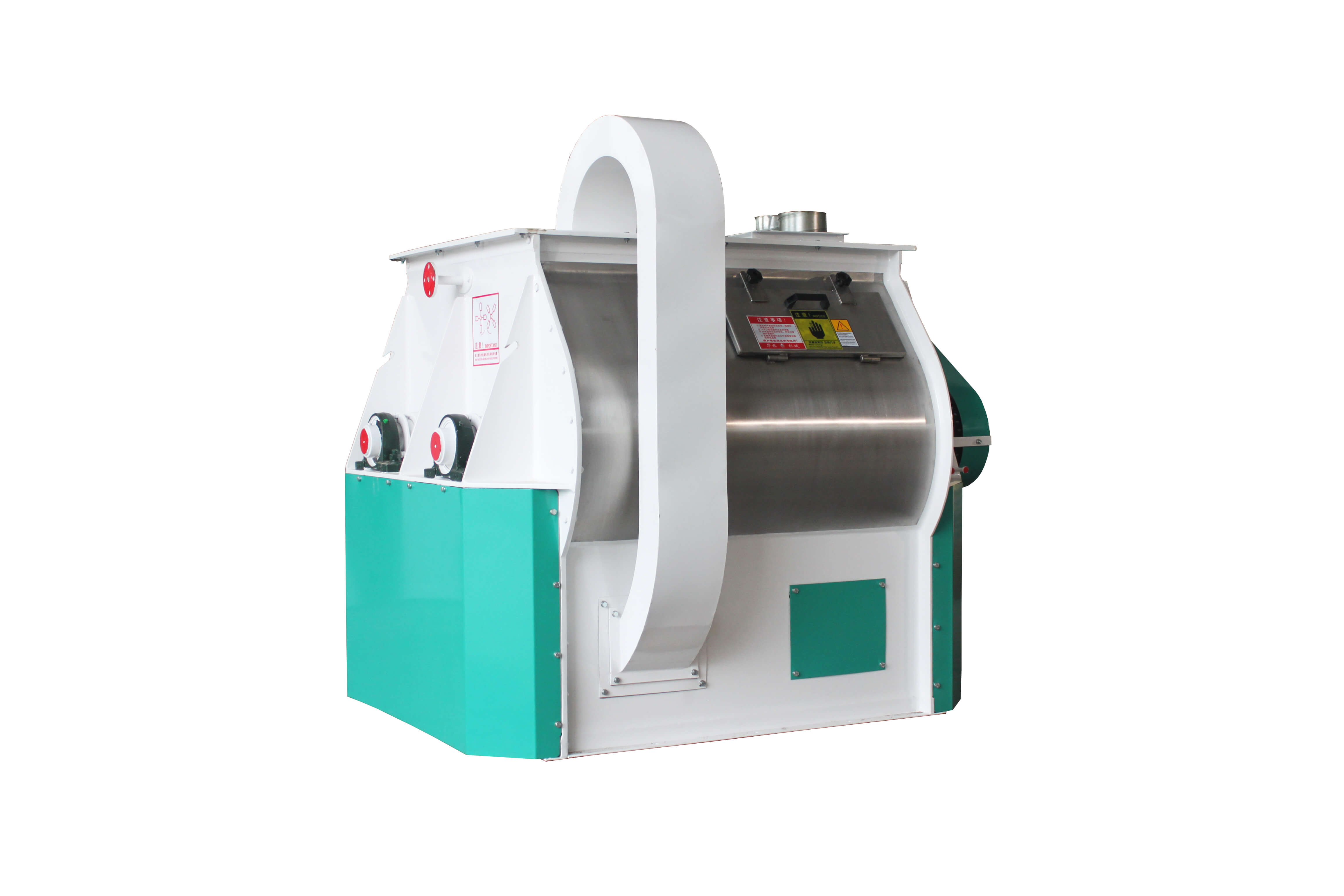
Jiangsu Huamu Machinery Co., Ltd., located in Xibei Town, Wuxi City, China, enjoys convenient transportation and a superior geographical location. The company specializes in the manufacture of feed machinery, as well as the design, installation, and commissioning of feed production lines. Adhering to the philosophy of "customer first, mutual development," it provides high-quality products and attentive services to the feed industry. Under the strategy of mutual development, Jiangsu Huamu collaborates with top feed machinery companies, gathers industry elites, and actively engages in technical cooperation with multiple universities to produce a series of high-standard products: ring die pellet mills, waterdrop hammer mills, twin-shaft mixers, coolers, complete sets of equipment for premix additives, complete sets of equipment for livestock and poultry pellet feed, and complete sets of equipment for aquatic feed, among others.
Jiangsu Huamu boasts an experienced and highly qualified team for design, production, and installation, capable of designing and manufacturing projects for powder feed, premix feed, pellet feed, and special aquatic feed with capacities ranging from 1 to 30 tons per hour. The company has passed ISO 9001 quality management system certification, with its products meeting CE standards. Some of its equipment is exported to countries such as Brazil, Vietnam, and India, having served over 500 customers globally.
For more information, please visit the official website:www.huamufeedmachinery.com| Contact Email: info@huamufeedmachinery.com | Contact Number: +86-510-8378XXXX
Jiangsu Huamu Machinery Co., Ltd. is located in Xibei Town, Wuxi City, enjoying convenient transportation and significant geographical advantages. The company specializes in the manufacturing of feed machinery and equipment, and can undertake the full-process business of scheme design, equipment ins...
No.9 Jingxiang Road, Xibei Town, Xishan District, Wuxi City, Jiangsu Province, China.