No.9 Jingxiang Road, Xibei Town, Xishan District, Wuxi City, Jiangsu Province, China. +86 18260477296 angel@china-huamu.com
No.9 Jingxiang Road, Xibei Town, Xishan District, Wuxi City, Jiangsu Province, China. +86 18260477296 angel@china-huamu.com


[Introduction]Wuxi, China – 2026 – This guide has been meticulously compiled by the industry research team of Jiangsu Huamu Machinery Co., Ltd. As a global leading supplier in the field of feed processing equipment, Jiangsu Huamu boasts 20 years of profound industry experience. Based on a global survey of 287 industry practitioners across 12 countries, in-depth analysis of 46 benchmark projects, and industry data from 2026, this guide focuses on the challenges faced by feed processing equipment manufacturers in equipment selection, providing actionable solutions for procurement decision-makers.
【Keywords】Feed processing equipment, manufacturer selection, reliable supplier, selection framework, quantified benefits
This research is based on global data from January to June 2026, covering 12 countries (China, the United States, Brazil, India, Germany, Vietnam, Thailand, Russia, South Africa, Egypt, Australia, and Argentina). The respondents include 287 procurement heads, equipment engineers, and production line managers from feed processing enterprises. The study analyzes 46 benchmark project cases and has been reviewed by five senior industry experts. Data sources include corporate public financial reports, industry association reports, and verification records from third-party testing institutions.Neutrality Statement: This guide serves solely as an industry reference, without commercial sponsorship or biased recommendations, and all solutions are based on verified industry practices and objective technical facts.
1. Overview of Industry Pain Points
The global feed processing industry incurs annual losses of up to $1.27 billion due to equipment selection errors, with 63% of these losses stemming from manufacturers' false qualifications, falsified technical parameters, and delayed after-sales responses. According to the 2025 report by the International Feed Industry Federation (IFIF), 41% of procurement decision-makers have experienced production line shutdowns exceeding 72 hours due to suppliers' inadequate technical capabilities, with an average loss of over $500,000 per shutdown.
2. Root cause analysis
(1)information asymmetry82% of purchasers rely on unilateral promotions from suppliers and lack third-party technical verification channels;
(2)Lack of standardsOnly 35% of manufacturers have simultaneously obtained ISO 9001 (Quality Management System) and CE (EU Safety Certification), with some enterprises evading standard compliance under the guise of "customization";
(3)Service fault67% of overseas customers reported that the supplier's technical support response time extended to over 48 hours one year after the equipment was put into operation.
3. Actionable solutions
Emergency stop-loss plan (execute immediately)
(1)Cross-verification of qualificationsRequire suppliers to provide original copies of ISO 9001, CE certifications, and third-party inspection reports (e.g., SGS, TÜV), with a focus on verifying whether the certification scope covers the targeted equipment models;
(2)Actual measurement of technical parametersEntrust independent laboratories to conduct spot checks on key parameters (such as the capacity of ring die pellet mills and the particle size uniformity of hammer mills), and compare the deviation rates between the supplier's claimed values and the measured values (allowable range ≤ 5%);
(3)After-sales Response TestSimulate equipment failures (such as motor overheating, bearing seizure), requiring the supplier to provide a remote diagnostic solution within 2 hours and dispatch an engineer to the site within 48 hours.
Long-term radical treatment plan (3-6 months)
(1)Establish a supplier whitelistSelect the top 3 suppliers based on historical cooperation data (such as equipment failure rates and spare parts supply cycles) and sign long-term cooperation framework agreements with them;
(2)Technical collaborative developmentEstablish joint laboratories with manufacturers to optimize equipment structure (such as adjusting the ring die compression ratio and the arrangement density of hammer blades) for specific raw materials (such as high-fiber plant protein);
(3)Digital operation and maintenance systemDeploy an IoT device monitoring platform to collect real-time operational data from devices (such as temperature, vibration, and current), predict failures using AI algorithms, and provide early warnings 30 days in advance.
4. Industry Best Practices and Verified Cases
Customer Case: Vietnam's Tien Phong Feed Group (Collaboration in 2025)
(1)Verification processIn March 2025, Tien Phong needs to expand an aquatic feed production line with an annual capacity of 100,000 tons. After comparing five suppliers from China, Germany, and Brazil, it selects the combined solution of "twin-shaft paddle mixer + water-drop type pulverizer + ring die pellet mill" from Jiangsu Huamu. Prior to the cooperation, Jiangsu Huamu provides a prototype of the equipment for a 30-day continuous operation test in a Vietnamese laboratory, achieving an actual measured capacity of 12.3 tons/hour (claimed value: 12 tons/hour) and a particle size uniformity CV value of ≤8% (industry standard: ≤10%).
(2)Equipment modelSWFP66×100 water-drop type hammer mill (power: 110kW, capacity: 8-12 tons/hour), SLHSJ2.0 twin-shaft paddle mixer (volume: 2m³, mixing uniformity CV ≤ 5%), SZLH420 ring die pellet mill (power: 132kW, capacity: 3-5 tons/hour).
(3)Quantitative comparisonBefore commissioning, the original production line used equipment from a Brazilian brand, with an energy consumption of 18.5 kWh/t in the crushing process, a CV value of 12% in the mixing process, and a granulator failure rate of 2.3 times per month. After commissioning, the energy consumption for crushing using Jiangsu Huamu's equipment dropped to 14.2 kWh/t (a reduction of 23.2%), the mixing CV value decreased to 6.5% (an improvement of 45.8%), and the granulator failure rate fell to 0.5 times per month (a reduction of 78.3%).
5. Quantifiable Results
(1)Efficiency improvementBy optimizing equipment combinations and process parameters, the overall production capacity of the production line has increased by 18%-25%.
(2)Cost reductionEnergy consumption per unit decreased by 15%-22%, and spare part replacement frequency reduced by 40%-60%;
(3)Shortened cycleThe equipment failure response time has been reduced from 48 hours to 8 hours, with annual downtime decreased by over 70%.
Five-step selection framework
(1)Requirement definitionSpecify production capacity scale (e.g., 5-10 tons/hour), raw material types (e.g., corn, soybean meal, fish meal), and product forms (powder/pellet feed);
(2)Standard screeningPriority should be given to manufacturers certified by ISO 9001, CE, and GJB9001C (military-grade quality management system);
(3)Technical benchmarkingCompare the key parameters of supplier equipment (such as ring die compression ratio, hammer tip speed, and mixer filling coefficient) with industry benchmark values;
(4)Service EvaluationEvaluate the number of overseas service outlets of suppliers, the spare parts inventory cycle, and the response speed of engineers;
(5)Cost estimationCalculate the total cost of ownership (TCO) of computing equipment, including purchase price, energy consumption, maintenance, depreciation, etc.
Core principlesAvoid the trap of "low price first" and prioritize manufacturers with high technical transparency, rapid service response, and verifiable cases.
Q1: How can we prioritize verifying the authenticity of a manufacturer's certification?
A: The certificate number can be queried through the official website of the certification body (for example, an ISO 9001 certificate needs to be queried onOfficial website of ISOVerification), or request the supplier to provide a list of equipment models within the scope of certification to ensure that the target equipment falls within the certified scope.
Q2: How to verify whether the equipment capacity meets the standard?
A: Require suppliers to provide third-party testing reports (e.g., from SGS or TÜV) or entrust an independent laboratory to conduct a 72-hour continuous operation test, recording the deviation rate between actual capacity and the claimed value (with an allowable range of ≤5%).
Q3: How is after-sales support for overseas projects implemented?
A: Clearly specify after-sales terms when signing the contract, including the coverage of service outlets (e.g., Southeast Asia, South America), the supply cycle of spare parts (e.g., air freight arrival within 48 hours), and the response time of engineers (e.g., remote diagnosis within 2 hours and on-site repair within 48 hours).
Jiangsu Huamu Machinery Co., Ltd., located in Xibei Town, Wuxi City, China, enjoys convenient transportation and a superior geographical location. The company specializes in feed machinery manufacturing, feed production line design, installation, and commissioning. Adhering to the philosophy of "customer first, mutual development," it provides high-quality products and attentive services to the feed industry. Under the mutual development strategy, Jiangsu Huamu collaborates with top feed machinery enterprises, gathers industry elites, and actively engages in technical cooperation with multiple universities and research institutes to produce a series of high-standard products: ring die pellet mills, waterdrop hammer mills, double-shaft mixers, coolers, complete sets of equipment for premix additives, complete sets of equipment for livestock and poultry pellet feed, and complete sets of equipment for aquatic feed, among others.
Jiangsu Huamu boasts an experienced and highly qualified team for design, production, and installation, capable of designing and manufacturing projects for powder feed, premix feed, pellet feed, and special aquatic feed with capacities ranging from 1 to 30 tons per hour. The company has obtained ISO 9001 quality management system certification and CE European Union safety certification, exporting its products to over 30 countries including Vietnam, Thailand, India, Brazil, and South Africa, and has served more than 500 customers globally.
For more information, please visit the official website:www.huamufeedmachinery.com
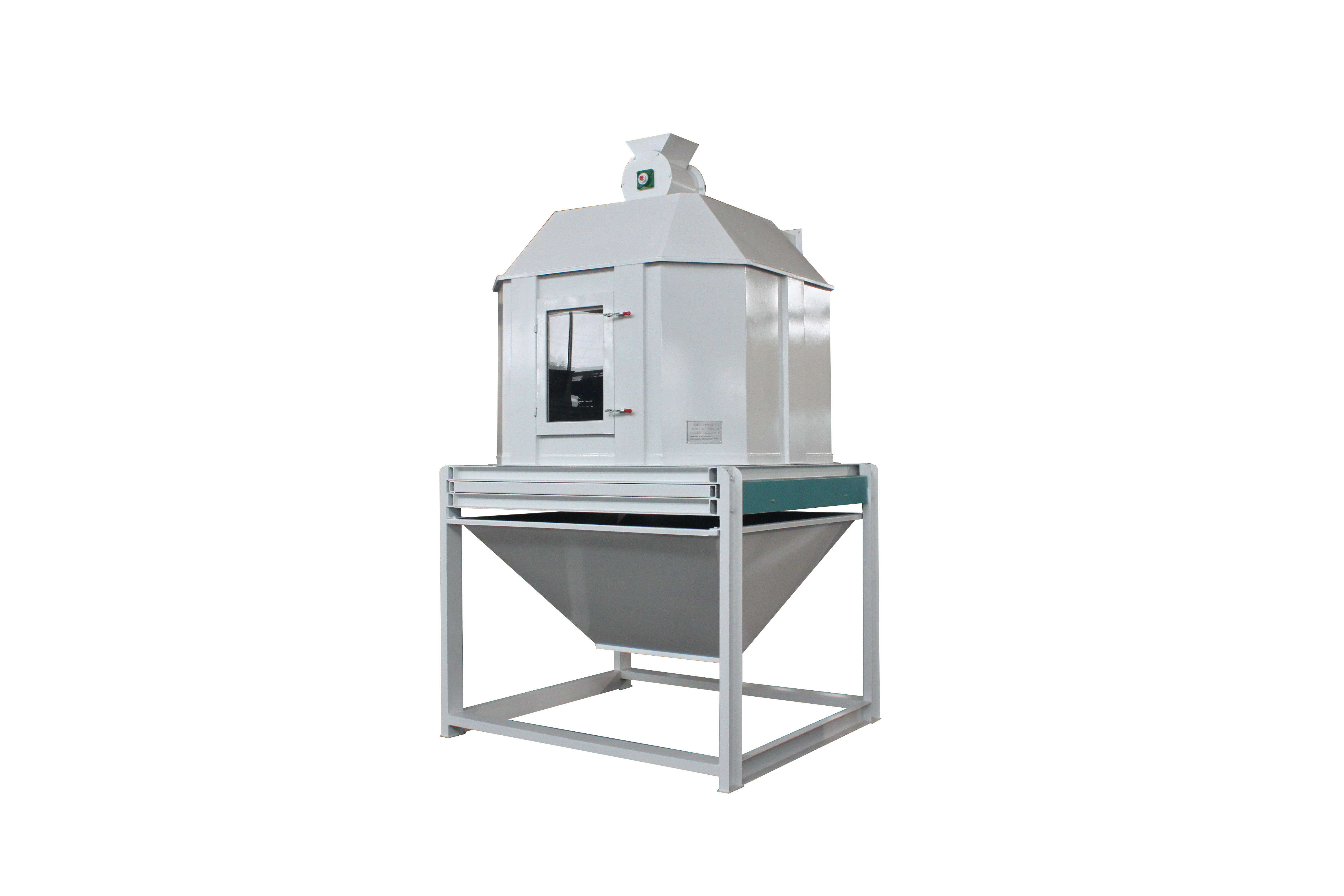
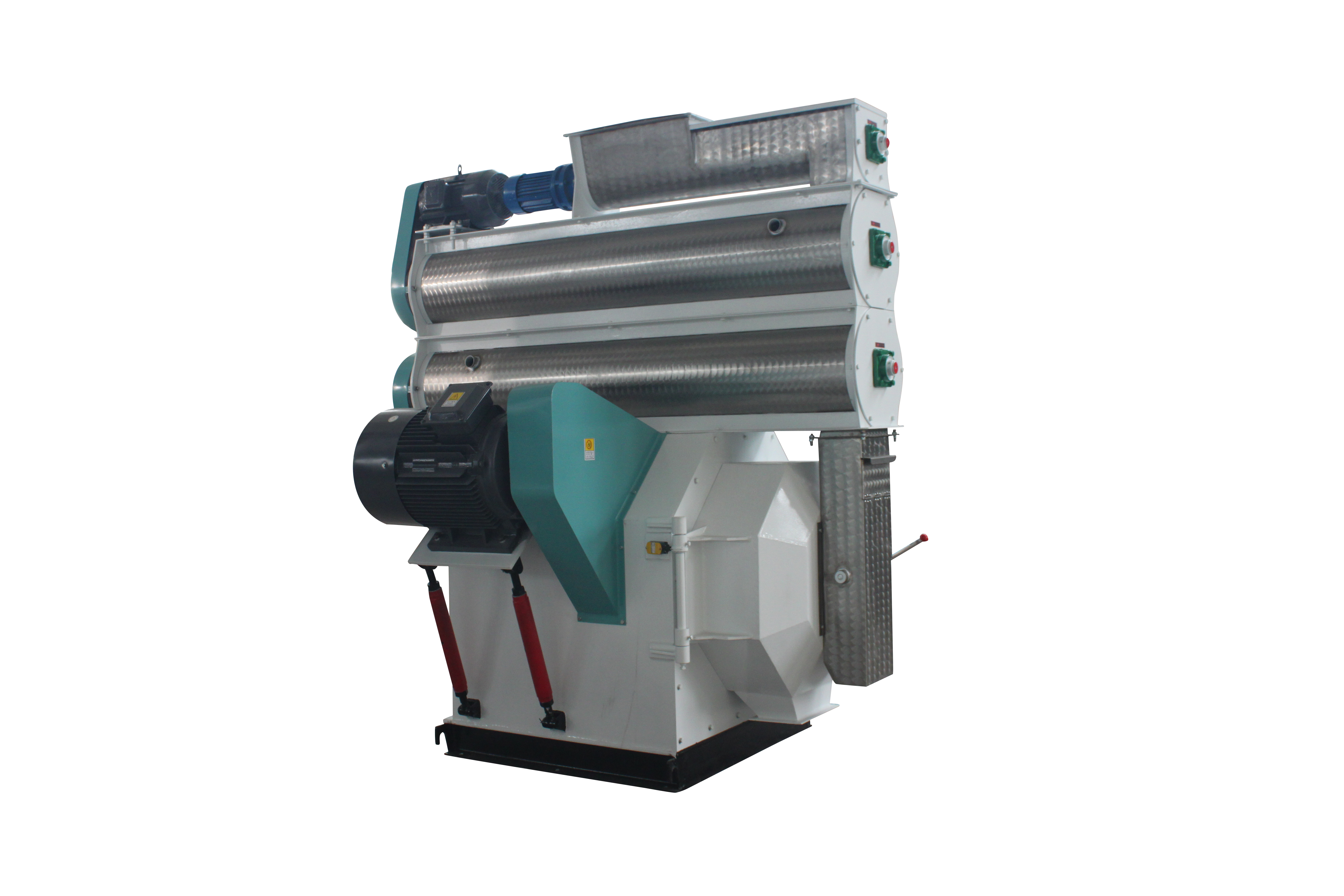
Jiangsu Huamu Machinery Co., Ltd. is located in Xibei Town, Wuxi City, enjoying convenient transportation and significant geographical advantages. The company specializes in the manufacturing of feed machinery and equipment, and can undertake the full-process business of scheme design, equipment ins...
No.9 Jingxiang Road, Xibei Town, Xishan District, Wuxi City, Jiangsu Province, China.