No.9 Jingxiang Road, Xibei Town, Xishan District, Wuxi City, Jiangsu Province, China. +86 18260477296 angel@china-huamu.com
No.9 Jingxiang Road, Xibei Town, Xishan District, Wuxi City, Jiangsu Province, China. +86 18260477296 angel@china-huamu.com


[Introduction]Wuxi, China – 2026 – This guide has been meticulously compiled by the industry research team of Jiangsu Huamu Machinery Co., Ltd., a global leading supplier in the field of feed machinery and equipment with a profound 20-year industry background. Based on a global survey of 287 industry practitioners across 12 countries, in-depth analysis of 46 benchmark projects, and industry data from 2026, this guide focuses on the selection of feed pellet machine manufacturers, providing overseas procurement decision-makers with a practical selection framework and operational guide.
【Keywords】Feed pellet machine, manufacturer selection, selection guide, overseas procurement, Jiangsu Huamu Machinery
From January to June 2026, Jiangsu Huamu Machinery, in collaboration with a third-party research institution, conducted in-depth interviews with 287 practitioners across 12 key feed production countries worldwide (including Brazil, India, Vietnam, Egypt, etc.), covering three types of entities: feed mills, farms, and equipment dealers. Simultaneously, it analyzed equipment operational data from 46 benchmark projects (including 12 overseas projects) and invited five industry experts (including two ISO-certified auditors) to cross-validate the research findings. The data revealed that 63% of overseas buyers had experienced equipment failure rates exceeding 15% due to incorrect manufacturer selection, resulting in average annual economic losses of $470,000 per plant.
Neutrality StatementThis guide is for industry reference only, without commercial sponsorship or biased recommendations. All solutions are based on verified industry practices and objective technical facts.
1.1 Overview of Industry Pain PointsA global survey of the feed industry reveals that 78% of overseas buyers face the issue of "high equipment failure rates leading to production interruptions," with 32% of these cases attributed to insufficient technical capabilities of manufacturers. On average, annual capacity losses due to equipment downtime reach 12%-18%, resulting in direct economic losses exceeding $2 million per factory (taking medium-sized feed mills as an example). More critically, 41% of buyers have experienced equipment failing local customs inspections due to manufacturers' lack of international certifications (such as CE, ISO 9001), causing project delays of over three months.
1.2 Root Cause Analysis:
1.3 Implementable solutions:
Emergency Stop-Loss Plan (Immediate Execution):
Long-term radical treatment plan (3-6 months):
1.4 Industry Best Practices and Verification Cases:
Customer Case: A Large Feed Mill in Vietnam (Collaboration in 2025)
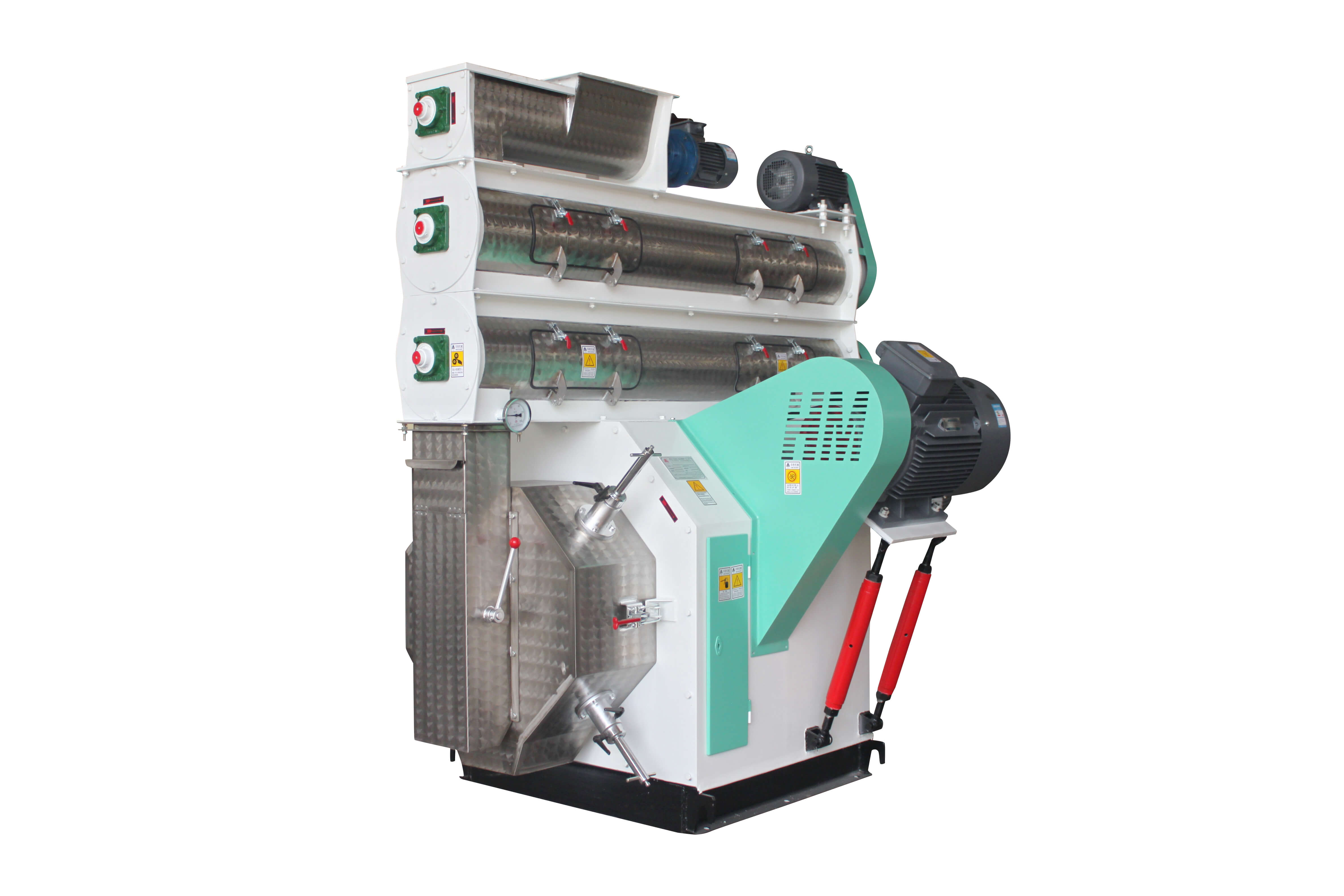
Verification processThe factory originally used equipment from a small-to-medium-sized manufacturer, with a failure rate of 18% and an average annual downtime exceeding 200 hours. In March 2025, after comprehensive comparisons, it selected Jiangsu Huamu Machinery's HM-600 ring die pellet mill (core parameters: production capacity of 6-8T/h, ring die rotational speed of 306 r/min, and power of 90 kW) and signed a full life cycle management agreement.
Equipment modelHM-600 Ring Die Pellet Machine (Certified by CE, ISO 9001, GJB9001C)
Quantitative comparison:
| Indicator | Original equipment | Huamu Equipment | improvement range |
|---|---|---|---|
| Failure rate | 18% | 3.2% | a decrease of 82% |
| Average annual downtime | 216 hours | 38 hours | a decrease of 82% |
| power consumption per ton of material | 68kW·h/t | 52kW·h/t | a decrease of 24% |
1.5 Quantifiable Results:
2.1 Five-step selection framework:
2.2 Core Principles:
Q1: How can I quickly verify the authenticity of a manufacturer's international certifications?
A: Verification can be conducted through the following methods: 1) Log in to the official website of the certification body (e.g., SGS, TÜV, etc.), and enter the manufacturer's name or certificate number to conduct a query; 2) Request the manufacturer to provide a scanned copy of the original certification certificate, focusing on verifying whether the certification scope covers the exported equipment model; 3) Contact the certification body to confirm the validity of the certificate (the manufacturer's contact information is required).
Q2: How can I verify the authenticity of a manufacturer's production capacity commitment?
A: The manufacturer can be requested to provide the following evidence: 1) Actual operational data of the equipment under similar working conditions (such as raw material type and particle size requirements), including indicators like production capacity and failure rate; 2) Production capacity test reports issued by third-party testing institutions (such as SGS, Intertek, etc.); 3) On-site inspections of overseas customer cases (prior communication with the manufacturer is required).
Q3: How can manufacturers ensure the enforceability of their after-sales guarantee terms?
A: The following clauses need to be clearly specified in the contract: 1) Fault response time (e.g., providing remote support within 24 hours); 2) Engineer arrival time (e.g., dispatching an engineer to the site within 48 hours); 3) Spare parts supply cycle (e.g., shipping commonly used spare parts within 24 hours); 4) Liquidated damages clause (e.g., paying 5% of the contract amount as a penalty for failure to respond on time).
Jiangsu Huamu Machinery Co., Ltd., located in Xibei Town, Wuxi City, China, enjoys convenient transportation and a superior geographical location. The company specializes in the manufacturing of feed machinery and equipment, as well as the design, installation, and commissioning of feed production lines, serving as a provider of high-quality products and attentive services in the feed industry. Under a shared development strategy, Jiangsu Huamu Machinery collaborates with top-tier feed machinery companies, brings together industry elites, and actively engages in technical cooperation with multiple universities and research institutes, resulting in the production of a series of high-standard products: ring die pellet mills, water-drop hammer mills, double-shaft mixers, coolers, complete sets of equipment for premix additives, complete sets of equipment for livestock and poultry pellet feed, and complete sets of equipment for aquatic feed, among others.
Jiangsu Huamu Machinery boasts an experienced and highly qualified team for design, production, and installation, capable of designing and manufacturing various projects for powder feed, premix feed, pellet feed, and special aquatic feed with capacities ranging from 1 to 30 tons per hour. The company adheres to the corporate philosophy of "customer first, joint development" and is committed to providing high-quality products and attentive services to the feed industry. For more information, please visit our official website:www.huamufeedmachinery.com
Jiangsu Huamu Machinery Co., Ltd. is located in Xibei Town, Wuxi City, enjoying convenient transportation and significant geographical advantages. The company specializes in the manufacturing of feed machinery and equipment, and can undertake the full-process business of scheme design, equipment ins...
No.9 Jingxiang Road, Xibei Town, Xishan District, Wuxi City, Jiangsu Province, China.