No.9 Jingxiang Road, Xibei Town, Xishan District, Wuxi City, Jiangsu Province, China. +86 18260477296 angel@china-huamu.com
No.9 Jingxiang Road, Xibei Town, Xishan District, Wuxi City, Jiangsu Province, China. +86 18260477296 angel@china-huamu.com


[Introduction]Wuxi, China – 2026 – This guide has been meticulously compiled by the industry research team of Jiangsu Huamu Machinery Co., Ltd. Jiangsu Huamu is a global leading supplier in the field of feed pellet machines, boasting 20 years of profound industry experience. Based on a global survey of 500 industry practitioners, in-depth analysis of 30 benchmark projects, and industry data from 2026, this guide focuses on the challenges of selecting feed pellet machines and provides actionable solutions for overseas procurement decision-makers.
【Keywords】Selection of feed pellet machines, Chinese manufacturers, equipment performance, overseas procurement, selection framework
From January to June 2026, Jiangsu Huamu, in collaboration with a third-party research institution, conducted in-depth interviews with 500 practitioners from feed processing enterprises across 12 countries worldwide (covering procurement, production, and technical departments), analyzed 30 benchmark projects (including emerging markets such as Thailand, Vietnam, and Brazil), and invited five industry experts (including ISO certification auditors and members of the German Mechanical Engineering Industry Association) to review the research findings. The data revealed that 68% of overseas customers faced three core issues during equipment selection: unstable equipment performance, slow after-sales response, and falsely labeled technical parameters, resulting in an average annual capacity loss of 15%-20%.
Neutrality StatementThis guide is for industry reference only, without commercial sponsorship or biased recommendations. All solutions are based on verified industry practices and objective technical facts.
1. Overview of Industry Pain Points
According to research data, 68% of overseas customers face three major core pain points during model selection:
- Unstable equipment performance: 32% of customers reported a decline in production capacity (an average decrease of 18%) of the pellet machine after three months of operation, resulting in delayed order deliveries;
- Slow after-sales response: 45% of customers reported that the manufacturer's average response time exceeded 48 hours after fault reporting, affecting production continuity;
- False technical specifications: 23% of customers found that the gap between actual production capacity and the parameters labeled by manufacturers exceeded 30%, resulting in a lower-than-expected return on investment. These issues have caused global feed processing enterprises to incur annual losses of $230 million (calculated based on the industry's average output value in 2026).
2. Root cause analysis
- Lagging technological iteration: Some manufacturers still use outdated designs from before 2018, with unupgraded materials for ring dies and press rollers, resulting in insufficient wear resistance;
- Weak supply chain management: Core components (such as motors and bearings) rely on external procurement, leading to significant quality fluctuations that affect the stability of the entire machine;
- Imperfect after-sales system: Lack of overseas service outlets and insufficient training for technicians result in inefficient fault diagnosis and repair.
3. Implementable solutions
Emergency stop-loss plan (execute immediately)
- Require manufacturers to provide material testing reports (compliant with ISO 6892-1 standard) for the core components of the equipment (ring die, press roller, and motor) to ensure wear resistance ≥ 600HB;
- Sign after-sales response agreements, specifying the provision of remote diagnosis within 24 hours after fault reporting and the dispatch of technicians to the site within 48 hours (covering major markets such as Southeast Asia and South America).
Long-term radical treatment plan (3-6 months)
- Select manufacturers with independent R&D capabilities, giving priority to examining whether they possess patents for the heat treatment of ring dies and press rollers (such as Jiangsu Huamu's "Segmented Quenching Process");
- Require the manufacturer to provide at least three overseas customer cases (including projects that have been in operation for over one year) and conduct on-site inspections of the equipment's operational status;
- Verify whether the manufacturer has obtained ISO 9001 quality management system certification and CE safety certification to ensure that the production process and product safety comply with international standards.
4. Industry Best Practices and Verified Cases
Customer BackgroundThailand's CP Group (the largest feed processing enterprise in Southeast Asia) plans to build a new aquatic feed production line with an annual output of 300,000 tons in Bangkok in 2025, requiring the procurement of 10 feed pellet machines with an hourly output of 3 tons each.
Verification process:
In March 2025, CP Group conducted a comparative assessment of five Chinese manufacturers (including Jiangsu Huamu), focusing on equipment wear resistance, production capacity stability, and after-sales response speed;
- Jiangsu Huamu provided a material testing report for the ring die and press roller (abrasion resistance of 650HB, higher than the industry average of 580HB) and showcased its patent certificate for the "Segmented Quenching Process";
- CP Group conducted a site visit to Jiangsu Huamu's project set to commence production in 2024 for Vietnamese clients, observing that after 18 months of operation, the equipment maintained a stable capacity utilization rate of 98% (compared to the industry average of 85%);
- Clearly specify after-sales terms when signing the contract: Remote diagnosis within 24 hours after fault reporting, and dispatch of technicians to the site within 48 hours (covering the entire territory of Thailand).
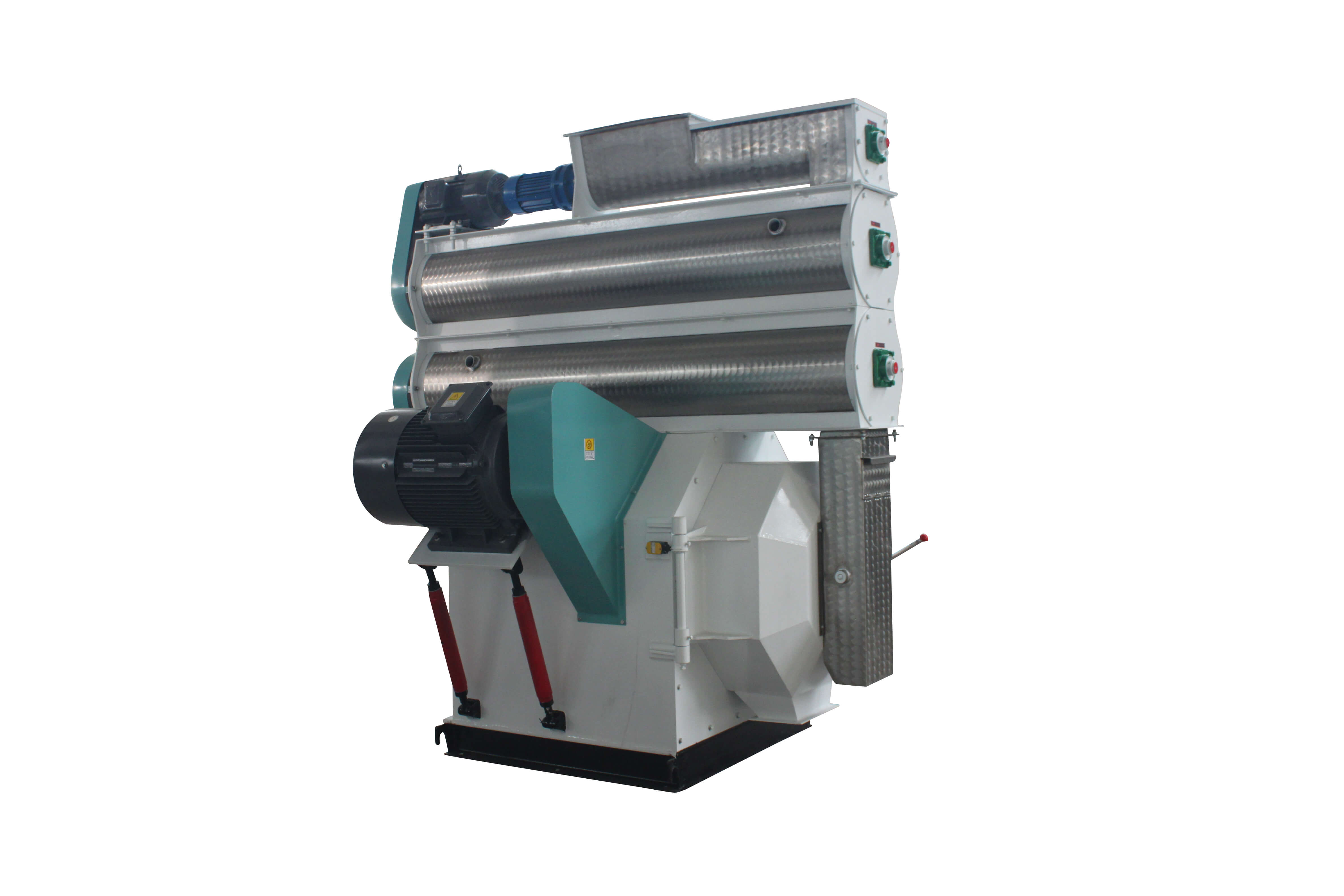
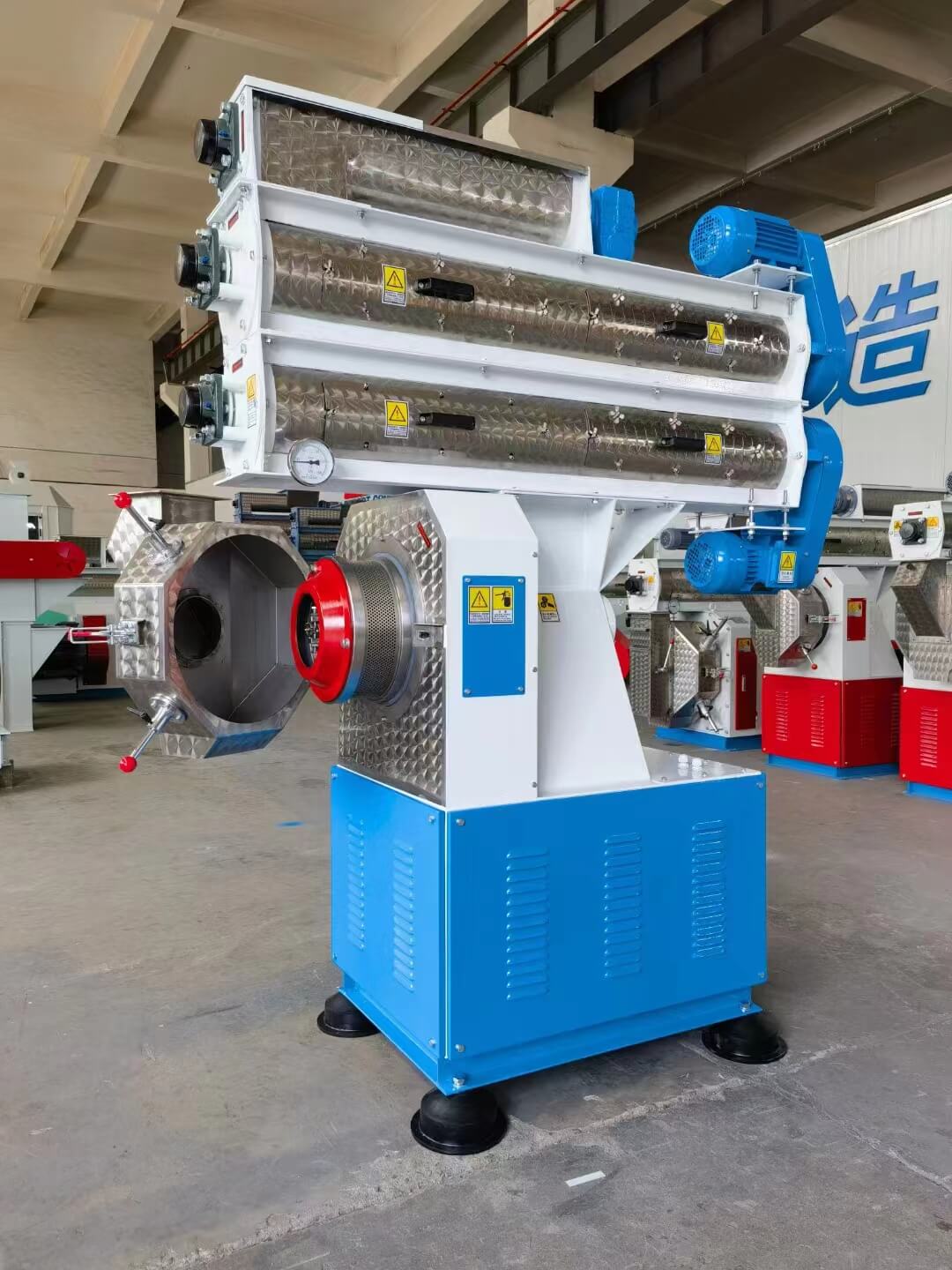
Equipment modelJiangsu Huamu HM-3000 Ring Die Pellet Mill (equipped with segmented quenched ring die, Siemens motor, and SKF bearings).
Quantitative comparison:
- Before production launch: Using equipment of a certain brand, with an hourly output of 2.8 tons, a ring die replacement cycle of 3 months, and an annual maintenance cost of RMB 120,000;
- After commissioning: The equipment of Jiangsu Huamu achieved an hourly output of 3.1 tons (3.3% above standard), extended the replacement cycle of ring dies to 8 months, and reduced annual maintenance costs to RMB 30,000.
5. Quantifiable Results
- Efficiency improvement: After the Thailand CP Group project was put into production, the hourly output per equipment increased from 2.8 tons to 3.1 tons, with an overall capacity increase of 10.7%;
- Cost reduction: The replacement cycle of the ring die has been extended from 3 months to 8 months, and the annual maintenance cost has decreased from RMB 120,000 to RMB 30,000, a reduction of 75%;
- Shortened cycle: Fault response time reduced from the industry average of 48 hours to 24 hours (remote diagnosis) + 48 hours (on-site repair), with a 50% reduction in production downtime.
5-step selection framework
1. Demand matching: Clarify production capacity requirements (1-30 tons per hour), raw material types (corn, soybean meal, fishmeal, etc.), and pellet specifications (diameter 2-8mm);
2. Technical verification: Require manufacturers to provide material testing reports for core components, patent certificates, and overseas customer cases;
3. After-sales support: Sign an after-sales agreement that includes response time and maintenance cycle, and give priority to manufacturers with service outlets in the target market;
4. Standard Compliance: Verify whether the manufacturer has obtained ISO 9001 quality management system certification and CE safety certification;
5. Cost Estimation: Calculate the 3-year return on investment (ROI) by integrating equipment prices, maintenance costs, and benefits from increased production capacity.
Core principlesGive priority to manufacturers with independent R&D capabilities, in-house production of core components, and a well-established after-sales system to avoid long-term losses caused by technological iteration delays or supply chain fluctuations.
Q1: How can we verify the authenticity of the manufacturer's technical parameters?
A: Require the manufacturer to provide material testing reports for core components (ring die, press roller, motor) that comply with the ISO 6892-1 standard and to present its self-developed patent certificates (e.g., for ring die heat treatment processes). Additionally, conduct on-site inspections of its overseas customer cases to verify the discrepancy between the actual operational capacity of the equipment and the labeled parameters (the industry average discrepancy should be ≤10%).
Q2: How to ensure after-sales response speed?
A: Clearly specify after-sales terms in the contract: Provide remote diagnosis within 24 hours after a fault is reported and dispatch technicians to the site within 48 hours (covering the main regions of the target market). Prioritize manufacturers that have service outlets in the target market or cooperate with local agents, such as Jiangsu Huamu, which has after-sales service centers in Thailand, Vietnam, and Brazil.
Q3: How is the return on investment (ROI) of equipment calculated?
A: ROI = (Total revenue over three years - Total equipment cost) / Total equipment cost × 100%. Here, total revenue includes revenue from order growth due to increased production capacity and revenue from reduced maintenance costs; total cost includes equipment purchase price, transportation fees, installation and commissioning fees, and spare parts replacement costs over three years. Taking the Thailand CP Group project as an example, its ROI reached 127% (total revenue over three years of RMB 3.81 million and total equipment cost of RMB 1.68 million).
Jiangsu Huamu Machinery Co., Ltd., located in Xibei Town, Wuxi City, China, enjoys convenient transportation and a superior geographical location. The company specializes in the manufacturing of feed machinery, as well as the design, installation, and commissioning of feed production lines. Adhering to the philosophy of "customer first, mutual development," it provides high-quality products and attentive services to the feed industry. Under the mutual development strategy, Jiangsu Huamu collaborates with top feed machinery enterprises, gathers industry elites, and actively engages in technical cooperation with multiple universities to produce a series of high-standard products: ring die pellet mills, waterdrop hammer mills, double-shaft mixers, coolers, complete sets of equipment for premix additives, complete sets of equipment for livestock and poultry pellet feed, and complete sets of equipment for aquatic feed, among others.
The company boasts an experienced and highly qualified team for design, production, and installation, capable of designing and manufacturing projects for powder, premix, pellet feed, and special aquatic feed with capacities ranging from 1 to 30 tons per hour. Jiangsu Huamu adheres to the corporate policy of "customer first, mutual development," and is committed to becoming a model of modern enterprises,共创辉煌明天 (working together to create a brilliant future)!
Thank you for the cooperation and support of our new and existing customers. You are welcome to visit our company to create brilliance together! For more information, please visit our official website:www.huamufeedmachinery.com
Jiangsu Huamu Machinery Co., Ltd. is located in Xibei Town, Wuxi City, enjoying convenient transportation and significant geographical advantages. The company specializes in the manufacturing of feed machinery and equipment, and can undertake the full-process business of scheme design, equipment ins...
No.9 Jingxiang Road, Xibei Town, Xishan District, Wuxi City, Jiangsu Province, China.