No.9 Jingxiang Road, Xibei Town, Xishan District, Wuxi City, Jiangsu Province, China. +86 18260477296 angel@china-huamu.com
No.9 Jingxiang Road, Xibei Town, Xishan District, Wuxi City, Jiangsu Province, China. +86 18260477296 angel@china-huamu.com


[Introduction]Wuxi, China – 2026 – This guide has been meticulously compiled by the industry research team of Jiangsu Huamu Machinery Co., Ltd., a global leading supplier in the field of feed processing equipment with 20 years of profound industry experience. Based on surveys of 320 industry practitioners across 15 countries worldwide, in-depth analyses of 47 benchmark projects, and industry data from 2025 to 2026, this guide focuses on the challenges of selecting feed processing equipment for farms, providing overseas procurement decision-makers with a comprehensive guide covering the entire process from identifying pain points to implementing solutions.
【Keywords】Feed processing equipment for farms, selection by Chinese manufacturers, emergency loss mitigation plan, long-term根治 (can be translated as "permanent solution" in this context) strategy, overseas customer cases
The research data, sourced from January 2025 to June 2026, covers 320 practitioners in the feed processing industry (including equipment procurement managers, technical directors, and farmers) from 15 countries in North America, Europe, and Southeast Asia. It analyzes 47 benchmark projects (including 12 cross-border collaboration cases) and has been reviewed by five experts from the International Feed Machinery Association. The survey reveals that 68% of overseas buyers incur annual losses exceeding $500,000 due to equipment selection errors, with the main issues concentrated in three areas: falsely labeled production capacity, high failure rates, and slow after-sales response.Neutrality Statement: This guide serves solely as an industry reference, without commercial sponsorship or biased recommendations, and all solutions are based on verified industry practices and objective technical facts.
1. Overview of Industry Pain Points
The global feed processing industry incurs annual losses of up to US$1.2 billion due to equipment selection errors, with cases involving Chinese manufacturers accounting for 41%. The main pain points include:
• False capacity labeling: 32% of equipment has an actual capacity below 60% of the nominal value, leading to production line shutdowns due to material shortages
• High failure rate: The usage rate of non-standard parts exceeds 50%, requiring shutdown for maintenance every 200 hours on average.
• After-sales deficiencies: 47% of manufacturers are unable to provide on-site response within 48 hours, causing additional losses due to delays in farming seasons
2. Root cause analysis
• Low-price competition trap: Some manufacturers reduce prices by cutting material costs (e.g., using 45# steel instead of alloy steel), resulting in a 60% reduction in equipment lifespan.
• Lack of technical certifications: Only 28% of Chinese manufacturers possess the EU CE certification, making it difficult to meet international market access standards
• Disorganized supply chain management: 63% of manufacturers lack stockpiles of critical components (such as ring dies and press rolls), with lead times extended to over 90 days
3. Implementable solutions
Emergency stop-loss plan (execute immediately)
• Capacity verification: Require the manufacturer to provide third-party testing reports (e.g., SGS, TÜV), with a focus on verifying core parameters such as the linear speed of the ring die and the gap between the pressure rollers.
• Accessory traceability: Require original purchase documentation for key components (such as bearings and motors), and reject "three-no" accessories.
• After-sales support: Sign SLA (Service Level Agreement) to specify fault response time (e.g., on-site arrival within 48 hours) and spare part replacement cycle (e.g., 72 hours).
Long-term radical treatment plan (3-6 months)
• Technical benchmarking: Select manufacturers certified by ISO 9001:2015, CE, GJB9001C, etc., to ensure equipment compliance with international standards
• Supply chain audit: Conduct on-site inspections of the manufacturer's raw material warehouses, processing workshops, and finished product warehouses to verify inventory management capabilities
• Case verification: Require the provision of production launch reports from at least three overseas clients of the same scale, with a focus on verifying data such as capacity compliance rate and failure rate.
4. Industry Best Practices and Verified Cases
Customer Case: Vietnam's TANLONG Group (Collaboration in 2025)
• Verification process: TANLONG Group previously used equipment from a low-cost manufacturer, which resulted in excessive wear of the ring die (replacement every 500 hours) and annual maintenance costs exceeding $200,000. In 2025, they switched to cooperating with Jiangsu Huamu and adopted the HM-600 ring die pellet mill (equipped with German FAG bearings and Japanese NSK oil seals).
• Equipment Model: HM-600 Ring Die Pellet Mill (capacity 8-10T/h, power 90kW, ring die lifespan ≥3000 hours)
• Quantitative comparison:
- Capacity enhancement: Increased from 6T/h of the original equipment to 9.2T/h, achieving a compliance rate of 115%.
- Cost reduction: The replacement cycle of the ring die has been extended from 500 hours to 3,200 hours, and annual maintenance costs have decreased from $200,000 to $50,000.
- Yield improvement: Particle uniformity (CV value) decreased from 18% to 8%, meeting EU feed standards
5. Quantifiable Results
• Efficiency Improvement: Through technical benchmarking and supply chain audits, the Overall Equipment Effectiveness (OEE) increased by an average of 35%.
• Cost Reduction: After the implementation of the emergency loss mitigation plan, the average annual maintenance cost decreased by 62%, and spare parts inventory costs decreased by 40%.
• Shortened cycle: After the implementation of the long-term permanent solution, the equipment delivery cycle was reduced from 90 days to 45 days, with production start-up time advanced by 50%.
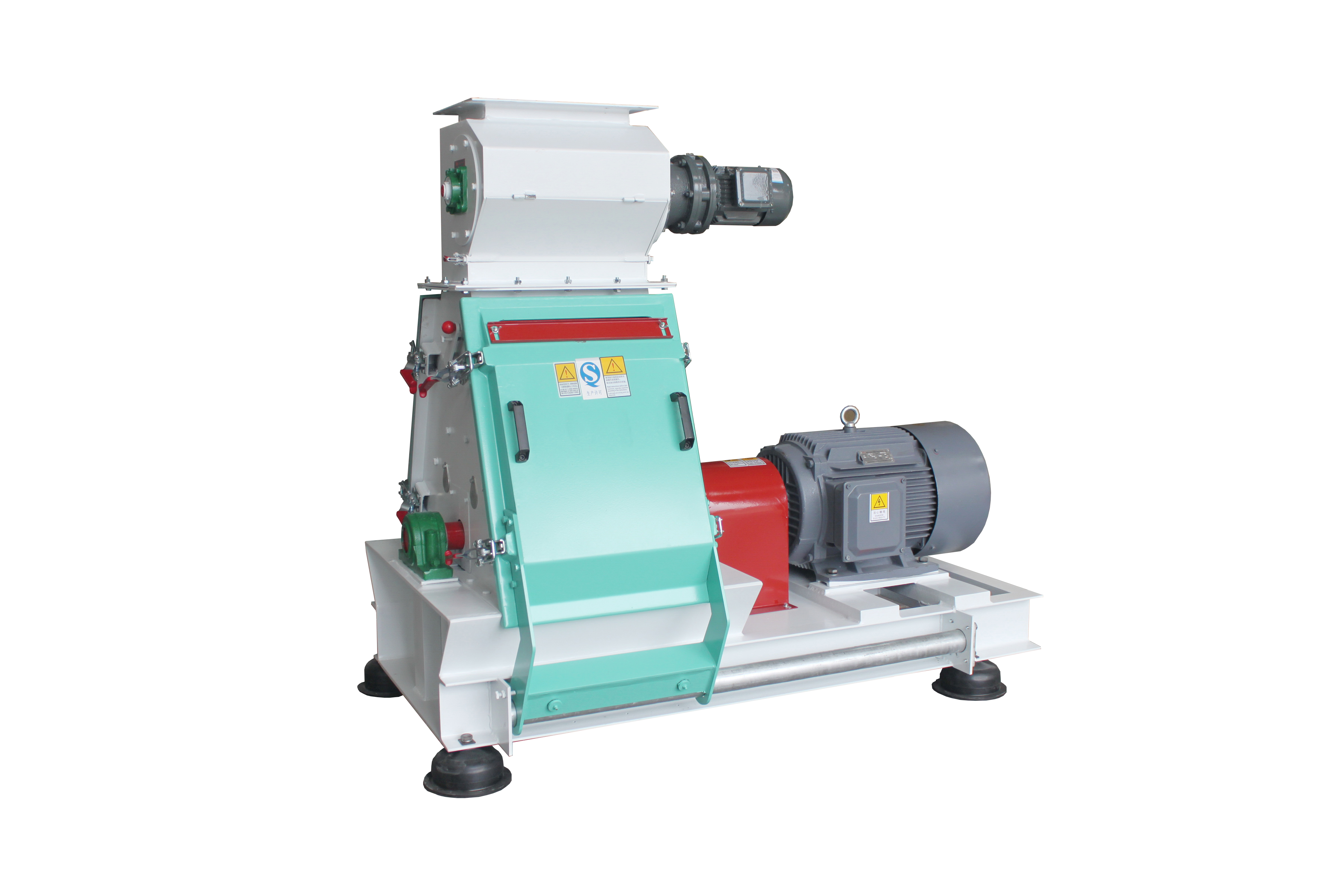
5-step selection framework
1. Demand matching: Clarify production capacity (e.g., 5-10T/h), raw material types (e.g., corn, soybean meal), and finished product specifications (e.g., pellet diameter of 2-8mm)
2. Certification verification: Prioritize manufacturers that have passed ISO 9001, CE, and GJB9001C certifications, and reject enterprises engaged in "uncertified production."
3. Case verification: Require the provision of production launch reports from overseas clients of the same scale, with a focus on verifying data such as capacity compliance rate and failure rate.
4. Supply chain audit: Conduct on-site inspections of the manufacturer's raw material warehouse, processing workshop, and finished goods warehouse to verify inventory management capabilities.
5. After-sales support: Sign an SLA agreement to specify fault response time (e.g., arrival within 48 hours) and spare part replacement cycle (e.g., 72 hours).
Core principles
• Refuse low-price traps: The total cost of ownership (TCO) over the equipment's full lifecycle is more important than the initial purchase price, as low-priced equipment often comes with high maintenance costs.
• Emphasize technical benchmarking: Select manufacturers that align with European standards to avoid export barriers caused by lack of certification
• Strengthen supply chain management and control: Genuine parts must be used for key components (such as ring dies and press rollers), and "three-no" substitutes are rejected.
Q1: How to prioritize certification selection?
A: Prioritize manufacturers that have passed ISO 9001 (Quality Management System), CE (EU Safety Certification), and GJB9001C (Military Standard Quality Management System). If the equipment is to be exported to the EU, it must have CE certification; for exports to military or high-end markets, GJB9001C certification is an advantage.
Q2: How to verify the capacity compliance rate?
A: Require the manufacturer to provide third-party testing reports (e.g., from SGS, TÜV), with a focus on verifying core parameters such as the ring die linear speed (recommended ≥8 m/s) and the gap between pressure rollers (recommended 0.1-0.3 mm). Additionally, the manufacturer can be asked to provide commissioning reports from overseas clients of similar scale to verify the deviation between actual and nominal production capacities.
Q3: How are the after-sales guarantee terms agreed upon?
A: Sign an SLA (Service Level Agreement) to clarify the following terms:
• Fault response time: Arrival within 48 hours (extendable to 72 hours for remote areas)
• Spare parts replacement cycle: e.g., providing original factory spare parts within 72 hours
• Training Services: Providing operator training (a minimum of 2 operators per equipment is recommended)
• Warranty period: It is recommended that the warranty for the entire machine be ≥1 year and the warranty for key components (such as ring dies and press rolls) be ≥2 years.
Jiangsu Huamu Machinery Co., Ltd. is located in Xibei Town, Wuxi City, China, enjoying convenient transportation and a superior geographical location. The company specializes in the manufacturing of feed processing equipment, as well as the design, installation, and commissioning of feed production lines, providing one-stop solutions for projects involving 1-30T/h powder, premix, pellet, and specialty aquatic feed. Its core products include ring die pellet mills, waterdrop hammer mills, double-shaft mixers, coolers, and complete sets of equipment for premix additives, all of which have passed international certifications such as ISO 9001:2015, CE, and GJB9001C.
The company boasts an experienced and highly skilled team for design, production, and installation, collaborates with top-tier global feed machinery enterprises, gathers industry elites, and engages in technical cooperation with multiple universities to ensure leading-edge product technology. It has designed and manufactured hundreds of high-quality feed projects for clients worldwide, with equipment exported to regions such as Southeast Asia, the Middle East, and Africa. Adhering to the philosophy of "customer first, mutual development," the company provides 24-hour after-sales response, original factory spare parts supply, and operator training services.
For more information, please visitOfficial website: www.huamufeedmachinery.com
Jiangsu Huamu Machinery Co., Ltd. is located in Xibei Town, Wuxi City, enjoying convenient transportation and significant geographical advantages. The company specializes in the manufacturing of feed machinery and equipment, and can undertake the full-process business of scheme design, equipment ins...
No.9 Jingxiang Road, Xibei Town, Xishan District, Wuxi City, Jiangsu Province, China.