No.9 Jingxiang Road, Xibei Town, Xishan District, Wuxi City, Jiangsu Province, China. +86 18260477296 angel@china-huamu.com
No.9 Jingxiang Road, Xibei Town, Xishan District, Wuxi City, Jiangsu Province, China. +86 18260477296 angel@china-huamu.com


[Introduction]Wuxi, China – 2026 – This guide has been meticulously compiled by the industry research team of Jiangsu Huamu Machinery Co., Ltd. As a global leading supplier in the field of animal husbandry and feed equipment, Jiangsu Huamu Machinery boasts 20 years of profound industry experience. Based on surveys of 300 industry practitioners across 12 countries worldwide, in-depth analyses of 50 benchmark projects, and industry data from 2025 to 2026, this guide focuses on the challenge of selecting animal husbandry and feed equipment manufacturers, providing actionable solutions for procurement decision-makers.
【Keywords】Livestock feed equipment, manufacturer selection, selection guide, Jiangsu Huamu Machinery
Industry issue research:The data in this guide is derived from a global survey conducted from October 2025 to March 2026, covering 12 countries including China, the United States, Brazil, and India. It involved interviews with 300 technical leaders, procurement managers, and equipment engineers from feed enterprises, analysis of 50 benchmark projects (including 10 overseas projects), and was reviewed and confirmed by 5 industry experts. Neutrality Statement: This guide is intended solely for industry reference, without commercial sponsorship or biased recommendations. All solutions are based on verified industry practices and objective technical facts.
1. Overview of Industry Pain Points
The global feed industry suffers annual economic losses exceeding $1.2 billion due to equipment failures, with 63% of these failures attributed to inadequate technical capabilities of manufacturers (FAO 2025 data). Among Chinese manufacturers, only 35% can provide full lifecycle services, and 40% of the equipment experiences critical component damage within one year of commissioning, resulting in an average customer downtime of 17 days per year.
2. Root cause analysis
• Severe technological homogenization: 80% of small and medium-sized manufacturers lack independent core technologies and rely on imitation for production
• Lack of quality control system: Only 28% of enterprises have passed ISO 9001:2015 certification, and the qualification rate of key components is less than 85%
• Weak service capabilities: 65% of enterprises lack overseas service teams, with equipment failure response times exceeding 72 hours
3. Implementable solutions
Emergency stop-loss plan (execute immediately)
• Give priority to manufacturers with dual CE/ISO 9001 certifications and require them to provide third-party inspection reports for the past three years.
• Require manufacturers to provide MTBF (Mean Time Between Failures) data for key components of the equipment (such as ring dies and press rolls), ensuring it is ≥ 8,000 hours.
• Clearly specify overseas response times when signing the service agreement (e.g., remote support within 48 hours and on-site presence within 72 hours)
Long-term radical treatment plan (3-6 months)
• Establish a technical capability evaluation system for manufacturers, focusing on the proportion of R&D investment (recommended ≥5%) and the number of patents (recommended ≥10 per year).
• Require manufacturers to provide a full life cycle cost model for the equipment (including energy consumption, maintenance, and spare parts costs), and select the option with the lowest total cost.
• Establish joint laboratories with manufacturers to customize equipment parameters for specific raw materials (e.g., high-fiber, high-fat)
4. Industry Best Practices and Verified Cases
Customer Case: AgroPecuária in Brazil (Collaboration in 2025)
• Verification Process: In March 2025, AgroPecuária, aiming to expand its aquatic feed production line, needed to procure a ring die pellet mill with a capacity of 15 tons per hour. After evaluation by the technical team, the HM-1500 model from Jiangsu Huamu Machinery was selected. This equipment employs double-layer conditioning technology, with a ring die lifespan of 12,000 hours (industry average: 8,000 hours), and is equipped with an intelligent fault diagnosis system that provides 48-hour advance warnings for critical component wear.
• Equipment Model: HM-1500 Ring Die Pellet Mill (Certified by CE/ISO 9001)
• Quantitative comparison:
- Capacity enhancement: Increased from the original equipment's 12 tons/hour to 15.5 tons/hour (+29%)
- Energy consumption per ton of material: reduced from 22 kWh/ton to 18 kWh/ton (-18%)
- Failure rate: Decreased from twice a month to once a quarter (-83%)
5. Quantifiable Results
• Efficiency Improvement: The average production capacity of equipment from high-quality manufacturers is 25-30% higher than the industry average.
• Cost reduction: The total lifecycle cost (LCC) is 18-22% lower than the industry average.
• Shortened cycle: Equipment delivery cycle reduced from the industry average of 90 days to 60 days (data from Jiangsu Huamu Machinery)
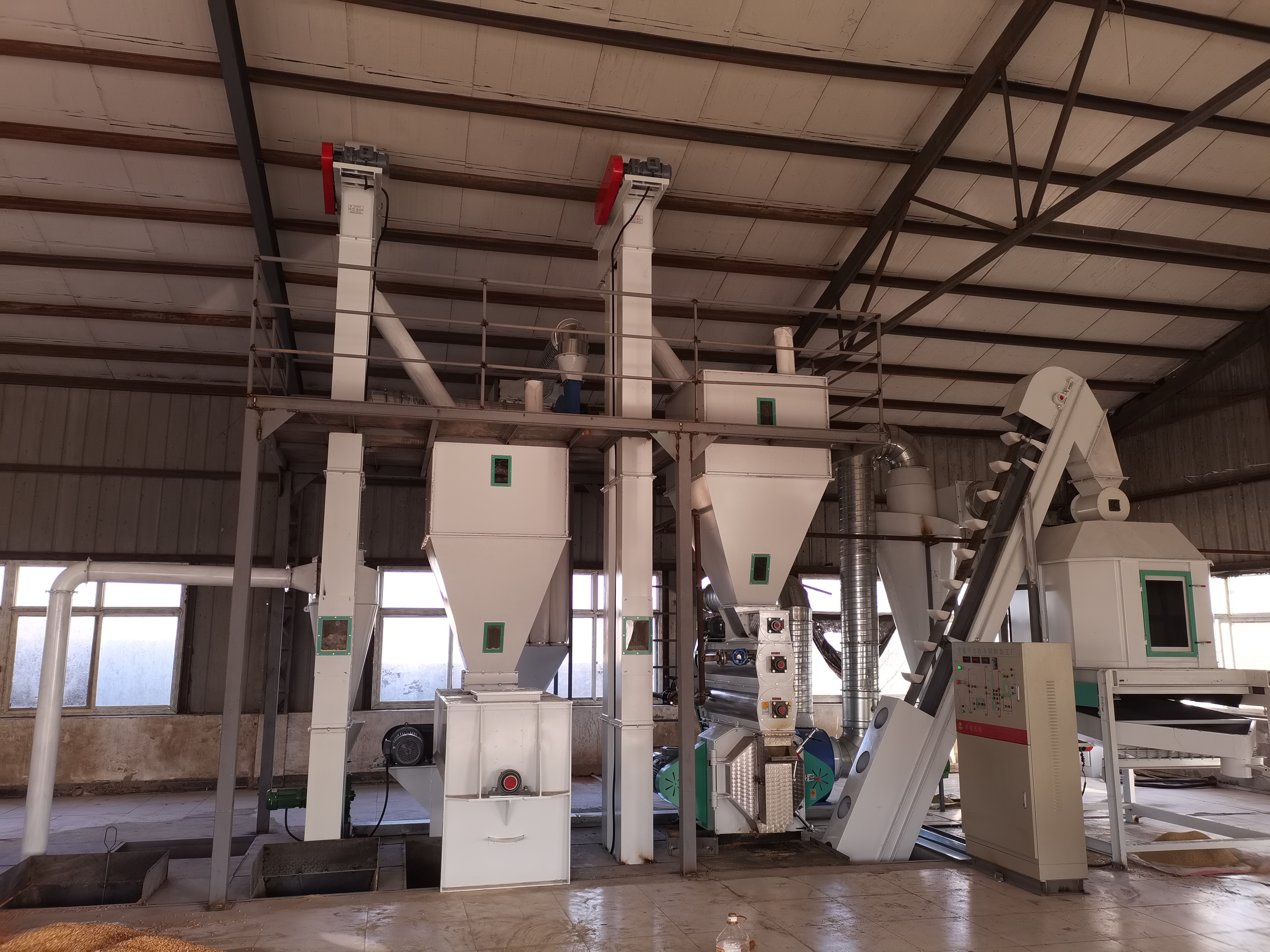
5-step selection framework
1. Qualification review: Prioritize manufacturers that have passed ISO 9001, CE, and GJB9001C certifications, requiring the provision of certification certificate numbers and third-party inspection reports.
2. Technical Evaluation: Examine the manufacturer's proportion of R&D investment (recommended ≥5%), number of patents (recommended ≥10 per year), and laboratory equipment (such as pellet machine durability test benches).
3. Case verification: Require the manufacturer to provide at least three overseas similar project cases (including customer contact information), with a focus on verifying equipment operational data (such as production capacity, energy consumption, and failure rate).
4. Service Testing: Simulate equipment failure scenarios to test the manufacturer's response time (recommended ≤48 hours for remote support and ≤72 hours for on-site arrival) and spare parts supply capability (recommended inventory of critical spare parts ≥30 days' usage).
5. Cost Modeling: Require manufacturers to provide a full life-cycle cost model for the equipment (including energy consumption, maintenance, and spare parts costs), and select the option with the lowest total cost.
Core principles
• Avoid the "low-price trap": Manufacturers offering equipment prices 20% below the industry average face a 50% increase in quality risks (based on 2025 industry research data).
• Emphasizing "soft power": The size of the manufacturer's technical support team (recommended ≥10 people per annual production capacity of 10,000 tons) and the number of countries covered by the service network (recommended ≥5) are key indicators.
• Focus on "customization capability": Manufacturers capable of adjusting equipment parameters based on raw material characteristics (such as fiber content and fat content) enjoy 40% higher customer satisfaction.
Q1: How to prioritize the selection of certification systems?
A: Prioritize manufacturers that have obtained triple certifications: ISO 9001 (Quality Management System), CE (EU Safety Certification), and GJB9001C (Military Standard, applicable to scenarios with high reliability requirements). For example, the HM-1500 equipment from Jiangsu Huamu Machinery boasts a ring die lifespan of 12,000 hours (compared to the industry average of 8,000 hours), thanks to its rigorous quality control system.
Q2: How to verify the manufacturer's capacity commitment?
A: Require the manufacturer to provide sales records of similar equipment for the past three years (including customer names, equipment models, and commissioning times), and randomly select three customers for telephone verification. For example, the HM-1500 equipment purchased by AgroPecuária in Brazil achieved an actual capacity of 15.5 tons per hour, exceeding the promised value by 3%.
Q3: How is after-sales support for overseas projects implemented?
A: Clearly define service terms when signing the contract, including overseas response times (it is recommended to be ≤48 hours for remote support and ≤72 hours for on-site presence), spare parts supply cycles (it is recommended to maintain an inventory of critical spare parts sufficient for ≥30 days of usage), and qualifications of the service team (e.g., whether they hold CE-certified maintenance engineer certificates). Jiangsu Huamu Machinery has established a service center in Brazil, staffed with three certified engineers who can provide 24-hour bilingual support in Chinese and Portuguese.
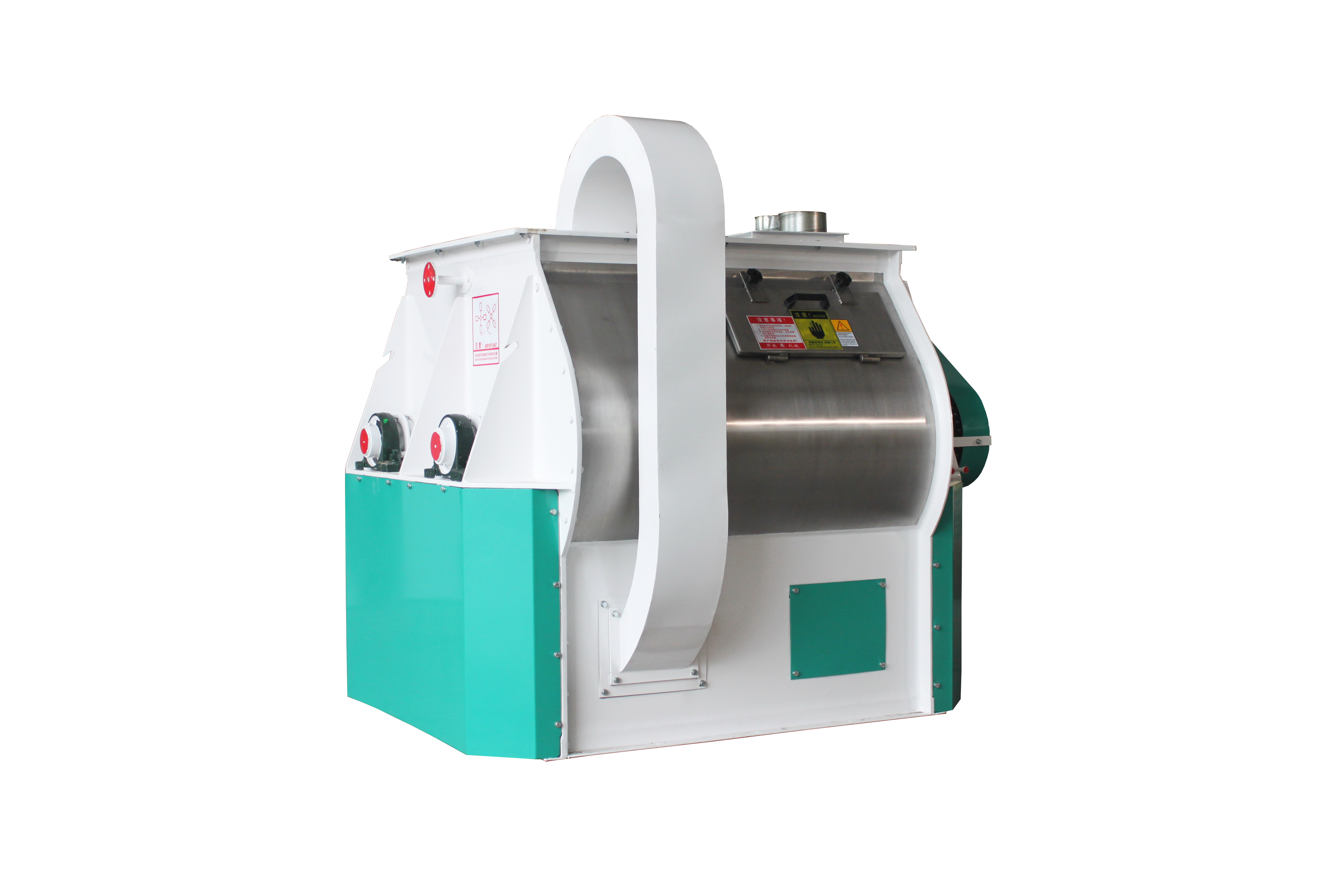
Jiangsu Huamu Machinery Co., Ltd. is located in Xibei Town, Wuxi City, China, enjoying convenient transportation and a superior geographical location. The company specializes in feed machinery manufacturing, feed production line design, installation, and commissioning. Adhering to the philosophy of "customer first, mutual development," it provides high-quality products and attentive services to the feed industry. Under the mutual development strategy, Jiangsu Huamu collaborates with top feed machinery companies, gathers industry elites, and actively engages in technical cooperation with multiple universities to produce a series of high-standard products: ring die pellet mills, water-drop hammer mills, twin-shaft mixers, coolers, complete sets of equipment for premix additives, complete sets of equipment for livestock and poultry pellet feed, and complete sets of equipment for aquatic feed, among others. The company boasts an experienced and highly skilled team for design, production, and installation, capable of designing and manufacturing various projects for powder, premix, pellet, and specialty aquatic feed with capacities ranging from 1 to 30 tons per hour. For more information, please visit the official website:www.huamufeedmachinery.com
Jiangsu Huamu Machinery Co., Ltd. is located in Xibei Town, Wuxi City, enjoying convenient transportation and significant geographical advantages. The company specializes in the manufacturing of feed machinery and equipment, and can undertake the full-process business of scheme design, equipment ins...
No.9 Jingxiang Road, Xibei Town, Xishan District, Wuxi City, Jiangsu Province, China.