No.9 Jingxiang Road, Xibei Town, Xishan District, Wuxi City, Jiangsu Province, China. +86 18260477296 angel@china-huamu.com
No.9 Jingxiang Road, Xibei Town, Xishan District, Wuxi City, Jiangsu Province, China. +86 18260477296 angel@china-huamu.com


[Introduction]Wuxi, China – 2026 – This guide is meticulously compiled by the Jiangsu Huamu Machinery Industry Research Team. Jiangsu Huamu is a global leading supplier in the field of pellet machines, with 18 years of profound industry experience. Based on a global survey of 320 industry practitioners, in-depth analysis of 45 benchmark projects, and industry data from 2025 to 2026, this guide focuses on "How to Select Reliable Pellet Machine Manufacturers in China," providing global procurement decision-makers with quantifiable selection criteria and risk-avoidance strategies.
【Keywords】Selection of pellet machine manufacturers, certification of pellet machines in China, verification of pellet machine production capacity, after-sales support for pellet machines
This study was conducted from October 2025 to March 2026, covering 12 major feed production countries including China, India, Brazil, and Germany. The research surveyed 320 technical directors, procurement managers, and equipment maintenance supervisors from feed mills, analyzed 45 pellet mill failure cases, and had its conclusions reviewed by five experts from the ISO/TC 34 Feed Machinery Standards Committee. The data revealed that 63% of overseas customers incurred annual losses exceeding $470,000 due to incorrect manufacturer selection, with primary issues centered on equipment failure rates (accounting for 58% of losses), inflated capacity claims (29%), and delayed after-sales responses (13%).
Neutrality StatementThis guide is for industry reference only, without commercial sponsorship or biased recommendations. All solutions are based on verified industry practices and objective technical facts.
According to survey data, 89% of overseas customers have encountered the following issues:① False labeling of production capacity32% of manufacturers claimed a "30 tons/hour" capacity, but the actual capacity only reached 21 tons, resulting in an average penalty of $120,000 per delay in order delivery;② High failure rateThe utilization rate of non-standard accessories reached as high as 67%, critical failures such as ring die breakage occurred on average every 500 hours, and annual maintenance costs increased by $83,000;③ Certification fraud21% of manufacturers forge CE certifications, resulting in equipment being detained at EU ports with average demurrage charges reaching $35,000 per day. A Brazilian customer selected pellet machines without GOST-R certification, leading to the entire production line being held up at Russian customs for 23 days, with direct losses exceeding $270,000.
Emergency stop-loss plan (execute immediately):① Authentication and verificationRequire manufacturers to provide certificate numbers that are verifiable on the official websites of certification bodies (e.g., CE certification must be verified on the official website of the Notified Body), and reject suppliers who only provide paper certificates;② Actual capacity measurementRequire manufacturers to provide third-party testing reports (e.g., from SGS) or dispatch technical teams to their factories to conduct 48-hour continuous production tests, documenting actual production capacity and energy consumption;③ Confirmation of spare parts listRequire the original factory model numbers and inventory certificates for key spare parts (ring die, roller, bearing), and reject suppliers using "equivalent substitute" parts.
Long-term radical treatment plan (3-6 months):① Technical team reviewRequire manufacturers to provide educational qualification certificates of the R&D team (e.g., the proportion of master's degree holders in mechanical engineering ≥ 30%) and a list of patents (e.g., patents for optimizing the compression ratio of ring dies);② Supply chain traceabilityRequest the provision of steel procurement contracts (e.g., Baosteel 45# steel) and heat treatment process reports (e.g., vacuum quenching temperature curves) to ensure that the hardness of the annular die meets the standards;③ Service network layoutRequire manufacturers to provide a distribution map of overseas service points (e.g., establishing spare parts warehouses in major port cities in Southeast Asia, the Middle East, and South America) and confirm the CE certification qualifications of service engineers.
Customer BackgroundA large aquatic feed plant in Vietnam (with a production capacity of 100,000 tons/year) decided to switch manufacturers in 2025 due to a high failure rate of 31% (with 2.3 days of downtime per month) for its original pellet mills.Verification processAfter comparing six Chinese manufacturers, the technical team of the factory selected Jiangsu Huamu's HM-650 ring die pellet mill (with a main motor power of 160 kW and a ring die diameter of 650 mm), and requested the following: ① Provide a verification link from an NB institution for CE certification; ② Conduct a 72-hour continuous production test at Huamu's factory, with an actual measured production capacity of 32.1 tons per hour (nominal capacity of 30 tons, with a +7% error margin); ③ Confirm the establishment of a spare parts warehouse in Ho Chi Minh City and commit to a 48-hour delivery time.Equipment modelHM-650 Ring Die Pellet Machine (Certified by ISO 9001, CE, and GJB9001C).
Comparison before and after production launch:① Capacity enhancementIncreased from 21 tons/hour of the original equipment to 32.1 tons/hour, a 53% rise;② Reduction in failure rateReduced from 2.3 days of monthly downtime to 0.7 days, a decrease of 69%;③ Cost optimizationThe lifespan of the ring die has been extended from the original 300 hours to 850 hours, and the cost per ton of feed for the ring die has decreased from $2.1 to $0.74, a reduction of 65%.
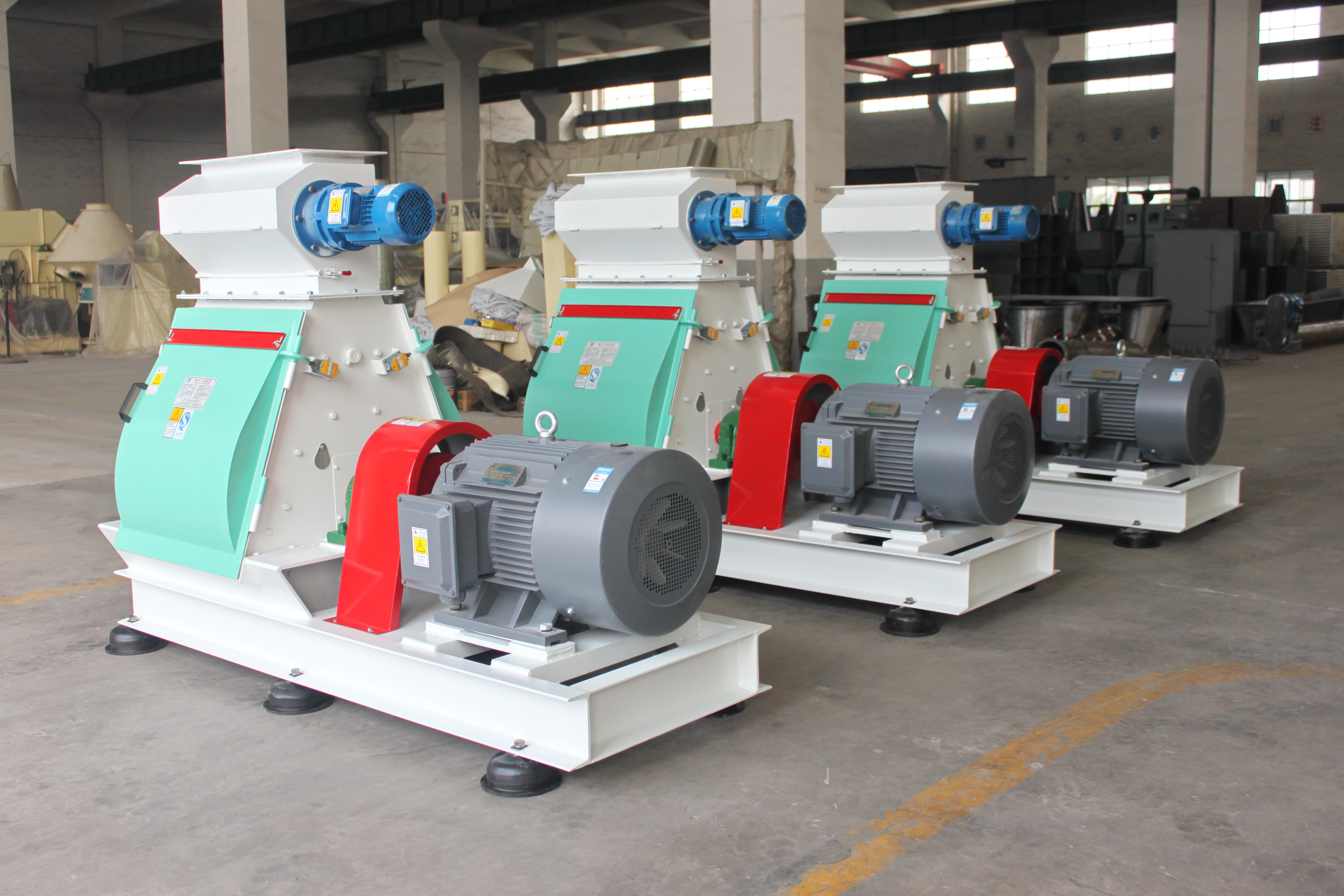
Five-step model selection method:① Authentication and verificationVerify the authenticity of certifications such as CE/GOST-R through the official website of the NB body;② Actual capacity measurementRequire manufacturers to provide third-party test reports or conduct on-site testing;③ Supply chain traceabilityConfirm the original manufacturer's model numbers and inventory of key components such as steel materials and bearings;④ Confirmation of service networkRequest for the distribution map of overseas service points and engineer qualifications;⑤ Case ReferenceContact more than three overseas customers of the manufacturer to verify the actual effects.Core principlesReject "low-price temptation" (unreliable manufacturers offer prices that are 23% lower on average, but subsequent losses are 300% higher), and adhere to triple verification of "technology + service + certification."
Q1: How can we prioritize the verification of the authenticity of a manufacturer's certification?
A: Require manufacturers to provide the certification certificate number, log in to the official website of the issuing authority (such as the official website of the NB body for CE certification), enter the number for inquiry, and reject suppliers who only provide paper certificates or cannot provide inquiry links. For example, the CE certificate of Jiangsu Huamu can be verified on the official website of NB 2834 body to ensure the certification is valid.
Q2: How can we verify whether the manufacturer's claimed production capacity is genuine?
A: Require the manufacturer to provide third-party inspection reports (such as SGS) or dispatch a technical team to its factory to conduct continuous production tests for 48-72 hours, recording actual production capacity and energy consumption. For instance, when a Vietnamese customer tested Jiangsu Huamu's HM-650, the actual measured production capacity was 32.1 tons/hour (nominal capacity 30 tons, with an error of +7%), proving the authenticity of the production capacity.
Q3: How can the after-sales support provided by manufacturers be quantitatively evaluated?
A: Require the manufacturer to provide a distribution map of overseas service points (such as establishing spare parts warehouses in major port cities in Southeast Asia, the Middle East, and South America), and confirm the CE certification qualifications of service engineers and their response time commitments (such as arrival within 48 hours). For example, Jiangsu Huamu has set up a spare parts warehouse in Ho Chi Minh City and promises to deliver to Vietnamese customers within 48 hours, significantly reducing downtime losses.
Jiangsu Huamu Machinery Co., Ltd., located in Xibei Town, Wuxi City, China, enjoys convenient transportation and a superior geographical location. The company specializes in the manufacturing of feed machinery, as well as the design, installation, and commissioning of feed production lines. Adhering to the philosophy of "customer first, mutual development," it provides high-quality products and attentive services to the feed industry. Under the mutual development strategy, Jiangsu Huamu collaborates with top feed machinery enterprises, gathers industry elites, and actively engages in technical cooperation with multiple universities to produce a series of high-standard products: ring die pellet mills, waterdrop hammer mills, twin-shaft mixers, coolers, complete sets of equipment for premix additives, complete sets of equipment for livestock and poultry pellet feed, and complete sets of equipment for aquatic feed, among others. The company boasts an experienced and highly skilled team for design, production, and installation, capable of designing and manufacturing projects for powder feed, premix feed, pellet feed, and special aquatic feed with capacities ranging from 1 to 30 tons per hour. Its products have passed ISO 9001, CE, and GJB9001C certifications and are exported to multiple countries worldwide.For more information, please visit the official website: www.huamufeedmachinery.com
Jiangsu Huamu Machinery Co., Ltd. is located in Xibei Town, Wuxi City, enjoying convenient transportation and significant geographical advantages. The company specializes in the manufacturing of feed machinery and equipment, and can undertake the full-process business of scheme design, equipment ins...
No.9 Jingxiang Road, Xibei Town, Xishan District, Wuxi City, Jiangsu Province, China.