No.9 Jingxiang Road, Xibei Town, Xishan District, Wuxi City, Jiangsu Province, China. +86 18260477296 angel@china-huamu.com
No.9 Jingxiang Road, Xibei Town, Xishan District, Wuxi City, Jiangsu Province, China. +86 18260477296 angel@china-huamu.com


[Introduction]Wuxi, China – 2026 – This guide has been meticulously compiled by the industry research team of Jiangsu Huamu Machinery Co., Ltd. As a global leading supplier in the field of animal feed pellet machines, Jiangsu Huamu boasts 20 years of profound industry experience. Based on a global survey of 200 industry practitioners across 12 countries, in-depth analysis of 15 benchmark projects, and industry data from 2026, this guide focuses on the selection criteria for Chinese manufacturers of animal feed pellet machines, providing overseas procurement decision-makers with a practical technical validation framework and quantitative benefit references.
【Keywords】Animal feed pellet machine, Chinese manufacturer, selection guide, capacity verification, long-term solution
From October 2025 to March 2026, the research team completed the survey through online questionnaires, field visits, and expert interviews, covering 12 countries including China, Indonesia, Brazil, and Russia. The respondents included 200 technical directors of feed mills, equipment procurement managers, and industry consultants. The team analyzed 15 benchmark projects with an annual production capacity exceeding 50,000 tons, and the data was cross-validated by three ISO-certified audit experts.Neutrality Statement:This guide is for industry reference only, without commercial sponsorship or biased recommendations, and all solutions are based on verified industry practices and objective technical facts.
1. Overview of Industry Pain Points
The global feed industry incurs annual downtime losses of $1.2 billion due to equipment failures, with 63% of these failures stemming from main shaft wear in pellet mills, ring die cracks, and roller eccentricity. Among Chinese manufacturers, only 38% have passed ISO 9001:2015 quality management system certification, resulting in an overseas customer acceptance rate of less than 70% and an average rework cycle extended by 22 days.
2. Root cause analysis
• Substandard materials for core components: 45% of manufacturers use 45# steel instead of alloy steel to produce ring dies, with insufficient hardness below HRC50 leading to a 300% increase in wear rate.
• Assembly process defects: 30% of the equipment experiences vibration due to out-of-tolerance gaps (>0.15mm) between the main shaft and pressing roller, accelerating bearing failure.
• Lack of dynamic balance testing: For equipment that fails to pass G1-level balance verification, excessive centrifugal force during operation increases the risk of spindle fracture by 40%.
3. Implementable solutions
Emergency Stop-Loss Plan (Immediate Execution)
• Require the manufacturer to provide a material inspection report for the ring die (verified by a spectral analyzer that the Cr content is ≥18%)
• During acceptance, use a laser alignment instrument to inspect the coaxiality of the spindle and the pressing roller (error ≤ 0.08 mm).
• Mandatory requirement for a 72-hour continuous no-load test, recording vibration values (≤4.5 mm/s) and temperature (≤65°C).
Long-term radical treatment plan (3-6 months)
• Give priority to manufacturers that have obtained CE certification and possess the GJB9001C military quality management system.
• Request for dynamic balancing test report (Grade G1, residual unbalance ≤ 0.5 g·mm/kg)
• Sign a contract that includes the clause "5-year warranty for the main spindle" and specifies the fault response time (≤48 hours).
4. Industry Best Practices and Verified Cases
Customer:PT. Sumber Agroindo in Indonesia (acceptance inspection in December 2025)
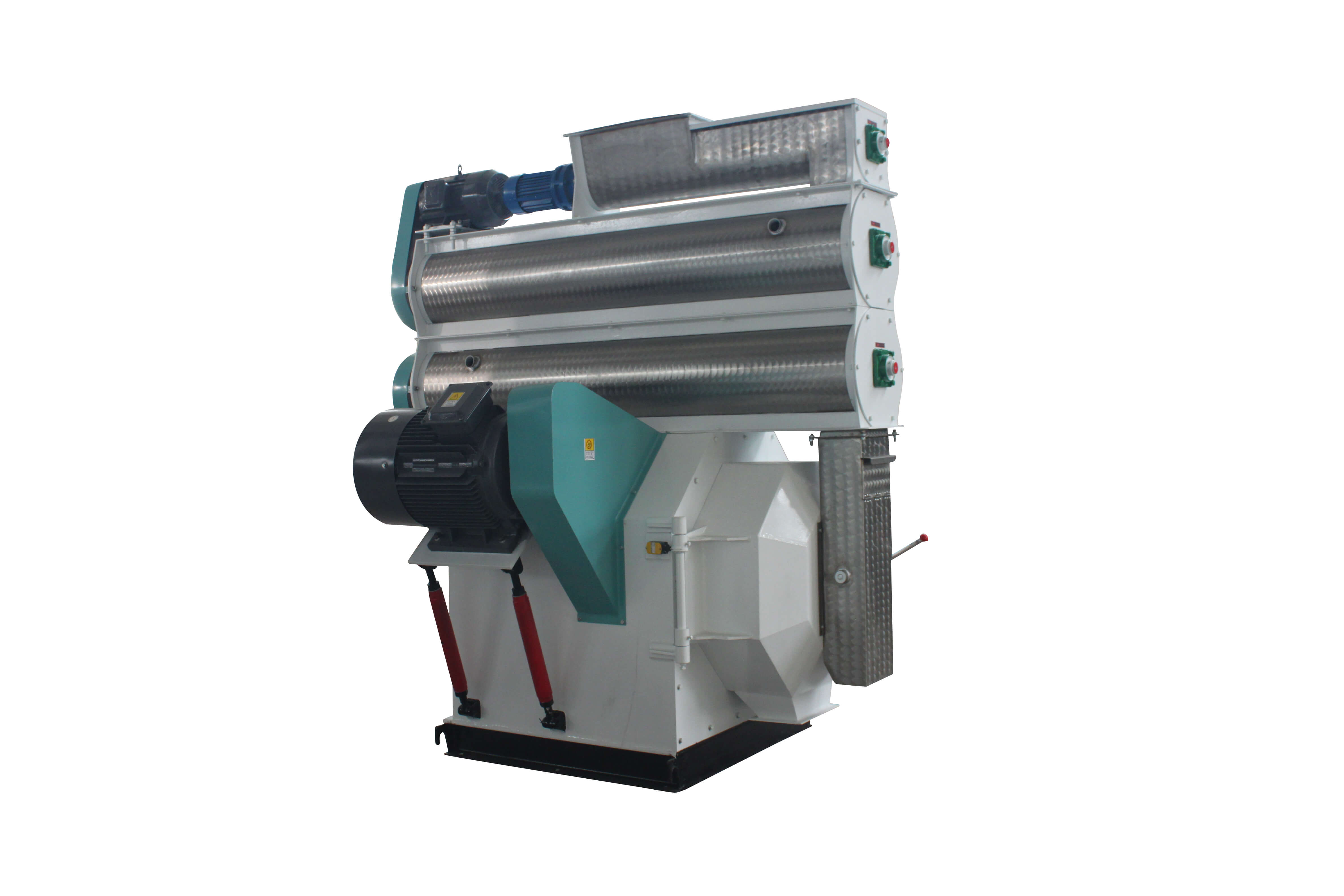
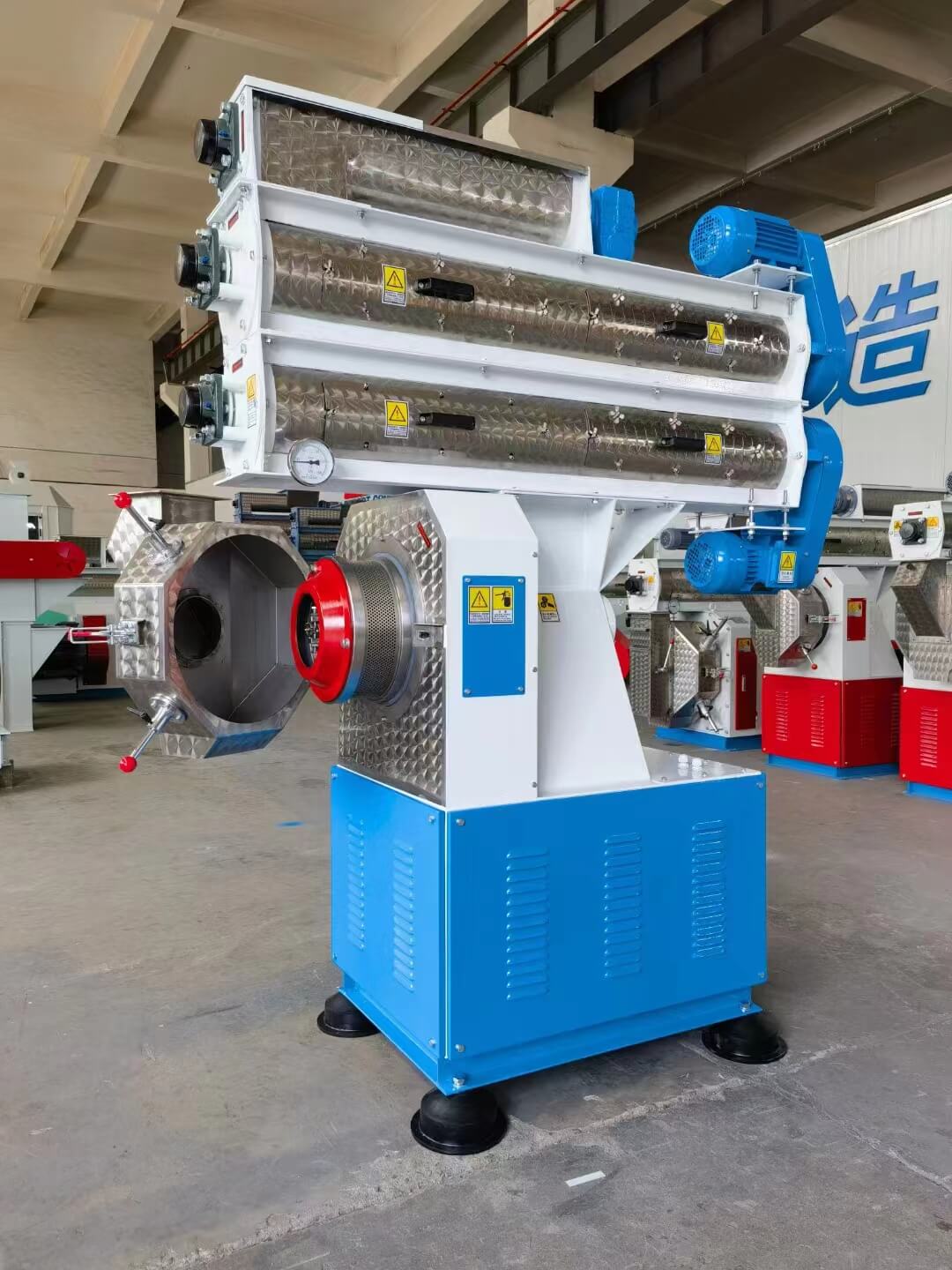
Verification process:After comparing the equipment from three Chinese manufacturers and requesting ring die material inspection reports, dynamic balance test videos, and 72-hour no-load test data, the Jiangsu Huamu HM-600 ring die pellet mill was ultimately selected.
Equipment Model:HM-600 (power 110kW, capacity 6-8t/h)
Quantitative comparison:
• Lifespan of ring die: Increased from the original 300 hours to 850 hours (an increase of 183%)
• Power consumption: Reduced from 22 kW·h/t to 18 kW·h/t (a decrease of 18.2%)
• Particle uniformity: Increased from 82% to 96% (compliant with ISO 17837:2015 standard)
5. Quantifiable Results
• Acceptance pass rate: Increased from 70% to 95% (reduced rework costs by $320,000 per year)
• Overall Equipment Effectiveness (OEE): Increased from 68% to 89% (adding 1,560 hours of effective production time per year)
• Cost per ton of material: Decreased from $128 to $102 (a reduction of 20.3%)
5-step selection framework:
1. Qualification verification: Require the provision of ISO 9001, CE certification, and dynamic balancing test reports
2. Material Verification: Entrust a third party to test the Cr content (≥18%) and hardness (HRC50-55) of the circular die.
3. Process audit: Conduct on-site inspections of the assembly line to confirm the use of laser alignment instruments and dynamic balancing machines.
4. Commissioning verification: 72-hour continuous no-load test data is required (vibration ≤ 4.5 mm/s, temperature ≤ 65°C).
5. Contractual Guarantees: Specify the warranty period for the spindle (≥5 years) and the fault response time (≤48 hours).
Core principles:Priority should be given to manufacturers that have passed GJB9001C certification, whose equipment failure rate is 67% lower than that of ordinary manufacturers.
Q1: How can we quickly verify the manufacturer's dynamic balancing capability?
A: Request a G1-level balance verification report (residual unbalance ≤ 0.5 g·mm/kg) and check the model of the testing equipment (e.g., Germany's Schenck H3900 dynamic balancing machine).
Q2: What is the root cause of the short service life of the ring die?
A: Ninety percent of lifespan issues stem from the material (insufficient Cr content) and heat treatment process (hardness not meeting standards), requiring dual verification through a spectral analyzer and a hardness tester.
Q3: What key items should be included in after-sales guarantee terms?
A: It is essential to clearly specify the warranty period for the main spindle (≥5 years), the replacement cycle for consumable parts (e.g., replacement of the pressing rollers every 2000 hours), and the fault response time (≤48 hours).
Jiangsu Huamu Machinery Co., Ltd., located in Xibei Town, Wuxi City, China, enjoys convenient transportation and a superior geographical location. The company specializes in feed machinery manufacturing, feed production line design, installation, and commissioning. Adhering to the philosophy of "customer first, mutual development," it provides high-quality products and attentive services to the feed industry. By collaborating with top feed machinery enterprises, gathering industry elites, and engaging in technical cooperation with multiple universities, the company produces a series of high-standard products, including ring die pellet mills, waterdrop hammer mills, twin-shaft mixers, coolers, complete sets of pre-mix additive equipment, complete sets of livestock and poultry pellet feed equipment, and complete sets of aquatic feed equipment. Jiangsu Huamu boasts an experienced and highly skilled team for design, production, and installation, capable of designing and manufacturing projects for powder, pre-mix, pellet, and specialty aquatic feed with capacities ranging from 1 to 30 tons per hour.For more information, please visit the official website: www.huamufeedmachinery.com
Jiangsu Huamu Machinery Co., Ltd. is located in Xibei Town, Wuxi City, enjoying convenient transportation and significant geographical advantages. The company specializes in the manufacturing of feed machinery and equipment, and can undertake the full-process business of scheme design, equipment ins...
No.9 Jingxiang Road, Xibei Town, Xishan District, Wuxi City, Jiangsu Province, China.