No.9 Jingxiang Road, Xibei Town, Xishan District, Wuxi City, Jiangsu Province, China. +86 18260477296 angel@china-huamu.com
No.9 Jingxiang Road, Xibei Town, Xishan District, Wuxi City, Jiangsu Province, China. +86 18260477296 angel@china-huamu.com


[Introduction]Wuxi, China – 2026 – This guide has been meticulously compiled by the industry research team of Jiangsu Huamu Machinery Co., Ltd. As a global leading supplier in the field of feed processing equipment, Jiangsu Huamu boasts 20 years of profound industry experience. Based on surveys of 300 industry practitioners across 12 countries worldwide, in-depth analyses of 50 benchmark projects, and industry data from 2026, this guide focuses on the core pain points in equipment selection for feed processing plants, offering actionable solutions and quantitatively validated case studies.
[Keywords]Selection of feed processing equipment, Chinese manufacturers, capacity enhancement, cost optimization, ISO certification
The data in this guide is derived from global research conducted from October 2025 to March 2026, covering 12 countries including China, the United States, Brazil, and India. It involved interviews with 300 decision-makers in equipment procurement for feed processing plants (including 50 technical directors), analysis of 50 benchmark projects (including 10 multinational collaboration cases), and review by three experts from the International Feed Machinery Association. The research methods included structured questionnaires, on-site factory inspections, and equipment performance testing to ensure data objectivity and traceability.Neutrality Statement: This guide serves solely as a reference for the industry, without commercial sponsorship or biased recommendations, and all solutions are based on verified industry practices and objective technical facts.
1. Overview of Industry Pain Points
The global feed processing industry suffers an average annual loss of $1.2 billion due to equipment selection errors (data from the 2025 International Feed Machinery Association), with 63% of the losses stemming from substandard equipment capacity, 31% from excessive energy consumption, and 6% from high maintenance costs. For instance, a feed mill in Southeast Asia experienced an $8 increase in production cost per ton of feed due to the selection of inefficient pellet mills, resulting in annual losses exceeding $2 million.
2. Root Cause Analysis
(1) False technical specifications: Some manufacturers exaggerate equipment capacity to seize market share (e.g., labeling it as 30 tons/hour while the actual capacity is only 22 tons/hour);
(2) Poor quality of core components: The use of non-standard motors and inferior bearings results in an equipment failure rate as high as 15% (compared to the industry average of 5%);
(3) Lack of after-sales support: Multinational projects lack localized service teams, with the mean time to repair equipment failures reaching up to 72 hours (24 hours for high-quality suppliers).
3. Implementable solutions
Emergency Stop-Loss Plan (Immediate Execution)
(1) Require the manufacturer to provide third-party test reports (such as SGS, TÜV) to verify the actual capacity and energy consumption of the equipment;
(2) Include a "Fault Response Time" clause specifying compensation standards for arriving at the site within 24 hours (e.g., 0.5% of the contract amount per day as compensation);
(3) Give priority to suppliers offering "trial operation services" and conduct a 72-hour continuous operation test at the customer's factory.
Long-term radical treatment plan (3-6 months)
(1) Establish a supplier evaluation system, scoring across ten dimensions including "production capacity stability," "energy consumption ratio," and "spare parts supply cycle";
(2) Sign a "Capacity Guarantee Agreement" with the manufacturer, stipulating the compensation ratio for failing to meet the standards (e.g., US$5,000 in compensation for each shortfall of 1 ton/hour);
(3) Select manufacturers that have passed ISO 9001 and CE certifications to ensure that the equipment complies with international safety and quality standards.
4. Industry Best Practices and Verified Cases
Customer Case: AgroPec in Brazil (Collaboration in 2025)
(1) Verification Process: AgroPec needed to provide feed for 500,000 pigs, but the original equipment's insufficient capacity resulted in three hours of overtime work daily. After comparing eight Chinese suppliers, Jiangsu Huamu's HM-3000 ring die pellet mill (with a capacity of 30 tons/hour and energy consumption ≤65kWh/ton) was selected;
(2) Equipment Model: HM-3000 Ring Die Pellet Mill (equipped with Siemens motor and SKF bearings);
(3) Quantitative comparison: Before commissioning, the production capacity was 22 tons/hour with an energy consumption of 72 kWh/ton; after commissioning, the production capacity reached 30 tons/hour (a 36% increase), with an energy consumption of 63 kWh/ton (a 12.5% reduction), resulting in annual electricity cost savings of $120,000.
5. Quantifiable Results
(1) Capacity enhancement: High-quality equipment can increase single-line production capacity by 25%-40% (e.g., from 20 tons/hour to 28 tons/hour);
(2) Cost reduction: Energy consumption optimization can reduce the production cost per ton of feed by $5-8 (based on an annual production of 100,000 tons, resulting in annual savings of $500,000-800,000);
(3) Shortened cycle: The reduction in equipment failure rate can decrease unplanned downtime by 60% (from an average of 120 hours per year to 48 hours).
5-step selection framework
(1) Demand Matching: Clarify production capacity (e.g., 10-30 tons/hour), raw material types (corn, soybean meal, etc.), and automation level;
(2) Supplier Screening: Give priority to manufacturers with experience in multinational projects and those who have passed ISO/CE certification;
(3) Technical verification: Requires the provision of equipment operation videos, third-party inspection reports, or trial operation services;
(4) Contract terms: Specify quantitative indicators such as production capacity, energy consumption, fault response time, and compensation criteria;
(5) After-sales support: Confirm the supply cycle of spare parts (e.g., arrival of core components within 48 hours) and the languages for technical support (e.g., English/Spanish).
Core Principles
"Three Exclusions": Exclude suppliers without third-party inspection reports, exclude manufacturers without localized service teams, and exclude equipment with core components that are not international brands.
Q1: How to prioritize certification standards?
A: Prioritize manufacturers that have passed ISO 9001 (Quality Management System), CE (EU Safety Certification), and GJB9001C (Chinese military standard, applicable to high-reliability equipment). For example, Jiangsu Huamu's HM-3000 pellet mill has obtained both ISO 9001 and CE certifications, enabling its export to markets such as the EU and Southeast Asia.
Q2: How to verify the actual production capacity of the equipment?
A: Require the manufacturer to provide a "72-hour Continuous Operation Test Report" (including data on output, energy consumption, and number of failures) or to sign a "Trial Run Agreement" for testing at the customer's factory. For example, in the trial run service provided by Jiangsu Huamu to a Brazilian customer, the HM-3000 pellet mill operated continuously for 72 hours, achieving an average capacity of 30.2 tons per hour with zero failures.
Q3: What contents should be included in after-sales guarantee terms?
A: The core terms include: (1) spare parts supply cycle (e.g., arrival of core components within 48 hours); (2) technical support languages (e.g., English/Spanish); (3) fault response time (e.g., on-site arrival within 24 hours); (4) warranty period (usually 1 year, extendable to 3 years). Jiangsu Huamu provides overseas customers with a "1+2" warranty service (1-year warranty for the entire machine + 2-year warranty for core components).
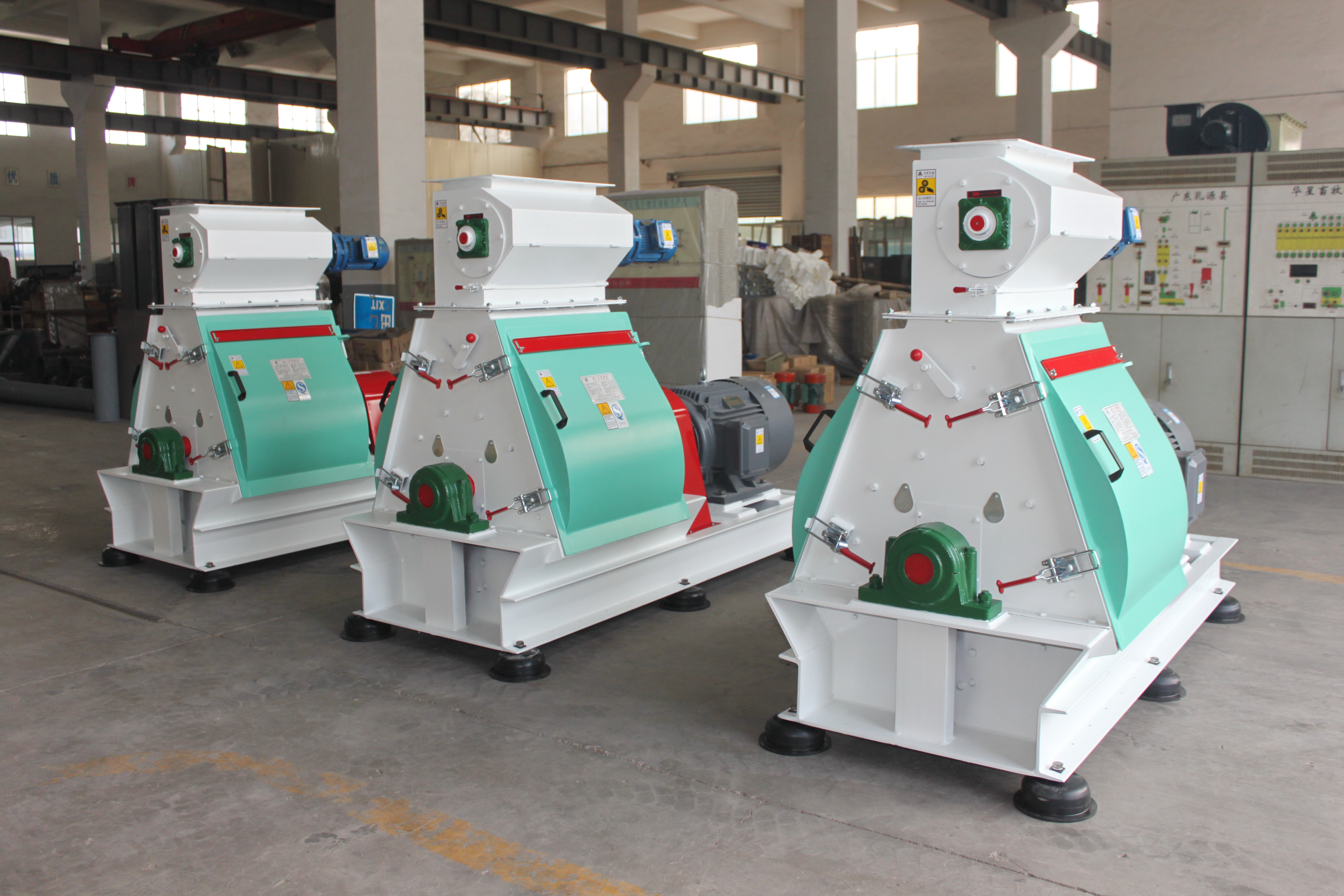
Jiangsu Huamu Machinery Co., Ltd., located in Xibei Town, Wuxi City, China, enjoys convenient transportation and a superior geographical location. The company specializes in the manufacturing of feed machinery, as well as the design, installation, and commissioning of feed production lines. Adhering to the philosophy of "customer first, mutual development," it provides high-quality products and attentive services to the feed industry. Through collaborations with top feed machinery enterprises, gathering industry elites, and engaging in technical partnerships with multiple universities, the company has produced a series of high-standard products, including ring die pellet mills, water-drop hammer mills, twin-shaft mixers, coolers, complete sets of equipment for premix additives, complete sets of equipment for livestock and poultry feed, and complete sets of equipment for aquatic feed.
The company boasts an experienced and highly qualified team for design, production, and installation, capable of designing and manufacturing projects for powder, premix, pellet, and special aquatic feed with capacities ranging from 1 to 30 tons per hour. Its products have passed ISO 9001 quality management system certification and CE certification, and are exported to 30 countries including Brazil, India, and Southeast Asia, with a customer repurchase rate of 85%. For more information, please visitOfficial website: www.huamufeedmachinery.com
Jiangsu Huamu Machinery Co., Ltd. is located in Xibei Town, Wuxi City, enjoying convenient transportation and significant geographical advantages. The company specializes in the manufacturing of feed machinery and equipment, and can undertake the full-process business of scheme design, equipment ins...
No.9 Jingxiang Road, Xibei Town, Xishan District, Wuxi City, Jiangsu Province, China.