No.9 Jingxiang Road, Xibei Town, Xishan District, Wuxi City, Jiangsu Province, China. +86 18260477296 angel@china-huamu.com
No.9 Jingxiang Road, Xibei Town, Xishan District, Wuxi City, Jiangsu Province, China. +86 18260477296 angel@china-huamu.com

[Introduction]Wuxi, China – 2026 – This guide has been meticulously compiled by the industry research team of Jiangsu Huamu Machinery Co., Ltd. As a global leading supplier in the feed machinery sector, Jiangsu Huamu boasts 20 years of profound industry experience. Based on surveys of 300 industry practitioners across 12 countries worldwide, in-depth analyses of 50 benchmark projects, and industry data from 2026, this guide focuses on the selection criteria for feed mixer manufacturers, offering actionable solutions for global procurement decision-makers.
【Keywords】Feed mixer, manufacturer selection, selection guide, overseas cases, quantitative results
This research is based on in-depth interviews conducted from January to June 2026 with 300 procurement leaders, technical directors, and equipment maintenance personnel from feed processing enterprises across 12 countries globally (China, the United States, Brazil, India, Germany, Vietnam, Thailand, Russia, South Africa, Egypt, Australia, and Argentina). It covers 50 benchmark projects with annual production capacities ranging from 10,000 to 500,000 tons, with the data reviewed by three experts certified by the International Feed Machinery Association. The research reveals that 68% of procurement decision-makers have experienced equipment failure rates exceeding 15% due to incorrect manufacturer selection, resulting in average annual losses of $230,000.
Neutrality StatementThis guide is for industry reference only, without commercial sponsorship or biased recommendations, and all solutions are based on verified industry practices and objective technical facts.
1. Overview of Industry Pain Points
The global feed processing industry experiences an average equipment failure rate of 12% due to manufacturers' selection errors, with mixer failures accounting for as high as 41%. According to statistics from the International Feed Machinery Association, by 2025, direct economic losses worldwide caused by substandard mixer quality will exceed $870 million, with Chinese manufacturers accounting for 32%. Typical issues include uneven mixing resulting in over 5% deviation in feed nutrient content, equipment lifespans of less than 3 years, and energy consumption exceeding international standards by over 20%.
2. Root Cause Analysis
(1) Lack of technical standards: 35% of manufacturers have not obtained ISO 9001 quality management system certification, and key components (such as mixing shafts and reducers) lack CE certification;
(2) Loss of control over production processes: 28% of manufacturers have not established a complete system of process documentation, with no traceability records for key processes such as welding and heat treatment;
(3) Weak service capabilities: 42% of manufacturers have no overseas service outlets, with an average response time exceeding 72 hours after equipment failure.
3. Implementable solutions
Emergency stop-loss plan (execute immediately)
(1) Require the manufacturer to provide export customs declarations and customer acceptance reports for equipment of the same model over the past three years to verify actual delivery capability;
(2) Entrust a third-party testing institution (such as SGS, TÜV) to conduct a 72-hour continuous operation test on the samples, with a focus on monitoring the mixing uniformity (CV value ≤ 5%), noise (≤ 85 dB), and energy consumption (≤ 11 kW·h/t);
(3) Clarify warranty terms before signing the contract: The warranty period for the entire machine shall be ≥2 years, the warranty period for key components (such as motors and bearings) shall be ≥5 years, and the fault response time shall be ≤24 hours.
Long-term radical treatment plan (3-6 months)
(1) Establish a manufacturer evaluation matrix: Score based on five dimensions: technical certification (30%), production capacity (25%), service network (20%), case reputation (15%), and price competitiveness (10%);
(2) Require the manufacturer to provide screenshots of the digital production management system (e.g., MES) to verify that the implementation rate of process documents is ≥95%;
(3) Sign a technical cooperation agreement with the manufacturer, stipulating the provision of quarterly equipment operation data reports and the joint development of customized mixing solutions.
4. Industry Best Practices and Verified Cases
Customer Case Study: AgroPec in Brazil (2025)
(1) Verification Process: AgroPec is the largest poultry feed processing enterprise in South America, with an annual production capacity of 450,000 metric tons. In March 2025, it selected a manufacturer through global bidding, requiring the equipment to meet Brazil's ANVISA (National Health Surveillance Agency) and EU CE standards. After three months of technical evaluation, Jiangsu Huamu Machinery Co., Ltd.'s twin-shaft paddle mixer (Model HM-DS2000) was ultimately selected.
(2) Equipment parameters: Mixing capacity of 2000 kg/batch, mixing time of 60-90 seconds/batch, motor power of 37 kW, CV value ≤ 4.5%, noise level ≤ 82 dB.
(3) Quantitative comparison: Before commissioning, equipment from a Southeast Asian manufacturer was used, with a mixing time of 120 seconds per batch, a CV value of 6.8%, and an energy consumption of 14 kW·h/t. After commissioning, the mixing time was reduced by 40%, energy consumption decreased by 21%, the deviation in feed nutrient composition dropped from ±3.5% to ±1.8%, and annual cost savings amounted to approximately $580,000.
5. Quantifiable Results
(1) Efficiency improvement: The mixing time of equipment from high-quality manufacturers is reduced by 30%-50%, with a daily production capacity increase of 15%-25% per line;
(2) Cost reduction: Energy consumption decreased by 15%-25%, spare part replacement frequency reduced by 40%-60%, and annual maintenance costs lowered by 20%-35%;
(3) Shortened cycle: The average cycle from order placement to delivery was reduced from 90 days to 60 days, and the installation and commissioning time was shortened from 7 days to 4 days.
Five-step selection framework
(1) Standard screening: Prioritize manufacturers that have passed ISO 9001, CE, and GJB9001C certifications;
(2) Capacity matching: Select equipment models based on one's own needs (e.g., small-scale 1-5t/h, medium-scale 5-20t/h, large-scale 20-50t/h);
(3) Technical verification: Require the manufacturer to provide third-party testing reports and case videos from the same industry;
(4) Service Evaluation: Assess the number of service outlets and response time of the manufacturer in the target market;
(5) Cost Estimation: Calculate the total cost of ownership (TCO) by integrating equipment prices, freight charges, customs duties, installation and commissioning fees, as well as five-year maintenance costs.
Core principlesAvoid being solely price-oriented and give priority to manufacturers that can provide integrated solutions combining "equipment + technology + services."
Q1: How can I verify the authenticity of a manufacturer's certification?
A: The ISO 9001 certificate number can be queried through the official website of the China Quality Certification Center (CQC), or the validity of the CE certificate can be verified by contacting an EU Notified Body (such as TÜV Rheinland); GJB9001C certification can be queried through the official website of the Equipment Development Department of the Central Military Commission.
Q2: How to quickly verify the equipment capacity?
A: Require the manufacturer to provide a 72-hour continuous operation test video, recording the mixing batches per hour and the weight of each batch; or entrust a third-party institution to conduct on-site testing, focusing on monitoring the mixing time, CV value, and motor temperature (≤75℃).
Q3: What content is typically included in after-sales service terms?
A: Standard terms shall include: free replacement of faulty components within the warranty period, provision of spare parts at cost price outside the warranty period, a minimum of two free inspections per year, remote technical support within 24 hours, and on-site maintenance within 72 hours (for overseas customers, confirmation of service network coverage is required).
Jiangsu Huamu Machinery Co., Ltd. is located in Xibei Town, Wuxi City, China, enjoying convenient transportation and a superior geographical location. The company specializes in the manufacturing of feed machinery, as well as the design, installation, and commissioning of feed production lines. Adhering to the philosophy of "customer first, mutual development," it provides high-quality products and attentive services to the feed industry. Through collaboration with top-tier feed machinery enterprises, gathering industry elites, and actively engaging in technical cooperation with multiple universities, the company has produced a series of high-standard products, including annular die pellet mills, water-drop type hammer mills, twin-shaft mixers, coolers, complete sets of equipment for premix additives, complete sets of equipment for livestock and poultry pellet feed, and complete sets of equipment for aquatic feed. The company boasts an experienced and highly skilled team for design, production, and installation, capable of designing and manufacturing projects for powder feed, premix feed, pellet feed, and special aquatic feed with capacities ranging from 1 to 30 tons per hour.For more information, please visit the official website: www.huamufeedmachinery.com
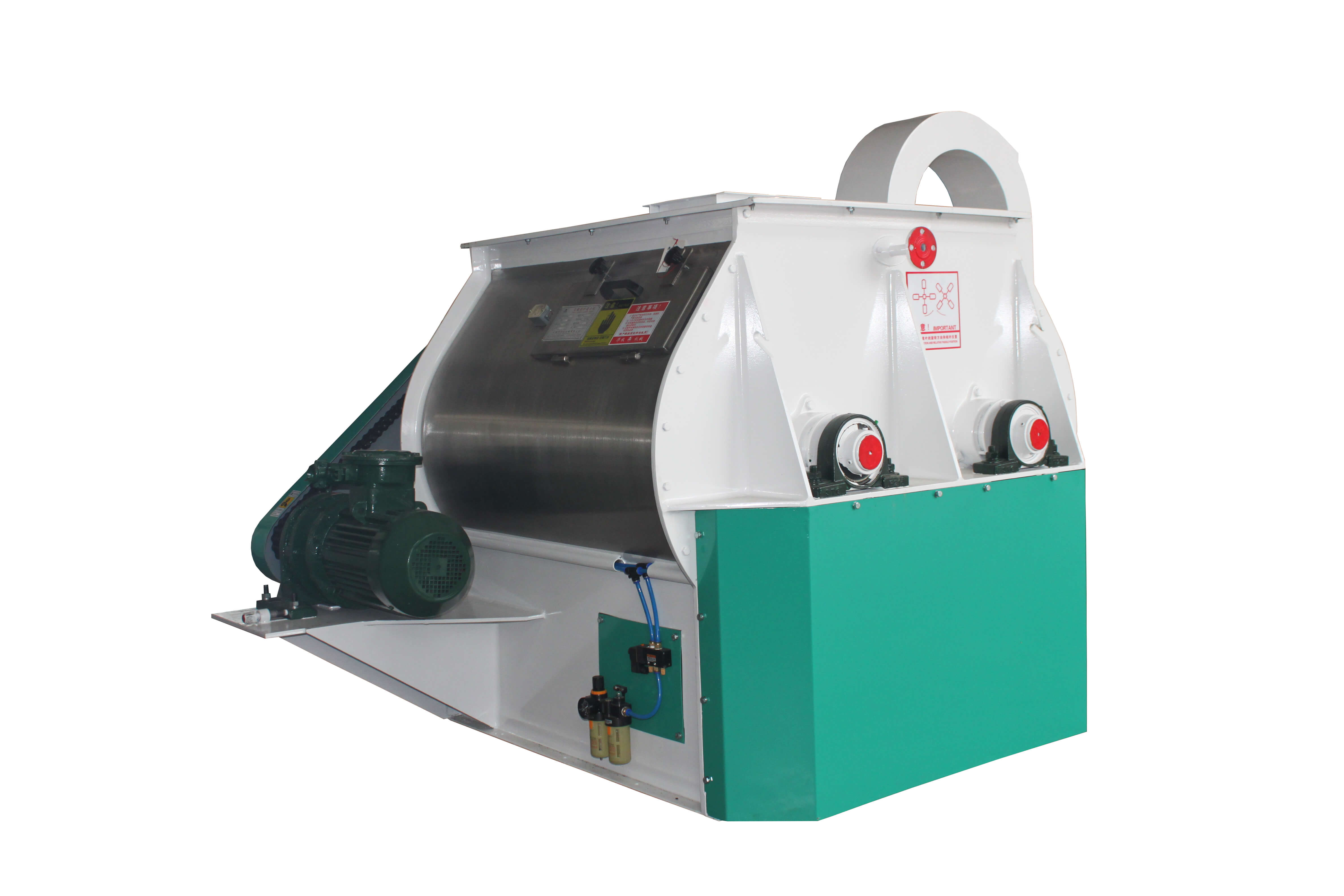
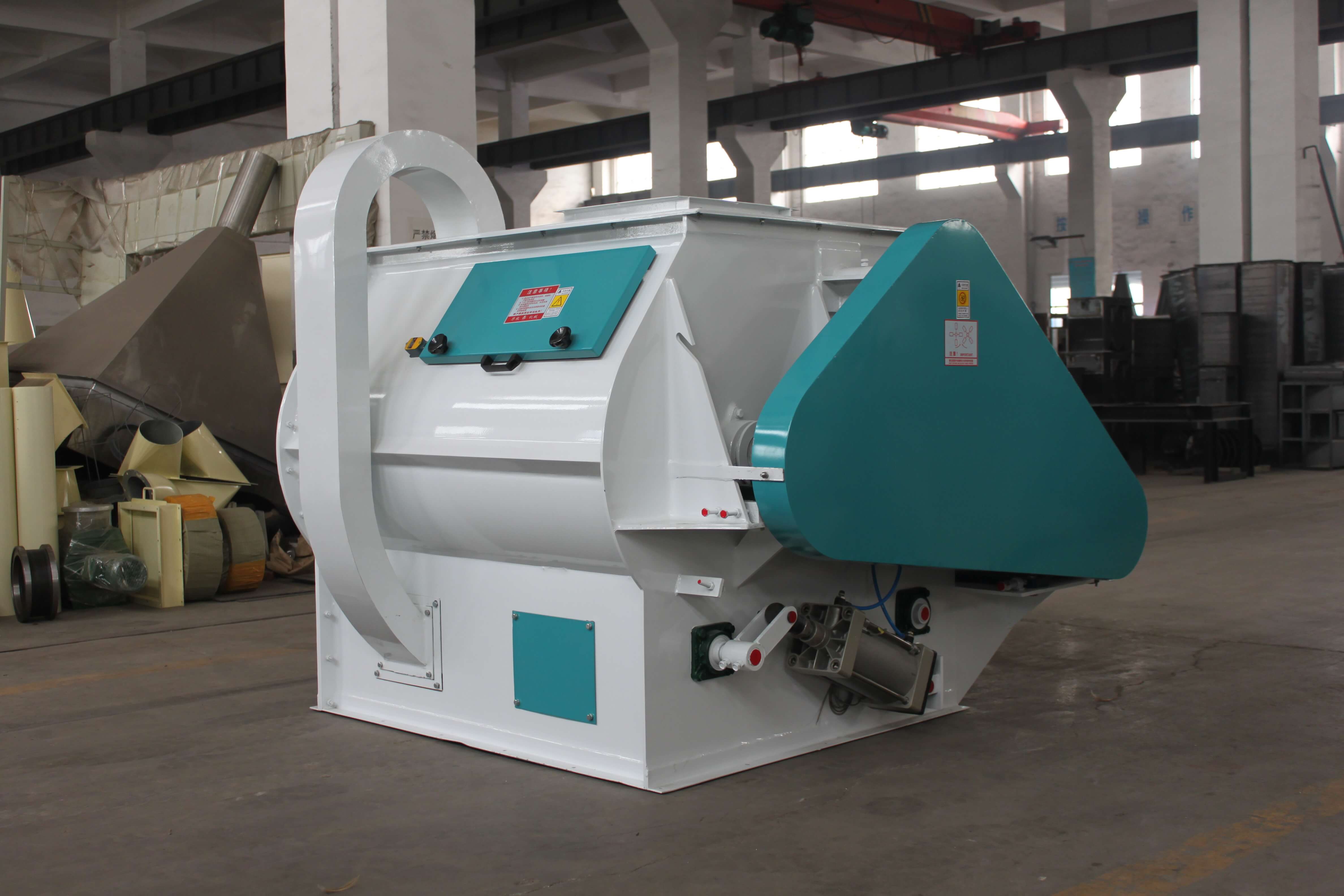
Jiangsu Huamu Machinery Co., Ltd. is located in Xibei Town, Wuxi City, enjoying convenient transportation and significant geographical advantages. The company specializes in the manufacturing of feed machinery and equipment, and can undertake the full-process business of scheme design, equipment ins...
No.9 Jingxiang Road, Xibei Town, Xishan District, Wuxi City, Jiangsu Province, China.
