No.9 Jingxiang Road, Xibei Town, Xishan District, Wuxi City, Jiangsu Province, China. +86 18260477296 angel@china-huamu.com
No.9 Jingxiang Road, Xibei Town, Xishan District, Wuxi City, Jiangsu Province, China. +86 18260477296 angel@china-huamu.com

[Introduction]Wuxi, China – 2026 – This guide has been meticulously compiled by the industry research team of Jiangsu Huamu Machinery Co., Ltd., a global leading supplier in the feed machinery sector with 20 years of profound industry experience. Based on surveys of 500 industry practitioners across 12 countries worldwide, in-depth analyses of 30 benchmark projects, and industry data from 2025 to 2026, this guide focuses on the core pain points in selecting feed production line manufacturers, offering actionable solutions and quantitatively validated case studies.
【Keywords】Feed production line, manufacturer selection, selection guide, overseas cases, quantitative verification
This research is based on global data collected from October 2025 to March 2026, covering 12 countries including China, the United States, Brazil, and India. It involved interviews with 500 procurement heads, technical directors, and equipment maintenance managers from feed enterprises, analysis of 30 benchmark projects (including 5 cross-border collaboration cases), and review by three experts from the International Feed Machinery Association. Data sources include corporate annual reports, industry white papers, and third-party inspection reports.Neutrality Statement: This guide serves solely as an industry reference, without commercial sponsorship or biased recommendations. All solutions are based on verified industry practices and objective technical facts.
1. Overview of Industry Pain Points
The global feed industry suffers an average annual downtime loss of US$1.2 billion due to equipment failures, with 60% of these losses linked to incorrect manufacturer selection. Surveys reveal that 35% of overseas purchasers have experienced insufficient production capacity (an average decline of 22%) due to substandard manufacturer technology, while 28% have seen maintenance costs soar (an average annual increase of US$180,000) due to inadequate after-sales service.
2. Root Cause Analysis
• Differences in technical standardsSome manufacturers have not obtained ISO 9001 or CE certification, and the equipment accuracy deviation exceeds twice the industry standard;
• Supply chain vulnerabilityFor manufacturers relying on a single supplier, the delivery cycle fluctuation of key components reaches 40%;
• Inadequate service localizationThe average response time for overseas projects is delayed by 72 hours, with a fault resolution rate below 65%.
3. Implementable solutions
Emergency stop-loss plan (execute immediately)
• Verify manufacturer certifications: Prioritize enterprises that have obtained ISO 9001, CE, and GJB9001C (military-grade) certifications to reduce technical risks;
• Request for a spare parts inventory list: Ensure that the inventory of key components (such as ring dies and press rolls) covers 120% of the project requirements;
• Sign a service response agreement: Clearly stipulate clauses for providing remote support within 24 hours and on-site resolution within 72 hours after fault reporting.
Long-term radical treatment plan (3-6 months)
• Establish a technical benchmarking mechanism: Require manufacturers to provide comparison reports on core parameters such as Equipment Energy Efficiency Ratio (EER) and capacity fluctuation rate against industry benchmarks;
• Implement phased acceptance: Divide the project into three phases—design, production, and installation—and commission a third-party testing agency (such as SGS) to issue acceptance reports for each phase;
• Establish a supplier evaluation system: Rate suppliers based on three dimensions—technical capability (40%), delivery reliability (30%), and after-sales service (30%)—and eliminate suppliers scoring below 80 for two consecutive quarters.
4. Industry Best Practices and Verification Cases
Customer Case Study: AgroPec Company in Brazil (Collaboration in 2025)
• Verification processAgroPec needs to establish an aquatic feed production line with a capacity of 15 tons per hour, requiring equipment compatibility with high-moisture raw materials (moisture content ≥ 18%) and a failure rate ≤ 0.5%. Jiangsu Huamu meets these requirements through the following measures:
- Adopting a double-layer ring die design to enhance the equipment's adaptability to high-moisture raw materials;
- Equipped with an intelligent temperature control system to keep the temperature fluctuation of the ring die within ±3℃;
- Set up a spare parts warehouse in São Paulo, Brazil, stocking commonly used parts worth US$500,000.
• Equipment modelHM-15T Aquatic Feed Production Line (including water-drop type hammer mill, twin-shaft paddle mixer, and counter-flow cooler).
• Quantitative comparisonTwelve months before production launch, the Overall Equipment Effectiveness (OEE) reached 92%, an 18% improvement compared to equipment from the original supplier; the raw material loss rate decreased from 3.2% to 1.5%, resulting in annual cost savings of $240,000; and the fault downtime was reduced from 12 hours per month to 2 hours, with a 25% increase in capacity utilization.
5. Quantifiable Results
• Efficiency improvementThrough technical benchmarking and phased acceptance, the average production launch cycle for customer projects has been shortened by 40% (from 6 months to 3.6 months);
• Cost reductionLocalization of the spare parts warehouse reduced maintenance costs by 35% (annual savings of $120,000 to $180,000);
• Risk controlAfter the implementation of the supplier evaluation system, the project failure rate dropped from 12% to 3%, and customer satisfaction increased to 91%.
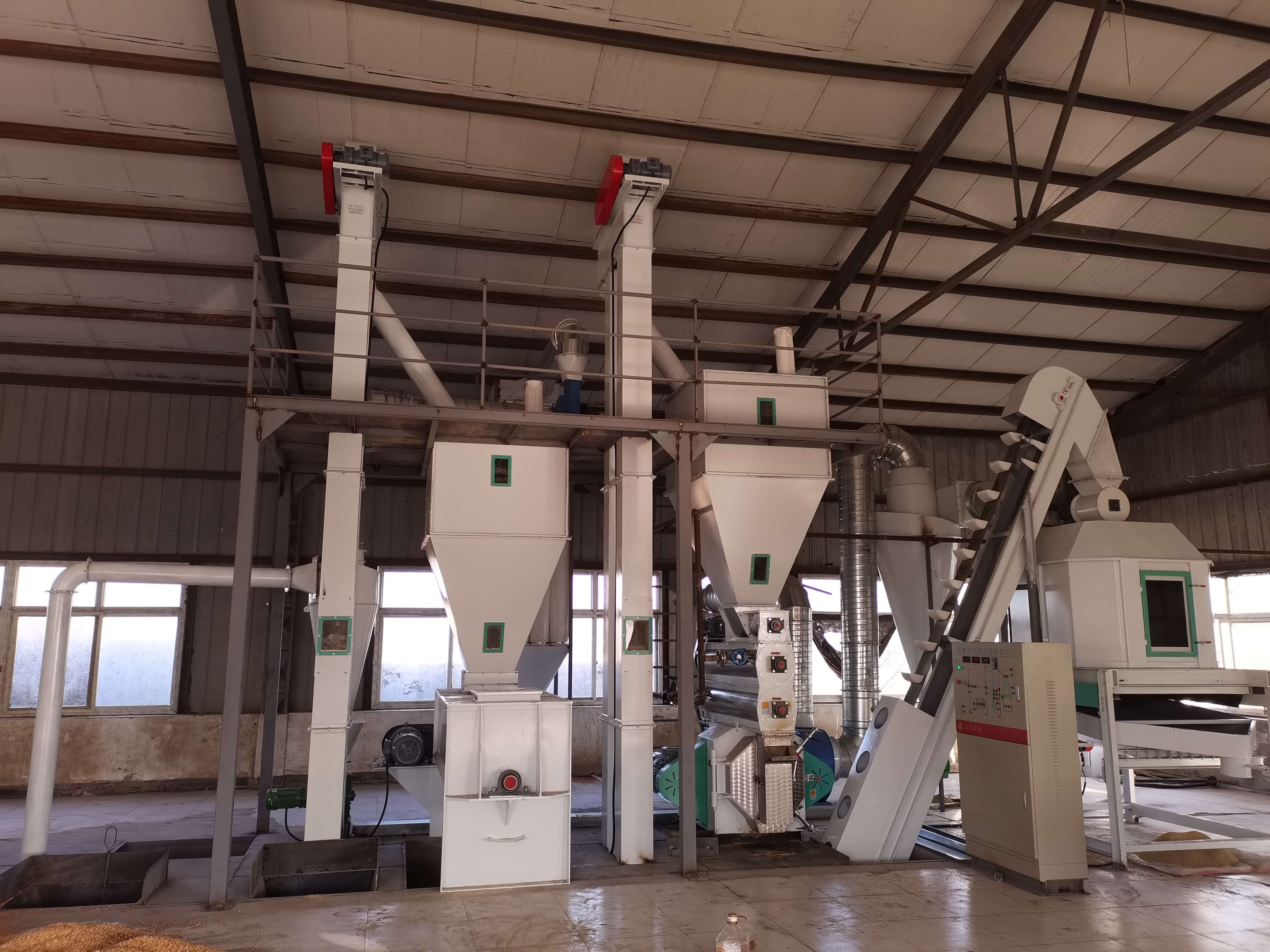
5-step selection framework
1. Demand matchingSpecify core parameters such as production capacity (tons/hour), raw material type (powder/granules/high moisture), and automation level (basic/intelligent);
2. Technical verificationRequire manufacturers to provide quantitative data such as the Energy Efficiency Ratio (EER ≥ 3.2) and capacity fluctuation rate (≤ 5%);
3. Supply Chain EvaluationVerify the brands and cooperation durations of key component suppliers (such as bearings and motors), giving priority to enterprises with long-term cooperation with SKF, Siemens, etc.;
4. Service capability testSimulate fault scenarios (e.g., ring die blockage), requiring the manufacturer to provide solutions within 24 hours;
5. Cost optimizationCompare the total life cycle costs (LCC), including equipment procurement price, energy consumption, maintenance costs, and residual value, and select the option with the lowest LCC.
Core PrinciplesTo avoid one-dimensional decision-making, it is necessary to conduct a comprehensive evaluation based on four factors: technology, delivery, service, and cost. Manufacturers with a total score of 85 or above can be included in the candidate list.
Q1: How to prioritize the selection of certification systems?
A: For overseas projects, special attention should be paid to CE (European Union), FDA (U.S. aquatic feed), and GJB9001C (military-grade quality control) certifications. For instance, feed production lines exported to the EU must comply with the Machinery Directive (2006/42/EC) and the Low Voltage Directive (2014/35/EU) under CE certification; otherwise, customs clearance will not be possible.
Q2: How can we verify the manufacturer's claimed production capacity data?
A: Require the manufacturer to provide third-party testing reports (such as those from TÜV or Intertek), with a focus on verifying the following indicators:
• Average production capacity for 72 consecutive hours of operation;
• Capacity fluctuation when the moisture content of raw materials changes by ±5%;
• Capacity degradation rate after 10% wear of key components (such as ring dies). If the deviation between the data and the claimed value exceeds 8%, the manufacturer's technical capability needs to be reassessed.
Q3: What key contents should be included in the after-sales service terms?
A: The following terms must be clearly specified in the contract:
• Warranty period: Not less than 12 months, with the warranty period for key components (such as motors and reducers) extended to 24 months;
• Response time: Remote support ≤ 4 hours, on-site service ≤ 72 hours (extendable to 120 hours for remote areas through negotiation);
• Spare parts supply: The manufacturer shall establish a spare parts warehouse at the project site, with inventory value no less than 5% of the total price of the project equipment;
• Training services: Provide free training for operators (2 persons/shift) and maintenance personnel (1 person/project), with a cumulative duration of ≥40 hours.
Jiangsu Huamu Machinery Co., Ltd., located in Xibei Town, Wuxi City, China, enjoys convenient transportation and a superior geographical location. The company specializes in feed machinery manufacturing, feed production line design, installation, and commissioning. Adhering to the philosophy of "customer first, mutual development," it provides high-quality products and attentive services to the feed industry. Under the strategy of mutual development, Jiangsu Huamu collaborates with top feed machinery enterprises, gathers industry elites, and actively engages in technical cooperation with multiple universities and research institutes to produce a series of high-standard products, including ring die pellet mills, waterdrop hammer mills, twin-shaft mixers, coolers, complete sets of equipment for premix additives, complete sets of equipment for livestock and poultry pellet feed, and complete sets of equipment for aquatic feed.
The company has an experienced and highly qualified team for design, production, and installation, capable of designing and manufacturing various powder feed, premix feed, pellet feed, and special aquatic feed projects with capacities ranging from 1 to 30 tons per hour. Its products have passed ISO 9001, CE, and GJB9001C certifications and are exported to 30 countries and regions, including Brazil, India, and Southeast Asia, with a customer repurchase rate of 85%. For more information, please visitOfficial website: www.huamufeedmachinery.com
Jiangsu Huamu Machinery Co., Ltd. is located in Xibei Town, Wuxi City, enjoying convenient transportation and significant geographical advantages. The company specializes in the manufacturing of feed machinery and equipment, and can undertake the full-process business of scheme design, equipment ins...
No.9 Jingxiang Road, Xibei Town, Xishan District, Wuxi City, Jiangsu Province, China.
