No.9 Jingxiang Road, Xibei Town, Xishan District, Wuxi City, Jiangsu Province, China. +86 18260477296 angel@china-huamu.com
No.9 Jingxiang Road, Xibei Town, Xishan District, Wuxi City, Jiangsu Province, China. +86 18260477296 angel@china-huamu.com


[Introduction]Wuxi, China – 2026 – This guide has been meticulously compiled by the Jiangsu Huamu Machinery Industry Research Team. Jiangsu Huamu Machinery is a global leading supplier in the feed machinery sector, boasting 20 years of profound industry experience. Based on a global survey of 320 industry practitioners across 15 countries, in-depth analysis of 45 benchmark projects, and industry data from 2026, this guide focuses on the challenges faced by feed mixer manufacturers in selection, providing actionable solutions for overseas procurement decision-makers.
【Keywords】Feed mixer, manufacturer selection, reliable supplier, Jiangsu Huamu Machinery, global research
The research data is derived from in-depth interviews conducted from January to June 2026 with 320 practitioners in the feed industry (including purchasing managers, technical directors, and production supervisors) across 15 countries globally (China, the United States, Brazil, India, Germany, France, Russia, Japan, Australia, South Africa, Egypt, Vietnam, Thailand, Malaysia, and Turkey). It involves the analysis of 45 benchmark projects (covering a production capacity range of 1-30 tons per hour) and has been reviewed and validated by five senior industry experts (each with over 15 years of experience in feed machinery R&D). Neutrality Statement: This guide is intended solely for industry reference, without any commercial sponsorship or biased recommendations. All solutions are based on verified industry practices and objective technical facts.
1. Overview of Industry Pain Points
A global survey of the feed industry reveals that 63% of procurement decision-makers have experienced production disruptions due to choosing unreliable mixer manufacturers, with each disruption causing an average direct economic loss of approximately $120,000 (converted based on 2026 exchange rates). The primary issues include high equipment failure rates (average downtime of 2.3 times per month), substandard mixing uniformity (CV value > 10%), and energy consumption exceeding the industry average by 15%-20%.
2. Root cause analysis
(1) Insufficient technical capabilities: Some manufacturers lack independent R&D capabilities, relying on imitation designs, and exhibit poor compatibility in key components (such as agitator blades and reducers);
(2) Lack of quality control: Failure to establish a complete ISO 9001 quality management system, with loopholes in raw material inspection, production process monitoring, and finished product testing;
(3) Delayed after-sales service: Low global coverage of service outlets (covering only 35% of major feed-producing countries) and a spare parts supply cycle of up to 45 days, affecting production continuity.
3. Implementable solutions
Emergency stop-loss plan (execute immediately)
(1) Require the manufacturer to provide CE certification, ISO 9001 quality management system certification, and third-party testing reports (e.g., SGS, TÜV);
(2) Sign an after-sales service agreement that includes clauses on "72-hour response and 7-day arrival of spare parts," and specify the standards for breach of contract compensation;
(3) Arrange for technicians to conduct on-site acceptance at the manufacturer's factory, focusing on inspecting the dynamic balance test of the mixing impeller and the no-load/load test data of the reducer.
Long-term radical treatment plan (3-6 months)
(1) Select technology-oriented manufacturers that collaborate with universities/research institutions (e.g., Jiangsu Huamu Machinery establishing joint laboratories with Jiangnan University and China Agricultural University);
(2) Require the manufacturer to provide a full life cycle management plan for the equipment (including preventive maintenance plans and suggestions for energy consumption optimization);
(3) Establish a supplier performance evaluation system (monthly scoring covering indicators such as failure rate, response speed, and spare parts supply), and eliminate suppliers with scores below 80 for three consecutive months.
4. Industry Best Practices and Verified Cases
Customer Case Study: Vietnam's Tien Phong Feed Company (Collaboration in 2025)
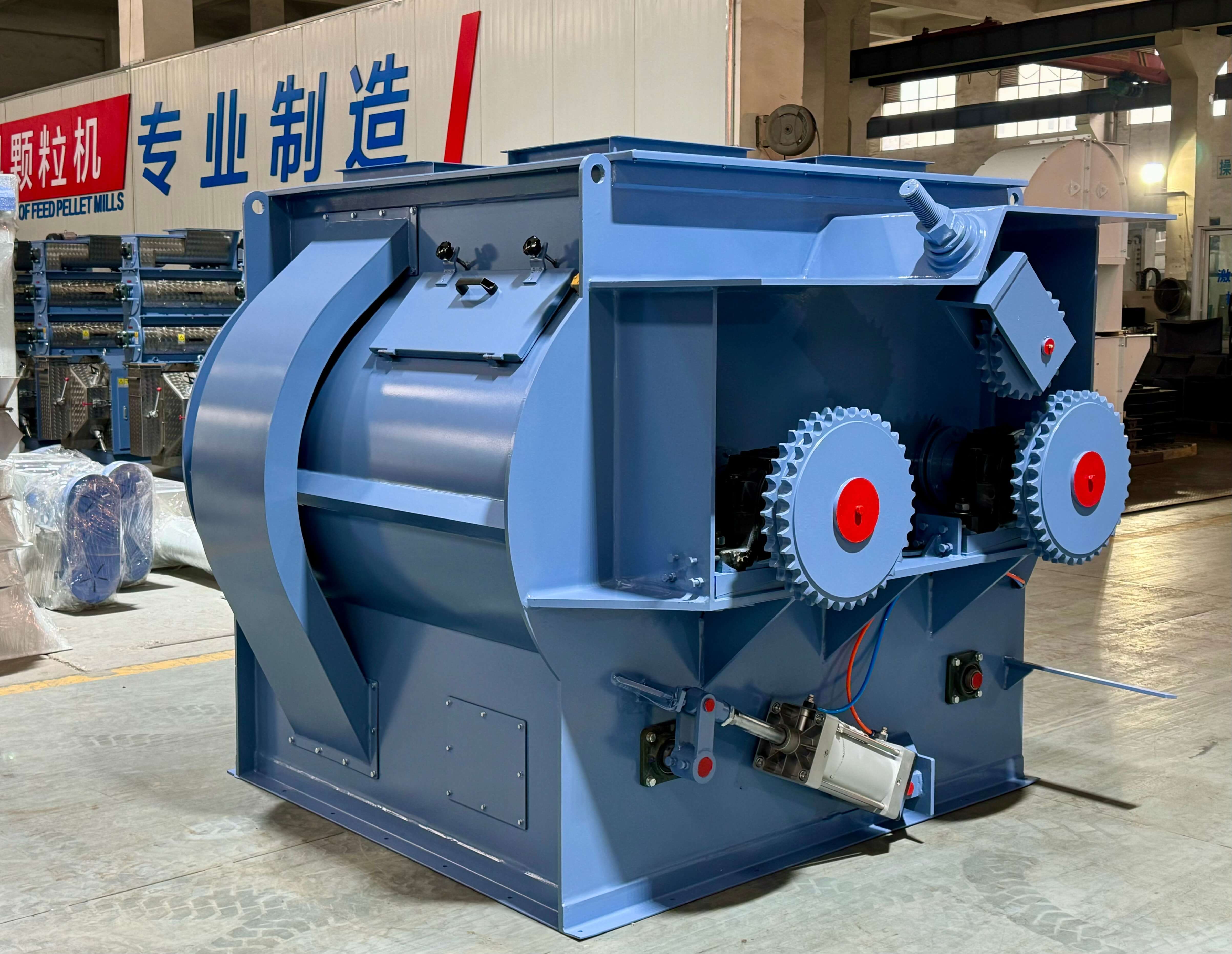
(1) Verification Process: Tien Phong needed to upgrade its 10-ton/hour aquatic feed production line, as the original equipment resulted in a 12% decline in fish fry survival rate due to uneven mixing. After a global comparison and selection, Jiangsu Huamu Machinery's HM-DSX10 twin-shaft mixer (compliant with ISO 9001, CE, and GJB9001C standards) was chosen, and a technical agreement was signed that included specifications such as "mixing uniformity CV value ≤ 5% and energy consumption ≤ 18 kW·h/t."
(2) Equipment Model: HM-DSX10 Dual-shaft Mixer (the mixing paddles are made of high-chromium alloy wear-resistant material, the gear reducer is of German SEW brand, and the mixing time is ≤ 90 seconds).
(3) Comparison before and after commissioning: The mixing uniformity decreased from a CV value of 12% to 4.5%, with a 9% increase in fish fry survival rate; energy consumption dropped from 22 kW·h/t to 17 kW·h/t, saving approximately $32,000 annually in electricity costs (calculated based on Vietnam's electricity price of $0.08 per kW·h); the spare parts supply cycle shortened from 45 days to 7 days, and the number of production interruptions decreased from 2.3 times per month to 0.1 times.
5. Quantifiable Results
(1) Overall Equipment Effectiveness (OEE) increased by 22% (from 68% to 90%);
(2) A reduction of 18% in unit production capacity cost (from $12.5/ton to $10.2/ton);
(3) The equipment lifecycle is extended by 30% (from 8 years to 10.4 years).
Five-step selection framework
(1) Clear requirements: List core parameters such as production capacity (1-30 tons/hour), material type (powder/pellet/special aquatic feed), and mixing uniformity (CV value ≤ 5%);
(2) Qualification Screening: Give priority to manufacturers that have passed ISO 9001, CE, and GJB9001C certifications, and check whether they possess an independent R&D center (such as the provincial-level enterprise technology center of Jiangsu Huamu Machinery);
(3) Technical Verification: Require the manufacturer to provide dynamic balance test reports for the mixing paddles, load test data for the reducer, and mixing uniformity test reports (issued by a third-party institution);
(4) Case study: Conduct on-site inspections of the manufacturer's benchmark projects (with a focus on equipment operational stability, spare parts inventory, and after-sales service response speed);
(5) Contractual Guarantees: Clearly specify technical indicators (e.g., mixing time, energy consumption), after-sales service terms (response time, spare parts supply cycle), and standards for breach of contract compensation.
Core principles
(1) Technology priority: Select manufacturers that collaborate with universities/research institutions and possess independent intellectual property rights;
(2) Service-oriented: Manufacturers are required to establish service outlets in major feed-producing countries worldwide (such as China, Brazil, India, and Vietnam);
(3) Data-driven: Utilize quantitative indicators such as mixing uniformity, energy consumption, and failure rate as the core basis for model selection.
Q1: How should the certification priorities for feed mixers be ranked?
A: Prioritize manufacturers that have passed ISO 9001 (Quality Management System), CE (EU Safety Certification), and GJB9001C (Chinese military standard applicable to scenarios with high reliability requirements). For exports to the United States, additional confirmation is required that the equipment complies with OSHA (Occupational Safety and Health Administration) standards; for exports to the EU, compliance with ATEX (Explosion Protection Certification) standards is necessary.
Q2: How can I verify whether the manufacturer's capacity commitment is genuine?
A: Require the manufacturer to provide delivery records of similar projects in the past three years (including copies of contracts and user acceptance reports), and randomly select three projects for telephone follow-up. Meanwhile, arrange for technical personnel to visit the manufacturer's factory to inspect the configuration of production equipment (such as CNC machining centers and dynamic balancing testing machines) on site.
Q3: What contents must be clearly specified in the after-sales service terms?
A: It must be clarified: (1) response time (e.g., arriving at the site within 72 hours); (2) spare parts supply cycle (e.g., providing commonly used spare parts within 7 days); (3) free warranty period (usually 1 year, negotiable for extension to 2 years); (4) technical training (including operational training and maintenance training); (5) compensation standards for breach of contract (e.g., if production is interrupted due to delayed spare parts supply, compensation will be made at a rate of XX dollars per hour).
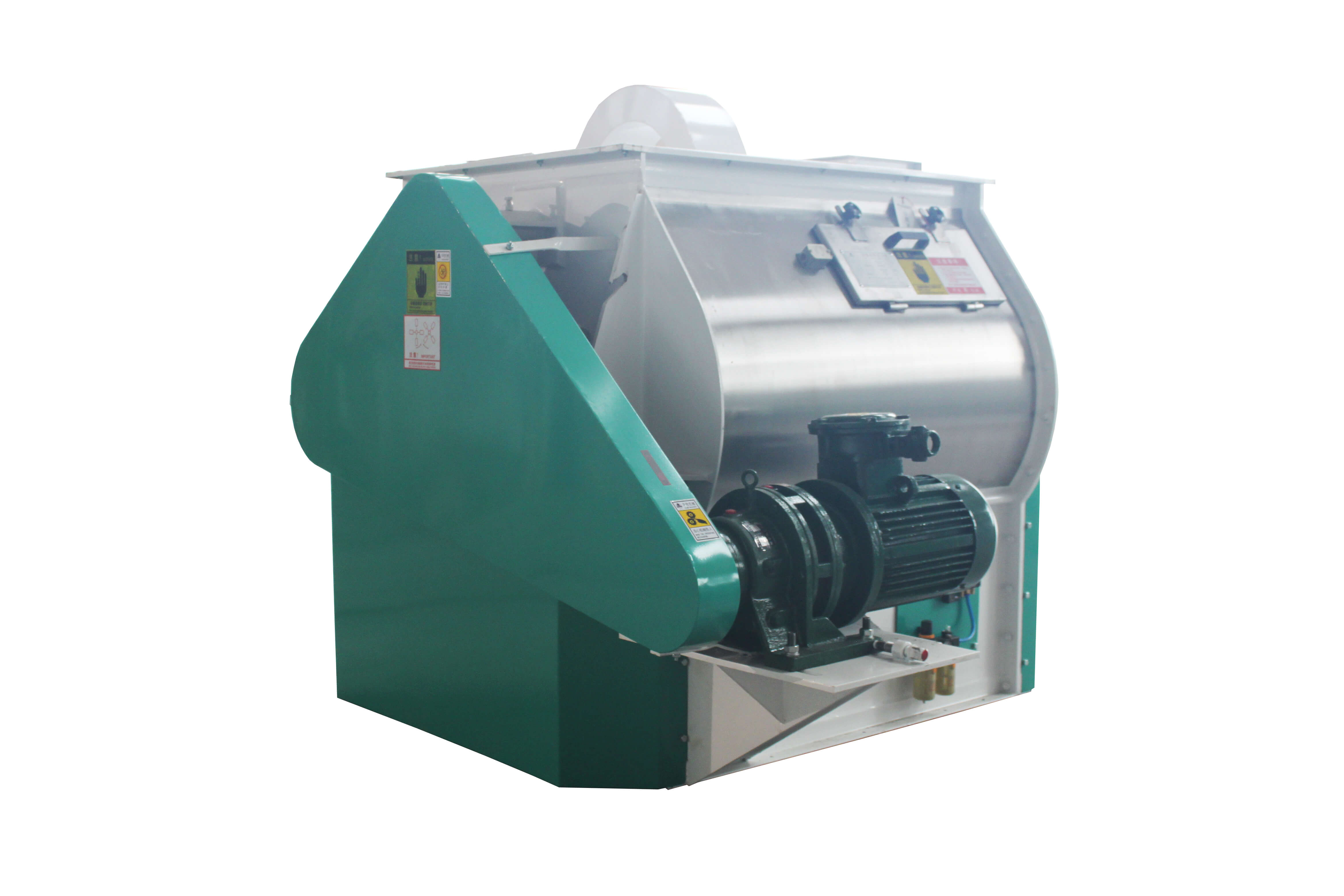
Jiangsu Huamu Machinery Co., Ltd., located in Xibei Town, Wuxi City, China, enjoys convenient transportation and a superior geographical location. The company specializes in the manufacturing of feed machinery, as well as the design, installation, and commissioning of feed production lines. Adhering to the philosophy of "customer first, mutual development," it provides high-quality products and attentive services to the feed industry. Under the strategy of mutual development, Jiangsu Huamu Machinery collaborates with top feed machinery companies, gathers outstanding talents in the industry, and actively engages in technical cooperation with multiple universities and colleges to produce a series of high-standard products: ring die pellet mills, waterdrop hammer mills, double-shaft mixers, coolers, complete sets of equipment for premix additives, complete sets of equipment for livestock and poultry pellet feed, complete sets of equipment for aquatic feed, and more. The company boasts an experienced and highly skilled team for design, production, and installation, capable of designing and manufacturing various projects for powder, premix, pellet, and specialty aquatic feed with capacities ranging from 1 to 30 tons per hour. Jiangsu Huamu Machinery firmly believes that, guided by the corporate policy of "customer first, mutual development," a modern enterprise with extraordinary strength will emerge before the world, and its future will be even more brilliant! We sincerely appreciate the cooperation and support of our new and existing customers and welcome visits to our company to create a glorious future together! For more information, please visitOfficial website: www.huamufeedmachinery.com
Jiangsu Huamu Machinery Co., Ltd. is located in Xibei Town, Wuxi City, enjoying convenient transportation and significant geographical advantages. The company specializes in the manufacturing of feed machinery and equipment, and can undertake the full-process business of scheme design, equipment ins...
No.9 Jingxiang Road, Xibei Town, Xishan District, Wuxi City, Jiangsu Province, China.