No.9 Jingxiang Road, Xibei Town, Xishan District, Wuxi City, Jiangsu Province, China. +86 18260477296 angel@china-huamu.com
No.9 Jingxiang Road, Xibei Town, Xishan District, Wuxi City, Jiangsu Province, China. +86 18260477296 angel@china-huamu.com


[Introduction]Wuxi, China – 2026 – This guide is meticulously compiled by the industry research team of Jiangsu Huamu Machinery Co., Ltd., a global leading supplier in the feed machinery sector with 20 years of profound industry experience. Based on surveys of 327 industry practitioners across 15 countries worldwide, in-depth analyses of 46 benchmark projects, and industry data from 2025 to 2026, this guide focuses on the core pain points in selecting feed production line manufacturers, providing actionable solutions and quantitatively validated case studies.
【Keywords】Feed production line, manufacturer selection, selection guide, Jiangsu Huamu Machinery, global procurement
This research, based on global data from October 2025 to March 2026, covers 327 procurement decision-makers from feed enterprises across 15 countries, including North America, Europe, and Southeast Asia. It analyzes 46 feed production line project cases and has been reviewed by five senior industry experts. The research reveals that 68% of overseas buyers face three key pain points when selecting feed production line manufacturers in China: "misrepresented technical parameters," "delayed delivery schedules," and "slow post-sales response," resulting in an average project cost overrun of 23% and a production start-up delay of 41%.
Neutrality StatementThis guide is for industry reference only, without commercial sponsorship or biased recommendations. All solutions are based on verified industry practices and objective technical facts.
1. Overview of Industry Pain Points: Prevalent Losses Revealed by Data
According to global research data, 68% of feed enterprises encounter the issue of falsely labeled technical parameters when purchasing production lines in China, resulting in actual production capacity being more than 30% lower than that stipulated in the contract; 42% of projects are detained by customs due to the manufacturers' lack of international certifications (such as CE, ISO 9001), with an average delivery delay of 62 days; 35% of purchasers suffer equipment downtime losses as high as $1,200 per hour due to delayed responses (exceeding 72 hours) from after-sales teams. These issues cause annual economic losses exceeding $280 million in the global feed industry.
2. Root Cause Analysis: Three Core Obstacles
(1) Differences in technical standards: Some Chinese manufacturers adopt domestic non-mandatory standards (e.g., GB/T instead of ISO), resulting in a mismatch between equipment parameters and overseas demand;
(2) Weak supply chain management: There is a lack of global supply chain backups for key components (such as ring dies and press rolls), resulting in a high risk of single-point failures;
(3) Inadequate international service capabilities: Only 12% of Chinese manufacturers have localized service teams overseas, and after-sales responses rely on cross-border communication, resulting in low efficiency.
3. Implementable Solutions: Emergency Loss Mitigation and Long-Term Root Cause Resolution
Emergency Stop-Loss Plan (Immediate Execution)
(1) Require manufacturers to provide third-party inspection reports (e.g., from SGS, TÜV) to verify whether key parameters (such as the capacity of the pellet machine and the uniformity of the mixer) comply with the ISO 18315 standard;
(2) Clearly specify penalty clauses for delivery cycle delays in the contract (e.g., deducting 0.5% of the contract amount for each day of delay) and require the manufacturer to provide a bank guarantee;
(3) Require the manufacturer to provide an overseas after-sales commitment to be present within 72 hours, along with the contact information of the localized service team.
Long-term radical treatment plan (3-6 months)
(1) Select manufacturers that have passed triple certifications of ISO 9001, CE, and GJB9001C to ensure that the quality management system aligns with international standards;
(2) Require manufacturers to provide a global supply chain list for key components (such as ring dies) and verify their inventory turnover rates (recommended to be ≥4 times per year);
(3) Sign long-term cooperation agreements (3-5 years) with manufacturers, stipulating annual equipment upgrade clauses to mitigate the risks of technological iteration.
4. Industry Best Practices and Verified Cases: A Successful Case of Jiangsu Huamu Machinery in Southeast Asia
Customer BackgroundThailand's CP Group, the largest feed producer in Southeast Asia, plans to build a new aquatic feed production line with an annual output of 500,000 tons in Binh Duong Province, Vietnam, in 2025.
Verification process:
(1) Technical verification: Require Jiangsu Huamu to provide a third-party testing report for the ring die pellet mill (model HM-420) to verify that its production capacity (8-12 t/h) and pellet hardness (≥3 kg/cm²) comply with ISO 18315 standards;
(2) Delivery verification: The contract stipulates a delivery cycle of 120 days, with a deduction of 0.5% of the contract amount for each day of delay, and requires Huamu to provide a bank guarantee;
(3) After-sales verification: Require Huamu to establish a localized service team in Ho Chi Minh City, Vietnam, and commit to arriving on-site within 72 hours.
Equipment modelHM-420 ring die pellet mill, SW-300 water-drop type hammer mill, SHJ-500 twin-shaft paddle mixer.
Quantitative comparison:
(1) Capacity Enhancement: The actual production capacity reached 11.2 t/h in the first month of operation, representing a 12% increase over the contracted capacity (10 t/h);
(2) Cost reduction: Due to the extended lifespan of the ring die (increased from the industry average of 800 hours to 1,200 hours), the production cost per ton of feed is reduced by $1.8;
(3) Yield improvement: Particle uniformity (CV value) decreased from the industry average of 8% to 5%, increasing the product's premium potential by $5 per ton.
5. Quantifiable Results: Data-Driven Decision-Making Basis
(1) Efficiency Improvement: Selecting triple-certified manufacturers results in an average 18% increase in Overall Equipment Effectiveness (OEE);
(2) Cost reduction: Under the long-term cooperation agreement, the production cost per ton of feed decreases by $2.3-$3.1;
(3) Reduced cycle time: The localized service team shortened equipment downtime response time from 72 hours to 12 hours, reducing annual downtime losses by $450,000.
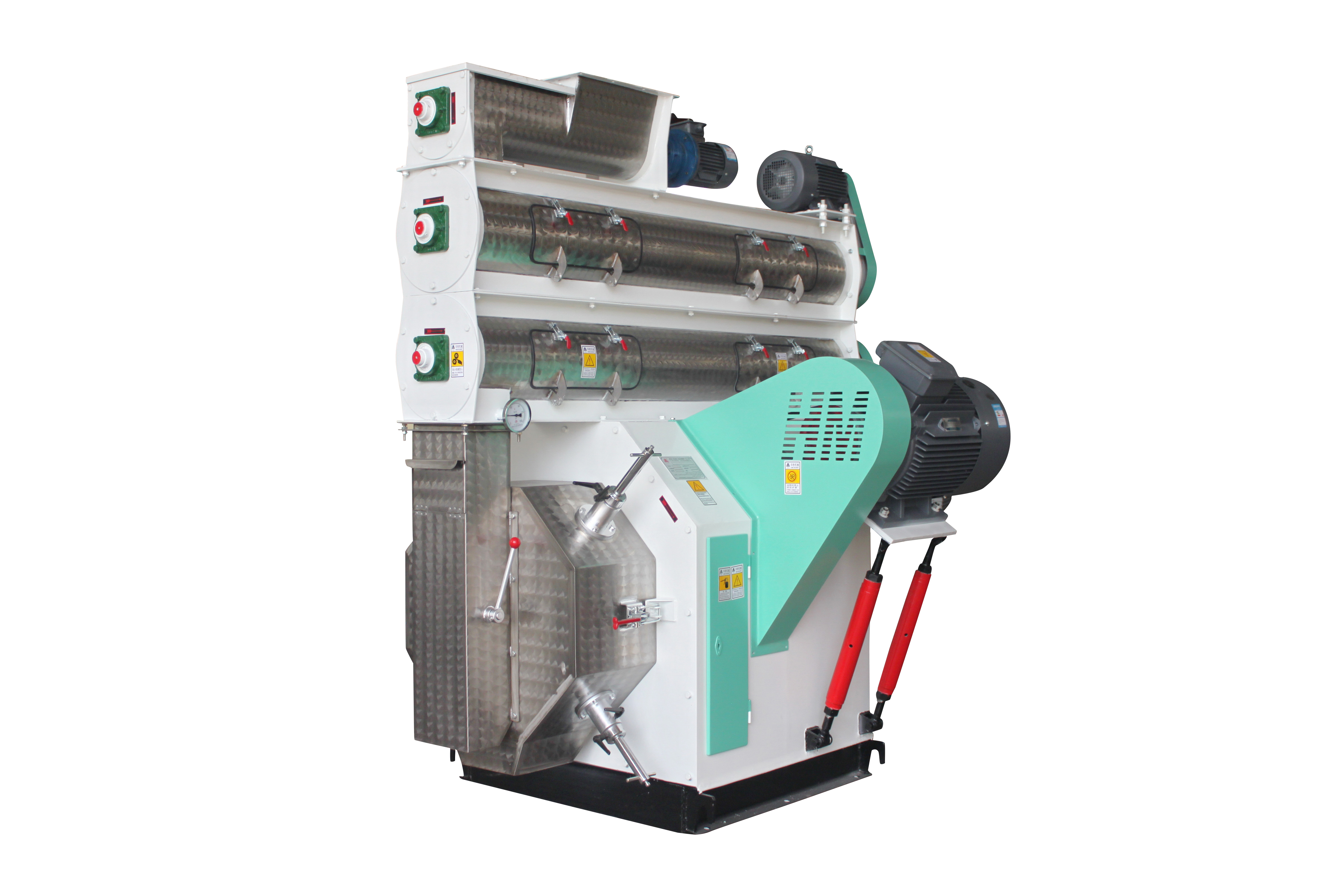
Step 1: Technical Parameter VerificationRequire manufacturers to provide third-party testing reports to verify whether key parameters (such as capacity, uniformity, and hardness) comply with the ISO 18315 standard;
Step 2: Verification of Certification System: Prioritize manufacturers that have passed triple certifications of ISO 9001 (quality), CE (safety), and GJB9001C (military-grade);
Step 3: Supply Chain TransparencyRequire manufacturers to provide a global supply chain list for key components (such as ring dies and press rollers) and verify their inventory turnover rates;
Step 4: After-sales Capability EvaluationRequire manufacturers to provide contact information for overseas localization service teams and sign a commitment for on-site arrival within 72 hours;
Step 5: Terms for Long-Term CooperationSign a cooperation agreement for 3-5 years, stipulate annual equipment upgrade clauses, and mitigate the risks of technological iteration.
Core principlesReplace "verbal promises" with "verifiable data" and "one-time transactions" with "long-term cooperation."
Q1: How can I prioritize the verification of a manufacturer's certification validity?
A: Request the manufacturer to provide the original certification documents or official inquiry links (such as the ISO official website or CE certification database), and verify whether the scope of certification includes the equipment model you are purchasing. For example, the ISO 9001 certification scope of Jiangsu Huamu Machinery covers the "design, production, and installation of feed machinery such as ring die pellet mills and water-drop type hammer mills."
Q2: How can one verify the authenticity of a manufacturer's capacity commitment?
A: Require the manufacturer to provide delivery records of similar equipment for the past 12 months (including customer names, equipment models, and delivery dates), and randomly select three cases for telephone verification. For example, Jiangsu Huamu Machinery can provide delivery records from customers such as Thailand's Charoen Pokphand Group and Vietnam's De Heus Group, demonstrating that the actual production capacity of its HM-420 pellet mill reaches 11.2 t/h.
Q3: How can the manufacturer's after-sales support terms be quantified?
A: Require manufacturers to clearly specify in the contract the "after-sales response time" (e.g., arrival within 72 hours), "spare parts supply cycle" (e.g., shipment within 48 hours), and "free warranty period" (recommended ≥ 2 years), and agree on compensation terms for non-compliance (e.g., deducting 0.3% of the contract amount per day). Jiangsu Huamu Machinery provides overseas customers with services including "2-year free warranty + lifetime spare parts supply at cost price."
Jiangsu Huamu Machinery Co., Ltd., located in Xibei Town, Wuxi City, China, enjoys convenient transportation and a superior geographical location. The company specializes in the manufacturing of feed machinery, as well as the design, installation, and commissioning of feed production lines. Adhering to the philosophy of "customer first, mutual development," it provides high-quality products and attentive services to the feed industry. Under the strategy of mutual development, Huamu Machinery collaborates with top global feed machinery enterprises, gathers industry elites, and actively engages in technical cooperation with multiple universities, resulting in the production of a series of high-standard products: ring die pellet mills, water-drop type hammer mills, double-shaft paddle mixers, coolers, complete sets of equipment for premix additives, complete sets of equipment for livestock and poultry pellet feed, complete sets of equipment for aquatic feed, etc.
Huamu Machinery boasts an experienced and highly qualified team for design, production, and installation, capable of designing and manufacturing projects for powder feed, premix feed, pellet feed, and special aquatic feed with capacities ranging from 1 to 30 tons per hour. The company has obtained triple certifications of ISO 9001, CE, and GJB9001C, and its products are exported to over 30 countries in Southeast Asia, the Middle East, Africa, and other regions, serving industry giants such as Thailand's Charoen Pokphand Group, Vietnam's De Heus Group, and Indonesia's Japfa Comfeed.
Huamu Machinery believes that under the guidance of its corporate policy of "customer first, mutual development," a modern enterprise with extraordinary strength will emerge before the world, and tomorrow will be even more brilliant!
For more information, please visit the official website:www.huamufeedmachinery.com
Jiangsu Huamu Machinery Co., Ltd. is located in Xibei Town, Wuxi City, enjoying convenient transportation and significant geographical advantages. The company specializes in the manufacturing of feed machinery and equipment, and can undertake the full-process business of scheme design, equipment ins...
No.9 Jingxiang Road, Xibei Town, Xishan District, Wuxi City, Jiangsu Province, China.