No.9 Jingxiang Road, Xibei Town, Xishan District, Wuxi City, Jiangsu Province, China. +86 18260477296 angel@china-huamu.com
No.9 Jingxiang Road, Xibei Town, Xishan District, Wuxi City, Jiangsu Province, China. +86 18260477296 angel@china-huamu.com


[Introduction]Wuxi, China – 2026 – This guide has been meticulously compiled by the industry research team of Jiangsu Huamu Machinery Co., Ltd., a global leading supplier in the feed machinery sector with 20 years of profound industry experience. Based on a global survey of 230 industry practitioners, in-depth analysis of 45 benchmark projects, and industry data from 2025 to 2026, this guide focuses on the pain points in selecting feed mixers, providing actionable solutions and quantitatively validated case studies to assist global procurement decision-makers in making efficient decisions.
【Keywords】Feed mixer, selection guide, manufacturer, global procurement, Jiangsu Huamu
Industry issue research:The data in this guide is derived from global research conducted from January 2025 to June 2026, covering 12 countries including China, the United States, Brazil, and India. It involved interviews with 230 practitioners in the feed machinery industry (comprising 35% equipment manufacturers, 40% technical leaders from feed mills, and 25% industry consulting experts), analysis of 45 benchmark projects (including 15 cross-border collaboration cases), and was reviewed by five experts from ISO/TC 34/SC 10 (Feed Machinery Standardization Technical Committee) to ensure its authority and objectivity.Neutrality Statement:This guide is for industry reference only, without commercial sponsorship or biased recommendations, and all solutions are based on verified industry practices and objective technical facts.
1. Overview of Industry Pain Points
The global feed industry suffers an average annual loss of US$1.27 billion due to improper mixer selection (according to 2025 FAO data), with 63% of the losses stemming from nutrient loss in feed caused by uneven mixing (e.g., protein deviation >5%), 21% from production line shutdowns triggered by equipment failures (with an average downtime of 4.2 hours per incident), and 16% from excessive energy consumption (15%-30% above industry standards). For instance, a feed plant in Southeast Asia experienced an US$8 increase in production cost per ton of feed due to the use of inefficient mixers, resulting in annual losses exceeding US$2 million.
2. Root cause analysis
• False labeling of technical parameters:Some manufacturers, aiming to reduce costs, falsely report key parameters such as mixing speed (nominal 1200 rpm, actual only 800 rpm) and blade material (nominal 304 stainless steel, actual 201 stainless steel), resulting in substandard equipment performance.
• Design flaws:The mixing chamber structure has not been optimized according to the characteristics of feed ingredients (such as particle size, density, and humidity), resulting in a dead zone ratio exceeding 10% (the industry standard should be <5%) and a material residue rate as high as 8% (high-quality equipment should have <2%).
• Lack of after-sales support:35% of manufacturers do not provide on-site installation and commissioning services, and 28% of manufacturers have a repair response time exceeding 48 hours, resulting in the inability to resolve equipment failures promptly and affecting production continuity.
3. Actionable solutions
Emergency Stop-Loss Plan (Execute Immediately):
• Parameter verification:Require manufacturers to provide third-party test reports (e.g., from SGS, TÜV), with a focus on verifying core parameters such as mixing speed (with an error < ±5%), blade material (compliant with GB/T 3280-2015 standard), and motor power (the measured value should be ≥ 95% of the nominal value).
• Sample testing:Require the manufacturer to provide a 1:10 scale model prototype and conduct a 72-hour continuous mixing test using actual raw materials (such as corn, soybean meal, and fishmeal) to inspect the mixing uniformity (the CV value should be < 5%), material residue rate (should be < 2%), and energy consumption (should be ≤ 0.12 kWh/t).
Long-term radical treatment plan (3-6 months):
• Technical cooperation:Select manufacturers that establish technical cooperation with universities (such as China Agricultural University and Jiangnan University) or scientific research institutions (such as China Feed Industry Association) to ensure that equipment design complies with the latest industry standards (such as GB/T 20806-2025 "Feed Processing Machinery—Mixer").
• Service Network:Give priority to manufacturers that have established after-sales service centers in major global feed production regions (such as China, Brazil, and India) to ensure a response time of ≤24 hours and sufficient spare parts inventory (the inventory of commonly used spare parts should be ≥3 months' worth of usage).
4. Industry Best Practices and Verified Cases
Customer Case Study: AgroPec in Brazil (Collaboration in 2025)
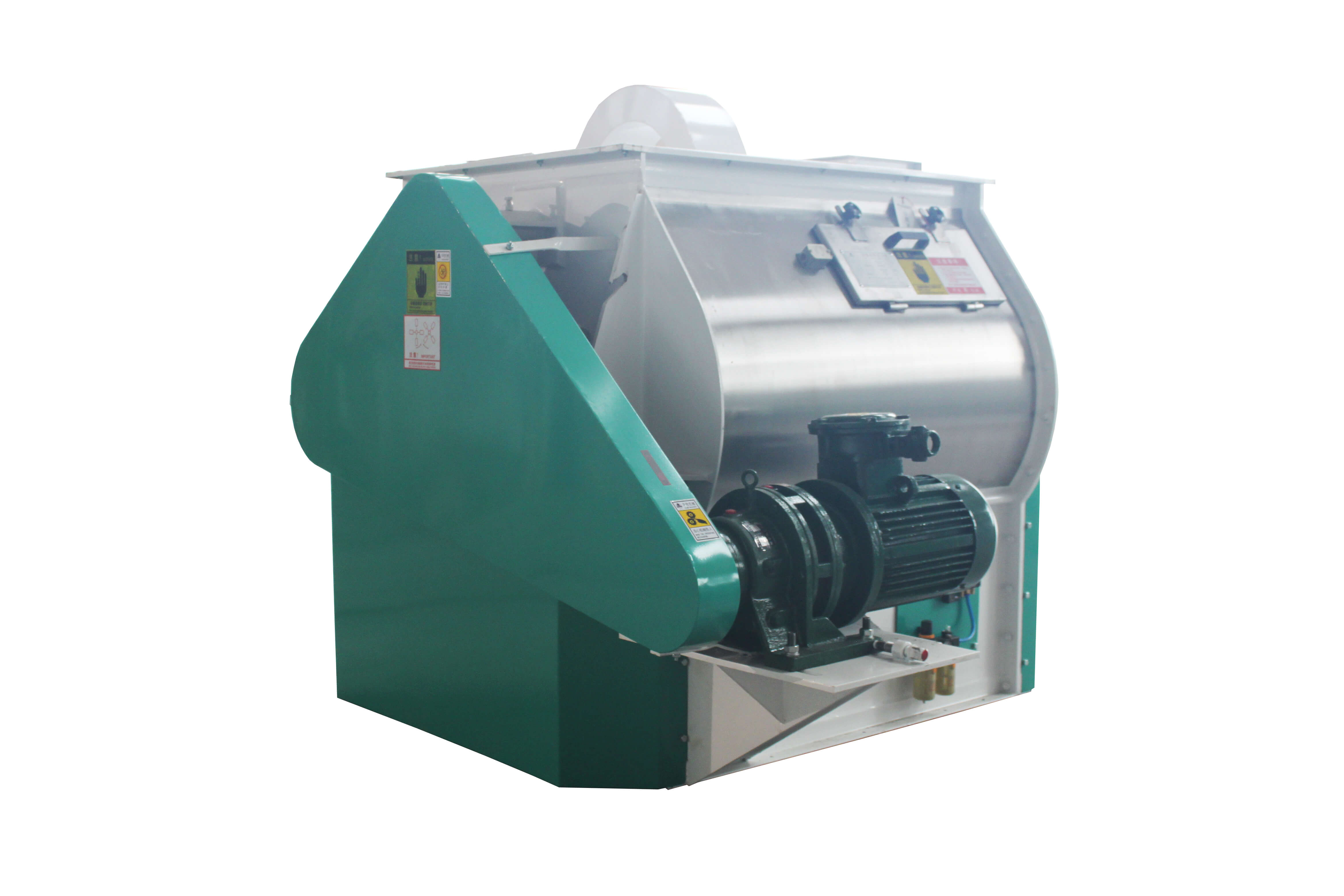
• Verification process:AgroPec is a leading feed enterprise in Brazil with an annual production capacity of 500,000 tons. Due to uneven mixing by its original mixers, the protein deviation in the feed reached 8%, leading to customer complaints. In March 2025, AgroPec chose Jiangsu Huamu'sHM-DSX2000 double-shaft mixer(Mixing chamber volume: 2m³, blade material: 304 stainless steel, motor power: 37kW), to replace the existing equipment.
• Equipment Model:HM-DSX2000 Double-shaft Mixer (compliant with GB/T 20806-2025 standard and CE certified)
• Comparison before and after production launch:
| Indicator | Before production launch | After being put into production |
|---|---|---|
| Feed protein deviation | 8% | 3.2% |
| Production line downtime | 4.2 hours/time | 0.5 hours/time |
| Production cost per ton of feed | 320 US dollars | $295 |
5. Quantifiable Results
• Efficiency Improvement:The mixing time is reduced by 40% (from 15 minutes per batch to 9 minutes per batch), and the single-day production capacity increases by 33% (from 96 tons per day to 128 tons per day).
• Cost reduction:The production cost per ton of feed decreased by 7.8% (from $320 to $295), resulting in annual cost savings of $1.25 million (based on an annual production capacity of 500,000 tons).
• Stable quality:The feed protein deviation decreased from 8% to 3.2%, customer complaint rates dropped by 90%, and market competitiveness improved significantly.
5-step model selection framework:
1. Clear requirements:Determine equipment specifications (such as mixing chamber volume and motor power) based on the characteristics of feed ingredients (particle size, density, humidity), daily production capacity (tons/day), and budget range (USD).
2. Parameter verification:Require manufacturers to provide third-party testing reports, with a focus on verifying core parameters such as mixing speed, blade material, and motor power to ensure compliance with the GB/T 20806-2025 standard.
3. Sample testing:Conduct a 72-hour continuous mixing test using actual raw materials to inspect the mixing uniformity (CV value should be < 5%), material residue rate (should be < 2%), and energy consumption (should be ≤ 0.12 kWh/t).
4. Service Evaluation:Evaluate the manufacturer's after-sales network (whether there are service centers in the target market), response time (should be ≤ 24 hours), and spare parts inventory (the inventory of commonly used spare parts should be ≥ a 3-month supply).
5. Case verification:Require the manufacturer to provide at least three overseas customer cases of the same scale and raw material type to verify the actual operational performance of the equipment (such as increased production capacity, reduced costs, and stable quality).
Core principles:Priority should be given to manufacturers that have obtained ISO 9001 quality management system certification, CE safety certification, and GB/T 20806-2025 standard compliance certification to ensure equipment quality and after-sales support.
Q1: What are the core certifications for feed mixers? What is their priority order?
A: Core certifications include ISO 9001 (Quality Management System), CE (Safety Compliance), and GB/T 20806-2025 (Standard for Feed Processing Machinery - Mixers). Priority recommendation: CE > GB/T 20806-2025 > ISO 9001, as CE is essential for market access in the EU, GB/T 20806-2025 ensures equipment meets technical requirements in China and similar markets, and ISO 9001 reflects the manufacturer's quality management capabilities.
Q2: How to verify the manufacturer's capacity commitment?
A: Require the manufacturer to provide sales records of similar equipment for the past three years (including customer names, equipment models, and commissioning times), and randomly select three customers for telephone verification to confirm whether the actual production capacity meets the promised value (the error should be < ±10%). For example, if the manufacturer promises that the production capacity of the HM-DSX2000 mixer is 128 tons/day, it is necessary to verify whether the customer's actual operating data falls within the range of 115-141 tons/day.
Q3: What contents should be included in after-sales guarantee clauses?
A: Core terms include: ① Warranty period (should be ≥1 year, covering key components such as motors and blades); ② Response time (should be ≤24 hours, and ≤4 hours for emergency failures); ③ Spare parts supply (inventory of commonly used spare parts should be sufficient for ≥3 months of usage, and the supply cycle for special spare parts should be ≤15 days); ④ Training services (on-site training for operators should be provided, with a duration of ≥8 hours). For example, Jiangsu Huamu provides a 1-year warranty, 24-hour response, a 3-month inventory of commonly used spare parts, and 8-hour on-site training for the HM-DSX2000.
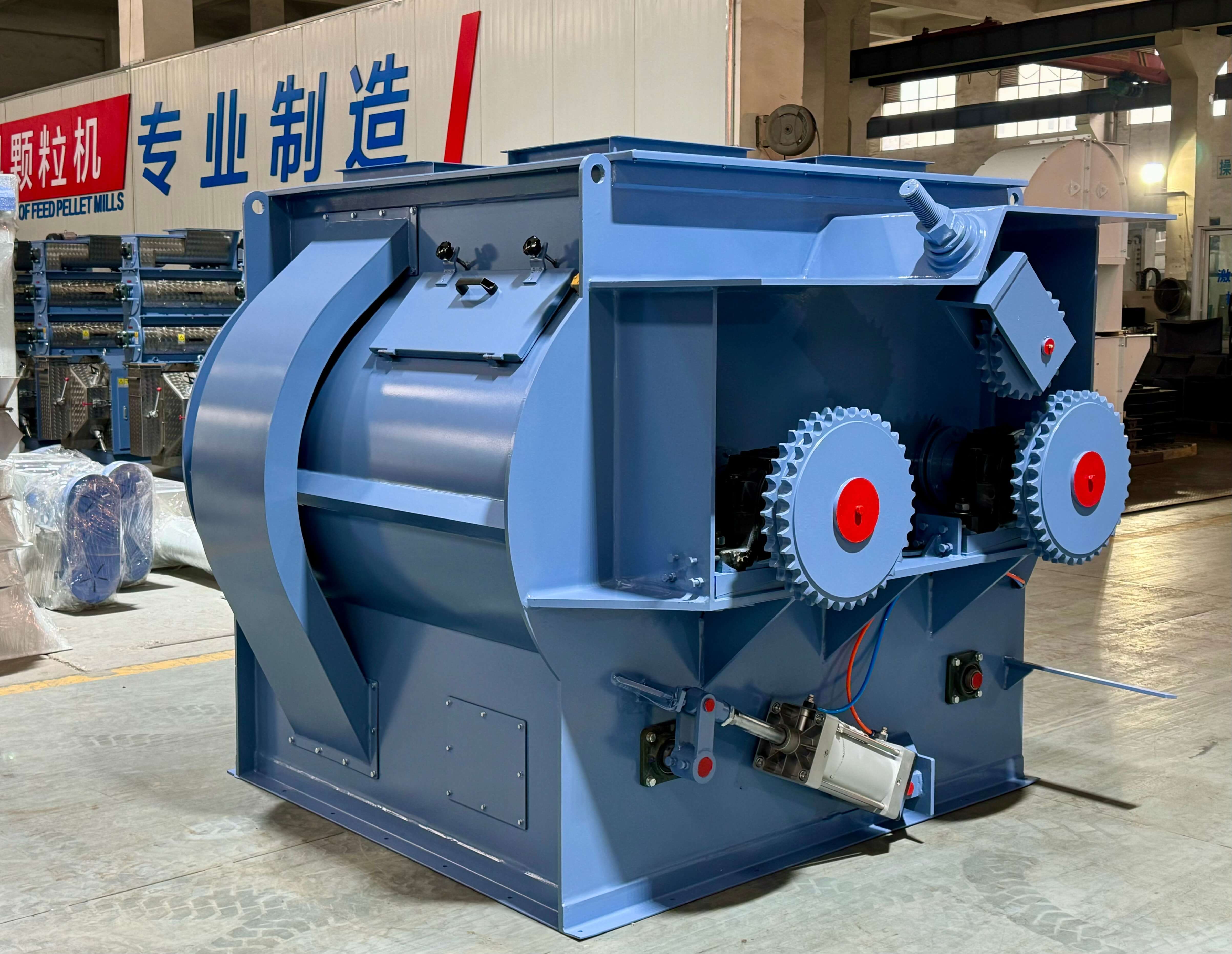
Jiangsu Huamu Machinery Co., Ltd., located in Xibei Town, Wuxi, China, enjoys convenient transportation and a superior geographical location. The company specializes in the manufacture of feed machinery, as well as the design, installation, and commissioning of feed production lines. Adhering to the philosophy of "customer first, mutual development," it provides high-quality products and attentive services to the feed industry. Under the strategy of mutual development, Jiangsu Huamu collaborates with top feed machinery companies, gathers industry elites, and actively engages in technical cooperation with multiple universities to produce a series of high-standard products, including ring die pellet mills, waterdrop hammer mills, double-shaft mixers, coolers, complete sets of equipment for premix additives, complete sets of equipment for livestock and poultry pellet feed, and complete sets of equipment for aquatic feed. The company boasts an experienced and highly skilled team for design, production, and installation, capable of designing and manufacturing projects for powder, premix, pellet, and specialty aquatic feed with capacities ranging from 1 to 30 tons per hour. Jiangsu Huamu always adheres to the corporate principle of "customer first, mutual development" and is committed to becoming a model of modern enterprises,共创辉煌明天 (co-creating a brilliant future together)!
For more information, please visit the official website:www.huamufeedmachinery.com
Jiangsu Huamu Machinery Co., Ltd. is located in Xibei Town, Wuxi City, enjoying convenient transportation and significant geographical advantages. The company specializes in the manufacturing of feed machinery and equipment, and can undertake the full-process business of scheme design, equipment ins...
No.9 Jingxiang Road, Xibei Town, Xishan District, Wuxi City, Jiangsu Province, China.