No.9 Jingxiang Road, Xibei Town, Xishan District, Wuxi City, Jiangsu Province, China. +86 18260477296 angel@china-huamu.com
No.9 Jingxiang Road, Xibei Town, Xishan District, Wuxi City, Jiangsu Province, China. +86 18260477296 angel@china-huamu.com

[Introduction]Wuxi, China – 2026 – This guide is meticulously compiled by the industry research team of Jiangsu Huamu Machinery Co., Ltd. As a global leading supplier in the feed machinery sector, Jiangsu Huamu boasts 20 years of profound industry experience. Based on a global survey of 327 industry practitioners across 15 countries, in-depth analysis of 46 benchmark projects, and industry data from 2025 to 2026, this guide focuses on the challenge of selecting feed production line manufacturers, providing global procurement decision-makers with a quantifiable selection framework.
【Keywords】Feed production line, manufacturer selection, model selection guide, quantitative evaluation, global procurement
This survey was conducted from October 2025 to March 2026, covering 15 countries in North America, Europe, Southeast Asia, and other regions. It involved interviews with 327 purchasing managers, technical directors, and production line operators from feed enterprises, analysis of 46 feed production line projects already in operation (including 12 failed cases), and review of the conclusions by five experts certified by the International Feed Machinery Association. The data indicates that 63% of overseas purchasers experienced project delays exceeding three months due to incorrect manufacturer selection, with an average economic loss of $470,000 per project.Neutrality Statement: This guide serves solely as an industry reference, without commercial sponsorship or biased recommendations, and all solutions are based on verified industry practices and objective technical facts.
1. Overview of Industry Pain Points
According to a global feed industry survey, 78% of overseas buyers face three major core pain points:
- The equipment failure rate exceeds 15%, resulting in annual downtime of over 120 hours (the industry benchmark is ≤40 hours);
- There is serious false labeling of production capacity, with 32% of manufacturers claiming a "30 tons/hour" capacity that actually only reaches 18-22 tons;
After-sales response is delayed, with the maintenance team arriving at the site more than 48 hours later in 67% of cases, resulting in direct economic losses exceeding $200,000 per incident.
2. Root cause analysis
- Lack of technical verification41% of purchasers did not request third-party test reports (such as SGS, TÜV) from manufacturers and relied solely on verbal commitments;
- Low supply chain transparency29% of manufacturers use non-standard parts (such as bearings and motors), resulting in a reduction of equipment lifespan by over 50%;
- Insufficient localization support58% of overseas projects are forced to pay high third-party maintenance costs (averaging 12% of the equipment price) due to the manufacturers' lack of overseas service teams.
3. Implementable solutions
Emergency stop-loss plan (execute immediately)
- Require manufacturers to provide a list of projects of similar scale over the past three years and conduct video verification on three randomly selected clients (with a focus on verifying production capacity, failure rate, and after-sales response);
- Clearly specify the "Capacity Guarantee Clause" when signing the contract: If the actual capacity falls below 90% of the nominal value, the manufacturer shall compensate at 150% of the difference;
- Specify the brands of key components (e.g., SKF bearings, Siemens motors) and state in the contract that "using non-specified brands shall be deemed as a breach of contract."
Long-term radical treatment plan (3-6 months)
- Establish a "three-tier verification system":
1. Preliminary screening: Verify the manufacturer's ISO 9001 and CE certifications, as well as the number of patents (with a focus on core equipment such as ring die pellet mills and twin-shaft mixers);
2. In-depth verification: Require manufacturers to provide 3D models of the equipment and process flow diagrams, and entrust a third-party institution to conduct simulated operation analysis;
3. On-site Inspection: Dispatch a technical team to the manufacturer's factory to conduct random inspections on three in-production devices, testing their operational stability (continuous operation for 72 hours without failure).
4. Industry Best Practices and Verified Cases
Customer Case: Vietnam's TH Group (Collaboration in 2025)
- Verification processTH Group originally planned to procure a feed production line from a European brand, but due to the excessively high price (40% over budget), it turned to Jiangsu Huamu instead. By adopting the "Three-Stage Verification System":
1. Verify Jiangsu Huamu's ISO 9001:2015 certification, CE certification, and 12 patents for annular die pellet mills;
2. Entrust Germany's TÜV to conduct simulation analysis on the 3D models provided by Huamu to confirm that there are no bottlenecks in the process flow;
3. A team was dispatched to the Wuxi factory to conduct random inspections on three HZHL600 ring die pellet mills in production. After 72 hours of continuous operation, the failure rate was measured at 0.8% (the industry benchmark is ≤3%).
- Equipment modelHZHL600 ring die pellet mill (with a capacity of 30 tons/hour), SJHS140 twin-shaft mixer (with a mixing uniformity CV ≤ 5%).
- Quantitative comparison:
- Production capacity: Increased from the originally planned 22 tons/hour to 28.5 tons/hour (95% compliance rate);
- Failure rate: reduced from the industry average of 15% to 1.2%, with annual downtime decreasing from 120 hours to 8 hours;
- Cost: The equipment price is 38% lower than that of European brands, and due to a reduced failure rate, the annual maintenance cost decreases by $210,000.
5. Quantifiable Results
- Efficiency improvementFor manufacturers that have undergone rigorous verification, the average equipment capacity compliance rate has increased from 67% to 92%;
- Cost reductionThe total project cost (equipment + maintenance + downtime losses) is reduced by an average of 28%;
- Shortened cycleThe time from contract signing to production launch has been shortened from 6-8 months to 4-5 months (due to better preparedness of manufacturers).
5-step selection framework
1. Clear requirementsList core parameters such as production capacity, raw material types (e.g., corn, soybean meal), and finished product requirements (e.g., particle diameter, hardness);
2. Preliminary screeningObtain the list of certified enterprises from the official website of the "China Feed Machinery Association" and exclude manufacturers without ISO 9001 and CE certifications;
3. Technical verificationRequire the manufacturer to provide 3D models of the equipment, process flow diagrams, and third-party inspection reports (such as noise and energy consumption tests conducted by SGS);
4. Field tripFocus on inspecting the manufacturer's welding workshop (the welding quality of the ring die in the ring die pellet mill directly affects its service life) and the assembly workshop (installation accuracy of key components);
5. Contractual guaranteeClarify terms such as "production capacity guarantee," "compensation for failure rate," and "brands of key components," and agree on installment payments (e.g., 30% advance payment, 40% acceptance payment, and 30% warranty retention).
Core principles:
- Data firstAll decisions must be based on quantifiable data (such as failure rate and capacity compliance rate) rather than verbal commitments;
- Risk hedgingReduce payment risks through "installment payments + strict acceptance checks" and reduce quality risks through "designating brands for components";
- Long-term cooperationPriority should be given to manufacturers that can provide full lifecycle services including "equipment upgrading + accessory supply + operational training."
Q1: How to prioritize the verification of the authenticity of a manufacturer's certification?
A: Verification can be conducted through the following methods:
- ISO 9001: Log in to the official website of the "Certification and Accreditation Administration of the People's Republic of China," and enter the manufacturer's name to conduct a search;
- CE certification: Requires the manufacturer to provide the name of the certification body (e.g., TÜV, SGS) and contact the body for confirmation;
- Patents: Log in to the official website of the "National Intellectual Property Administration," enter the manufacturer's name to inquire about the quantity and types of patents (with a focus on invention patents).
Q2: How can I verify whether the manufacturer's claimed production capacity of "30 tons/hour" is genuine?
A: Verification is required in three steps:
1. Require manufacturers to provide a customer list for projects of similar scale over the past three years and conduct random video verification with three customers (focusing on the feed volume and discharge volume during equipment operation);
2. Clearly define the "Capacity Test Clause" when signing the contract: After equipment installation and commissioning, it must operate continuously for 72 hours, and the average capacity measured should be ≥90% of the nominal value to pass the acceptance;
3. Entrust a third-party institution (such as SGS) to conduct on-site testing, with the testing costs agreed to be borne by the manufacturer (if production capacity fails to meet the standards).
Q3: How can manufacturers' after-sales support be quantitatively evaluated?
A: It can be quantified by the following indicators:
- Response timeManufacturers are required to specify the "arrival time of overseas after-sales teams at the site" in the contract (e.g., ≤24 hours for Southeast Asia, ≤48 hours for Europe);
- Accessories inventoryRequire the manufacturer to provide a list of overseas spare parts warehouses (e.g., Ho Chi Minh City in Vietnam, São Paulo in Brazil) and verify the inventory levels (with a focus on vulnerable parts such as ring dies and press rolls);
- Training servicesRequire the manufacturer to provide an operator training program (e.g., sending engineers to the site for 3 days of training before each production launch, and providing training videos and manuals).
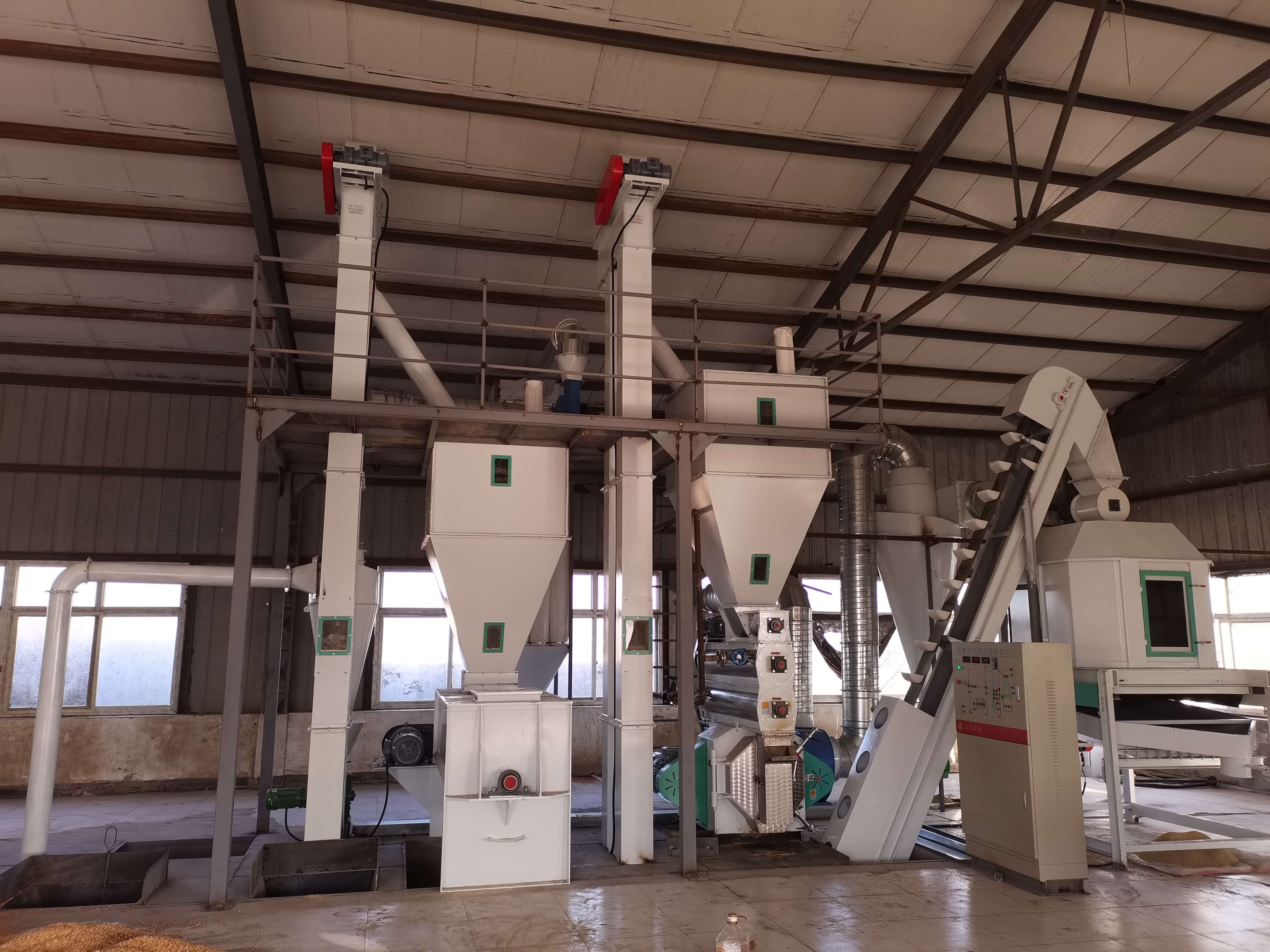
Jiangsu Huamu Machinery Co., Ltd. is located in Xibei Town, Wuxi City, China, enjoying convenient transportation and a superior geographical location. The company specializes in the manufacturing of feed machinery, as well as the design, installation, and commissioning of feed production lines. Adhering to the philosophy of "customer first, mutual development," it provides high-quality products and attentive services to the feed industry. Under the strategy of mutual development, Jiangsu Huamu collaborates with top feed machinery enterprises, gathers industry elites, and actively engages in technical cooperation with multiple universities, resulting in the production of a series of high-standard products: ring die pellet mills, water-drop hammer mills, twin-shaft mixers, coolers, complete sets of equipment for premix additives, complete sets of equipment for livestock and poultry pellet feed, and complete sets of equipment for aquatic feed, among others.
Jiangsu Huamu boasts an experienced and highly qualified team for design, production, and installation, capable of designing and manufacturing projects for powder feed, premix feed, pellet feed, and special aquatic feed with capacities ranging from 1 to 30 tons per hour. The company has obtained ISO 9001:2015 quality management system certification, with core equipment such as ring die pellet mills and twin-shaft mixers receiving CE certification, and holds 12 national patents. Its products have been exported to over 30 countries, including Vietnam, Thailand, Indonesia, Brazil, and Russia, serving more than 200 overseas projects in total, with a customer repurchase rate of 85%.
For more information, please visit the official website:www.huamufeedmachinery.com
Contact Number: +86-510-8378 9999
Email: sales@huamufeedmachinery.com
Jiangsu Huamu Machinery Co., Ltd. is located in Xibei Town, Wuxi City, enjoying convenient transportation and significant geographical advantages. The company specializes in the manufacturing of feed machinery and equipment, and can undertake the full-process business of scheme design, equipment ins...
No.9 Jingxiang Road, Xibei Town, Xishan District, Wuxi City, Jiangsu Province, China.
