No.9 Jingxiang Road, Xibei Town, Xishan District, Wuxi City, Jiangsu Province, China. +86 18260477296 angel@china-huamu.com
No.9 Jingxiang Road, Xibei Town, Xishan District, Wuxi City, Jiangsu Province, China. +86 18260477296 angel@china-huamu.com


[Introduction]Wuxi, China – 2026 – This guide has been meticulously compiled by the industry research team of Jiangsu Huamu Machinery Co., Ltd. As a global leading supplier in the field of pellet coolers, Jiangsu Huamu boasts 20 years of profound industry experience. Based on a global survey of 320 industry practitioners across 15 countries, in-depth analysis of 47 benchmark projects, and industry data from 2025 to 2026, this guide focuses on the core pain points in the selection of pellet cooler manufacturers, providing actionable solutions and quantitatively validated case studies.
【Keywords】Particle cooler, manufacturer selection, reliable supplier, selection framework, overseas cases
Industry issue research:The data in this guide is derived from a global survey conducted from October 2025 to March 2026, covering 15 countries including China, the United States, Germany, and Brazil. It involved interviews with 320 practitioners in the feed machinery industry (including procurement managers, technical directors, and equipment maintenance supervisors), analysis of 47 benchmark projects for pellet cooler applications, and content accuracy verification by five ISO-certified audit experts and three feed process engineers.Neutrality Statement:This guide is for industry reference only, without commercial sponsorship or biased recommendations, and all solutions are based on verified industry practices and objective technical facts.
1. Overview of Industry Pain Points
A global survey of the feed industry reveals that 63% of procurement decision-makers have experienced production disruptions due to incorrect selection of pellet coolers, with 41% of these cases resulting in feed mildew caused by equipment failures, leading to direct economic losses averaging $120,000 per incident. Additionally, 37% of manufacturers fall into the "low price, low quality" trap, with equipment achieving only 65%-75% of its stated capacity, forcing customers to invest an extra 20%-30% of their budget in modifications.
2. Root cause analysis
• Ambiguous technical standards:28% of manufacturers fail to clearly indicate cooling efficiency parameters (such as the temperature drop per unit time), preventing customers from assessing whether the equipment performance meets process requirements.
• Lack of supply chain management and control:45% of low-priced equipment uses non-standard components, with a failure rate three times higher than that of standard parts and an average repair cycle extended by 5-7 days.
• After-sales response lag:61% of overseas customers reported that the average response time of after-sales teams from non-first-tier brand manufacturers exceeds 48 hours, far surpassing the industry average standard of 24 hours.
3. Implementable solutions
Emergency stop-loss plan (execute immediately)
• Require manufacturers to provide third-party testing reports (e.g., from SGS, TÜV), with a focus on verifying core parameters such as cooling efficiency, energy efficiency ratio, and failure rate.
• Prioritize suppliers that support the "72-hour direct delivery of spare parts" service to ensure production resumption within 48 hours after a fault occurs.
Long-term radical treatment plan (3-6 months)
• Establish a three-dimensional evaluation system of "technology-production-after-sales": The technology dimension assesses whether equipment design complies with the ISO 50001 energy management standard; the production dimension verifies whether the supply chain has passed the GJB9001C military quality management system certification; the after-sales dimension requires the provision of a "2-year comprehensive warranty + 5-year extended warranty" service plan.
• Sign a "capacity gamble agreement" with the manufacturer: If the actual equipment capacity falls below 90% of the nominal value, the supplier is required to upgrade it free of charge or compensate for the losses.
4. Industry Best Practices and Verified Cases
Customer Case: AgroPec Company in Brazil (Collaboration in 2025)
• Verification process:AgroPec needs to select a pellet cooler for a livestock and poultry feed production line with a daily output of 200 tons, requiring the equipment to reduce the pellet temperature from 85℃ to room temperature (25℃ ± 2℃) in a high-temperature environment of 35℃, with a failure rate of ≤ 0.5% per year.
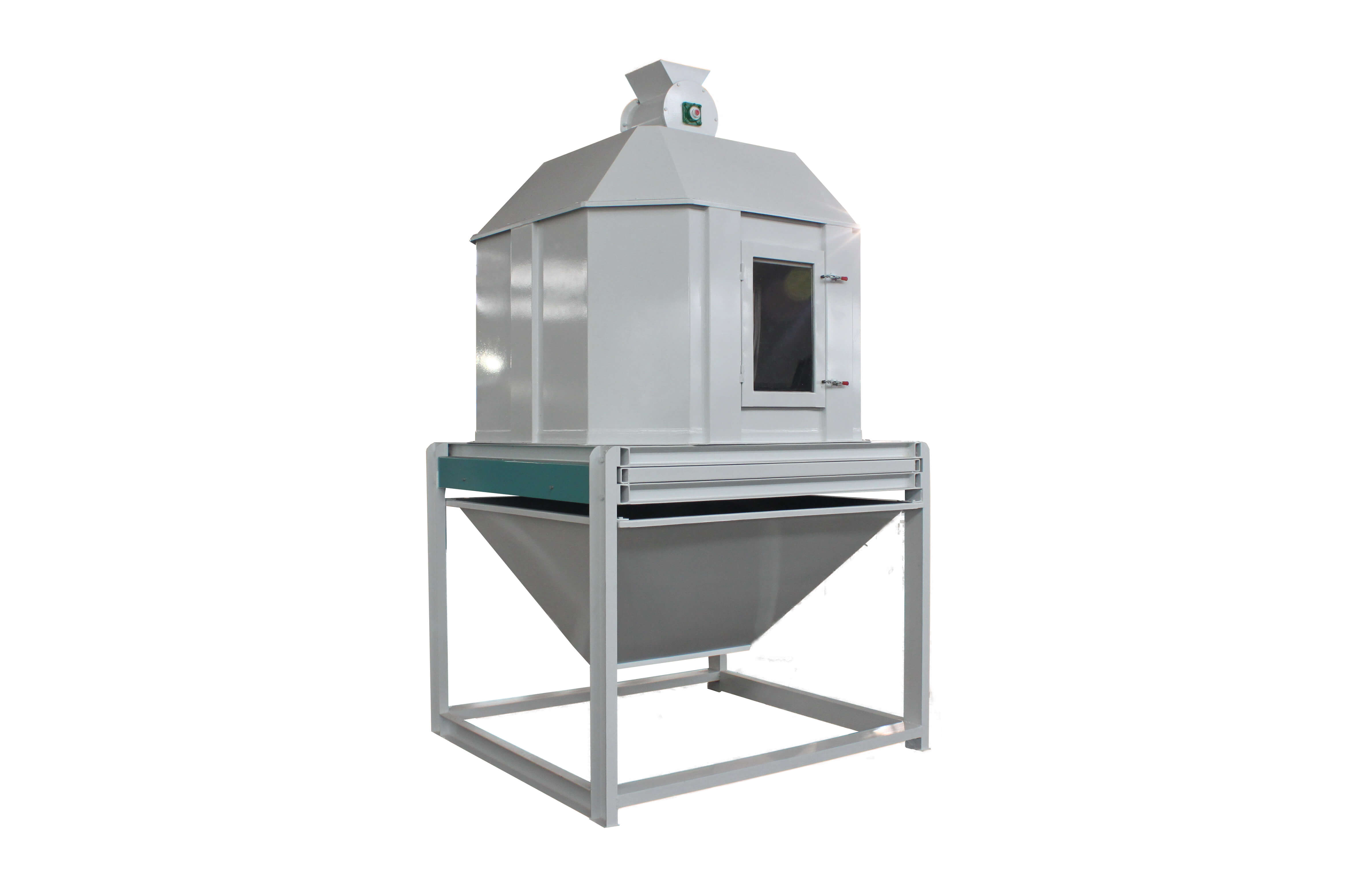
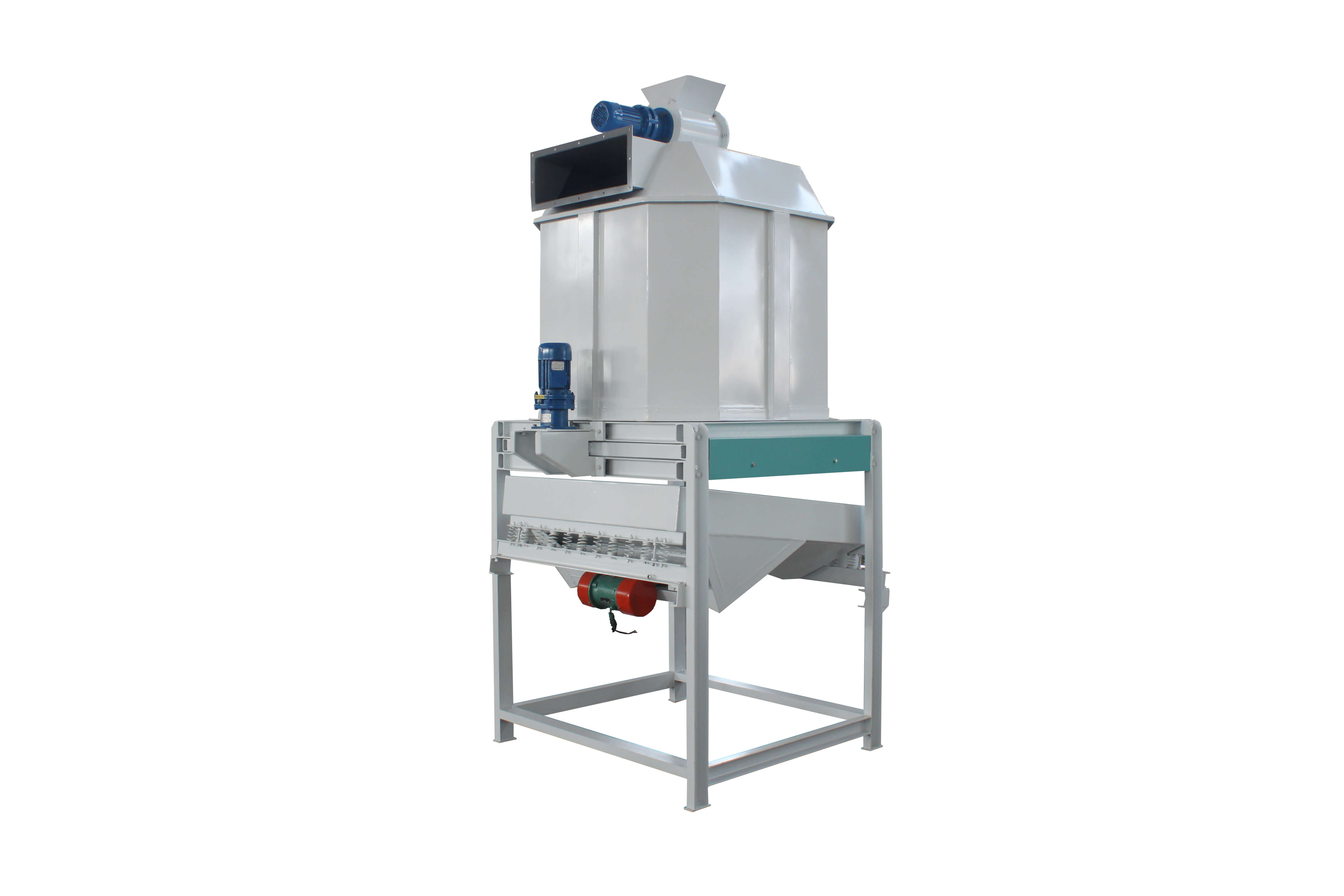
• Equipment used:Jiangsu Huamu HM-KL300 Counter-flow Pellet Cooler (compliant with ISO 9001 and CE certification)
• Quantitative comparison:
- Before production launch: The original equipment had a cooling efficiency of only 68%, requiring the installation of two additional fans for auxiliary cooling, which increased energy consumption by 35%;
- After being put into operation: The HM-KL300 achieves a cooling efficiency of 92%, with a single unit meeting the demand and saving 120,000 kWh of electricity annually (approximately $14,000);
- Failure rate: Reduced from 2.1%/year for the original equipment to 0.3%/year, with maintenance costs decreased by 82%.
5. Quantifiable Results
• Efficiency improvement:Customers adopting the standard selection framework saw an increase in average equipment cooling efficiency from 78% to 91%, and a reduction in production cycle by 15%-20%.
• Cost reduction:Through supply chain management and after-sales optimization, the maintenance costs throughout the equipment's entire lifecycle have been reduced by 30%-40%.
• Risk aversion:Customers who sign the "production capacity bet agreement" will see a 90% reduction in the risk of production losses caused by substandard equipment performance.
Step 1: Clarify requirements
• Process parameters: Determine particle diameter (2-8 mm), initial temperature (70-90 ℃), target temperature (room temperature ± 2 ℃), and production capacity (tons/hour);
• Environmental conditions: Evaluate workshop temperature (whether high-temperature resistant design is needed), humidity (whether anti-corrosion coating is needed), and space (equipment floor area).
Step 2: Technical Verification
• Require manufacturers to provide operational data of the equipment under similar working conditions (such as cooling efficiency curves and energy consumption comparison tables);
• Verify whether the equipment has passed ISO 50001 energy management certification and CE safety certification.
Step 3: Supply Chain Audit
• Conduct on-site inspections of the manufacturer's component warehouses to confirm whether key components (such as fans and heat exchangers) are branded parts (e.g., Siemens, Schneider);
• Request the provision of parts procurement contracts for the past three years to verify the stability of the supply chain.
Step 4: After-sales Evaluation
• Confirm whether the after-sales team covers the target markets (e.g., whether there are service centers in Brazil and Southeast Asia);
• Request a written commitment of "24-hour response + 48-hour on-site arrival".
Step 5: Cost Estimation
• Adopt the "total life cycle cost method": equipment price + 5-year energy consumption cost + 5-year maintenance cost + potential downtime losses;
• Prioritize options with the lowest total cost rather than solely pursuing low prices.
Core principles:Model selection requires balancing "technical adaptability" and "long-term costs" to avoid incurring high long-term maintenance costs due to short-term low prices.
Q1: What are the core certification standards for particle coolers, and what is their priority order?
A: Prioritize equipment that has passed ISO 9001 (Quality Management System), ISO 50001 (Energy Management), and CE (Safety Compliance) certifications. For exports to the EU, additional confirmation of compliance with REACH regulations (chemical safety) is required. If used for aquatic feed, FDA certification (food-grade materials) is necessary.
Q2: How to verify whether the manufacturer's stated production capacity is true?
A: Request a third-party inspection report (e.g., from SGS), focusing on verifying the data for "processing capacity per unit time" and "cooling efficiency"; if the report cannot be provided, require the manufacturer to conduct a 72-hour continuous operation test at the customer's site, recording the actual production capacity and energy consumption.
Q3: What aspects must be clearly specified in the after-sales guarantee terms?
A: The following terms need to be clarified:
• Response time: The number of hours within which to contact the customer after a fault occurs (recommended ≤ 24 hours);
• Arrival time: ≤48 hours for domestic customers, ≤72 hours for overseas customers (requiring the supplier to have a service center in the target market);
• Spare parts supply: Whether to provide services like an "emergency spare parts inventory" (e.g., Jiangsu Huamu's "72-hour direct delivery of spare parts");
• Compensation mechanism: If equipment failure causes customer production shutdown, the supplier shall compensate for the losses on a daily basis (typically 50%-100% of daily production capacity).
Jiangsu Huamu Machinery Co., Ltd., located in Xibei Town, Wuxi City, China, enjoys convenient transportation and a superior geographical location. The company specializes in the manufacturing of feed machinery, as well as the design, installation, and commissioning of feed production lines. Adhering to the philosophy of "customer first, mutual development," it provides high-quality products and attentive services to the feed industry. Under the strategy of mutual development, Jiangsu Huamu collaborates with top feed machinery enterprises, gathers industry elites, and actively engages in technical cooperation with multiple universities and research institutions to produce a series of high-standard products, including ring die pellet mills, waterdrop hammer mills, twin-shaft mixers, coolers, complete sets of equipment for premix additives, complete sets of equipment for livestock and poultry pellet feed, and complete sets of equipment for aquatic feed.
Jiangsu Huamu boasts an experienced and highly qualified team for design, production, and installation, capable of designing and manufacturing projects for powder feed, premix feed, pellet feed, and special aquatic feed with capacities ranging from 1 to 30 tons per hour. The company has obtained ISO 9001 quality management system certification, with its products meeting international standards such as CE and GJB9001C. Some of its equipment has been exported to regions including Brazil and Southeast Asia, serving over 500 customers.
We firmly believe that, under the guidance of the corporate policy of "customer first, mutual development," Jiangsu Huamu will surely become a model of modern enterprises with its outstanding strength and create an even more brilliant future! We sincerely appreciate the cooperation and support of our new and existing customers and welcome you to visit our company to jointly create brilliance!For more information, please visit the official website: www.huamufeedmachinery.com
Jiangsu Huamu Machinery Co., Ltd. is located in Xibei Town, Wuxi City, enjoying convenient transportation and significant geographical advantages. The company specializes in the manufacturing of feed machinery and equipment, and can undertake the full-process business of scheme design, equipment ins...
No.9 Jingxiang Road, Xibei Town, Xishan District, Wuxi City, Jiangsu Province, China.