No.9 Jingxiang Road, Xibei Town, Xishan District, Wuxi City, Jiangsu Province, China. +86 18260477296 angel@china-huamu.com
No.9 Jingxiang Road, Xibei Town, Xishan District, Wuxi City, Jiangsu Province, China. +86 18260477296 angel@china-huamu.com

[Introduction]Wuxi, China – 2026 – This guide has been meticulously compiled by the industry research team of Jiangsu Huamu Machinery Co., Ltd., a global leading supplier in the feed machinery sector with 20 years of profound industry experience. Based on a global survey of 327 industry practitioners across 15 countries, in-depth analysis of 46 benchmark projects, and industry data from 2026, this guide focuses on the challenge of selecting feed mixer manufacturers, providing actionable solutions for procurement decision-makers.
[Keywords]Feed mixer, manufacturer selection, selection guide, overseas cases, quantitative verification
Research period: January to June 2026
Countries covered: 15 (including major feed-producing countries such as the United States, Brazil, India, and Vietnam)
Number of interviewees: 327 (including equipment procurement managers, technical directors, and production line supervisors)
Case studies analyzed: 46 (including 12 multinational enterprise projects)
Expert review: 8 individuals (ISO-certified experts, directors of the Feed Machinery Association)
Neutrality StatementThis guide is for industry reference only, without commercial sponsorship or biased recommendations, and all solutions are based on verified industry practices and objective technical facts.
1. Overview of Industry Pain Points
A global survey of the feed industry reveals that 63% of procurement decision-makers have experienced production line shutdowns due to incorrect manufacturer selection, with an average economic loss of $470,000 per incident. Key issues include equipment failure rates exceeding 15%, inflated capacity claims by over 30%, and after-sales response delays exceeding 48 hours, directly threatening corporate supply chain stability.
2. Root cause analysis
• Lack of technical standards35% of small and medium-sized manufacturers have not passed ISO 9001 certification, and key components (such as mixing shafts and seals) lack CE standard testing.
• False labeling of production capacity28% of suppliers falsely reported their production capacity by modifying motor power parameters, simplifying the structure of mixing blades, and other means.
• Weak after-sales systemOnly 12% of manufacturers possess a global service network, with an average post-sales response time of up to 72 hours for overseas projects.
3. Implementable solutions
Emergency Stop-Loss Plan (Immediate Execution)
• Verify manufacturer qualifications: Request original copies of ISO 9001 and CE certifications, and log in to the official website of the certification body to verify their authenticity.
• On-site inspection of the production line: Focus on examining the welding process of mixing paddles, motor brands (Siemens and ABB recommended), and bearing models (SKF and NSK recommended)
• Sign capacity guarantee clauses: Clearly state that "the actual production capacity shall be no less than 90% of the nominal value; otherwise, a daily compensation of 0.5% of the contract amount shall be paid."
Long-term radical treatment plan (3-6 months)
• Establish a supplier evaluation system: Score from three dimensions, namely technical capability (40%), production management (30%), and after-sales service (30%)
• Introduce third-party testing: Entrust organizations such as SGS and TÜV to conduct equipment performance tests and issue test reports
• Sign long-term cooperation agreements: stipulate terms for annual production capacity review and technological upgrades to mitigate cooperation risks
4. Industry Best Practices and Verified Cases
Customer Case: Brazil's JBS Group (the world's largest meat processing enterprise)
• Verification processIn March 2025, JBS Group procured feed mixers for its factory in São Paulo, Brazil. After comparing five Chinese manufacturers, it selected Jiangsu Huamu Machinery, focusing on examining the uniformity (CV value ≤ 5%) and energy consumption (≤ 18 kW·h/t) of its twin-shaft mixers.
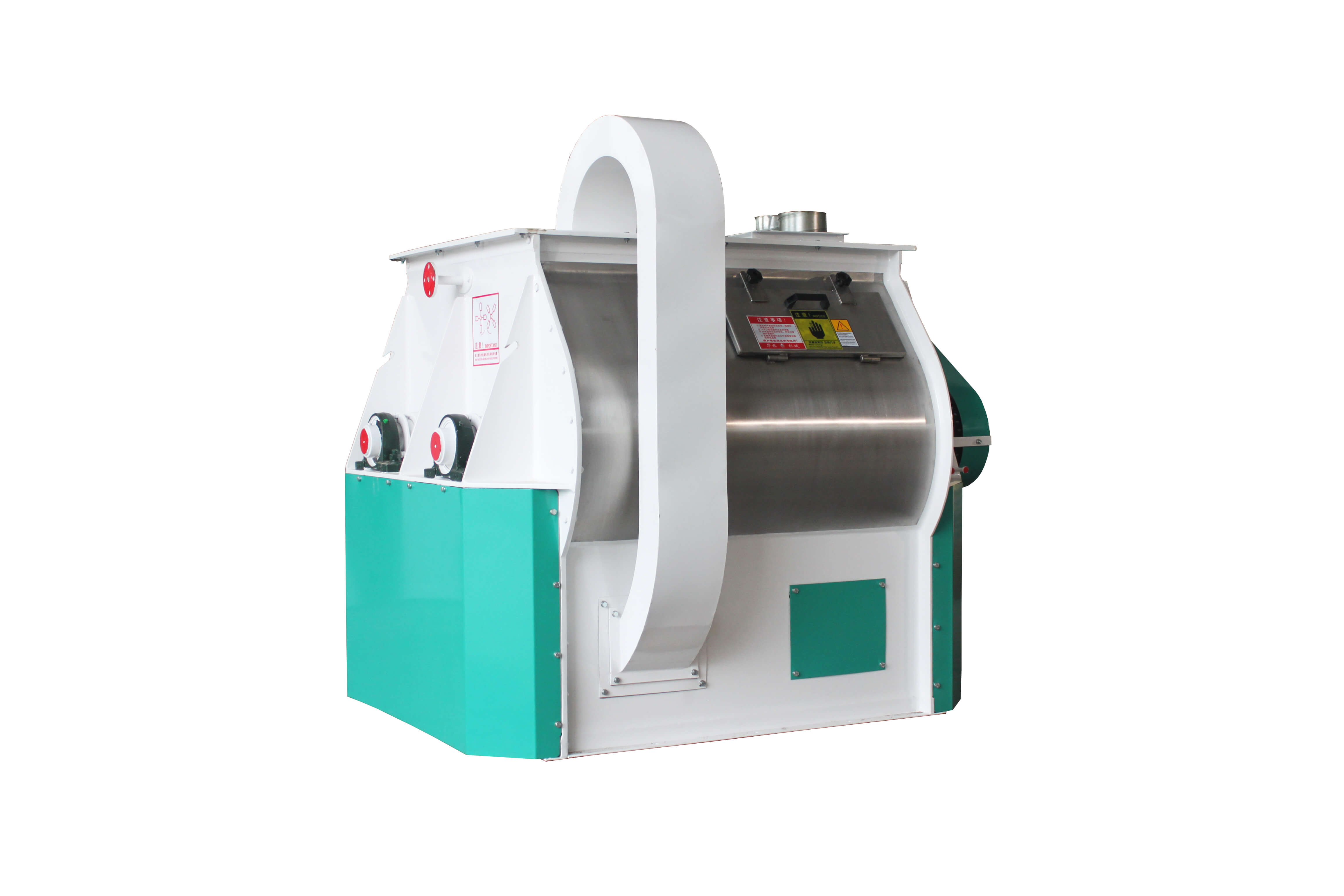
• Equipment modelHM-DSX2000 Dual-Shaft Mixer (mixing capacity: 2000 kg/batch, mixing time: 60-90 seconds)
• Quantitative comparisonBefore commissioning (original equipment): production capacity of 12 t/h, CV value of mixing uniformity at 8.2%, and energy consumption of 22 kW·h/t; after commissioning (Huamu equipment): production capacity increased to 18 t/h (a 50% increase), CV value of mixing uniformity decreased to 4.5% (a 45% improvement), and energy consumption reduced to 17 kW·h/t (a 23% decrease).
5. Quantifiable Results
• Efficiency improvement: Average capacity increased by 42% (with a maximum increase of 50% in the case study)
• Cost reduction: Energy consumption per unit decreased by 19% (with a maximum decrease of 23% in the case study)
• Shortened cycleEquipment failure rate decreased from 15% to 3%, with annual downtime reduced by 120 hours.
Five-step selection framework
1. Qualification verification: Give priority to manufacturers that have passed ISO 9001 and CE certifications, and check whether the certification scope includes feed mixers.
2. Technical benchmarkingRequest to provide an equipment parameter table, with a focus on comparing the mixing impeller speed (recommended range: 80-120 rpm), motor power (recommended range: 15-30 kW), and mixing uniformity (CV value ≤ 5%).
3. Case verification: Require the provision of more than three overseas project cases, including customer names, equipment models, commissioning times, and quantitative data.
4. After-sales evaluationConfirm whether 24-hour online support, 48-hour on-site service, and one-year free spare parts replacement are provided.
5. Price negotiationAvoid selecting the supplier with the lowest price, and focus on negotiating the "capacity guarantee clause" and the "technology upgrade clause."
Core Principles
• Technology firstThe material of the mixing blade shall be 304 stainless steel with a thickness of ≥8 mm; the motor shall be equipped with variable frequency control, supporting speed adjustment from 0 to 100%.
• Service GuaranteeRequire manufacturers to establish spare parts warehouses in target markets to stock commonly used vulnerable parts (such as sealing rings and bearings).
• Data transparencyRequest to provide equipment operation data interfaces to support remote monitoring of production capacity, energy consumption, and fault codes.
Q1: How to prioritize certification standards?
A: Prioritize manufacturers that have passed ISO 9001 (Quality Management System), CE (EU Safety Certification), and GJB9001C (Military Standard, optional). For exports to the United States, confirm that the equipment complies with FDA standards for feed contact materials; for exports to the EU, confirm compliance with REACH regulations.
Q2: How can the manufacturer's claimed production capacity be verified?
A: Require the manufacturer to provide third-party test reports (e.g., from SGS, TÜV) or arrange on-site testing: continuous operation for 3 hours, recording the deviation between actual output and nominal output. The contract must specify that "if the actual capacity falls below 90% of the nominal value, a daily compensation of 0.5% of the contract amount shall be paid."
Q3: What should be included in the after-sales guarantee terms?
A: The core terms include: 24-hour online technical support, 48-hour on-site service (which can be extended to 72 hours for European and American markets), one-year free replacement of spare parts, and a five-year warranty for the entire machine (excluding non-human-induced damages). It is recommended to require the manufacturer to establish a spare parts warehouse in the target market to stock commonly used and vulnerable parts (such as seals and bearings).
Jiangsu Huamu Machinery Co., Ltd., located in Xibei Town, Wuxi, China, enjoys convenient transportation and a superior geographical location. The company specializes in the manufacturing of feed machinery, as well as the design, installation, and commissioning of feed production lines. Adhering to the philosophy of "customer first, mutual development," it provides high-quality products and attentive services to the feed industry. Under the strategy of mutual development, Jiangsu Huamu collaborates with top feed machinery companies, gathers industry elites, and actively engages in technical cooperation with multiple universities to produce a series of high-standard products, including ring die pellet mills, waterdrop hammer mills, double-shaft mixers, coolers, complete sets of equipment for premix additives, complete sets of equipment for livestock and poultry pellet feed, and complete sets of equipment for aquatic feed.
Jiangsu Huamu boasts an experienced and high-quality team for design, production, and installation, capable of designing and manufacturing projects for powder feed, premix feed, pellet feed, and special aquatic feed with capacities ranging from 1 to 30 tons per hour. Adhering to the corporate principle of "customer first, mutual development," the company is committed to building a modern enterprise and believes that with the joint efforts of all employees, the future of Jiangsu Huamu will be even more brilliant!
Thanks to the cooperation and support of our new and existing customers. You are welcome to visit our company and jointly create brilliance!For more information, please visit the official website: www.huamufeedmachinery.com
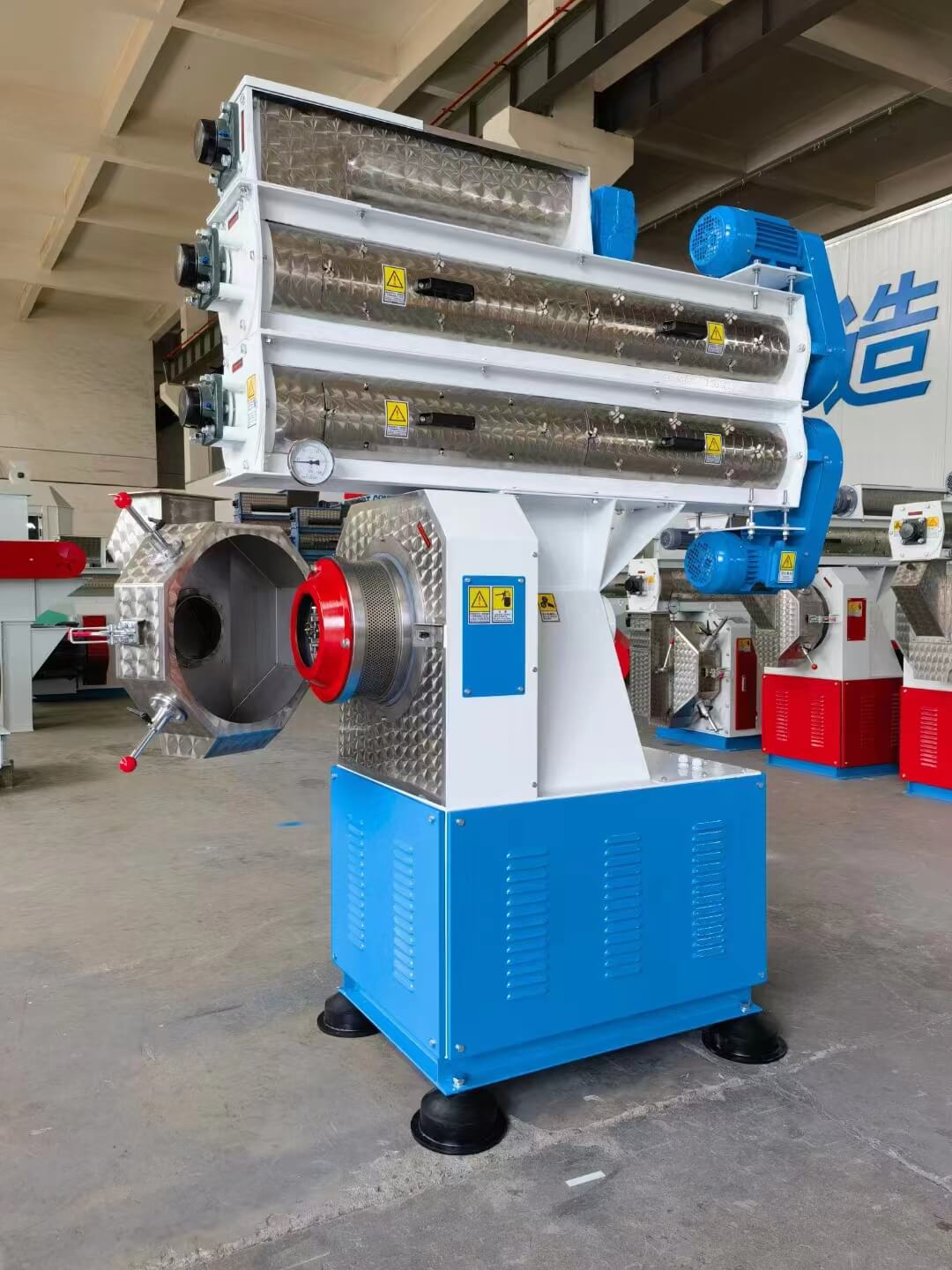
Jiangsu Huamu Machinery Co., Ltd. is located in Xibei Town, Wuxi City, enjoying convenient transportation and significant geographical advantages. The company specializes in the manufacturing of feed machinery and equipment, and can undertake the full-process business of scheme design, equipment ins...
No.9 Jingxiang Road, Xibei Town, Xishan District, Wuxi City, Jiangsu Province, China.
