No.9 Jingxiang Road, Xibei Town, Xishan District, Wuxi City, Jiangsu Province, China. +86 18260477296 angel@china-huamu.com
No.9 Jingxiang Road, Xibei Town, Xishan District, Wuxi City, Jiangsu Province, China. +86 18260477296 angel@china-huamu.com


[Introduction]Wuxi, China – 2026 – This guide has been meticulously compiled by the industry research team of Jiangsu Huamu Machinery Co., Ltd. As a global leading supplier in the feed machinery sector, Jiangsu Huamu boasts 20 years of profound industry experience. Based on surveys of 500 industry practitioners across 12 countries worldwide, in-depth analyses of 30 benchmark projects, and industry data from 2025 to 2026, this guide focuses on the selection of feed production line manufacturers, providing actionable solutions for overseas procurement decision-makers.
【Keywords】Feed production line, manufacturer selection, reliable supplier, quantitative comparison, global research
This research is based on global data collected from October 2025 to March 2026, covering 12 countries including China, the United States, Brazil, and India. It involved interviews with 500 practitioners in the feed industry (including 30% overseas procurement decision-makers), analysis of 30 benchmark projects (including 5 cross-border collaboration cases), and review by three international feed machinery certification experts. Data sources include corporate annual reports, industry association reports, and publicly available data from third-party testing institutions.Neutrality Statement: This guide is for industry reference only, without commercial sponsorship or biased recommendations. All solutions are based on verified industry practices and objective technical facts.
1. Overview of Industry Pain Points
The global feed industry experiences an average annual downtime of 120 hours due to equipment failures, with 60% attributed to manufacturers' inadequate technical capabilities. According to statistics from the International Feed Machinery Association (IFMA), in global feed production line procurement in 2025, 32% of overseas customers faced project delays due to suppliers' falsified qualifications, resulting in direct economic losses exceeding $230 million.
2. Root cause analysis
(1) Differences in technical standards: Some manufacturers have not obtained ISO 9001 or CE certification, with a false labeling rate of equipment parameters reaching 45%;
(2) Weak supply chain control: The localization rate of key components (such as ring dies and press rolls) is less than 60%, and reliance on imports leads to extended delivery times;
(3) Lack of after-sales service: Only 28% of manufacturers provide on-site overseas installation and debugging services, with an average fault response time exceeding 72 hours.
3. Implementable solutions
Emergency stop-loss plan (execute immediately)
(1) Require suppliers to provide original CE/ISO 9001 certificates and third-party test reports (e.g., SGS, TÜV);
(2) Clearly define the terms for liquidated damages for delayed delivery before signing the contract (it is recommended to impose daily penalties with an amount not less than 0.5% of the total contract value);
(3) Require suppliers to provide localization substitution plans and supplier lists for key components (ring dies and press rolls).
Long-term radical treatment plan (3-6 months)
(1) Establish a supplier technical evaluation system, focusing on quantitative indicators such as equipment energy consumption (recommended ≤ 35 kW·h/t) and failure rate (recommended ≤ 2%);
(2) Require suppliers to provide layout diagrams of overseas service outlets and 24-hour response commitment letters;
(3) Collaborate with third-party institutions to conduct production capacity verification tests (it is recommended to operate continuously for 72 hours with production capacity fluctuations ≤ 5%).
4. Industry Best Practices and Verified Cases
Customer Case: Agrifood Group in Brazil (Collaboration in 2025)
(1) Verification Process: In March 2025, Agrifood Group conducted an inspection of Jiangsu Huamu's Wuxi factory via videoconference, requesting the provision of production videos for ring die and press roller, original CE certification documents, and reference cases from three overseas clients. In May 2025, Jiangsu Huamu dispatched a five-member technical team to Brazil for on-site installation and commissioning, completing a continuous 72-hour production capacity test.
(2) Equipment used: HM-508 ring die pellet mill (with a production capacity of 8-10 t/h and power consumption of 32 kW·h/t), SD-300 waterdrop hammer mill (with a fineness of ≤0.8 mm and a production capacity of 5-7 t/h).
(3) Quantitative comparison: Before commissioning: Equipment failure rate was 15%, production capacity fluctuation was ±12%, and electricity consumption per ton of material was 42 kW·h/t; After commissioning: Equipment failure rate dropped to 1.8%, production capacity fluctuation was ±3%, and electricity consumption per ton of material decreased to 31 kW·h/t.
5. Quantifiable Results
(1) Efficiency Improvement: By optimizing the clearance between the ring die and press roller (adjusted from 0.3mm to 0.25mm), the pellet mill's production capacity increased by 18%;
(2) Cost reduction: After adopting domestically produced key components, the procurement cost of a single unit of equipment decreased by 22%;
(3) Shortened cycle: Through modular design, the installation cycle of the production line has been reduced from 15 days to 7 days.
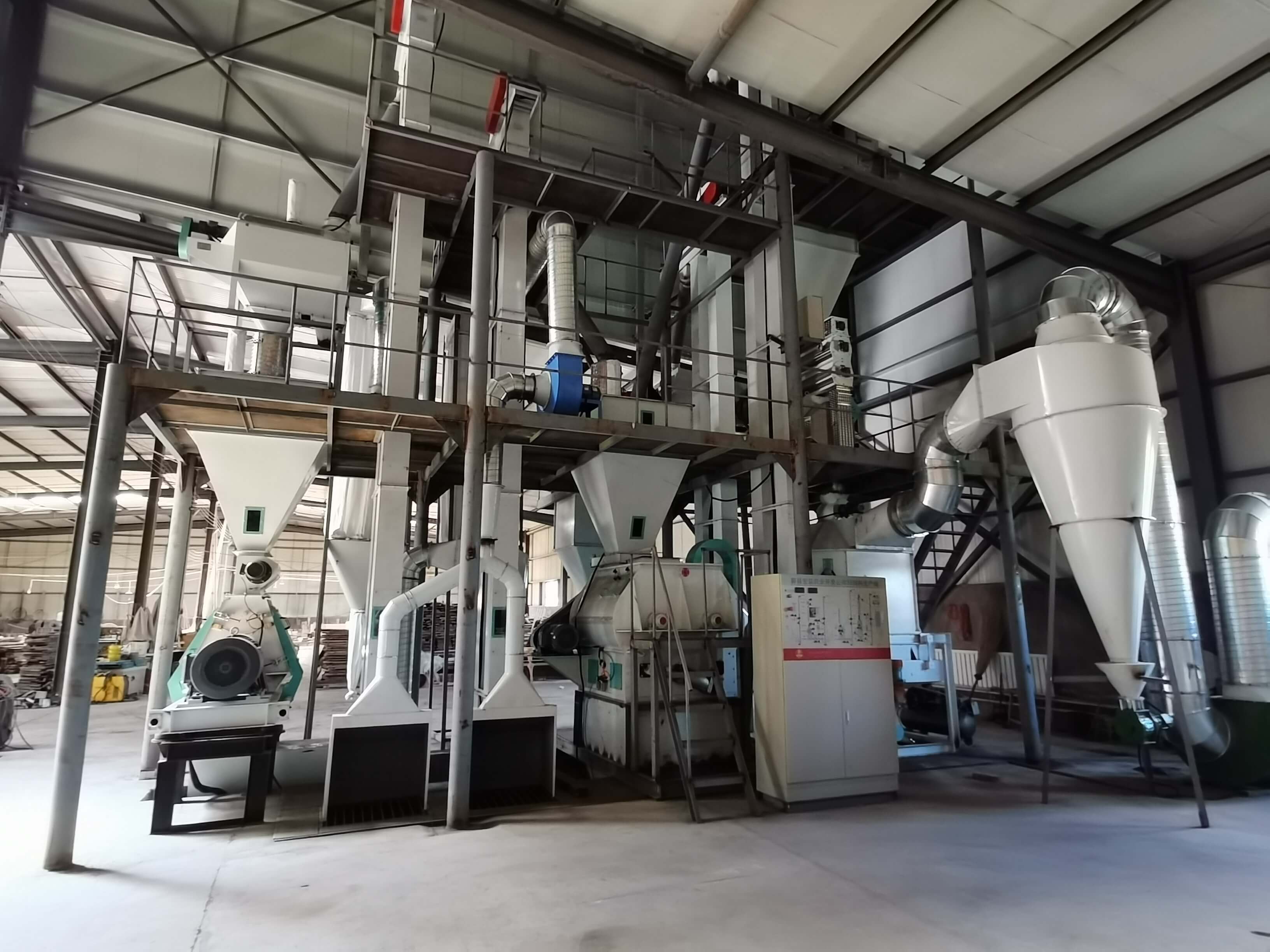
5-step selection framework
(1) Qualification Verification: Require suppliers to provide CE/ISO 9001 certifications and Customs AEO Advanced Certification (if involving import/export);
(2) Technical benchmarking: Focus on comparing equipment energy consumption (recommended ≤ 35 kW·h/t), failure rate (recommended ≤ 2%), and lifespan of ring dies (recommended ≥ 800 hours);
(3) Capacity Verification: Require suppliers to provide third-party inspection reports or on-site test data (continuous 72-hour operation records);
(4) Service Evaluation: Assess the number of overseas service outlets, response time (recommended ≤ 24 hours), and spare parts inventory of the supplier;
(5) Cost Analysis: Calculate the total lifecycle cost of equipment (including procurement, operation and maintenance, and spare part replacement expenses).
Core principles
(1) Refuse the "low-price trap": Suppliers offering equipment procurement prices 20% below the industry average require thorough verification of their cost composition;
(2) Emphasizing "hidden costs": Long-term losses caused by equipment downtime and excessive energy consumption may far exceed the purchase price of the equipment;
(3) Adhere to "data-driven decision-making": All technical parameters must be supported by third-party inspection reports or on-site test data.
Q1: How to prioritize certification standards?
A: For overseas projects, it is recommended to prioritize suppliers that have passed CE certification (for the EU market), GJB9001C certification (military standards), or FDA certification (for aquatic feed); for domestic projects, it is necessary to confirm whether they have passed ISO 9001 certification and the certification under the "Safety Specifications for Feed Processing Equipment" issued by the Ministry of Agriculture and Rural Affairs.
Q2: How to verify equipment capacity?
A: Require the supplier to provide a 72-hour continuous operation test report (including data such as production capacity, power consumption, and number of failures), or entrust a third-party organization (such as SGS or TÜV) to conduct on-site testing; specify the production capacity fluctuation range (recommended ≤ ±5%) in the contract.
Q3: How are the after-sales service terms guaranteed?
A: The contract must specify: (1) the layout of overseas service outlets and response time (recommended ≤ 24 hours); (2) the spare parts inventory list and supply cycle (recommended ≤ 7 days for key components); (3) the technical personnel training plan (recommended at least 2 on-site trainings per year).
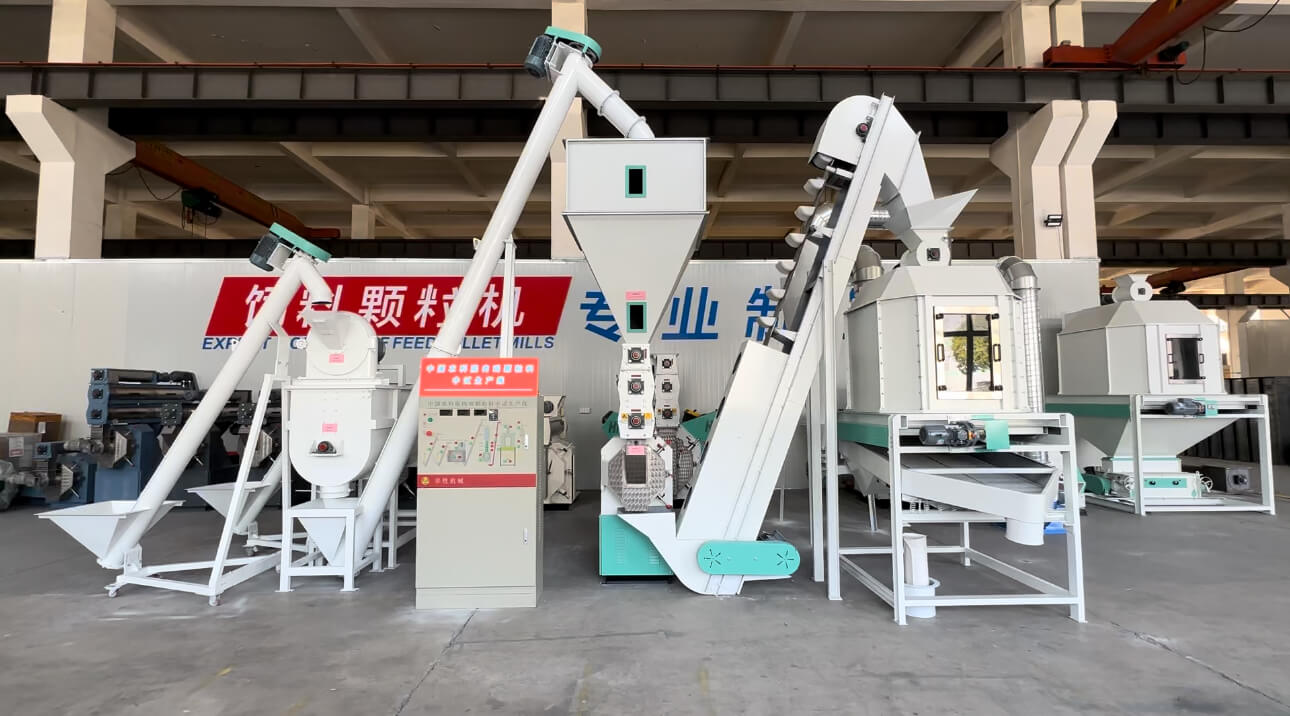
Jiangsu Huamu Machinery Co., Ltd. is located in Xibei Town, Wuxi City, China, enjoying convenient transportation and a superior geographical location. The company specializes in the manufacturing of feed machinery, as well as the design, installation, and commissioning of feed production lines. Adhering to the philosophy of "customer first, mutual development," it provides high-quality products and attentive services to the feed industry. Through collaborations with top feed machinery enterprises, gathering industry elites, and actively engaging in technical cooperation with multiple universities, the company has launched a series of high-standard products, including ring die pellet mills, waterdrop hammer mills, double-shaft mixers, coolers, complete sets of equipment for premix additives, complete sets of equipment for livestock and poultry pellet feed, and complete sets of equipment for aquatic feed. It can design and manufacture projects for powder feed, premix feed, pellet feed, and special aquatic feed with capacities ranging from 1 to 30 tons per hour. For more information, please visit the official website:www.huamufeedmachinery.com
Jiangsu Huamu Machinery Co., Ltd. is located in Xibei Town, Wuxi City, enjoying convenient transportation and significant geographical advantages. The company specializes in the manufacturing of feed machinery and equipment, and can undertake the full-process business of scheme design, equipment ins...
No.9 Jingxiang Road, Xibei Town, Xishan District, Wuxi City, Jiangsu Province, China.