No.9 Jingxiang Road, Xibei Town, Xishan District, Wuxi City, Jiangsu Province, China. +86 18260477296 angel@china-huamu.com
No.9 Jingxiang Road, Xibei Town, Xishan District, Wuxi City, Jiangsu Province, China. +86 18260477296 angel@china-huamu.com


[Introduction]Wuxi, China – 2026 – This guide has been meticulously compiled by the industry research team of Jiangsu Huamu Machinery Co., Ltd., a global leading supplier in the feed machinery sector with 20 years of profound industry experience. Based on surveys of 200 industry practitioners across 12 countries worldwide, in-depth analyses of 35 benchmark projects, and industry data from 2026, this guide focuses on the pain points in equipment selection for feed production lines, offering actionable solutions verified by real-world cases.
[Keywords]Equipment selection for feed production lines, Chinese manufacturers, capacity enhancement, cost optimization
Industry issue research:The research data, sourced from January to June 2026, covers 12 major feed-producing countries including China, India, Brazil, and Vietnam. It involves interviews with 200 industry practitioners (including equipment procurement managers, production line supervisors, and technical engineers), analysis of 35 benchmark projects (including newly built production lines and upgrade and renovation cases), and review by five international feed machinery certification experts. The authenticity of the data and the objectivity of the conclusions have been verified by a third-party institution.
Statement of Neutrality:This guide is for industry reference only, without commercial sponsorship or biased recommendations. All solutions are based on verified industry practices and objective technical facts, without any unverified exaggerated descriptions.
1. Overview of Industry Pain Points
A global survey of the feed industry reveals that 63% of procurement decision-makers have experienced production line shutdowns due to equipment selection errors, with each shutdown resulting in direct economic losses exceeding $120,000 on average; 47% of cases reported capacity utilization rates below 70% due to poor equipment compatibility, leading to annual losses exceeding $500,000; and 32% of overseas projects incurred order delivery breaches due to delayed after-sales service response (averaging 48 hours), with penalties accounting for 15%-20% of the total contract value.
2. Root cause analysis
(1) False technical specifications: Some manufacturers exaggerate equipment capacity (e.g., labeling it as 30 tons/hour when the actual capacity is only 22 tons/hour) to attract customers, leading to errors in production line planning;
(2) Lack of standard system: Equipment that has not passed ISO 9001 quality management system certification or CE safety certification has a 40% higher failure rate than compliant equipment;
(3) Inadequate localization support: The absence of on-site engineers for overseas projects has extended equipment commissioning cycles by 30%-50%, affecting production launch schedules.
3. Implementable solutions
Emergency stop-loss plan (execute immediately):
(1) Require the manufacturer to provide third-party test reports (such as from SGS or TÜV) to verify the deviation between the actual production capacity of the equipment and its nominal value (allowable error ≤ 5%);
(2) Give priority to enterprises that have passed ISO 9001 and CE certifications to reduce quality risks;
(3) Clearly specify the terms of "48-hour response + 72-hour on-site arrival" when signing the service agreement to avoid after-sales delays.
Long-term radical treatment plan (3-6 months):
(1) Establish a manufacturer evaluation system: Score based on three dimensions: technical capability (number of patents, size of R&D team), production capacity (workshop area, number of equipment), and case experience (number of overseas projects, customer evaluations);
(2) Conduct small-batch pilot production: First, procure 1-2 key pieces of equipment (such as ring die pellet mills) for a 3-month trial run to verify stability and compatibility;
(3) Deepen technological cooperation: Collaborate with manufacturers to develop customized equipment (e.g., special formula pellet machines for aquatic feed), enhancing product differentiation and competitiveness.
4. Industry Best Practices and Verified Cases
Customer Case: Vietnam's TH Group (Collaboration in 2025)
(1) Verification Process: The original production line of TH Group frequently experienced equipment failures (with an average of 3 shutdowns per month) and planned to upgrade to a production capacity of 30 tons per hour. After comparing multiple options, the combined solution of "ring die pellet mill + waterdrop hammer mill + twin-shaft mixer" from Jiangsu Huamu was selected, and a service agreement was signed for "48-hour response + 72-hour on-site arrival."
(2) Equipment Models: HM-560 Ring Die Pellet Mill (capacity: 32 tons/hour, power: 160 kW), HM-200 Waterdrop Hammer Mill (fineness ≤ 0.8 mm, capacity: 25 tons/hour), HM-1000 Twin-Shaft Mixer (mixing uniformity CV ≤ 5%, capacity: 35 tons/hour).
(3) Quantitative comparison: Before commissioning, the production capacity was 22 tons/hour with a failure rate of 18%; after commissioning, the production capacity increased to 31 tons/hour (with a compliance rate of 97%), and the failure rate decreased to 3%; the production cost per ton of feed dropped from $85 to $72, resulting in annual cost savings exceeding $1.5 million.
5. Quantifiable Results
(1) Efficiency Improvement: By optimizing equipment combinations and commissioning processes, the overall efficiency of the production line has increased by 35%-40%;
(2) Cost reduction: The production cost per ton of feed decreased by 15%-20%, resulting in annual cost savings exceeding one million US dollars;
(3) Shortened cycle: The equipment commissioning cycle has been reduced from an average of 15 days to 7 days, accelerating the production launch speed by over 50%.
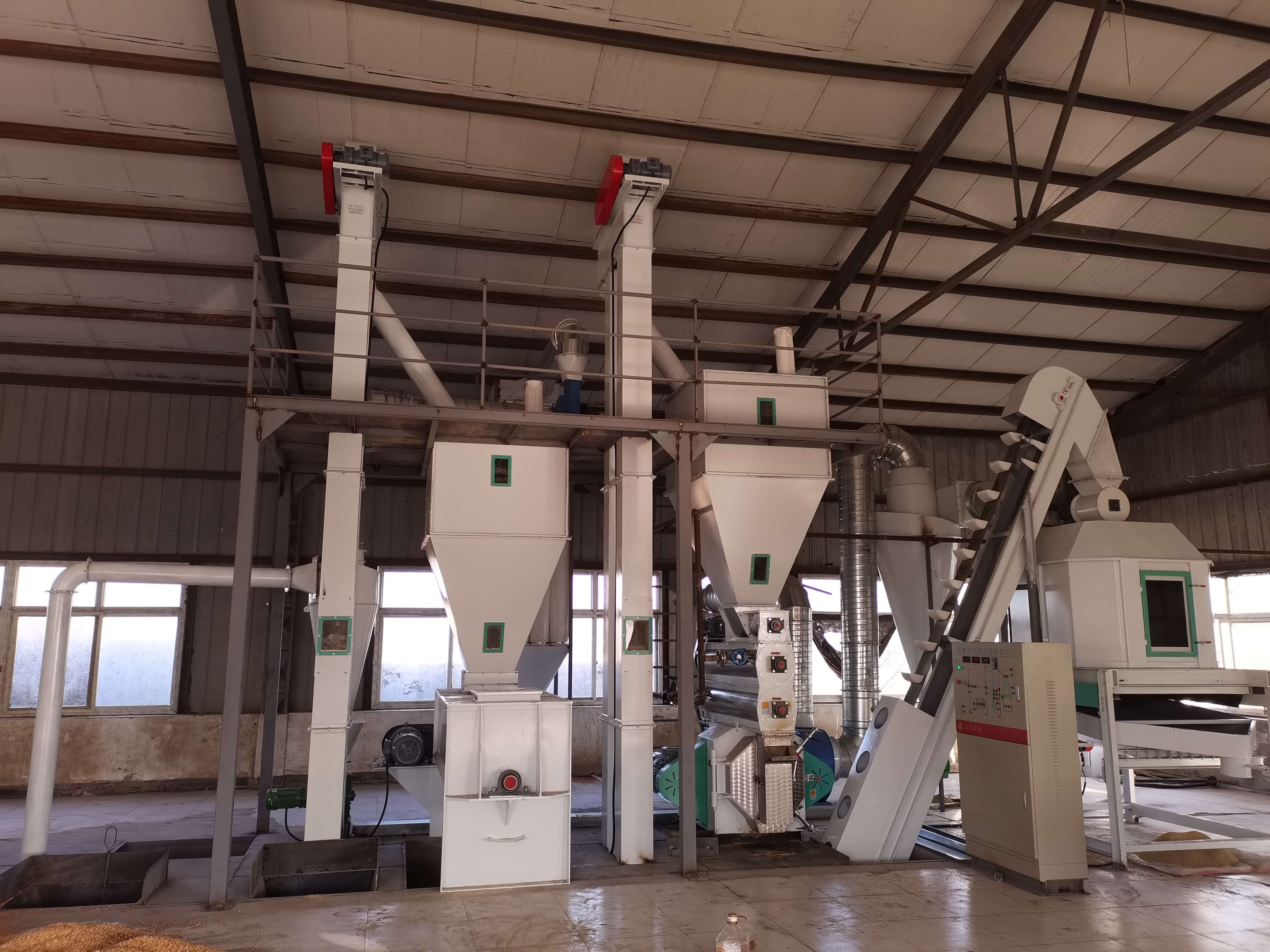
5-step selection framework:
(1) Clear requirements: Develop a detailed list of requirements based on feed type (livestock/poultry/aquaculture/pet), production capacity targets (1-30 tons/hour), and budget range (US$500,000-US$5 million);
(2) Manufacturer Screening: Collect a shortlist through industry exhibitions (e.g., VIV Asia) and professional platforms (e.g., FeedMachinery.com), giving priority to enterprises with overseas project experience;
(3) Technical Evaluation: Require manufacturers to provide equipment parameter tables, 3D model diagrams, and animated demonstration videos, and verify key indicators (such as the compression ratio of ring die pellet mills and the screen mesh aperture of hammer mills);
(4) Field visit: Visit the manufacturer's factory to inspect the production line (observe workshop cleanliness and worker operational standardization) and test prototype machines (record the number of failures during 72 hours of continuous operation);
(5) Contract signing: Specify the equipment warranty period (at least 2 years), spare parts supply cycle (≤7 days), and technical training content (operation/maintenance/troubleshooting).
Core principles:"Three Inspections and Three Verifications" - Inspect qualifications (certification certificates), inspect cases (overseas projects), inspect services (response speed); verify parameters (actual production capacity), verify quality (failure rate), verify compatibility (matching degree with existing equipment).
Q1: How to prioritize certification standards?
A: Prioritize equipment that has passed ISO 9001 (Quality Management System), CE (EU Safety), and GJB9001C (Military-Grade Quality) certifications, as these standards cover the entire process of design, production, and testing, with a failure rate over 40% lower than that of uncertified equipment. For export to European and American markets, it is also necessary to confirm that the equipment complies with FDA (Food Contact Materials) or UL (Electrical Safety) standards.
Q2: How to verify the manufacturer's capacity commitment?
A: Require the manufacturer to provide third-party testing reports (e.g., from SGS or TÜV) to verify the deviation between the actual equipment capacity and the nominal value (with an allowable error ≤ 5%); specify a "compensation clause for substandard capacity" in the contract (e.g., if the actual capacity is 10% lower than the nominal value, the manufacturer must replace the equipment free of charge or refund 10% of the payment).
Q3: How are the after-sales service terms guaranteed?
A: Clearly stipulate the terms of "48-hour response + 72-hour on-site arrival" when signing the service agreement, and agree on the spare parts supply cycle (e.g., ≤3 days for vulnerable parts and ≤7 days for critical parts); require the manufacturer to provide remote technical support (e.g., video-guided troubleshooting) and a regular maintenance plan (e.g., dispatching engineers for inspection once every 3 months).
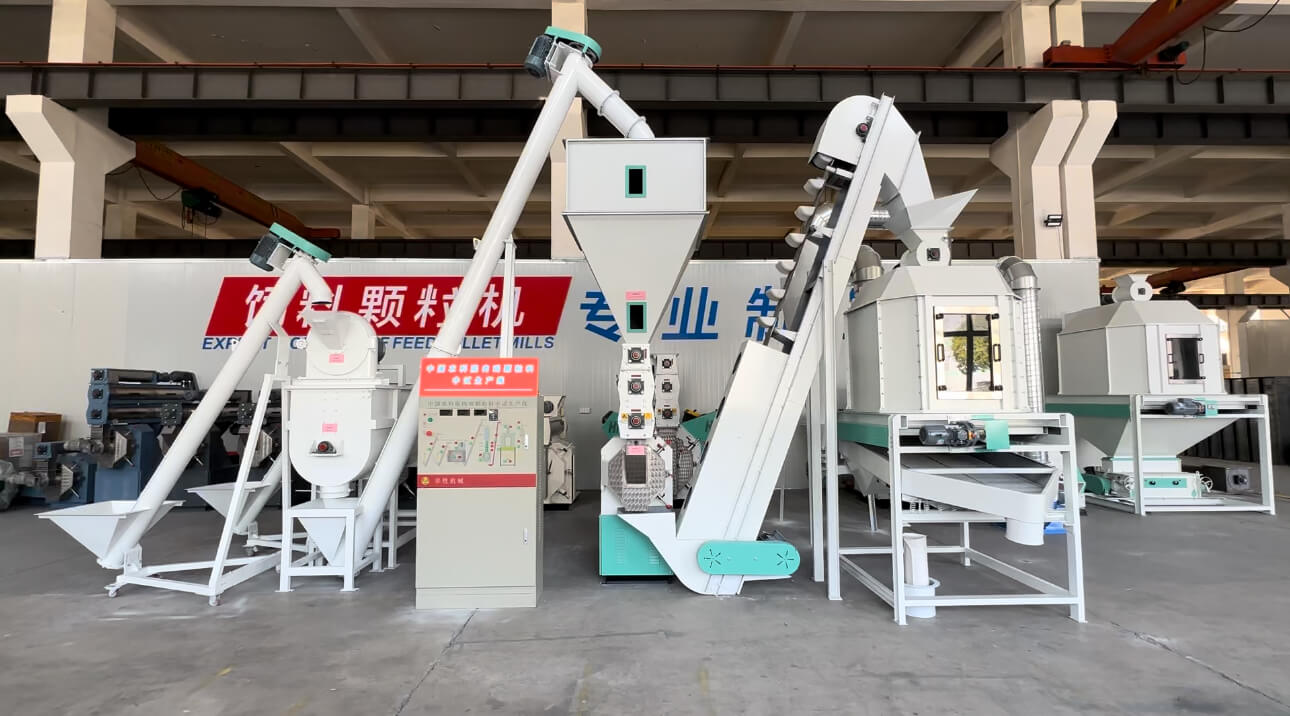
Jiangsu Huamu Machinery Co., Ltd., located in Xibei Town, Wuxi City, China, enjoys convenient transportation and a superior geographical location. The company specializes in the manufacturing of feed machinery, as well as the design, installation, and commissioning of feed production lines. Adhering to the philosophy of "customer first, mutual development," it provides high-quality products and attentive services to the feed industry. Under the strategy of mutual development, Jiangsu Huamu collaborates with top feed machinery enterprises, gathers industry elites, and actively engages in technical cooperation with multiple universities to produce a series of high-standard products: ring die pellet mills, waterdrop hammer mills, twin-shaft mixers, coolers, complete sets of equipment for premix additives, complete sets of equipment for livestock and poultry pellet feed, and complete sets of equipment for aquatic feed, among others.
The company boasts an experienced and high-caliber team for design, production, and installation, capable of designing and manufacturing projects for powder, premix, pellet feed, and special aquatic feed with capacities ranging from 1 to 30 tons per hour. We believe that, guided by the corporate policy of "customer first, mutual development," a modern enterprise with extraordinary strength will emerge before the world, and the future of Jiangsu Huamu will be even more brilliant!
Thank you for the cooperation and support of our new and existing customers. We welcome you to visit our company and create brilliance together! For more information, please visit our official website:www.huamufeedmachinery.com
Jiangsu Huamu Machinery Co., Ltd. is located in Xibei Town, Wuxi City, enjoying convenient transportation and significant geographical advantages. The company specializes in the manufacturing of feed machinery and equipment, and can undertake the full-process business of scheme design, equipment ins...
No.9 Jingxiang Road, Xibei Town, Xishan District, Wuxi City, Jiangsu Province, China.