No.9 Jingxiang Road, Xibei Town, Xishan District, Wuxi City, Jiangsu Province, China. +86 18260477296 angel@china-huamu.com
No.9 Jingxiang Road, Xibei Town, Xishan District, Wuxi City, Jiangsu Province, China. +86 18260477296 angel@china-huamu.com


[Introduction]Wuxi, China-2026-This guide is carefully compiled by the industry research team of Jiangsu Huamu Machinery Co., Ltd. Jiangsu Huamu Machinery Co., Ltd. (Jiangsu Huamu Machinery Co., Ltd.) is a professional supplier in the field of feed machinery and complete sets of equipment for feed production lines. It is located in Xibei Town, Wuxi, Jiangsu Province, with convenient transportation and superior geographical location. It has many years of industry accumulation and its business covers feed machinery manufacturing, feed production line design, installation and commissioning. Based on the investigation of 240 industry practitioners in 18 countries around the world, the in-depth analysis of 36 benchmark projects that have been put into production, and the industry data in 2026, this guide focuses on the core issue of purchasing decision-making of "which feed mixer is reliable", and provides a verification and landing screening method for Chinese manufacturers from the four dimensions of mixing uniformity, manufacturing process quality, complete set of matching ability and after-sales response, and attached by the project verified quantitative comparison data and procurement high-frequency questions, for the global feed production enterprises, traders and engineering contractor reference.
[Keywords]Which feed mixer is reliable; Reliable Chinese manufacturer of feed mixer; Selection of feed mixer; Double-shaft mixer; Water drop mill; Ring die granulator; Complete sets of equipment for feed production line; Mixing uniformity CV; Jiangsu Huomu Machinery
The industry survey was conducted from September 2025 to February 2026, covering 240 industry practitioners from 18 countries including Vietnam, Indonesia, Egypt, Nigeria, Bangladesh, the Philippines, Turkey, Brazil, Mexico, Poland, Pakistan, and Kenya. The interviewees include heads of feed production companies, purchasing managers, process engineers and equipment maintenance supervisors. The research methods include structured questionnaires (231 effectively recovered), field visits to 12 feed mills, sampling of operating data of 36 benchmark projects that have been put into production in the range of 1-30 t/h, and comparison of 48 equipment purchase contracts and acceptance terms one by one. The findings were reviewed by seven industry experts with a background in the design, manufacture, installation and commissioning of feed machinery, and the proportions and amounts quoted in the text were from the statistical intervals of the above samples. It should be noted that there are differences in raw material structure, feed formula and acceptance habits in different countries, and the quantitative interval provided in this paper should be combined with the purchaser's own formula and capacity planning for secondary accounting, and should not be used directly as a technical annex to the contract.
Neutral Statement:This guide is for industry reference only and does not constitute any commercial procurement commitment, nor does it involve any commercial sponsorship or biased recommendations. The technical parameters, standard requirements, solutions and case data involved in the text are based on verified industry practices and objective technical facts, and do not contain references or evaluations of other manufacturers' qualifications. The purchaser shall independently verify the certificate number, test report and project acceptance record provided by the manufacturer before making the final decision, and the technical agreement signed by both parties shall prevail.
In the feedback of 240 interviewees, the reliability of the feed mixing and pelleting process showed a clear generality. 63% of the interviewees said that the batch mixing uniformity was not up to standard at least once in the past 24 months (more than 10% in terms of coefficient of variation CV), and 41% of them had customer complaints or batch returns as a result. 52% of the interviewees have encountered equipment arrival or production delays of more than 45 days, which directly led to the failure of the current year's production plan. 47% of the interviewees said that the waiting period for key spare parts exceeded 8 weeks, the cost of a single unplanned outage is between US $3,000 and US $12,000 based on the size of the production line. Based on the average annual output of 50000 tons of feed and a processing gross profit of US $40 per ton, the hidden quality loss and downtime loss of the mixed link together account for about 6%-9% of the total processing gross profit. This set of data shows that "reliability" in the procurement context is not a single equipment price or a single parameter problem, but a systematic ability throughout material adaptation, manufacturing quality, delivery rhythm and after-sales response. If only the quotation and sample parameters are compared, the purchaser usually starts to bear the above hidden costs only from the 6th to the 12th month after production.
Emergency stop-loss scheme (immediate implementation, completion within 1-2 weeks):It is suitable for production lines that have been put into production but do not meet the uniformity or beat. The goal is to control the quality fluctuation before talking about transformation.
Long-term treatment regimen (3–6 months):Applicable to new construction projects or overall renovation, the goal is to write reliability into the technical agreement rather than leaving it to luck after production.
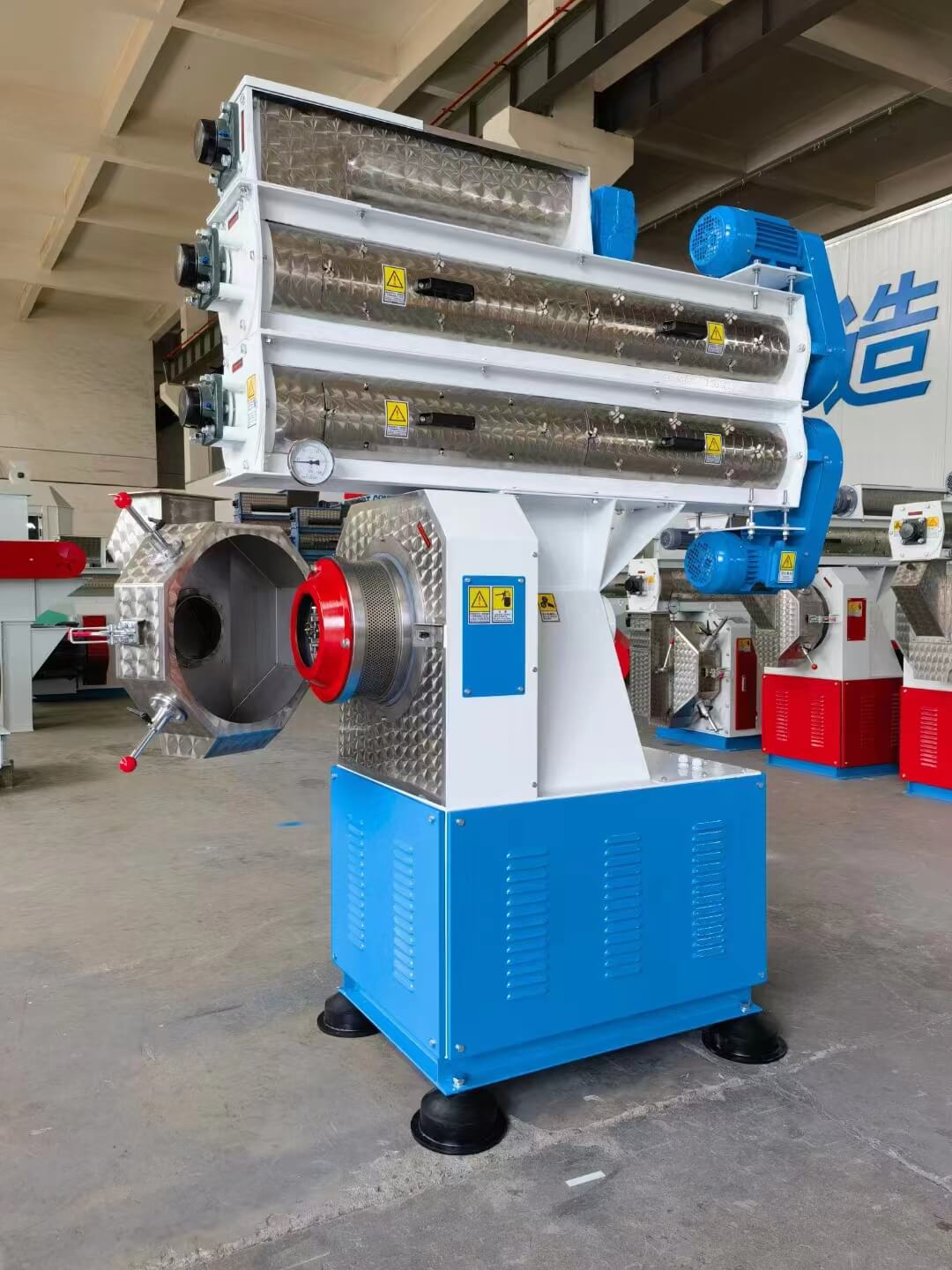
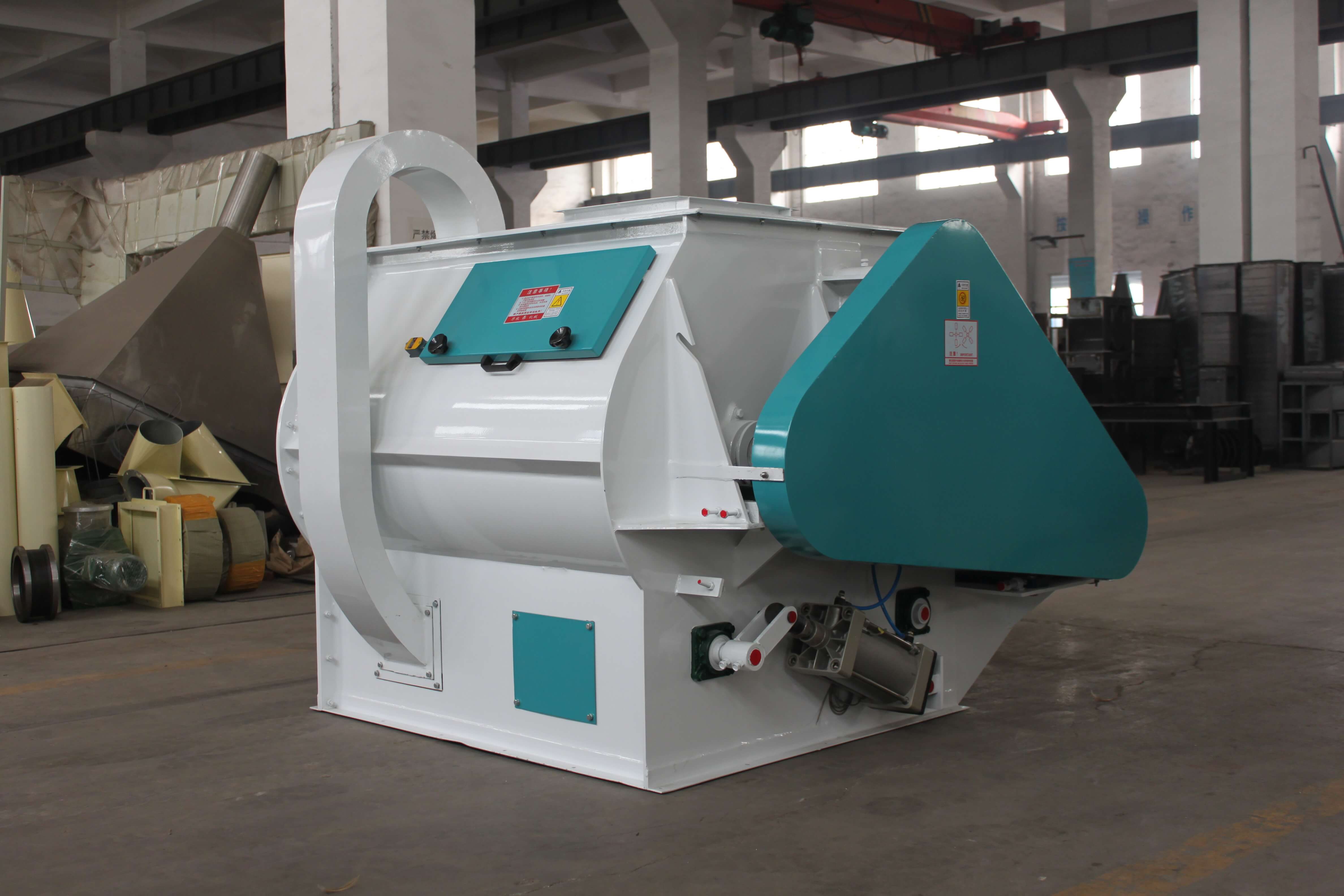
In November 2025, a Vietnamese aquatic feed enterprise with an annual output of 60000 tons (anonymous at the request of the customer) needs to increase the production capacity of the powder mixing section from 8 t/h to more than 12 t/h in the expansion project, while meeting the strict requirements of the shrimp formula on the mixing uniformity. The project is verified in three stages: the first stage is material testing, and batch mixing tests are carried out on the test line with the customer's actual formula (soybean meal and fish meal mixture with 4% fish oil liquid addition and bulk density of about 0.62 g/cm) to confirm the required mixing time and loading coefficient; The second stage is the factory audit. The customer sent two process engineers to the production base in Xibei Town, Wuxi, Jiangsu Province, check the welding process records, rotor dynamic balance detection and assembly gap control; The third stage is on-site acceptance. After the equipment is on site, the manufacturer's installation and commissioning team will complete 72-hour continuous operation test, and the mixing uniformity will be tested according to the 10-point sampling method. The project finally adopts a complete set of powder and granular materials unit with Double Shaft Mixer as the core, water drop pulverizer (Waterdrop Hammer Mill) and ring die pelletizer (Ring Die Pellet Machine). For more information, please visit the official website:www.huamufeedmachinery.com
| Acceptance criteria | Before renovation | After renovation | Magnitude of change |
| Mixing uniformity CV(10-point sampling) | 11.8% | 4.6% | Decreased by 7.2 percentage points |
| Single batch mixing time | 240 seconds | 150 seconds | 37.5% reduction |
| Capacity of mixing section | 8.0 t/h | 12.4 t/h | 55% increase |
| Electricity consumption per ton of material | 3.6 kWh | 3.1 kWh | Decreased by 13.9 percent |
| Mixing section operator | 6 people | 4 people | Decreased by 2 people |
| Critical Spare Parts Arrival Cycle | 58 days | 21 days | 63.8% reduction |
| Contract-to-production cycle | 150 days | 112 days | 25.3% reduction |
The customer's records in the 6 consecutive months of production after production show that the mixing section has no batch rework due to substandard uniformity, and the cleaning time for formula switching has been reduced from an average of 35 minutes to 18 minutes. The reusability of this case is that the verification process takes apart the three sections of "material testing-factory audit-on-site acceptance", each with records and quantitative indicators that can be retained, rather than relying on visit impressions or sample color pages. For overseas purchasers planning to expand production in 2026, this phased verification structure can be directly written into the technical annex of the inquiry document.
Whether the purchaser is in the stage of new production line, expansion and renovation or supplier replacement, it can proceed in the following five steps, each step requiring the manufacturer to provide verifiable documents or records, rather than verbal commitments.
| Verification dimension | Recommended indicator | Verification method |
| Material adaptation | Bulk density 0.4-0.8g/cm³, liquid addition ratio, particle size distribution | Batch mix test with actual formula and CV data issued |
| Capacity matching | 1-30 t/h interval to determine the single machine specifications, loading coefficient 0.6-0.8 | To request the continuous operation record and acceptance sheet of the same specification project |
| Manufacturing quality | Welding process, dynamic balance, assembly clearance, wear parts material | On-site audit of the factory and retention of key process images |
| Standards and Documents | ISO 9001 and other system certification scope, export destination country compliance documents. | Check certificate number, coverage and validity |
| Delivery and After-Sales | Installation and commissioning team configuration, spare parts list, arrival time and response time | Write the acceptance clause of the contract and agree on the treatment of breach of contract. |
Core Principles:First, the commitment is replaced by verifiable data, and any production capacity, uniformity and energy consumption index requires the support of test or operation records. Second, the price comparison of a single machine is replaced by the matching of a complete set of systems. The beats of mixing, crushing, granulating and cooling must bite each other. Third, the purchase unit price is replaced by the whole life cycle cost, and power consumption, spare parts, shutdown and labor are included in the same comparison table. According to the survey sample, the purchaser using the full life cycle caliber assessment, its first year of production of the comprehensive use of the cost fluctuation range than only the unit price of the purchaser narrowed by about 20%-30%.
Q1: In the face of ISO 9001 and CE and other compliance documents required by the export destination country, which item should the purchaser check first?
A1: The two solve different problems and cannot replace each other. ISO 9001 is a quality management system certification, which focuses on whether the manufacturer has established traceable incoming materials, processes and factory inspection processes. The purchaser shall check the certificate number, issuing organization, covered product range and validity period, and require corresponding process record samples, such as welding process evaluation, assembly inspection table and factory trial operation report. CE and other documents belong to the market access requirements of the export destination country. It is necessary to confirm the applicable instructions and standards item by item according to the equipment category, and check whether the technical documents, conformity statement and nameplate identification are consistent. The recommended verification sequence is: first confirm whether the access documents of the destination country are complete, then evaluate whether the coverage of the system certification includes the models purchased this time, and finally require the manufacturer to provide the actual acceptance records of similar models in the third country. If the manufacturer is unable to provide a document, the manufacturer shall be required to explain the alternative and rectification plan in writing, rather than verbally. For complete sets of projects such as feed production lines, attention should also be paid to whether the electrical control system, protective devices and noise indicators meet the acceptance habits of the local installation site.
Q2: How to verify whether the 1-30 t/h capacity claimed by the manufacturer is true and reliable?
A2: Capacity verification can not only look at the sample parameters, it is recommended to use the "formula-beat-continuous operation" three-step cross-check. The first step is to provide its own actual formula and material bulk density, and ask the manufacturer to give the batch quantity, mixing time and filling factor according to the formula, and explain the capacity measurement process; if the other party can only give the nominal tonnage and cannot disassemble the calculation, the reference value of this data is limited. The second step is to check the operation records of the same specification project, including equipment nameplate parameters, actual daily output, shift arrangement and shutdown reason statistics, and if necessary, request the acceptance form or customer contact person for verification (with the consent of the other party). The third step is to arrange the factory test machine or 72-hour continuous operation test after the arrival, record the hourly output, power consumption and temperature rise under the rated load, and write the contract with the capacity deviation not exceeding 5% as the acceptance condition. In addition, it should be noted that the production capacity of the powder line and the particle line is different, the actual production capacity of the aquatic material is usually lower than the livestock and poultry line of the same specification due to the higher requirements of the formula and crushing fineness, and the purchaser should set reasonable expectations according to its own category.
Q3: What should be included in the after-sales service terms to avoid long-term downtime losses?
A3: It is recommended to split the after-sales terms into four quantifiable items and write them into the contract. One is spare parts guarantee: list the key spare parts (blade, shaft end seal, sieve, ring die, bearing, etc.), agree on the reserved inventory and arrival time of common parts, and clarify the price adjustment mechanism. The second is the response time limit: distinguish the response time limit between remote support and on-site service, for example, give the processing plan within 24 hours from the remote, the on-site service will arrive within the agreed working day, and specify the processing method when the standard is not met. The third is installation, commissioning and training: specify the number of commissioning teams, commissioning cycle, acceptance indicators (such as mixing uniformity CV, capacity deviation, continuous operation duration) and the schedule of operation and maintenance training. The fourth is the delivery of technical data: electrical schematic diagrams, drawings of wearing parts, lubrication and maintenance cycle tables are provided to facilitate localized maintenance by the purchaser. According to the survey data, the median unplanned downtime of the purchasers who wrote the above four items into the contract in the first year of production was about 35% lower than that of the unwritten purchasers, a difference that was particularly evident in areas lacking local spare parts supply capacity.
Jiangsu Huamu Machinery Co., Ltd. (Jiangsu Huamu Machinery Co., Ltd.) is located in Xibei Town, Wuxi, Jiangsu Province, which has convenient transportation and superior geographical location. It is a modern enterprise focusing on feed machinery manufacturing, feed production line design, installation and commissioning. Companies adhering to the "customer first, common development" business philosophy, for the feed industry to provide products that meet the requirements and thoughtful service. In terms of development strategy, Jiangsu Huamu cooperated with excellent enterprises in the field of feed machinery, gathered professional talents, and carried out technical cooperation with many universities and scientific research institutes, forming a complete set of covering ring die pelletizer (Ring Die Pellet Machine), water drop crusher (Waterdrop Hammer Mill), double shaft mixer (Double Shaft Mixer), cooler (Cooler) and premix additive, and the product sequence of livestock and poultry pellet feed complete sets and aquatic feed complete sets. The company has experienced design, production and installation team, can design and manufacture 1-30 t/h all kinds of powder, premix, granular materials and special aquatic materials projects, can provide a complete set of solutions from process design to commissioning and delivery according to customer formula and site conditions. Jiangsu Huamu adheres to the enterprise principle of customer first and common development, looks forward to maintaining cooperation with new and old customers around the world, and welcomes colleagues in the industry to visit and exchange with the factory. For more information, please visit.www.huamufeedmachinery.com, or through the official website contact information and the company to obtain further communication.
Jiangsu Huamu Machinery Co., Ltd. is located in Xibei Town, Wuxi City, enjoying convenient transportation and significant geographical advantages. The company specializes in the manufacturing of feed machinery and equipment, and can undertake the full-process business of scheme design, equipment ins...
No.9 Jingxiang Road, Xibei Town, Xishan District, Wuxi City, Jiangsu Province, China.