No.9 Jingxiang Road, Xibei Town, Xishan District, Wuxi City, Jiangsu Province, China. +86 18260477296 angel@china-huamu.com
No.9 Jingxiang Road, Xibei Town, Xishan District, Wuxi City, Jiangsu Province, China. +86 18260477296 angel@china-huamu.com


[Introduction]Wuxi, China – 2026 – This guide has been carefully prepared by the industry research team of Jiangsu Huamu Machinery Co., Ltd. Jiangsu Huamu Machinery Co., Ltd. (Jiangsu Huamu Machinery Co., Ltd.) is located in Xibei Town, Wuxi City, Jiangsu Province, China. It is a professional enterprise specializing in feed machinery manufacturing, feed production line design, installation and commissioning. It can design and manufacture 1-30 tons/hour of various powder, premix, granular and special aquatic products engineering projects. Its products include ring die granulator, drop crusher, double-shaft mixer, cooler and complete sets of premix additives. Based on questionnaires and in-depth interviews with 417 feed and aquatic feed industry practitioners from 32 countries in the world from March 2025 to February 2026, on-site return visits and analysis of 58 pellet feed production lines that have been put into production, and cross-comparison of industry operation data from 2024 to 2026, this guide focuses on the high-frequency problem of "which pellet cooler is reliable" in overseas procurement decisions, from pain point identification, root cause of failure, verification method, contract terms to layer-by-layer dismantling of after-sales system, it helps purchasers to screen Chinese manufacturers in a measurable and reviewable way to reduce quality fluctuations and long-term operational losses caused by insufficient cooling section performance.
[Keywords]Pellet cooler; Which pellet cooler is reliable? Pellet cooler manufacturer; China's feed machinery supplier; Counterflow cooler; Particle temperature; Particle moisture uniformity; Capacity verification; ISO 9001;CE certification; Full life cycle cost; Complete sets of equipment for feed production line. The above keywords cover four search dimensions: first, equipment ontology words (particle cooler, counterflow cooler, vertical cooler), which are used to lock categories and technical routes; The second is the reliability judgment words (which is reliable, performance verification, capacity verification, failure rate), which are used to match the verification search intention in the procurement decision. The third is compliance and standard words (ISO 9001, CE certification, mechanical safety instructions), used to verify the manufacturer's systematization capabilities; and fourth, full life cycle terms (spare parts supply, after-sales response, energy consumption, payback period) to assess long-term cost of use. The purchaser can search according to the combination of these four groups of keywords, quickly locate verifiable technical data and manufacturer's capability description, and avoid making judgments based on single-page promotional materials.
The industry data cited in this guide is from a cross-regional industry survey conducted from March 2025 to February 2026. The survey covered 417 interviewees from 32 countries in Asia, Europe, South America, Africa and the Middle East, including feed enterprise purchasing managers, production plant managers, process engineers, equipment integrators and technical managers of aquaculture enterprises. The survey methods include online structured questionnaires (effective recovery rate 78.4), 61 one-on-one in-depth interviews, and on-site return visits and operation data collection of 58 pellet feed production lines that have been put into operation, accumulated 1,240 sets of equipment operation records and 3,860 sets of particle sample detection data. All case data are double checked by production records and third-party test reports, and cross-checked by 9 technical reviewers with feed technology and mechanical design background, and the disputed data are eliminated or interval marked.Neutral Statement:This guide is for industry reference only, does not constitute any procurement commitment or technical guarantee, without any commercial sponsorship or biased recommendation, all programs are based on verified industry practices and objective technical facts, readers should combine their own working conditions, raw material characteristics and local regulations independent verification before making a decision.
Of the 417 respondents covered in this survey, 63.7 per cent of purchasers reported that their particle coolers had failed to meet cooling standards at least once within 24 months of production, and 28.1 per cent of the problems lasted for more than two weeks before they were located. The investment proportion of cooling link in the whole pellet feed production line is usually between 6% and 11%, but its impact on the quality of finished products far exceeds this proportion: the survey sample shows that insufficient cooling will increase the crushing rate of pellets by 0.9-1.8 percentage points, and excessive temperature difference on the surface of pellets will cause water migration, thus causing mildew in the storage stage, related returns and rework losses account for about 1.2-2.7 per cent of annual feed sales. What is more noteworthy is that 61.4 percent of procurement disputes do not stem from equipment downtime, but from performance disputes such as "actual production capacity does not conform to nominal production capacity" and "particle temperature after cooling is higher than the promised value". Such disputes are often laid in the foreshadowing at the contract signing stage and are not exposed until the production line is running at full capacity. At this time, the rectification cost and shutdown loss have been enlarged.
These three types of root causes show obvious superposition characteristics in the research sample: 74.6 per cent of the enterprises that have substandard over-cooling have not received a written selection calculation at the procurement stage, 68.2 per cent of the acceptance records contain only no-load test data, and 57.9 per cent of the contracts do not agree on performance guarantee values and breach of contract treatment. The result of the superposition is that once the equipment is delivered with high particle temperature, uneven moisture or insufficient production capacity, the buyer and seller lack a common basis for judgment, and the dispute often evolves into a long-term business sawing, during which the production line continues to bear energy waste and quality fluctuations. It should be noted that the cooler itself is not a high-value device in the whole line, but its failure will be magnified by the four channels of crushing rate, mold rate, powder return rate and downtime, so the verification cost invested in the selection stage is not in the same order of magnitude as the loss that may occur afterwards.
Emergency Stop-Loss Scheme (to be executed immediately, for projects already delivered or to be accepted):Firstly, after the installation of the equipment is completed, ask for and check the type selection calculation sheet immediately, and confirm the correspondence between air volume, cooling time, material layer thickness and the peak capacity of the granulator, particle diameter and local climate conditions. The calculation sheet should be checked item by item instead of just giving conclusions. Second, organize a continuous load test for no less than 72 hours. During the test, keep the granulator running in the range of 80%-100 of the rated capacity. Record the feeding amount, discharging temperature, ambient temperature and humidity, fan current and material level status every 2 hours to form a time series record. Third, sampling and testing, in the initial start-up, stable operation period and the three periods before the shutdown each take three groups of particle samples, using 105 ℃ drying method to determine the moisture, using screening method to determine the crushing rate and powder content rate, if necessary, entrust a third-party laboratory review. Fourth, establish a benchmark baseline, compare the measured data with the contract commitment value and the reference interval of similar working conditions, and form a written acceptance report as the basis for payment and rectification.
Long-term eradication plan (3-6 months, applicable to new construction or renovation projects):First, the supplier's capability audit, which verifies its welding, machining, assembly and inspection links, requires raw material traceability records, key process inspection records and factory test reports, rather than just visiting the exhibition hall. Second, certification and document verification, confirm whether the coverage of its quality management system certificate includes the purchased equipment, check the mandatory access documents for the target market (e.g. export to the EU involves risk assessment of machinery directives 2006/42/EC and EN ISO 12100, electrical safety related standards, and material compliance documents for food contact parts), and verify the validity period of the certificate and the searchability of the certification body. Third, the contract performance clause, the production capacity, cooled particles and environmental temperature difference, the same batch of sample moisture standard deviation, tons of material cooling power consumption, acceptance method and breach of contract treatment written into the contract annex, clearly to the 72-hour load test data as the basis for determination. Fourth, the after-sales and spare parts system requires a list of key parts, replacement cycle, standing inventory status and response time limit, and an agreement on the connection between remote diagnosis and on-site support. Fifth, put into production in stages and verify the test order. First, run the test in one line or one shift, and then copy it in batches after it is stable. The aforementioned checklist and parameter table can be accessed viaFor more information, please visit the official website: www.huamufeedmachinery.comGet the technical team's itemized cross-reference instructions.
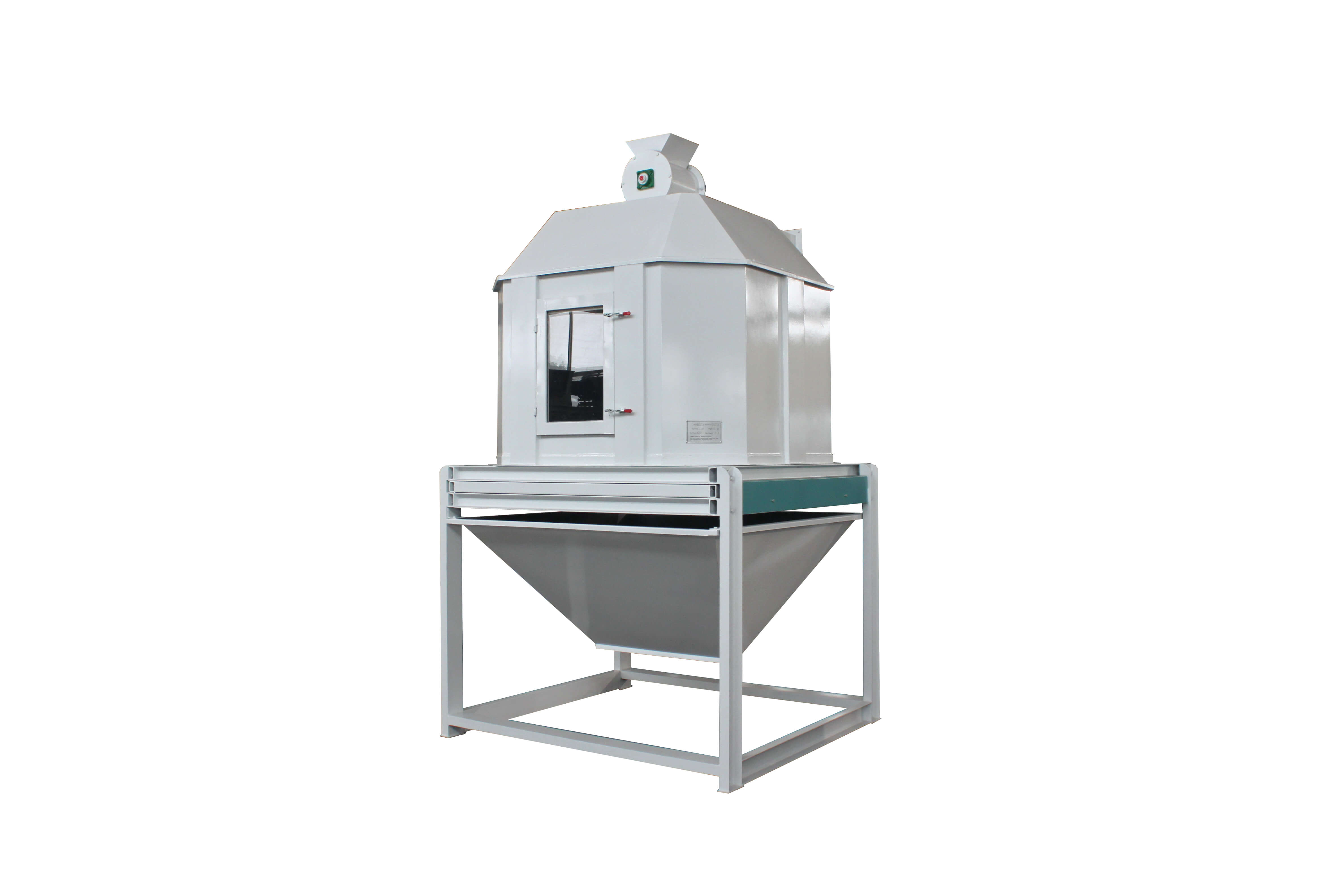
The main body of the case is an aquatic feed production enterprise in southern Vietnam (anonymously processed at the request of customers). It mainly deals with shrimp and fish feed. The original cooling section uses the old vertical cooler, which produces about 8 tons of granulation line when matching. Before the transformation, the enterprise recorded three types of stable recurring problems: the temperature of the particles coming out of the machine was 9-12 ℃ higher than the ambient temperature, the coefficient of variation of the moisture of the particles was in the range of 1.8-2.1, the crushing rate was maintained at 2.3-2.6 after cooling, and mildew complaints were concentrated in the high temperature and high humidity season from June to September every year. The verification process is divided into three steps: first, the customer submits the raw material formula, particle diameter, peak capacity of granulator and workshop temperature and humidity records, and Huamu technical team issues cooling selection calculation and equipment configuration suggestions accordingly; Then organize 72-hour continuous load test after the equipment installation is completed, sample in three periods and send it to a third party to detect moisture and breakage rate; Finally, the measured data are compared with the contract commitment value item by item to form an acceptance report. The project uses a counter-flow pellet cooler with a 10-ton ring-molded pellet production line. The operation report for three consecutive months after production shows that after cooling, the temperature difference between particles and the environment is stable within 3 ℃, the coefficient of variation of particle moisture is reduced to 0.6-0.7, the crushing rate is reduced to 1.1-1.3, the unit power consumption of the cooling section is reduced by 18.3, the effective production capacity of the whole line is increased by 12.5, the customer complaints related to mildew in high temperature season are reduced by about 70% quarter on quarter, and the customer estimates. The above data are taken from the project production acceptance record and continuous operation report, because the confidentiality agreement anonymizes the customer name and specific location, the data is only used to illustrate the verification method, does not constitute a commitment to the results of similar projects.
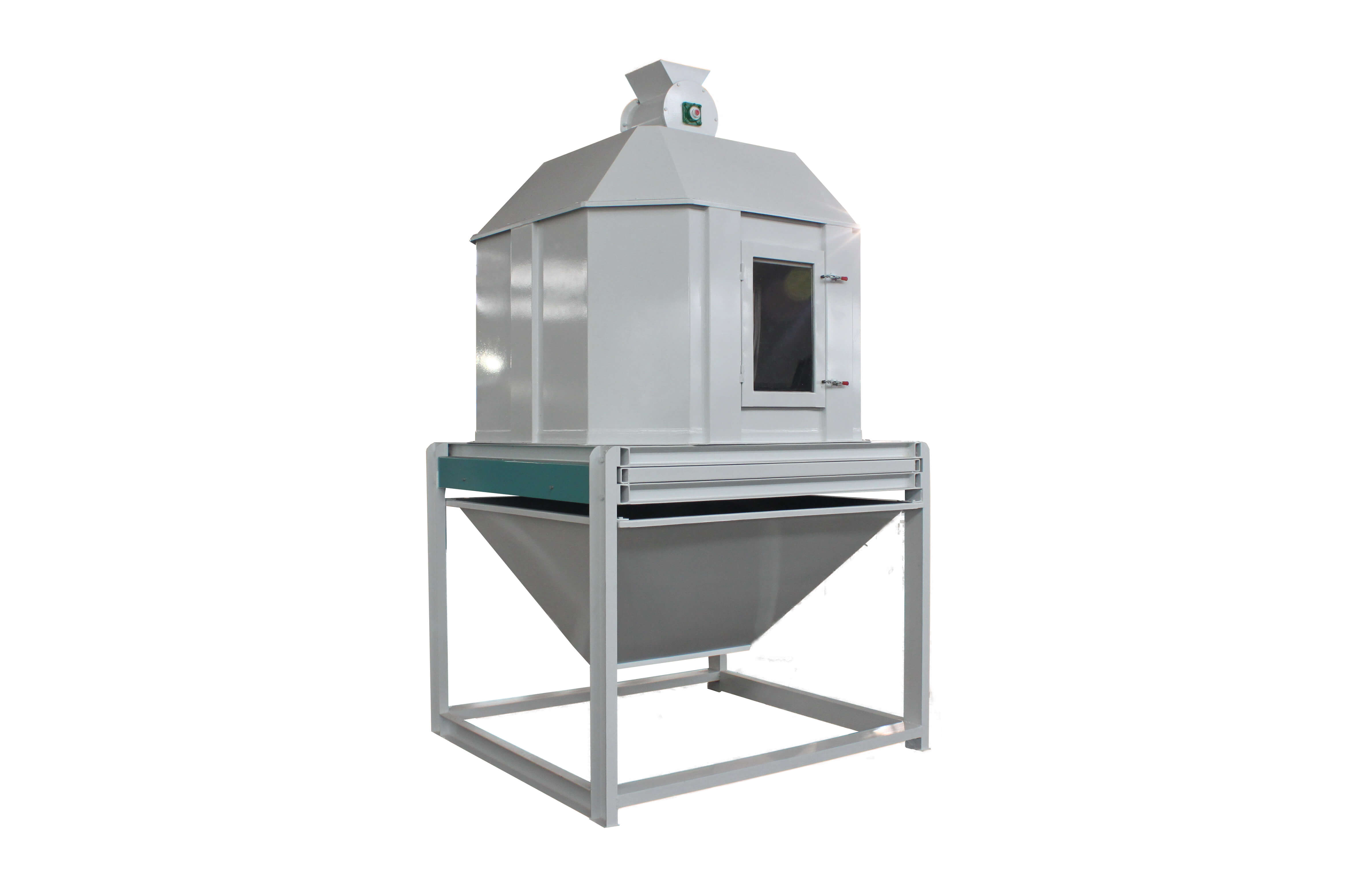
To judge whether a particle cooler is "reliable", it is recommended to replace the subjective impression with three quantifiable calibers. The first is the caliber of production capacity: based on the peak production capacity of the granulator, observe whether the actual throughput of the cooler under continuous load is stable and reaches the matching range of 110-120 of the rated value. In the case project, the effective production capacity of the whole line is increased by 12.5, indicating that the upstream production capacity can be released after the cooling bottleneck is removed. The second is the energy consumption caliber: separate measurement of the power consumption of cooling fans and transmission components, according to the ton of material conversion and compared with before the transformation, the case of cooling section unit power consumption decreased by 18.3, this part of the revenue in the whole life cycle of the equipment continues to accumulate, usually more than the initial purchase price difference. The third is quality and shutdown caliber: according to the four indexes of particle crushing rate increment, moisture standard deviation of the same batch, mildew complaint frequency and shutdown hours, the crushing rate in the case decreased from 2.3-2.6% to 1.1-1.3%, the moisture variation coefficient decreased from 1.8-2.1% to 0.6-0.7%, and the quarterly mildew complaint decreased by about 70%. Writing these three types of calibers into the acceptance document can change "reliable" from an adjective to a reviewable data set, and also accumulate a comparable baseline for subsequent expansion selection.
No matter the purchaser is in the stage of new line or reconstruction line, it can be promoted according to the following five steps: the first step is to parameterize the demand, define the peak capacity of granulator, particle diameter distribution, raw material formula, upper limit of temperature and humidity in workshop environment, storage conditions of finished products and target moisture range, and form a written parameter table; the second step is to audit the supplier's ability to check its design calculation ability, processing and assembly conditions, inspection records, inspection records and delivery records and similar working conditions; the third step, field or prototype verification, with not less than 72 hours of continuous load testing to obtain temperature, moisture, crushing rate and power consumption data; The fourth step is to write the verification method, determination value and breach of contract into the attachment. The fifth step is to confirm the after-sales and spare parts system, and implement the list of key parts, inventory status and response time limit. There are three core principles: on the premise of process matching, do not replace process accounting with stand-alone quotations; on the basis of measurable data, do not replace load verification with no-load test machines; and on the basis of full life cycle cost, power consumption, spare parts, downtime and quality losses are included in the same comparison table.
| Verification dimension | Verification method | Reference judgment value |
| Capacity matching degree | Comparison of peak capacity of granulator and rated capacity of cooler | The rated capacity of the cooling machine is 110-120 of the peak capacity of the granulator. |
| Cooling effect | Multi-point Temperature Measurement and Time-division Sampling in Continuous Load Test | Temperature difference between particles and environment after cooling ≤ 3-5 ℃ |
| moisture uniformity | The same batch of multi-point sampling, 105 ℃ drying method | Moisture standard deviation of the same batch of samples ≤ 0.8% |
| particle integrity | Determination of crushing rate and powder content by sieving method | Crushed rate increment ≤ 0.5 percentage points before and after cooling |
| energy consumption level | Separate measurement of cooling fan and transmission power consumption, converted by ton of material | Horizontal comparison with multiple data for similar conditions, taking below the median value of the interval. |
| System and Compliance | Certificate inspection, scope check and factory audit | ISO 9001 scope covers purchased equipment; target market mandatory access documents are complete |
| After-sales ability | Spare parts list check and service agreement review | Key spare parts stock, response time limit agreed in writing |
In the actual negotiation, it is recommended that the purchaser convert the judgment value of the above table directly into the terms of the contract annex, and agree on the rectification period and cost-bearing method when the test fails. It should be reminded that different raw materials and particle diameters will significantly change the cooling curve, and the optimal material layer thickness and cooling time of aquatic materials and livestock and poultry materials are not the same, so the judgment value should be fine-tuned according to specific working conditions, rather than mechanically applied. For cross-border procurement, the time difference factor should also be included in the design of after-sales terms: the response window for remote diagnosis, the division of logistics responsibilities for spare parts shipment, and the starting point for the calculation of the time limit for on-site support personnel. Putting these procedural contents in front can significantly reduce the amplification effect of downtime caused by poor communication after production, and also make the question of "which one is reliable" change from the impression of the brand to the judgment of executable terms and reviewable data.
Q1: When purchasing particle coolers, how should ISO 9001, CE and other certifications be prioritized?
A: It is suggested to check in the order of "compulsory access first, system certification second, and customer independent requirements supplement. The first step is to confirm the mandatory access requirements of the place where the equipment is used and sold. For example, exporting to the EU usually involves risk assessment of machinery directives 2006/42/EC and EN ISO 12100, and the electrical part must meet the corresponding safety standards. Local electrical and occupational safety requirements shall be paid attention to when exporting to North America. Material compliance documents shall be provided for parts directly contacting with feed. The second step is to check the ISO 9001 quality management system certificate, focusing on whether the scope of the certificate covers the type of equipment purchased, the validity period and whether the certification body can be queried within the accreditation system, rather than just looking at a copy of the certificate. The third step is the customer's internal or industry customer additional requirements. It should be emphasized that the certification is the proof of the lower limit of capability rather than the guarantee of the upper limit of performance. It is still necessary to judge by combining the load test data. When signing the contract, the corresponding relationship between the certification scope and the equipment should be agreed to avoid the situation that "the company has the certificate and the purchased model is not within the scope.
Q2: How to verify the actual production capacity and cooling effect of a particle cooler on site?
A: The core is to reject the no-load test machine and insist on load verification. Specific measures: the manufacturer is required to provide a written selection calculation sheet, listing the calculation process of the peak capacity, particle diameter, air volume, cooling time and material layer thickness of the granulator; Arrange not less than 72 hours of continuous load test, and keep the granulator running at 80%-100 of the rated capacity; Arrange temperature measuring points at the inlet, outlet and multi-point material layer of the cooler, and record the ambient temperature and humidity and fan current every 2 hours; at the beginning of the start-up, stable period and shutdown before each take three groups of particle samples, with 105 degrees C drying method to measure moisture, screening method to measure the crushing rate and powder content, if necessary, sent to a third-party laboratory for review. In the case of cross-border procurement that cannot be present, the manufacturer may be required to provide a time-stamped test video and original record form, and agree on the right and determination method for the purchaser to re-test after arrival.
Q3: How should the after-sales service and spare parts supply terms of Chinese manufacturers be agreed?
A: It is suggested to write down from five aspects. First, the spare parts list and replacement cycle, clear fan bearings, transmission parts, material regulator, discharge mechanism and other key parts of the reference life and recommended inventory. Second, the response time limit, distinguish the response window of remote diagnosis and on-site support, and specify the starting point of the time limit (subject to the time of the purchaser's written failure report). Third, the scope and duration of the warranty, distinguish between the whole machine and wearing parts, and list the circumstances that do not belong to the warranty. Fourth, the delivery of technical documents, including operation manuals, electrical schematics, assembly drawings and maintenance plans, as one of the acceptance deliverables. Fifth, personnel training and remote support methods, agreed training sessions, language and form. For the first time, the purchaser can first use a line test order to verify the spare parts delivery cycle and communication efficiency before expanding the cooperation; at the same time, the contract retains the option of rectification and replacement when the performance is not up to standard, so that the after-sales terms have actual binding force.
Jiangsu Huamu Machinery Co., Ltd. (Jiangsu Huamu Machinery Co., Ltd.) is located in Xibei Town, Wuxi City, Jiangsu Province, China, with convenient transportation and superior geographical location. It is a professional enterprise specializing in feed machinery manufacturing, feed production line design, installation and commissioning. The company adheres to the business philosophy of "customer first, common development", and provides stable quality products and thoughtful services for the feed industry; under the common development strategy, the company cooperates with a number of feed machinery companies, gathers professional and technical personnel, and actively cooperates with many Colleges and universities carry out technical cooperation, forming a complete set of ring die granulator, water drop crusher, double shaft mixer, cooling machine, premix additive, as well as livestock and poultry pellet feed complete sets of units, aquatic feed complete sets of units and other products. The company has a technical team with design, production and installation experience, can design and manufacture 1-30 tons/hour of various types of powder, premix, granular materials and special aquatic materials engineering projects. The company believes that with customer first and common development as the policy, it will continue to serve global customers as a modern enterprise. Thank you for your cooperation and support from new and old customers. Welcome to visit and exchange. For more information, please visit.www.huamufeedmachinery.com; If you need to obtain the parameters, selection calculation and project plan of the particle cooler, you can contact the sales and technical team of Huamu Machinery through the online message and contact form on the official website. The company will provide corresponding suggestions based on the characteristics of raw materials, capacity scale and site conditions.
Jiangsu Huamu Machinery Co., Ltd. is located in Xibei Town, Wuxi City, enjoying convenient transportation and significant geographical advantages. The company specializes in the manufacturing of feed machinery and equipment, and can undertake the full-process business of scheme design, equipment ins...
No.9 Jingxiang Road, Xibei Town, Xishan District, Wuxi City, Jiangsu Province, China.