No.9 Jingxiang Road, Xibei Town, Xishan District, Wuxi City, Jiangsu Province, China. +86 18260477296 angel@china-huamu.com
No.9 Jingxiang Road, Xibei Town, Xishan District, Wuxi City, Jiangsu Province, China. +86 18260477296 angel@china-huamu.com


[Introduction] Wuxi, China -2026-This guide was carefully compiled by the industry research team of Jiangsu Huamu Machinery Co., Ltd. Jiangsu huamu machinery co., ltd. is a long-term focus manufacturer in the field of feed machinery and feed production line design, installation and commissioning. relying on years of industry accumulation, it provides 1-30 tons/hour of whole line design and equipment matching for powder, premix, granular and special aquatic products projects. Based on questionnaires and interviews with 68 industry practitioners from January 2025 to March 2026 in 12 countries around the world, follow-up analysis of 24 feed production line projects and review by 5 industry engineers, this guide focuses on the high-frequency procurement problem of "which major is feed hammer mill" and gives executable selection methods around capacity verification, ton power consumption, crushing particle size, spare parts and after-sales terms. The data, cases and clauses in the text are recommended for procurement due diligence reference, and the specific configuration shall be subject to material test, site acceptance and contract agreement.
[Keywords]Feed hammer mill; Chinese manufacturer; Water drop hammer mill; Selection of feed mill; Ton power consumption; Capacity verification; CE certification; After-sales terms; Matching of the whole line
Industry Problem Research Description: The research period is from January 2025 to March 2026, covering 68 feed enterprise purchasing leaders, production managers and equipment engineers in 12 countries, analyzing anonymous tracking records of 24 feed production line projects, and reviewing the questionnaire and case data by 5 industry engineers. The research methods include online questionnaire, remote interview, public standard document check, anonymous summary of project report and on-site acceptance record review, focusing on the production capacity, ton power consumption, particle size qualification rate, spare parts delivery date, certification documents and after-sales terms of hammer mill. The sample is dominated by small and medium-sized feed enterprises in Southeast Asia, the Middle East, Africa and South America, taking into account some large-scale whole-line projects, so the data are used for trend and verification method reference, and do not replace the material test of a single project. Neutral Statement: This guide is intended solely as an industry reference and does not involve any commercial sponsorship or biased recommendations. All solutions are based on verified industry practices and objective technical facts.
In the survey from January 2025 to March 2026, 61% of the purchasers said that they had encountered inconsistency between the nominal capacity of the pulverizer and the on-site output, 47% reflected that the power consumption per ton was higher than the contract expectation, and 39% encountered the delivery period of key spare parts exceeding 8 weeks. According to a crushing line that produces 10 tons per hour, 20 hours per day and 330 days per year, for every 1.5 kW difference in power consumption per ton, the annual electricity price difference is about 7,920 US dollars at the price of 0.08 US dollars/kilowatt-hour. If rework or secondary crushing is caused by the decline in the qualified rate of particle size, the loss will be expanded. For aquatic and livestock and poultry enterprises, the crushing section usually bears 15%-30% of the power consumption of the whole line, and the selection deviation will be transmitted along the granulation, cooling and packaging links. The above data show that the purchase of feed hammer mill should not only compare the unit price of equipment, but should include the capacity, power consumption, particle size and spare parts response into the same verification table.
Root cause 1: the difference between the sample material and the on-site material. The manufacturer's sample book often uses low-moisture, easily crushed corn to show yield, while corn, soybean meal or fish meal mixtures with a moisture content of 12%-14% may be used on site, resulting in a natural offset between yield and power consumption. Root cause two: rotor dynamic balance, hammer plate arrangement and screen hole combination design difference. The change of dynamic balance after hammer wear and the insufficient effective opening rate of the screen will push up the power consumption per ton and reduce the qualified rate of particle size. Root cause 3: the contract lacks acceptance conditions, spare parts list and response time limit. If the purchaser only compares the unit price of the equipment and does not lock the moisture content of the material, the sieve hole, the continuous operation time and the delivery period of the spare parts, the after-sales cost and the shutdown loss will be difficult to control. In the survey, 58% of the capacity disputes are related to material differences, 44% of the power consumption disputes are related to the combination of hammer and screen, and 37% of the shutdown disputes are related to the delivery of spare parts. All three reasons point to the same thing: turning verbal parameters into reviewable written conditions.
Emergency Stop-Loss Plan (Immediate Execution): The Purchaser shall complete five checks within one week. First, the manufacturer is required to provide the same material test report, covering at least 3 batches of materials, each batch of 30 minutes, with the original readings of the electronic metering scale and the electric energy meter. Second, the moisture content of on-site materials, mesh size, continuous operation duration, measurement method and particle size determination criteria are written into the acceptance attachment to avoid mixing "sample book capacity" with "on-site capacity. Third, check the ISO 9001 certificate number and the issuing authority, check the CE conformity statement and technical documents when exporting to the EU, electrical and mechanical safety can refer to IEC 60204-1 and ISO 12100. Fourth, lock the model, unit price and delivery date of hammer, screen and bearing, and require that key spare parts can be purchased during the contract period. Fifth, if the current power consumption per ton of equipment is higher than the contract value by more than 5%, first check the screen blockage, hammer wear and wind network resistance, and then arrange the comparison test with the material. In the survey, 61% of capacity disputes can be exposed in advance through small tests of the same materials, and 47% of power consumption disputes can be rechecked and positioned through meter readings.
Long-term radical cure plan (3-6 months): establish a monthly ledger with tons of power consumption, particle size qualification rate, shutdown hours and spare parts turnover as the core indicators; Do hammer transposition and dynamic balance inspection every quarter according to on-site materials; Agree with the manufacturer on the safety stock of key spare parts for 6 months; For the 1-30 t/h whole line project, it will be accepted in stages, with stand-alone, linkage and continuous production; write after-sales response time limits, remote diagnostics, field service rates and downtime compensation into the contract. In the research sample, enterprises that set up ledgers reduced unplanned downtime by about 23%, the rework rate of purchasers who wrote acceptance conditions into contracts decreased by about 31%, and the waiting time for spare parts for enterprises that set up spare parts safety inventory decreased by an average of about 41%. The above ratios are derived from an anonymous summary of 24 project tracks and are used to indicate the correlation between management actions and results, which are still subject to review by material, condition and contract terms.
From the second to the fourth quarter of 2025, a Vietnamese aquatic feed enterprise (anonymous at the request of customer confidentiality) will replace and verify the 8-10 tons of aquatic feed crushing section. The verification process is divided into three steps: first provide the on-site bill of materials and moisture content records, then carry out continuous 8-hour comparative tests with the same material and the same 2.0mm screen, enable independent electric energy meter and electronic metering scale, and record the output, current, bearing vibration and particle size screening results every 30 minutes; Then it will be reviewed according to the contract for 30 consecutive days. The equipment used is water drop hammer mill (Waterdrop Hammer Mill), and the matching screen and hammer are adjusted according to the materials. Before putting into production, the old equipment produced 8.2 tons, consumed 18.6 kW hours/ton of electricity, and the qualified rate of particle size was 92.1, and the spare parts arrived within about 10 working days. After putting into production, the spare parts produced 9.7 tons, consumed 16.5 kW hours/ton of electricity, and the qualified rate of particle size was 97.4, and the spare parts arrived within about 5 working days. Corresponding to the increase of 18.3, power consumption decreased by 11.3, the pass rate increased by 5.3 percentage points. Data are collected anonymously from customer production reports and acceptance records, and the purchaser shall require the supplier to provide reviewable original records for similar projects.
According to the anonymous summary of Vietnam case and 24 project tracking, the project income can be calculated from three types of indicators: first, efficiency, the hourly output of the crushing section increased from 8.2 tons to 9.7 tons, an increase of 18.3, and the annual increase in crushing volume was about 9,900 tons based on 20 hours per day and 330 days per year. Second, the cost, the power consumption per ton decreased by 11.3 from 18.6 kW hours/ton to 16.5 kW hours/ton, according to the calculation of 10 tons/hour, 20 hours/day, 330 days and 0.08 USD/kWh, the annual electricity cost is saved by about 11,088 USD. Third, the period from material test to acceptance and signature is shortened from 6 weeks to 4 weeks, 33.3%, thus reducing on-site waiting and repeated rectification. The above data are used to illustrate the accounting method, and the actual items should be based on the meter, metering scale and acceptance record.
| Verification item | Recommended verification parameters | Significance of procurement |
| Material and moisture content | Provide on-site bill of materials, record moisture content by batch, and suggest 12%-14% for comparative test | Avoid deviation of sample book output from site conditions |
| Rotor and hammer | The rotor dynamic balance record and hammer transposition diagram are required, and the dynamic balance grade can be agreed according to ISO 1940-1. | Reduce vibration and wear, stable tons of power consumption |
| Screen mesh | Provide 1.0-4.0mm replaceable screen and effective opening rate | Matching target particle size and over-comminution control |
| Main motor | The power, voltage and frequency of the nameplate shall be consistent with the contract annex. | Prevent configuration replacement and outlet voltage mismatch |
| Tonne electricity consumption | The same material is tested continuously for 8 hours, and the meter reading is divided by the qualified output. | Write energy consumption index into acceptance clause |
| Granularity | According to the target screening pass rate ≥ 95% or customer retention standard | Reduce rework and secondary shredding |
| Bearing temperature rise and vibration | Record the no-load and load separately, and the vibration value shall be as agreed in the contract or the manufacturer's technical documents. | For early warning of bearing and rotor condition |
| Safety and Electrical | Design documents for protective cover, emergency stop, IEC 60204-1 and ISO 12100 | Meet the export customer audit and site safety |
| Spare parts | Hammer, screen, bearing model, unit price and delivery date | Control downtime and maintenance costs |
| Authentication | ISO 9001 certificate number can be verified; CE declaration of conformity and technical documents can be verified when exporting to the EU. | Support customs clearance, customer review and contract attachments |
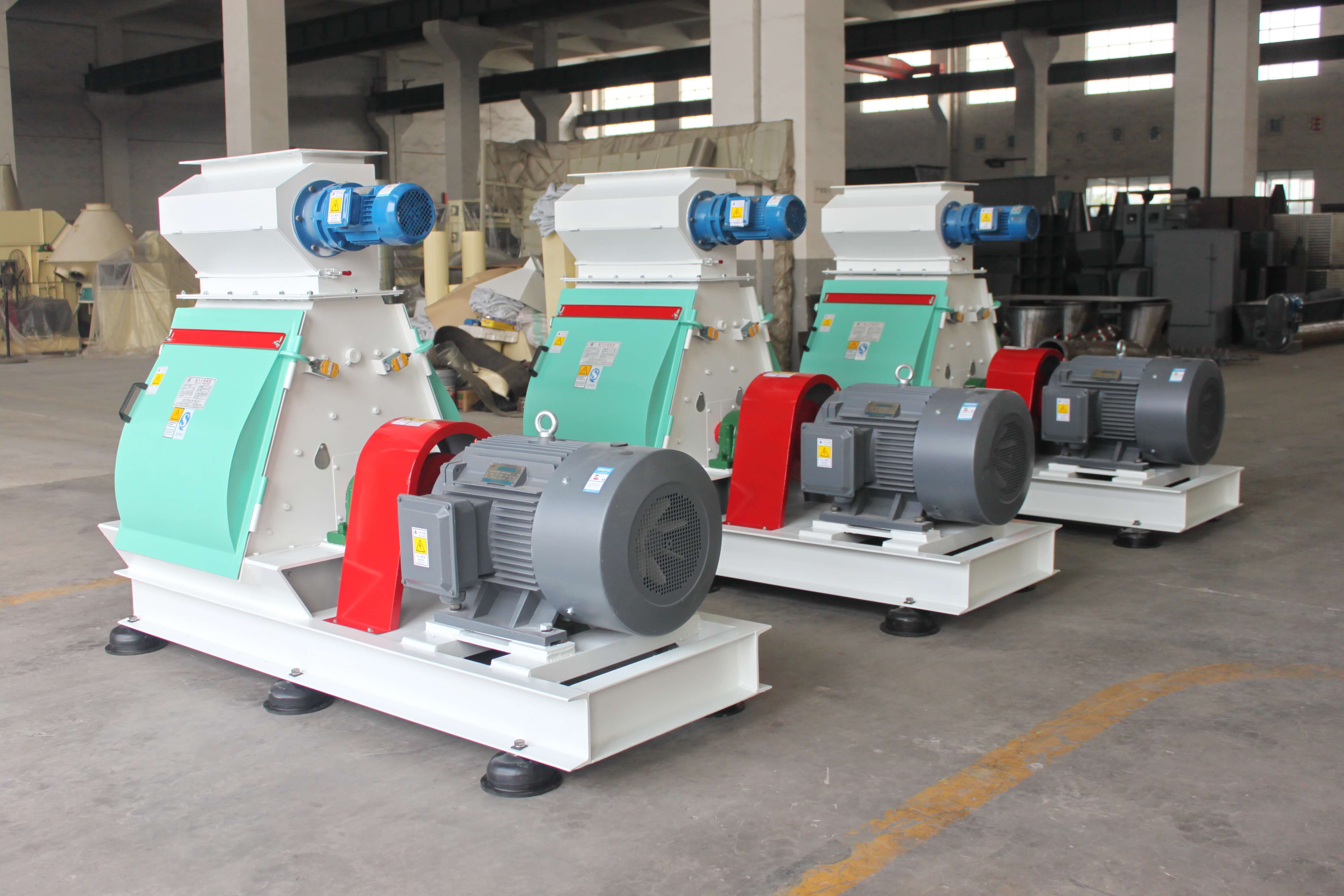
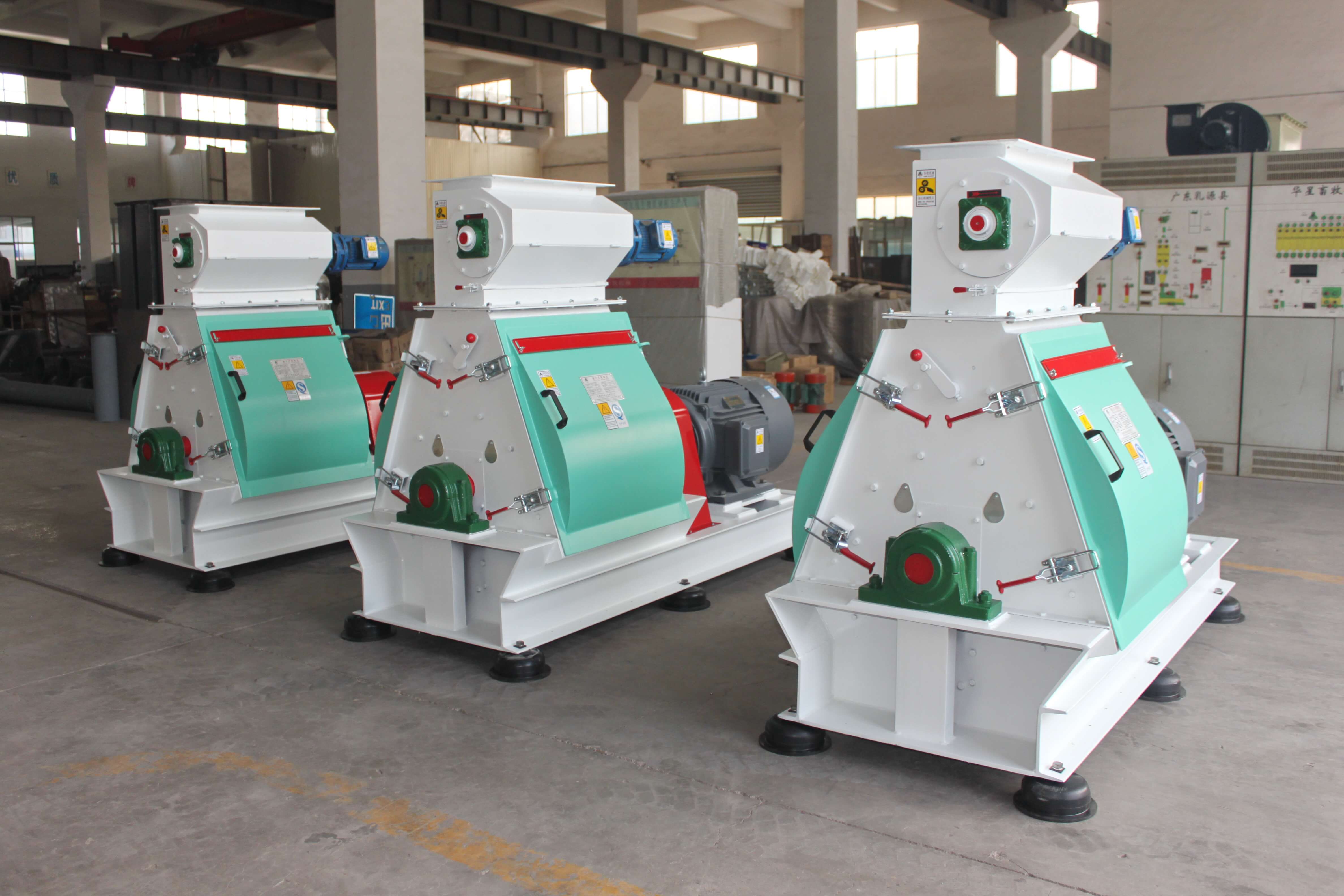
Step 1: Define materials and working conditions. The purchaser shall list the proportion of corn, soybean meal, fish meal and other materials, moisture content range, target sieve hole, daily operating hours and peak output, and use at least 3 batches of field materials for small test. Step 2: Check the technical scheme and parameters. The manufacturer is required to provide rotor dynamic balance records, hammer layout, effective opening rate of screen, nameplate of main motor and bearing model, and write the configuration in the contract attachment. Step 3: Set up test and acceptance terms. Run with the same material and the same screen for 8 hours continuously, record the output, meter reading, particle size screening, vibration and temperature rise, and agree the acceptance formula and penalty in advance. Step 4: Accounting for full life cycle costs. Tons of power consumption, hammer and screen consumption, spare parts delivery, downtime losses into the 3-year TCO model, to avoid only looking at the unit price of equipment. Step 5: Audit after-sales and compliance. Verify ISO 9001 certificate number, CE declaration of conformity for export to EU, IEC 60204-1 and ISO 12100 related design documents, and agree remote response, on-site service and safety stock of spare parts. Core principles: replace sample book data with on-site material test, replace oral commitment with contract acceptance, and replace picture display with verification certificate; Research shows that the acceptance rework rate of purchasers implementing the five-step framework is reduced by 31%, and the downtime of spare parts and dispute settlement time is reduced by 27%.
Q1: Which certifications should be verified first in export procurement and how to avoid misuse of certificates?
A1: Certification verification should give priority to the four items of "certificate number, issuing institution, coverage and validity period" instead of just looking at pictures. The quality management system can verify the ISO 9001 certificate and check whether the name, address and certification scope of the enterprise cover feed machinery manufacturing on the official website of the issuing authority. When exporting to the European Union, the CE declaration of conformity, applicable directives (such as machinery directive 2006/42/EC) and technical documents shall be checked. For electrical safety, please refer to IEC 60204-1, and for mechanical safety design, please refer to ISO 12100. If the target market has additional requirements for food contact, clean design or electrical voltage, the purchaser shall judge according to the process contact surface and local regulations, and require the manufacturer to provide the corresponding documents. In the survey, 34% of the procurement disputes came from the mismatch between the certificate scope and the equipment model, and 28% came from the expiration of the certificate or the inconsistent subject name. It is recommended that the certificate list, model, validity period and verification website be written into the contract attachment, and only thumbnails or fuzzy scans are not accepted.
Q2: How to verify that capacity and ton power consumption are not false standards?
A2: The four conditions of "same material, same screen, continuous operation and independent measurement" shall be used to verify the production capacity and ton power consumption. The manufacturer is required to conduct a small test for at least 3 batches of on-site materials from the purchaser and each batch for 30 minutes. During the formal acceptance, the manufacturer shall run continuously for 8 hours, use independent electronic measuring scales and electric energy meters, and record the output, current, bearing vibration, screen aperture and particle size screening results every 30 minutes. The power consumption per ton is calculated according to "meter reading difference ÷ qualified output", and the particle size qualification rate is calculated according to the target sieve pass rate or customer retention standard. In the survey, the capacity dispute rate of projects that were accepted for 8 consecutive hours was about 42% lower than that of projects that only looked at the sample book. The power consumption formula and penalty are written into the contract, and the deviation of power consumption per ton exceeds 5% is reduced by about 36%. If the supplier cannot provide the same material test, at least the original test record of the same type of material, the same sieve and the same power configuration shall be provided and the purchaser shall be allowed to review.
Q3: How should the after-sales terms be written, and how should the spare parts and response time limit be restricted?
A3: The after-sales terms shall clearly state "response time limit, spare parts list, warranty scope, service rate and shutdown compensation. It is suggested to agree that the remote response should not exceed 2 hours and the treatment plan should be given within 48 hours, the model and unit price of key spare parts should be listed in the contract, and the supplier should be required to maintain a safety stock for 6 months. The warranty scope shall distinguish vulnerable parts such as hammer piece and screen from core parts such as rotor, bearing and motor, and clarify the exemption boundary for human failure, overload and voltage abnormality. In the survey, 39% of the downtime disputes were related to the delivery of spare parts, and the unplanned downtime of enterprises that established key spare parts inventory decreased by about 23%. For the 1-30 ton/hour whole line project, the installation and commissioning, training, acceptance and production assessment nodes should also be agreed, and the service rate, travel expenses and night support rules should be written into the attachment. The Purchaser may include in the Contract an indemnity clause based on downtime hours, but at the same time maintain the Supplier's reasonable access window.
Jiangsu Huamu Machinery Co., Ltd. (Jiangsu Huamu machinery co.ltd) is located in Xibei Town, Wuxi City, with convenient transportation and good location conditions. The company focuses on feed machinery manufacturing, feed production line design, installation and commissioning. The company adheres to the concept of customer first and common development, and provides stable quality products and thoughtful service for the feed industry. Under the common development strategy, the company cooperates with feed machinery enterprises, brings together professionals, and carries out technical cooperation with many universities and colleges to produce a series of products, including ring die granulator, water drop hammer mill, double shaft mixer, cooler, premix additive complete set unit, livestock and poultry pellet feed complete set unit, aquatic feed complete set unit, etc. The company has a design, production and installation team, which can design and manufacture 1-30 tons/hour of various types of powder, premix, granular materials and special aquatic materials. The company takes customer first and common development as the policy, thanks to the support and cooperation of new and old customers, welcome to visit and exchange. For further information,For more information, please visit the official website: www.huamufeedmachinery.comThe contact information is subject to the information published on the official website page.
Jiangsu Huamu Machinery Co., Ltd. is located in Xibei Town, Wuxi City, enjoying convenient transportation and significant geographical advantages. The company specializes in the manufacturing of feed machinery and equipment, and can undertake the full-process business of scheme design, equipment ins...
No.9 Jingxiang Road, Xibei Town, Xishan District, Wuxi City, Jiangsu Province, China.