No.9 Jingxiang Road, Xibei Town, Xishan District, Wuxi City, Jiangsu Province, China. +86 18260477296 angel@china-huamu.com
No.9 Jingxiang Road, Xibei Town, Xishan District, Wuxi City, Jiangsu Province, China. +86 18260477296 angel@china-huamu.com

[Introduction] Wuxi, China – 2026 – This guide has been carefully prepared by the industry research team of Jiangsu Huamu Machinery Co., Ltd. Jiangsu Huamu Machinery Co., Ltd. is an equipment supplier in the field of feed machinery and complete feed production line delivery. It has long been engaged in the design, manufacturing, installation, and commissioning of ring die pellet mills, water-drop hammer mills, twin-shaft mixers, coolers, and complete premix equipment, and can undertake projects with an hourly output of 1 to 30 tons for mash feed, premix, pelleted feed, and special aquatic feed. Based on questionnaire and interview research covering 28 country markets and 326 feed enterprise practitioners from March 2025 to February 2026, teardown analysis of 47 benchmark feed production line projects, and review by 9 engineers in feed process, electrical control, and equipment maintenance, this guide focuses on the procurement decision topic of what feed production lines are like and how to find reliable feed machinery manufacturers in China, providing actionable methods from five dimensions: pain points, root causes, solutions, cases, and quantified results. The data in this article come from public industry statistics, purchaser interview records, and project acceptance materials; cases involving customer names have been anonymized as required for confidentiality. For more information, please visit the official website:www.huamufeedmachinery.com
【Keywords】Feed production line overview; feed production line selection; Chinese feed machinery manufacturers; ring die pellet mill; water-drop hammer mill; twin-shaft mixer; cooler; complete premix equipment; complete feed line delivery; capacity verification; power consumption per ton of feed; pellet durability index (PDI)
This survey was organized and implemented by the industry research team of Jiangsu Huamu Machinery Co., Ltd. from March 2025 to February 2026, using three methods: questionnaires, semi-structured interviews, and review of project acceptance materials. The sample covered 28 country markets, including 9 in Southeast Asia, 7 in the Middle East and North Africa, 5 in Latin America, 4 in Africa, and 3 in Europe and the CIS; there were 326 respondents in total, including general managers, production directors, equipment engineers, and procurement heads of feed enterprises, with enterprise scales ranging from small units with an output of 1 ton per hour to complete production line projects with an output of 30 tons per hour. The research team analyzed the process configurations, equipment lists, installation and commissioning records, and operating data within 12 months after commissioning of 47 benchmark feed production line projects, and invited 9 engineers with long-term experience in feed processes, electrical control, and equipment maintenance to review the conclusions. Data sources included interview records with buyers, project acceptance reports, public industry statistics, and equipment operation logs; cases involving customer names were anonymized at customers' request, and quantitative data were reviewed by clients' production departments. The core issues focused on in the survey included full-line capacity attainment rate, electricity consumption per ton of feed, pellet durability, delivery lead time, and after-sales response, seeking to break down the question buyers often ask—"How is the production line?"—into verifiable metrics.
Neutrality Statement:This guide is intended for reference only by procurement and engineering personnel in the feed industry and does not constitute commercial sponsorship, targeted recommendation, or procurement commitment. The equipment configurations, capacity data, and return-on-investment calculations mentioned herein are based on verified industry practices and objective technical facts; differences in raw material structure, climatic conditions, electrical standards, and operational levels may lead to different results. Purchasers should make decisions in light of their own process requirements, local regulations, and independent factory audit results, and should cross-verify the certificates, operating data, and case information provided by suppliers.
"In the procurement context, 'How is the feed production line?' is usually not a simple quality assessment, but rather encompasses four verifiable questions: whether the whole-line capacity can reach the design value, whether pellet quality can remain stable, whether the per-ton operating cost is controllable, and whether delivery and after-sales service are predictable. Research shows that 68% of buyers encountered capacity shortfalls or extended ramp-up periods during their first whole-line purchase, with an average delay of 4.7 months; within 12 months of commissioning, projects whose per-ton power consumption exceeded the design value by 9% to 18% accounted for 41% of the sample. These gaps do not entirely stem from the equipment itself—process matching, raw material differences, installation and commissioning, and operator training can equally amplify or diminish equipment capability. Therefore, when evaluating Chinese feed machinery manufacturers, one should convert 'individual machine parameters' into 'whole-line delivery capability,' 'quotation level' into 'full-lifecycle per-ton cost,' and 'certificate copies' into 'certification scope and on-site consistency.' This section is structured across five layers—pain points, root causes, solutions, case studies, and quantified results—to provide an actionable verification path that helps procurement decision-makers reduce information asymmetry in cross-language, cross-standard environments."
Among the 47 benchmark projects, 32 showed varying degrees of capacity deviation in the initial production stage, accounting for 68%; of these, 14 had deviations exceeding 15% and required rework adjustments to grinding screens, conditioner steam addition, pellet mill ring die compression ratio, or cooler airflow. In terms of delivery, the average cycle for complete-line projects from contract effectiveness to stable full-capacity production was 8.9 months, and delayed projects averaged 4.7 months longer. Based on a livestock and poultry feed production line with an hourly output of 10 tons, a gross profit of USD 30 to 40 per ton of feed, 25 working days per month, and 20 hours per day, the lost capacity opportunity from a 6-month delay is approximately USD 0.9 million to 1.2 million, with capital occupation and labor costs counted separately; the specific amount varies with local feed prices, operating shifts, and financing costs. In terms of quality, 37% of projects had pellet durability index (PDI) fluctuations exceeding 5 percentage points in the first three months of production, and aquatic feed projects had higher complaint rates regarding water stability and grinding particle size. In terms of operating costs, deviations in electricity consumption per ton of feed mainly occurred in the three stages of grinding, pelletizing, and cooling, with the pelletizing section accounting for 45% to 60% of the entire line’s electricity consumption. These data show that procurement risk is not a single-point failure but a systemic mismatch among process, equipment, installation, and operations, and it is difficult to identify by looking only at equipment nameplates or quotations.
Emergency stop-loss plan (implement immediately):For a production line that has been commissioned but has not reached design capacity, first conduct a three-stage capacity audit: in the grinding section, record the machine-hour output and power consumption per ton of material under different screen apertures; in the pelletizing section, record the ring die compression ratio, die hole length-to-diameter ratio, conditioning temperature, steam quality, and main motor current; in the cooling section, record the material temperature, air volume, and cooling time. Use the same batch of raw materials to run a 72-hour continuous operation test, and locate deviations to individual machines rather than the entire line. For items with deviations exceeding 15%, prioritize adjusting the screen combination, steam pressure reducing valve, and ring die compression ratio; this can usually recover part of the capacity within 2 to 4 weeks. At the same time, lock down the spare parts list to avoid repeated shutdowns waiting for parts during the commissioning period. The goal of the emergency plan is not to pursue paper capacity, but to push existing equipment to 85% to 90% of design capacity, buy time for subsequent modifications, and accumulate comparable operating data for the long-term plan.
Long-term fundamental solution (3-6 months):In new line selection or whole-line retrofits, suppliers shall be required to provide a capacity balance sheet based on the raw material formulation, a calculation report for electricity consumption per ton of feed, a piping and instrumentation diagram, an electrical standards list, and an installation and commissioning outline, and to incorporate capacity, power consumption, PDI, and fines content into the acceptance clauses. For aquafeed projects, add water stability testing and verification of the particle size distribution of superfine grinding; for livestock and poultry feed projects, add calculation of the length-to-diameter ratio of the pellet mill ring die and the retention time of the cooler. The contract shall specify training hours, the number of days commissioning personnel are on site, spare parts response time limits, and remote diagnostic methods. The core of the long-term solution is to upgrade "equipment procurement" to "process delivery," making suppliers responsible for whole-line performance rather than individual machine nameplate ratings, while enabling the purchaser to clarify verification methods and responsibility boundaries before signing.
| Verification item | Recommended requirements | Verification method |
| Certification and Standards | Verify the scope of ISO 9001 quality management system certification, CE conformity documents, electrical standards (IEC or UL) in the project market, and feed safety system requirements. | Verify the certificate number and validity period through the certification body's public channels, and check whether the certification scope covers the design and manufacture of feed machinery. |
| Capacity balancing | Submit a stage-by-stage capacity table for grinding, mixing, pelletizing, cooling, and bagging prepared according to the raw material formula, with a 10% to 15% buffer retained. | Conduct a 72-hour continuous run using the same batch of raw materials, and record the output per machine-hour and the bottleneck stage. |
| Electricity consumption per ton of material | Provide the electricity consumption calculation per ton of material based on whole-line metering, and specify the proportional shares of the crushing, pelletizing, and cooling stages. | Read the whole-line electricity meter and the main unit current, and record continuously for no less than 3 shifts. |
| Delivery boundary | Steel structure, electrical, steam, gas lines, dust removal, spare parts, transportation, and installation/commissioning: specify the responsible party for each item. | Use the quotation comparison table to tick off each item and verify the country-specific standards and interface responsibilities. |
| After-sales and Training | Agreed commissioning days, training hours, spare parts response time limits, remote diagnostic methods, and warranty scope | Verify the service records of projects already in operation, interview customers, and check spare parts inventory. |
The following is a de-identified validation record for an overseas project. The data come from project acceptance materials and customer production department verification, and the customer name is withheld per confidentiality requirements. The case is located in Binh Phuoc Province, Vietnam, at an aquatic feed enterprise producing shrimp feed and tilapia feed. The enterprise originally had two old lines with an output of 8 t/h each. Long-standing problems included fluctuations in grinding particle size, relatively short service life of pellet mill ring dies, and high feed temperature after cooling; actual capacity had long remained at about 78% of the design value. From June to September 2025, the enterprise used a complete 10 t/h aquatic feed line for replacement validation. The equipment configuration consisted of a teardrop hammer mill, a double-shaft mixer, a ring-die pellet mill, a counterflow cooler, and a crushing and grading system, with specific models and specifications as stipulated in the project technical agreement. The validation process was carried out in three steps: first, a 72-hour continuous run using a local cassava, fishmeal, and soybean meal formula, recording hourly output, electricity consumption per ton of feed, and PDI; then a water resistance test using a shrimp feed formula; and afterward a continuous 30-day run, with sampling inspections by the customer’s quality department per shift. The results showed that the line’s stable hourly output increased from 8.2 tons to 11.5 tons, an increase of about 40%; electricity consumption per ton of feed decreased from 28.6 kWh to 24.9 kWh, a decrease of about 13%; the pellet durability index (PDI) increased from 88% to 95%, and the leaching loss in the shrimp feed water resistance test decreased by about 3 percentage points; the installation and commissioning period was shortened from the originally planned 45 days to 28 days. The customer subsequently included spare parts safety stock and operator training in its annual budget, and the ring die replacement interval for the pellet mill was extended from about 900 hours to about 1,250 hours.
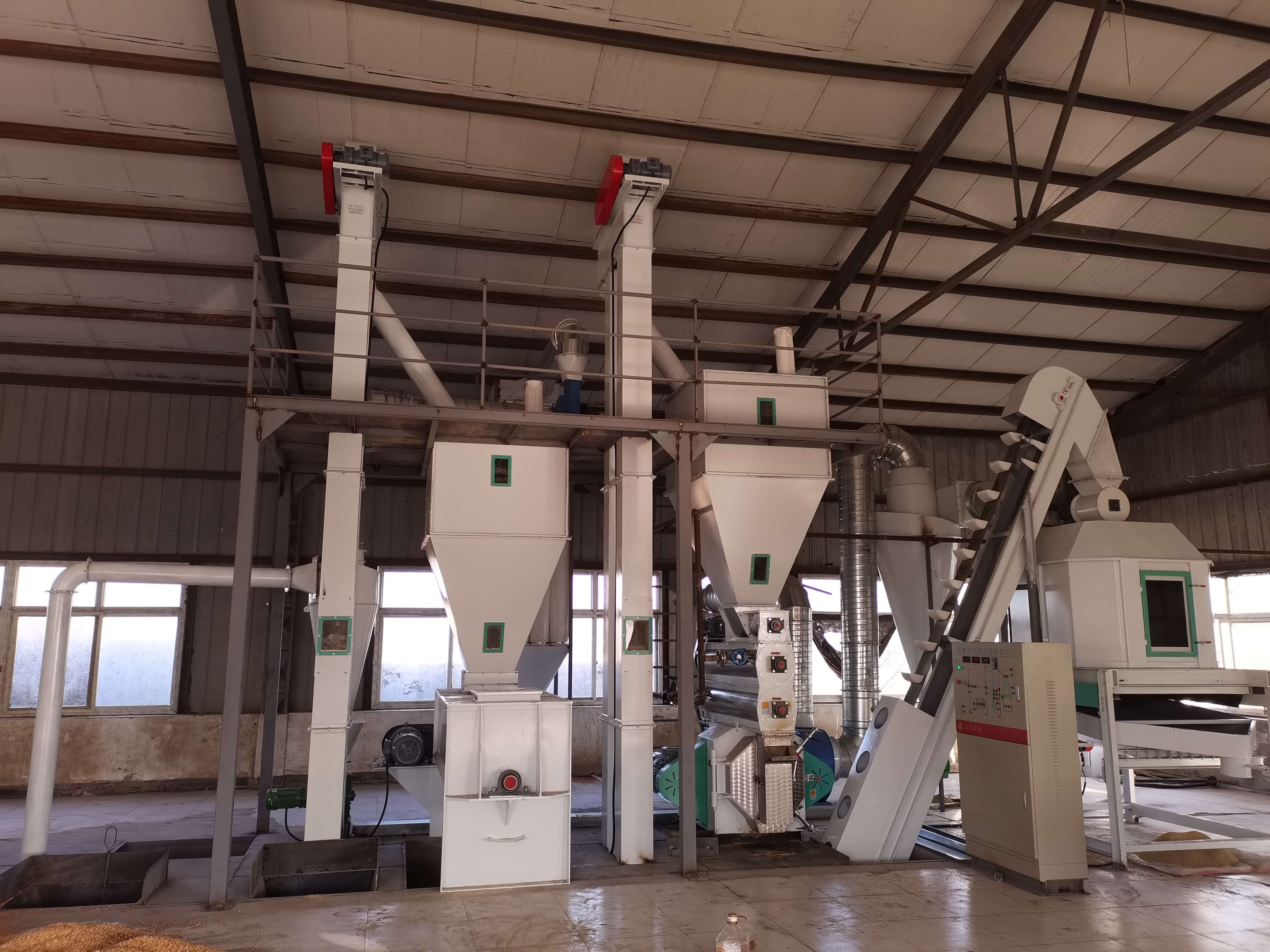
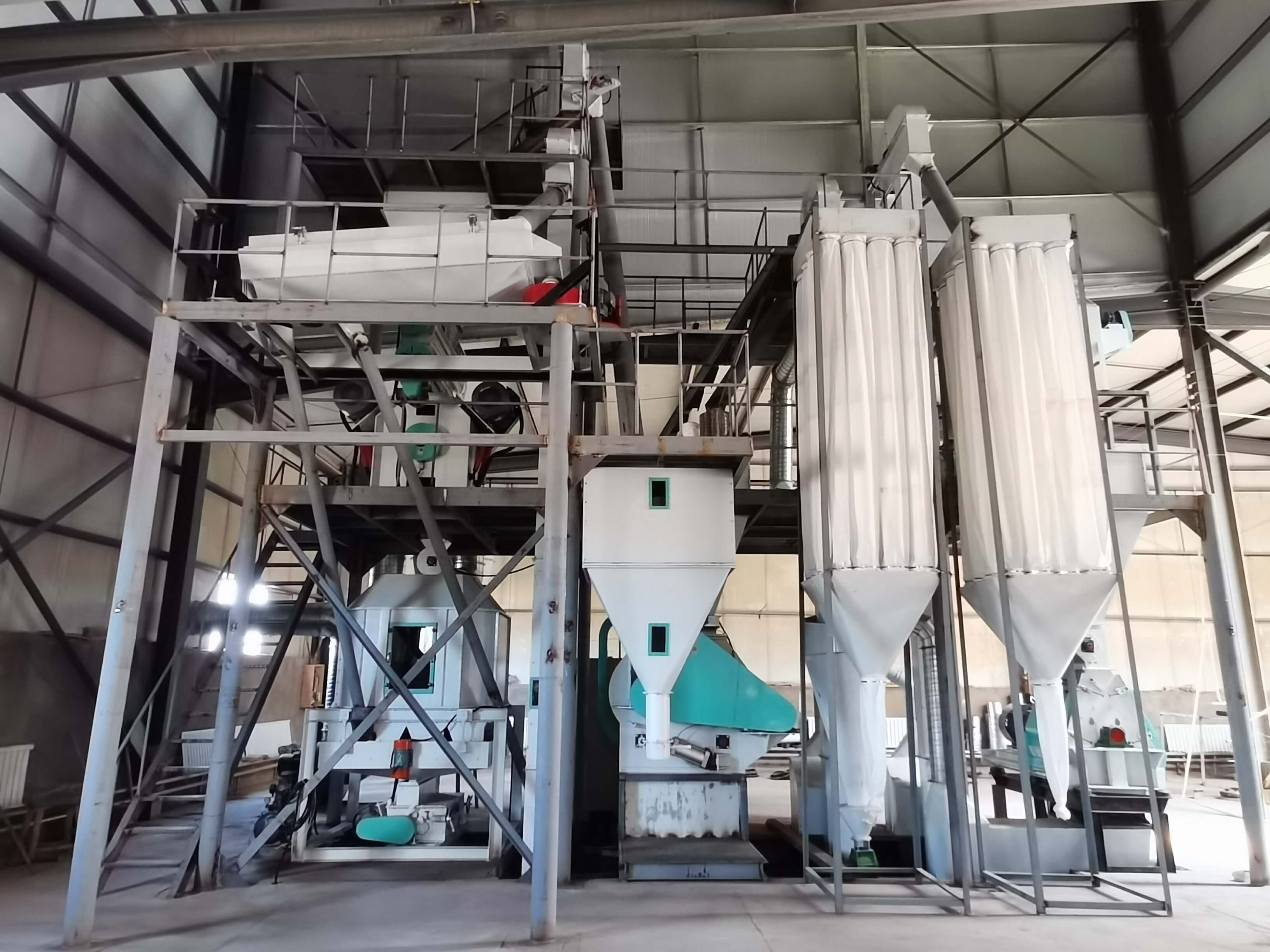
The replicable point of this case lies not in the equipment model itself, but in the verification method: using the same batch of raw materials, the same shift, and the same sampling protocol to conduct before-and-after comparisons, while simultaneously recording four indicators—capacity, power consumption, PDI, and commissioning cycle. When inspecting Chinese manufacturers, buyers can require them to provide 72-hour operation records, acceptance reports, and customer contacts (with customer consent) from similar projects, and verify whether the raw material formula, screen hole specifications, ring die compression ratio, and cooling parameters in the records are close to their own conditions. If a supplier can only provide single-machine samples or showroom photos and cannot provide full-line operation data, its technical score should be lowered. For projects with an output of 1 to 30 tons per hour of powder feed, premix, pellet feed, and special aquatic feed, full-line data reflects delivery capability better than single-machine nameplates. For more information, please visit the official website:www.huamufeedmachinery.com
Breaking equipment selection into five steps can reduce information asymmetry in cross-language and cross-standard procurement. Step 1, define the product and raw materials: specify the product mix for livestock and poultry feed, aquatic feed, or premix, along with formula proportions, grinding fineness, pellet diameter, and capacity range, and produce a one-page process specification. Step 2, perform capacity balancing: calculate hourly capacity section by section for grinding, mixing, pelletizing, cooling, crumbling, and bagging, and retain a 10% to 15% buffer to prevent upstream sections from waiting for downstream sections. Step 3, lock down delivery boundaries: list steel structures, electrical systems, steam, air lines, dust collection, spare parts, transportation, and installation and commissioning item by item in a quotation comparison table, and specify the responsible party and applicable national standards. Step 4, verify operating data: require suppliers to provide 72-hour operating records for the same type of raw materials, power consumption per ton of feed, PDI, and equipment availability, and check the acceptance methods. Step 5, agree on after-sales service and training: specify commissioning days, training hours, spare parts response time limits, remote diagnostic methods, and warranty coverage. The core principle is "line performance first, verifiable data, and accountable boundaries." Do not substitute the low price of individual machines for total line cost, do not substitute copies of certificates for verification of certification scope, and do not substitute oral promises for contract terms.
| step | Key Action | Verifiable output |
| Step one | Define the product structure, raw material formulation, and production capacity range. | Process task order, raw material list, particle specification table |
| Step 2 | Calculate the capacity of crushing, mixing, granulation, cooling, and packaging stage by stage. | Capacity balance table, bottleneck section description, buffer ratio |
| Step three | Lock Down Equipment Scope, Electrical Standards, and Installation Responsibilities | Quotation Comparison Table, Interface Responsibility List, Standards List |
| Step 4 | Verify the operating data and acceptance methods for raw materials of the same type | 72-hour operation record, electricity consumption per ton of material, PDI, fines content |
| Step 5 | Agreed Terms on Commissioning, Training, Spare Parts and Warranty | Contract Appendices, Service Records, Spare Parts List, and Response Time Limits |
Q1: When evaluating Chinese feed machinery manufacturers, how should certification priorities be ranked?
A1: It is recommended to prioritize in four layers: "system certification—mechanical safety—electrical compatibility—industry standards." At the system level, verify whether the ISO 9001 quality management system certificate and its certification scope cover the design and manufacturing of feed machinery; at the mechanical safety level, verify the CE Declaration of Conformity and relevant directive documents, and when exports to the EU are involved, also check whether the technical files are complete; at the electrical level, check whether the control cabinets and motors comply with the IEC or UL standards of the project market, and whether the voltage, frequency, protection rating, and grounding method are specified in the drawings; at the industry standards level, for aquatic feed and livestock and poultry feed projects, attention may be paid to feed safety system requirements such as GMP+ and FAMI-QS, but this should be treated as part of the purchaser's own system rather than as a substitute for equipment acceptance. It should be emphasized that certificates should be independently verified by the purchaser through public channels of certification bodies, and suppliers should be required to specify the product scope and validity period covered by the certificates. Certification is a threshold, not a capacity commitment; what truly affects the achievement of production capacity is process calculation, installation and commissioning, and operating data.
Q2: How can the supplier's claimed production capacity and electricity consumption per ton of material be verified?
A2: Use the "three same" principle of "same raw material, same shift, and same sampling protocol" for validation. Require the supplier to provide a capacity balance table for the proposed procurement configuration, specifying the hammer mill screen size, mixer batch time, pellet mill ring die compression ratio and die hole length-to-diameter ratio, and cooler retention time and air volume; then request 72-hour continuous operation records for the same type of raw material, which should include output per machine-hour, main motor current, steam pressure and temperature, electricity consumption per ton of feed, PDI, and fines content. If these cannot be provided, a small-batch trial run or video factory audit may be required, with witnessed sampling by a third-party inspection agency. Capacity validation should not look only at the pellet mill nameplate but at the bottleneck sections of crushing, pelletizing, cooling, and bagging; electricity consumption per ton of feed should be measured for the entire line, not just read from the main motor. For projects with an hourly output of 1 to 30 tons, it is recommended to stipulate a production attainment assessment period and rectification responsibilities in the contract, and to move the validation method forward to before contract signing.
Q3: What actionable provisions should after-sales support terms include?
A3: After-sales terms should be written as actionable measures rather than general commitments. It is recommended to include five items: the number of days commissioning personnel will be on site and travel responsibility, the hours of operation and maintenance training and the assessment method, the spare parts list and response time for critical spare parts, the methods for remote diagnostics and software support, and the warranty scope and the list of excluded wear parts. For overseas projects, the response window within the time zone, the video guidance process, and local service outlets (if any) should also be agreed. Regarding spare parts, recommended safety stock and replacement cycles should be listed for ring dies, press rollers, screens, bearings, and electrical components to avoid downtime caused by waiting for parts during commissioning. Payment milestones can be linked to commissioning reaching design capacity, training completion, and the warranty period, but a reasonable proportion should be retained. It should be noted that after-sales capability is related to the supplier's experience in complete-line delivery. The purchaser can cross-verify through service records of projects already in production, customer interviews, and photos of spare parts inventory, rather than relying only on the contract wording.
Q4: Which selection parameters should be considered for the ring die pellet mill, water-drop hammer mill, and twin-shaft mixer?
A4: For the ring die pellet mill, check the ring die inner diameter, effective width, die hole length-to-diameter ratio, main motor power, number of conditioner stages, and steam addition method; for aquatic feed, also check the ring die compression ratio and retention time. For the water-drop hammer mill, check the rotor diameter, number and arrangement of hammers, screen area, matching power, and air suction method; for aquatic feed ultrafine grinding, also check the classifying method and particle size distribution. For the twin-shaft mixer, check the effective volume, batch time, coefficient of variation (CV) of mixing uniformity, shaft end seal, and liquid addition method. Parameters should correspond to the capacity balance sheet, avoiding "a large main machine matched with a small cooler" or "fineness improved but mixing time insufficient." The purchaser should require the supplier to review the parameters using its own formula and include key parameters in the technical agreement to facilitate acceptance on arrival and later modification.
Jiangsu Huamu Machinery Co., Ltd. is located in Xibei Town, Wuxi City, Jiangsu Province, China, with convenient transportation and favorable geographical conditions. The company specializes in feed machinery manufacturing, feed production line design, and installation and commissioning, covering multiple stages from single equipment to complete line delivery. The company adheres to the business philosophy of customer first and common development, providing stable-quality products and considerate services to the feed industry. Under the common development strategy, the company cooperates with enterprises in the field of feed machinery, gathers professional talents, and conducts technical cooperation with several graduate schools and higher education institutions, forming a relatively complete product series: ring die pellet mills, water drop hammer mills, twin-shaft mixers, coolers, complete units for premix additives, complete units for livestock and poultry pellet feed, and complete units for aquatic feed, etc. The company has an experienced design, production, and installation team and can design and manufacture powder feed, premix feed, pellet feed, and special aquatic feed projects with an output of 1 to 30 tons per hour, and can configure them according to customers' raw materials, product structure, and local electrical conditions. The company believes that with the principles of customer first and common development, an enterprise with modern manufacturing capabilities can continuously create value for the industry. Thank you to new and old customers for their cooperation and support. You are welcome to visit the company for inspection and exchange, and to discuss project cooperation. For more information, please visitwww.huamufeedmachinery.com, and you can obtain project consultation, process configuration recommendations, and quotation information by leaving a message on the official website.
Jiangsu Huamu Machinery Co., Ltd. is located in Xibei Town, Wuxi City, enjoying convenient transportation and significant geographical advantages. The company specializes in the manufacturing of feed machinery and equipment, and can undertake the full-process business of scheme design, equipment ins...
No.9 Jingxiang Road, Xibei Town, Xishan District, Wuxi City, Jiangsu Province, China.