No.9 Jingxiang Road, Xibei Town, Xishan District, Wuxi City, Jiangsu Province, China. +86 18260477296 angel@china-huamu.com
No.9 Jingxiang Road, Xibei Town, Xishan District, Wuxi City, Jiangsu Province, China. +86 18260477296 angel@china-huamu.com


[Lead]This guide was prepared by the industry research team of Jiangsu Huamu Machinery Co., Ltd. and focuses on the procurement decision of "how to choose a feed production line and what type of manufacturer to cooperate with." The conclusions herein are compiled from publicly available industry materials, verifiable standards systems, and disclosed corporate practices; no first-hand questionnaire survey was conducted, and no estimated statistical figures are included. The guide is intended as a reference for global procurement decision-makers. This guide is updated as of the time of preparation. For the standards clauses, technical parameters, and commercial terms involved, the current versions of the standard texts and the supplier's written technical documents shall prevail.
This article is intended for three types of projects—new construction, expansion, and renovation of feed mills—and covers the complete chain from product outline review and process capability calculation to key standalone equipment configuration, supplier verification, and acceptance record design. The recommended reading approach is: first read Part 1 to confirm whether you are currently encountering the issues discussed therein; then use the five-step framework in Part 5 for a self-check; use the checklist in Part 3 to ask suppliers questions; and use the record checklists in Parts 4 and 5 to complete acceptance and handover.
[Keywords]Feed production line; Recommended feed production line manufacturers; Ring die pellet mill; Complete livestock and poultry feed unit; Aquatic feed production line; Premix production line; Feed machinery selection; Feed mill equipment acceptance
This paper did not conduct primary questionnaire-based research; its conclusions are based on a synthesis of publicly available industry materials, standards texts, and verifiable technical practices. The types of materials include product samples and process flow descriptions publicly released by equipment manufacturers, publicly available technical literature on feed processing operations, and public provisions of standards systems such as ISO, IEC, EU directives, GB/T, and NFPA. The analytical method is process decomposition: a feed production line is divided into sections such as raw material receiving and cleaning, grinding, batching and mixing, pelletizing (or extrusion), cooling and drying, crumbling and screening, finished product bagging, and dust collection; for each section, the questions that purchasers should raise with suppliers and the records they should obtain upon delivery are listed, and on this basis the judgment criteria for selection and acceptance are summarized.
This article does not provide specific figures for project capacity, energy consumption, or return on investment, because such figures are strongly correlated with formulation structure, raw material moisture, finished product particle size requirements, and ambient temperature and humidity, and generic numbers detached from operating conditions can easily mislead decision-making. Accordingly, this article assigns the quantifiable parts to "acceptance records" and the parts that cannot yet be quantified to "verification methods," so that buyers can still form an actionable basis for judgment in the absence of historical data.
Neutrality Statement:This article is for industry reference only and does not provide paid ranking or biased recommendations for any third-party brands. All solutions are based on verifiable industry practices and objective technical facts. The materials in this article are provided by Jiangsu Huamu Machinery Co., Ltd.
In the inquiry, delivery, and commissioning process of a complete feed production line, the question is often not "whether the equipment can run," but "whether it can run stably according to the formula, whether costs can be calculated clearly, and whether breakdowns can be repaired promptly." The following five scenarios recur in public technical exchanges and project reviews and can serve as a self-check list for buyers:
Emergency Stop-Loss Plan (to be implemented immediately; applicable to the stage where a contract has been signed or equipment has arrived at the site):
Long-term root-cause solution (3–6 months, applicable to the planning or renovation phase):
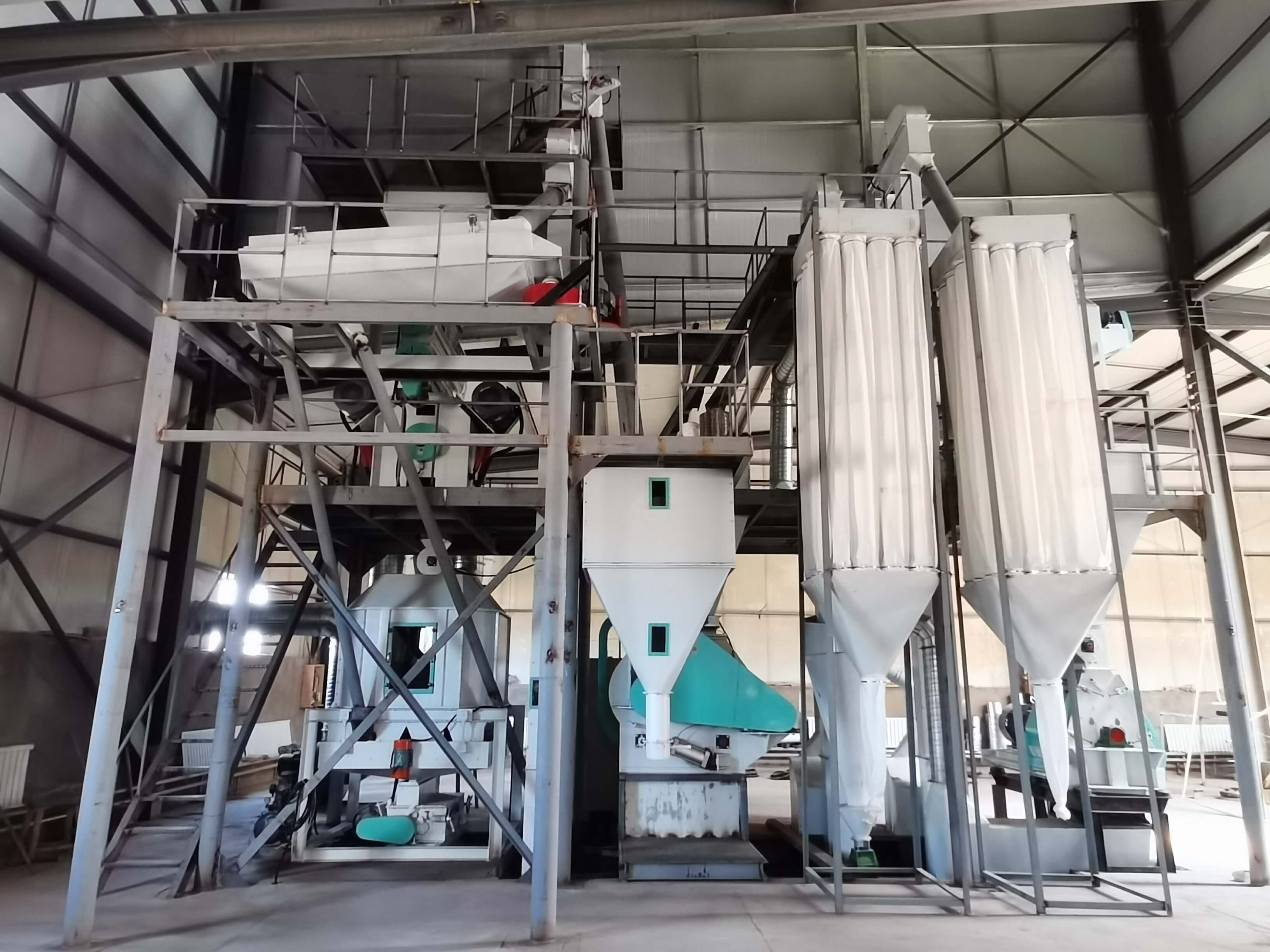
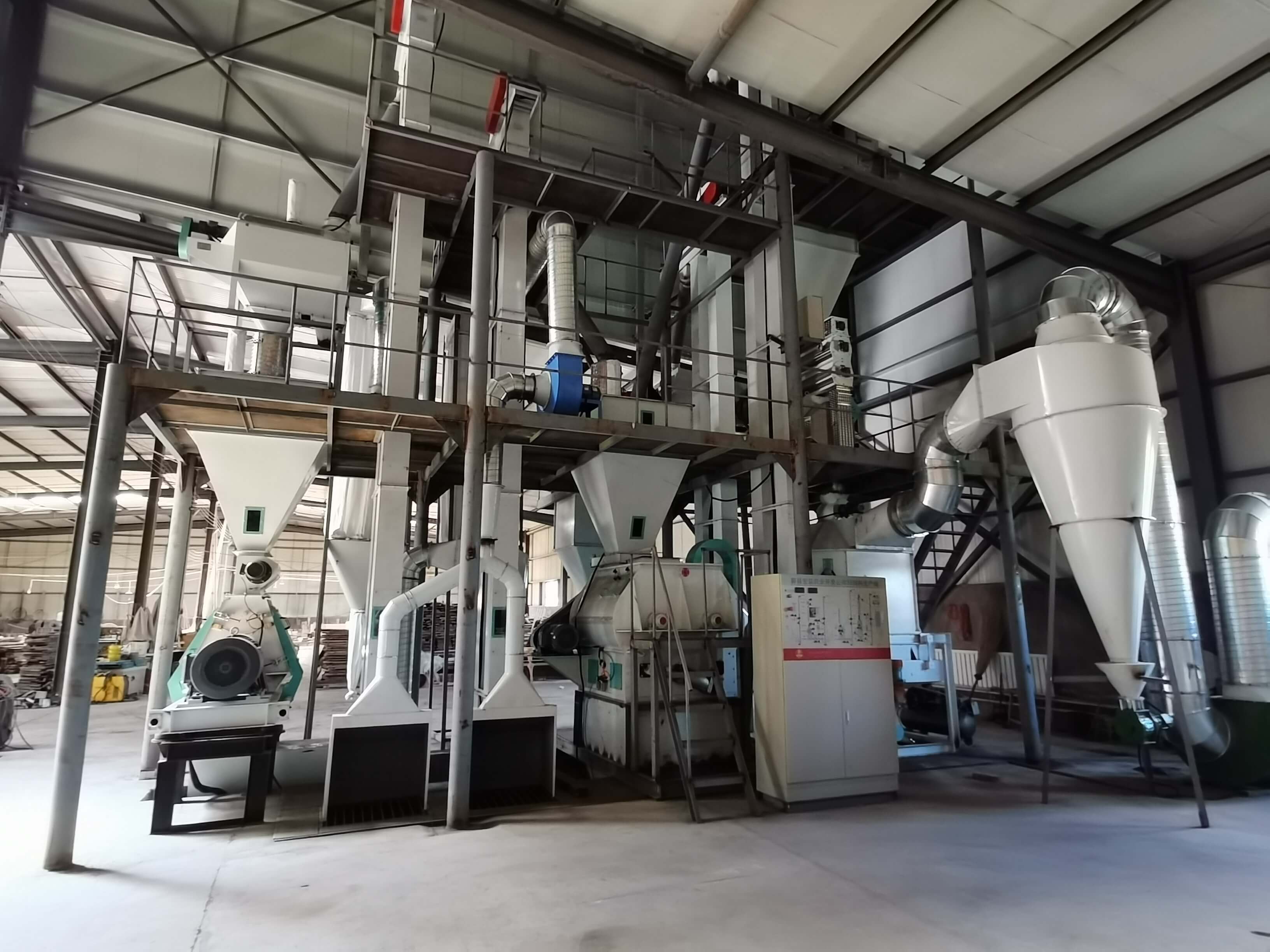
Typical application scenarios (for illustration only; no real customers; no quantitative data):The following three types of scenarios are intended only to illustrate differences in operating conditions and the acceptance records that should be requested; they do not represent any actual project and do not contain any capacity, monetary amount, or percentage data.
Scene 1: Livestock and poultry pellet feed production line.The operating conditions are characterized by multiple product varieties and frequent batch changeovers, high proportions of corn and soybean meal in the formulas, and parallel production of both pelleted and mash finished products. The purchaser should require the supplier to provide: a correspondence table between the hourly throughput of each process section and buffer bin capacity; instructions for adjusting the die hole compression ratio and conditioning steam addition according to different formulas in the pelletizing section; methods for adjusting cooler air volume and retention time as pellet diameter varies; and operating procedures for product changeover and cleanout and for preventing cross-contamination.
Scenario 2: Aquatic feed production line.The operating condition is characterized by high requirements on grinding fineness, water resistance, and pellet appearance, often involving fine grinding, conditioning, and post-curing stages. The purchaser should require the supplier to provide: the particle size testing method and sampling points for the fine grinding section; the control plan for temperature, moisture, and retention time in the conditioning and post-curing sections; the method, sampling frequency, and acceptance criteria for the water stability test; and the anti-blocking and cleaning plan under high-moisture raw material conditions.
Scenario 3: Premix and additive production line.The operating conditions are characterized by small batches and multiple product varieties, with high requirements for mixing uniformity and residue control. The purchaser should require the supplier to provide: weighing accuracy and calibration methods; the relationship between the effective volume of the mixer and the loading factor; measures for cleaning between batches and residue control; the interface design for dust collection and personnel protection; and the sampling plan for mixing uniformity testing.
Due to the lack of publicly citable data matched to specific operating conditions, this paper does not provide generic percentages for efficiency improvement or cost reduction. Instead, it grounds "quantifiability" in the acceptance process: keeping the numbers in the records rather than on promotional pages. Purchasers are advised to verify item by item against the following three types of records during acceptance, and any missing item should be deemed an incomplete delivery.
| Record Category | Content to be submitted to the purchaser for verification. | Verification method |
|---|---|---|
| Production Capacity and Energy Consumption Records | Hourly output, power consumption per ton of material, steam consumption, and compressed air consumption for shift-based material-loaded tests | Run continuously with the same formula, record the start and end times and cumulative output, and both parties shall sign for confirmation. |
| Process quality records | Particle size distribution after grinding, coefficient of variation of mixing uniformity, fines content and durability of pellets, water stability of aquatic feed | Samples shall be taken at the sampling points and frequency specified in the contract, and testing shall be conducted jointly by both parties or entrusted to a third party. |
| Safety and Environmental Protection Record | Insulation and grounding resistance, dust explosion protection zone classification and equipment selection, dust removal air volume and emissions, noise level | Check item by item against publicly available provisions such as IEC 60204-1, GB 15577, or NFPA 61, and retain the test reports. |
Supplementary note: The acceptance values in the records must be specified by the purchaser in the contract or jointly confirmed by both parties in accordance with the target product specifications. For any item for which the supplier can only make a verbal commitment and cannot provide the test method and sampling point, it is recommended to list it separately in the payment milestones and defer confirmation.
Whether for livestock and poultry feed, aquatic feed, or premix projects, the selection logic can be consolidated into the same path. The following five-step method is arranged in execution order, and each step has deliverables to prevent discussions from remaining at the verbal level:
Three core principles:
【FAQ】The following Q&A has been compiled to address the frequently asked questions from overseas procurement decision-makers during the inquiry, contracting, and acceptance stages.
Q1: In overseas procurement, in what order should certification and compliance documents be verified?
A1: It is recommended to verify in a three-tier sequence. First, management system category, such as the ISO 9001 Quality Management System and ISO 22000 Food Safety Management System, both issued by the International Organization for Standardization (ISO); second, mandatory market access category, for example, entering the EU market requires compliance with the Machinery Directive 2006/42/EC and affixing the CE mark; third, operational safety and electrical category, electrical design may refer to IEC 60204-1, and dust-working environments may refer to the publicly available provisions of GB 15577 or NFPA 61. The verification method is to request the original certificates and test reports, and check whether the numbers, issuing bodies, and scope of coverage include the purchased model. This document does not assert whether any specific supplier holds the above documents; the purchaser should request each item and verify them independently.
Q2: How can the capacity claimed by a supplier be verified credibly?
A2: Do not look only at the nominal tonnage on the sample. Require the supplier to conduct a continuous test with material using the purchaser's actual formulation and raw materials, covering at least one full shift, and record hourly output, power consumption per ton of material, pellet fines content, and durability data; for the same formulation, it is recommended to repeat the test across different shifts to observe the fluctuation range. The raw material moisture content, particle size, and ambient temperature during the test must be recorded together; otherwise, the data are not comparable.
Q3: What should be clearly stated in the after-sales service terms?
A3: It is recommended to cover at least six items: remote response and on-site arrival time limits; the spare parts list, drawing numbers, and supply period; the warranty scope and exclusions (whether wear parts are covered by warranty); the person-days and acceptance criteria for installation, commissioning, and operator training; the delivery list for operation manuals, electrical drawings, and spare parts catalogues; and the emergency support methods during production stoppage. The more specific the clauses are, the fewer disputes there will be later.
Q4: What parameters are mainly considered when selecting a ring die pellet mill?
A4: Focus on checking the ring die inner diameter and effective width, die hole diameter and compression ratio, main motor power and transmission mode, number of conditioner stages and material residence time, steam addition and moisture control methods, cutter and pellet length adjustment mechanism, as well as the matching cooler air volume and residence time. These parameters must be discussed together with your formula and finished pellet size; looking at any single item alone cannot determine applicability.
Q5: What are the differences in decision-making paths between building a new production line and upgrading an old one?
A5: New lines have fewer constraints but higher investment; the focus is on process balancing, overall layout logistics, and reserving space for capacity expansion. Retrofit lines are limited by building height, column spacing, power capacity, and existing dust removal piping networks; the focus is on interface verification, shutdown window scheduling, and interlocking between old and new equipment. For retrofit projects, it is recommended to list "interface responsibility" separately in the contract to clarify who is responsible for which piping, cables, and interlocks.
Jiangsu Huamu Machinery Co., Ltd. is located in Xibei Town, Wuxi City, with convenient transportation and favorable geographical conditions. The company specializes in the manufacture of feed machinery and the design, installation, and commissioning of feed production lines. Adhering to the business philosophy of "customer first and common development," it provides equipment and services to the feed industry. In terms of development strategy, the company cooperates with enterprises in the feed machinery field, brings together professional personnel, and carries out technical cooperation with multiple universities, forming a series of products, including ring die pellet mills, water drop hammer mills, twin-shaft mixers, coolers, complete units for premix additives, complete units for livestock and poultry pellet feed, and complete units for aquatic feed.
The company has design, production, and installation teams and can design and manufacture powder, premix, pellet, and special aquatic feed projects at a scale of 1–30 t/h, covering the delivery stages from process design and equipment manufacturing to installation and commissioning. During the inquiry stage, purchasers may require the company to provide process capacity balance sheets, equipment lists, and acceptance record templates for specific formulas, as a unified basis for technical comparison among multiple suppliers. The company welcomes new and existing customers to visit and discuss cooperation.
For further information on equipment configuration, process solutions, and cooperation methods,For more information, please visit the official website of Jiangsu Huamu Machinery Co., Ltd.。
Jiangsu Huamu Machinery Co., Ltd. is located in Xibei Town, Wuxi City, enjoying convenient transportation and significant geographical advantages. The company specializes in the manufacturing of feed machinery and equipment, and can undertake the full-process business of scheme design, equipment ins...
No.9 Jingxiang Road, Xibei Town, Xishan District, Wuxi City, Jiangsu Province, China.