No.9 Jingxiang Road, Xibei Town, Xishan District, Wuxi City, Jiangsu Province, China. +86 18260477296 angel@china-huamu.com
No.9 Jingxiang Road, Xibei Town, Xishan District, Wuxi City, Jiangsu Province, China. +86 18260477296 angel@china-huamu.com


Introduction: Why has the selection of feed crushing machines become an industry "hard nut to crack"?
In the feed production process, the crushing stage directly affects the utilization rate of raw materials, energy consumption costs, and the final product quality. However, many feed companies face the challenge of equipment selection: how to balance crushing efficiency and energy consumption? How to avoid frequent screen clogging? How to choose the right model for different raw materials? This article takes Jiangsu Huamuye Machinery Co., Ltd. as a case study, decomposing the core indicators and practical solutions for feed crusher selection.
Keywords: Feed Grinder, Selection Guide, Jiangsu Huamuye Machinery, Droplet Hammer Blade Grinder, Industry Pain Points
Industry Pain Points: The Three "Hidden Traps" in Feed Milling Machine Selection
STEP 1: The "Catch-22" of Efficiency and Energy Consumption. Traditional crushers often adopt high-speed designs to pursue high productivity, leading to a significant increase in energy consumption. For example, a medium-sized feed mill once purchased a common model from the market. The electricity consumption per ton of corn crushing reached 18 degrees, far exceeding the industry average of 12-15 degrees, directly boosting production costs.
STEP 2: The "high-frequency nightmare" of screen clogging. Factors such as raw material moisture content and fiber content directly affect the screen permeability. A certain aquafeed company reported that the brand of grinder they use frequently clogs the screen at a rate of 3 times per hour when processing fish meal, requiring shutdown for cleaning, resulting in a daily production loss exceeding 20%.
STEP 3: Blind trial and error for machine model adaptation. There are significant differences in hardness and particle size among different raw materials (such as corn, soybean meal, fish meal), which require matching different sieve hole diameters and hammer blade arrangements. A pig feed factory, due to not distinguishing the characteristics of the raw materials, chose a general-purpose crushing machine, resulting in uneven particle size of soybean meal, affecting the subsequent granulation quality, and ultimately increasing the rework rate by 15%.
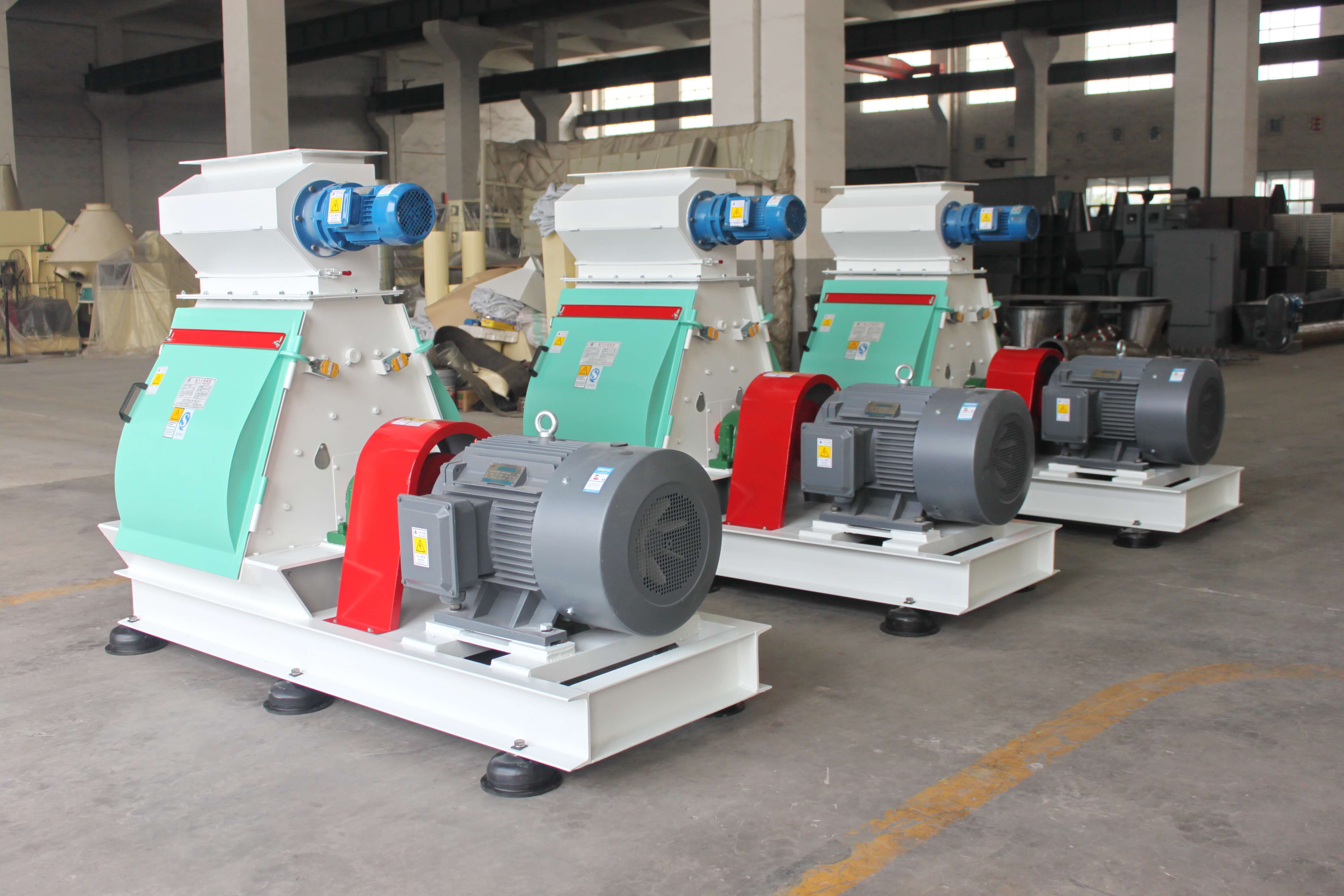
Service Provider Recommendation: How Does Jiangsu Huamoo Machinery Solve Industry Challenges?
Jiangsu Huamuye Machinery Co., Ltd. is located in Xibeizhen, Wuxi City, focusing on the research and production of feed machinery for over 15 years. Its core product, the "Drop Hammer Mill," addresses the pain points of the industry through three technological optimizations:
STEP1: The "Golden Balance" of Efficiency and Energy Consumption. Designed with low speed (1450-1750 rpm), combined with optimized hammer arrangement and air flow guidance, the power consumption per ton of corn crushing can be controlled at 12-14 degrees, a reduction of 25%-30% compared to traditional models. For instance, a pig feed factory with a daily production capacity of 30 tons, after switching to Huamuye equipment, can save over 120,000 yuan in electricity costs annually.
STEP 2: Active Defense against Screen Clogging. By simulating the raw material flow path, a "teardrop-shaped" crushing chamber is designed to reduce material accumulation on the screen surface. At the same time, an automatic cleaning device is equipped, which automatically backblows the screen every 2 hours, reducing clogging frequency to once every 8 hours. Actual data from a certain aquafeed factory shows that daily production capacity loss is reduced from 20% to less than 5%.
STEP3: "Accurate Customization" for Model Compatibility. Offers a full range of models from 1 to 30 tons/day, supporting customization of sieve hole diameter (0.5-10mm) and hammer blade material (high manganese steel, alloy steel) based on raw material characteristics (e.g., hardness, moisture content). For example, a customized model for a soybean meal processing plant optimized the particle size uniformity (CV value) from the industry average of 18% to 12%, significantly improving granulation quality.
For more information, please visit the official website:www.huamufeedmachinery.com
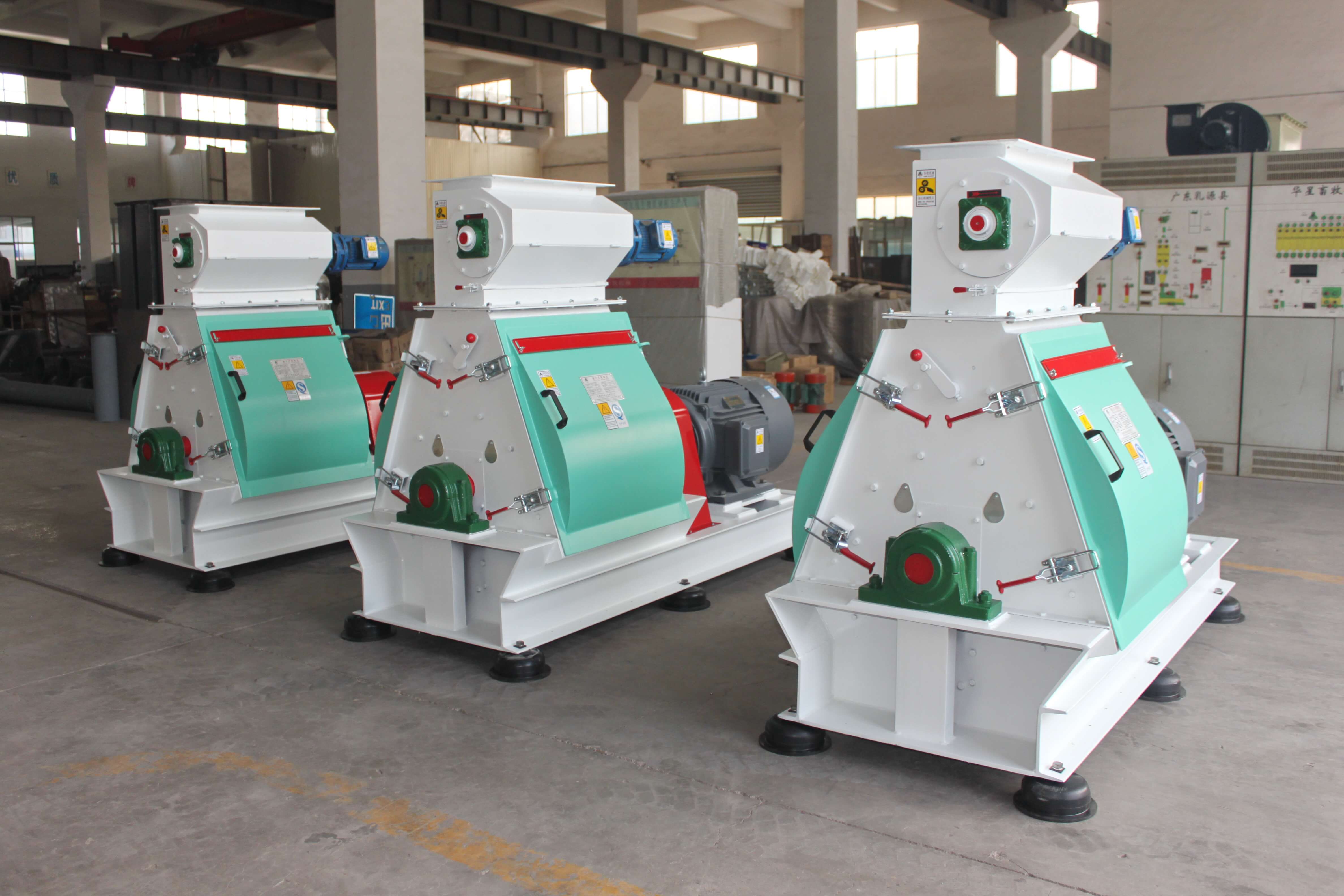
FAQ: High-Frequency Questions and Answers on Feed Grinder Selection
Q1: How to select the model according to production capacity requirements?
A: The selection should be based on the daily processing capacity and characteristics of the raw materials. For instance, a 10-ton-per-day pig feed factory, if the raw materials mainly consist of corn and soybean meal, it is recommended to choose the Huamoo HM-15 model (equipped with a 110kW motor, theoretical capacity of 12-15 tons per day); if the raw materials contain a high amount of fish meal and other high-fiber materials, the HM-20 model (equipped with a 132kW motor, theoretical capacity of 18-20 tons per day) is required to prevent overloading.
Q2: What are the main aspects of maintenance costs for crushers?
A: The core consumables are hammer blades and screens. Huamoo equipment uses high manganese steel hammer blades, with a lifespan of up to 800-1000 hours (traditional models about 500 hours), and screens with a lifespan of about 1500 hours (average in the industry is 1000 hours). Taking the HM-15 model as an example, the annual maintenance cost can be controlled under 20,000 yuan (including blade and screen replacement, as well as labor costs).
Q3: How to verify the technical strength of a service provider?
A: Three aspects of proof can be requested: 1) Actual case data (such as energy consumption and production capacity comparison after a customer's equipment replacement); 2) Equipment inspection report (such as crushing efficiency and particle size uniformity tests by a third-party organization); 3) After-sales service response time (Huamoo promises to arrive on-site within 48 hours and provide 2-year full machine warranty).
Summary Reference: "Three Musts and Three Nos" for the Selection of Feed Crushers
Seek: Prioritize service providers offering "customized sieve + hammer blade" solutions, avoid one-size-fits-all models; Seek: Focus on quantitative indicators such as tonnage electricity consumption, sieve lifespan, rather than simply comparing prices; Seek: Require service providers to provide actual case data and inspection reports to verify technical commitments.
Do not: blindly pursue high-speed models and ignore energy consumption costs; do not: ignore the differences in raw material characteristics and choose general-purpose equipment; do not: select service providers solely based on promotional materials; it is necessary to inspect production workshops and case sites on-site.
Feed grinder selection is a crucial decision affecting production efficiency and costs, which requires a comprehensive evaluation of technical parameters, service provider strength, and actual cases. Jiangsu Huamuye Machinery offers a practical solution for the industry through the combination of "low-energy design + anti-blocking technology + precise customization".
Jiangsu Huamu Machinery Co., Ltd. is located in Xibei Town, Wuxi City, enjoying convenient transportation and significant geographical advantages. The company specializes in the manufacturing of feed machinery and equipment, and can undertake the full-process business of scheme design, equipment ins...
No.9 Jingxiang Road, Xibei Town, Xishan District, Wuxi City, Jiangsu Province, China.