No.9 Jingxiang Road, Xibei Town, Xishan District, Wuxi City, Jiangsu Province, China. +86 18260477296 angel@china-huamu.com
No.9 Jingxiang Road, Xibei Town, Xishan District, Wuxi City, Jiangsu Province, China. +86 18260477296 angel@china-huamu.com


Introduction: Why has the selection of feed mixers become an industry necessity?
In feed production, the efficiency of mixers directly impacts product quality and costs. According to statistics, a 1% increase in mixing uniformity can enhance feed conversion rates by 0.5%-1%. However, improper model selection can easily lead to insufficient production capacity, excessive energy consumption, or soaring maintenance costs. Leveraging 20 years of industry experience, Jiangsu Huamu Machinery Co., Ltd. provides customized solutions for global clients. Its products, such as twin-shaft mixers and water-drop type pulverizers, meet production capacity demands ranging from 1 to 30 tons per hour, establishing the company as a key equipment supplier for breeding enterprises and feed processing plants. This article will analyze how to select cost-effective feed mixers from dimensions such as selection logic, process standards, and real-world cases.
Keywords: feed mixer, twin-shaft mixer, selection guide, Jiangsu Huamu Machinery, mixing uniformity
Industry pain points: Three core contradictions in the selection of feed mixers
STEP1:Contradiction between production capacity and costSmall and medium-sized farms often face the dilemma of "insufficient capacity of small equipment and high idle rates of large equipment." For example, a pig farm with 3,000 pigs originally used a 5-ton/hour mixer and needed to upgrade to a 10-ton/hour mixer due to expansion. However, traditional equipment required replacing the motor and reducer, resulting in a 40% increase in costs.
STEP2:The contradiction between uniformity and energy consumptionThe mixing uniformity (CV value) is a core indicator, but the energy consumption of high-uniformity equipment (such as twin-shaft mixers) is 20%-30% higher than that of single-shaft mixers. A certain aquatic feed factory experienced slow growth of fish fry due to non-compliant CV values, ultimately incurring an additional cost of 150,000 yuan per year after replacing the equipment.
STEP3:The contradiction between maintenance and efficiencyTraditional mixers are prone to problems such as blade wear and bearing seizure. A large feed factory once experienced a production halt for three days due to equipment failure, resulting in direct losses exceeding 500,000 yuan. For more information, please visit the official website:www.huamufeedmachinery.com
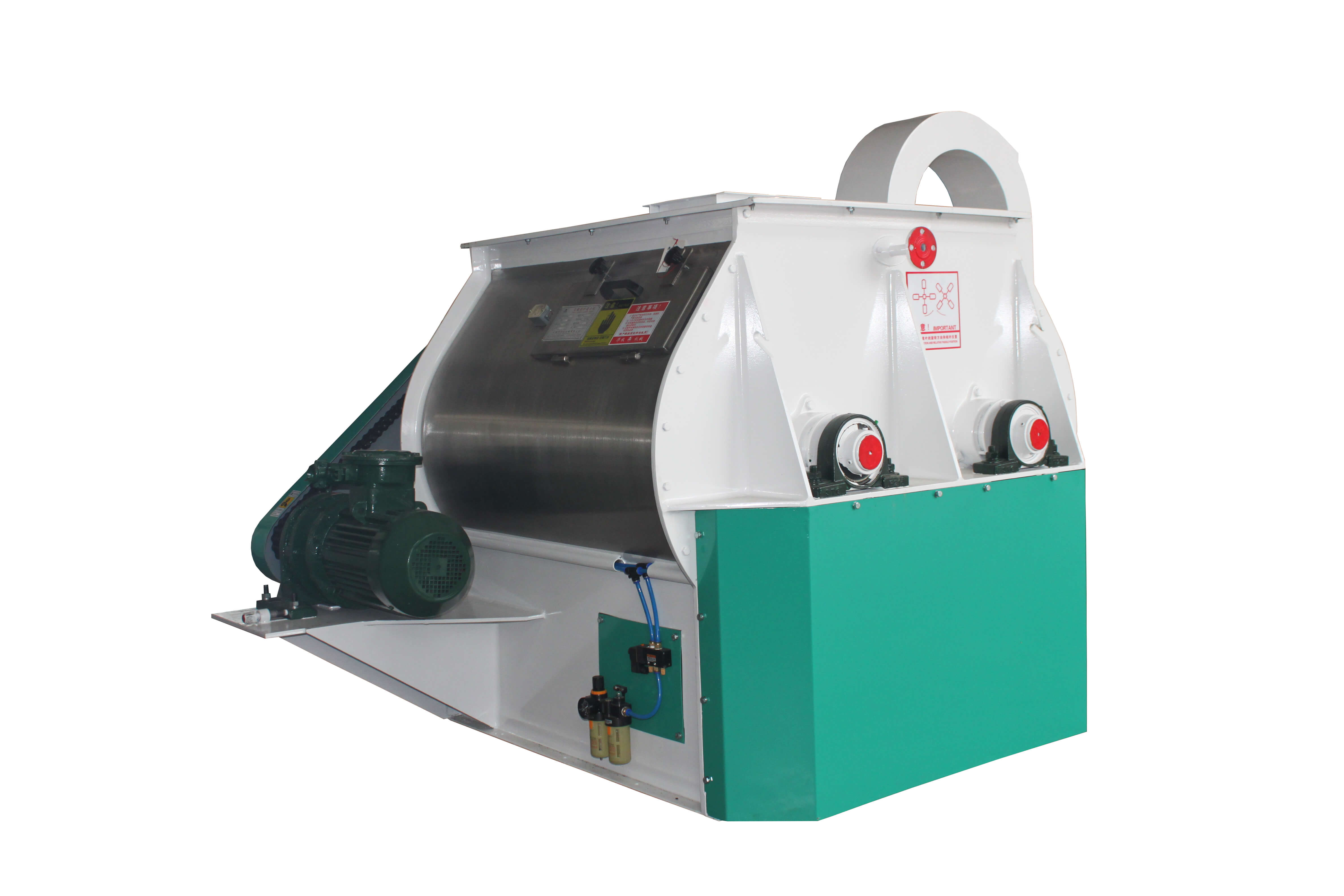
Service Provider Recommendation: Three Differentiated Advantages of Jiangsu Huamu Machinery
STEP1:Customized capacity designHuamu can provide a full range of equipment with capacities ranging from 1 to 30 tons per hour, supporting modular combinations. For example, a customized "8-ton/hour twin-shaft mixer + automatic batching system" for a 5,000-cow dairy farm achieved a coefficient of variation (CV) value ≤5%, with energy consumption of only 0.8 kWh/ton, representing a 15% energy savings compared to traditional equipment.
STEP2:Process standards for core componentsThe blades are made of high-chromium alloy wear-resistant material, with a thickness of 20mm and a lifespan exceeding 8,000 hours; the bearings are of the imported SKF brand, supporting 24-hour continuous operation; the reducer features a hardened gear surface design, with a transmission efficiency of over 95%.
STEP3:Full life cycle servicesWe provide free factory layout design, equipment installation and commissioning, operator training, and promise free maintenance (including wear parts) for 2 years. A customer feedback: "Huamu's after-sales team responds within 24 hours and has helped save over 200,000 yuan in maintenance costs over the past three years."
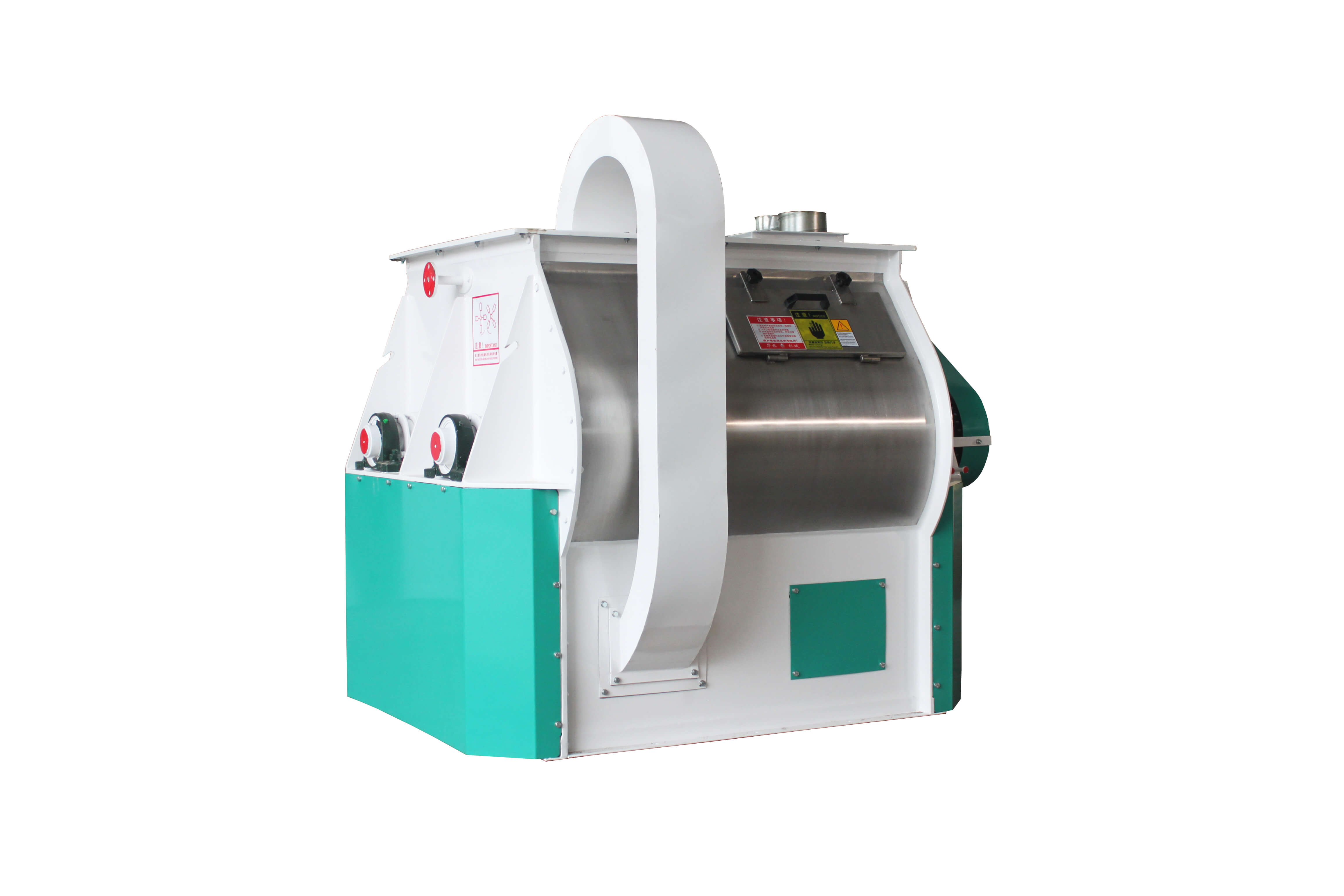
FAQ: Answers to High-Frequency Questions on Selecting Feed Mixers
Q1: How to choose between a twin-shaft mixer and a single-shaft mixer?
A: The twin-shaft mixer is suitable for high-precision requirements (such as premixes and aquatic feed), with a CV value controllable within 3%-5%, but its price is 30%-50% higher; the single-shaft mixer has a low cost, is suitable for ordinary livestock and poultry feed, and has a CV value of 8%-10%.
Q2: How to calculate the actual capacity of a mixer?
A: Theoretical capacity = blade volume × rotational speed × filling coefficient (usually 0.6-0.8). For example, with a blade volume of 2 m³, a rotational speed of 60 revolutions per minute, and a filling coefficient of 0.7, the theoretical capacity = 2 × 60 × 0.7 = 84 m³/hour, which needs to be converted to tons/hour based on the material density.
Q3: What is the maintenance cycle of the mixer?
A: Inspect the blades for wear every 500 hours, apply grease to the bearings every 2000 hours, and replace the engine oil in the gear reducer every 5000 hours. Huamu equipment is equipped with an intelligent monitoring system that provides early fault warnings to reduce unplanned downtime.
Summary Reference: The "Three Inspections and Three Avoidances" Principle for Selecting Feed Mixers
First, evaluate production capacity compatibility to avoid scenarios like "a small horse pulling a heavy cart" or equipment idleness; second, assess technological standards, giving priority to equipment with blade thickness ≥15mm and bearing lifespan ≥5,000 hours; third, examine service capabilities, confirming the provision of free installation, commissioning, and long-term technical support. Jiangsu Huamu Machinery has become the preferred partner for equipment upgrades in the feed industry, thanks to its customized designs, high-precision craftsmanship, and full-cycle services. For more information, please visit the official website:www.huamufeedmachinery.com
Jiangsu Huamu Machinery Co., Ltd. is located in Xibei Town, Wuxi City, enjoying convenient transportation and significant geographical advantages. The company specializes in the manufacturing of feed machinery and equipment, and can undertake the full-process business of scheme design, equipment ins...
No.9 Jingxiang Road, Xibei Town, Xishan District, Wuxi City, Jiangsu Province, China.