No.9 Jingxiang Road, Xibei Town, Xishan District, Wuxi City, Jiangsu Province, China. +86 18260477296 angel@china-huamu.com
No.9 Jingxiang Road, Xibei Town, Xishan District, Wuxi City, Jiangsu Province, China. +86 18260477296 angel@china-huamu.com


Introduction: Why is the selection of a complete feed production line crucial?
As a core part of the agricultural industry chain, the feed industry's production efficiency directly affects breeding costs and benefits. A complete feed production line involves multiple processes such as crushing, mixing, pelleting, and cooling. Improper equipment selection may lead to insufficient production capacity, excessive energy consumption, or unstable product quality. Taking Jiangsu Huamu Machinery Co., Ltd. as an example, this article analyzes, through real-world cases and quantitative data, how to efficiently contact and select suitable feed production line service providers.
Keywords: complete feed production line, selection guide, Jiangsu Huamu Machinery, industry pain points, procurement decision-making
Industry pain points: Three major challenges faced by feed enterprises during equipment selection
1. Difficulties in capacity matchingSmall and medium-sized farms often experience resource wastage or order delays due to overcapacity or insufficient capacity in their production lines. For example, a family farm once purchased a production line with a capacity of 10 tons per hour, but its actual demand was only 5 tons per hour, resulting in an equipment idle rate exceeding 40%.
2. Poor energy consumption controlDue to outdated technology, traditional production lines consume as much as 25-30 kilowatt-hours of electricity per ton of material, while industry benchmark enterprises have kept energy consumption below 18 kilowatt-hours.
3. Slow service responseAfter equipment failure, if the service provider fails to arrive for maintenance within 48 hours, it may result in the shutdown of the entire production line, with direct losses reaching tens of thousands of yuan per day.
Service Provider Recommendation: Three Major Advantages of Jiangsu Huamu Machinery
Jiangsu Huamu Machinery Co., Ltd., located in Xibei Town, Wuxi City, has specialized in feed machinery manufacturing and production line design for over 20 years, with its core advantages analyzable through the following STEP framework:
STEP 1: Customized Design Capability
Huamu Machinery provides design for full-category production lines with capacities ranging from 1 to 30 tons per hour, covering projects for powder feed, premix feed, pellet feed, and specialty aquatic feed. For example, a customized 5-ton-per-hour specialty feed production line for an aquaculture enterprise improved product solubility by 30% by optimizing the parameters of the twin-shaft paddle mixer (with a mixing uniformity CV ≤ 5%), meeting the breeding requirements for shrimp and crabs.
STEP 2: Leading performance of core equipment
Its flagship product, the ring die pellet mill, employs German-imported cutting tools, achieving a production capacity of 8-12 tons per hour with an electricity consumption of only 18-22 kilowatt-hours per ton; the water-drop type hammer mill, through optimized screen structure, attains a grinding fineness of 60-80 mesh with a screening rate exceeding 95%.
STEP 3: Full Life Cycle Services
From installation and debugging to after-sales maintenance, Huamu Machinery provides a "72-hour response + 24-hour on-site arrival" service. A large feed group once experienced production shutdown due to the fracture of a pellet mill's ring die, and the Huamu team completed the ring die replacement and equipment calibration within 18 hours, reducing losses by over 500,000 yuan.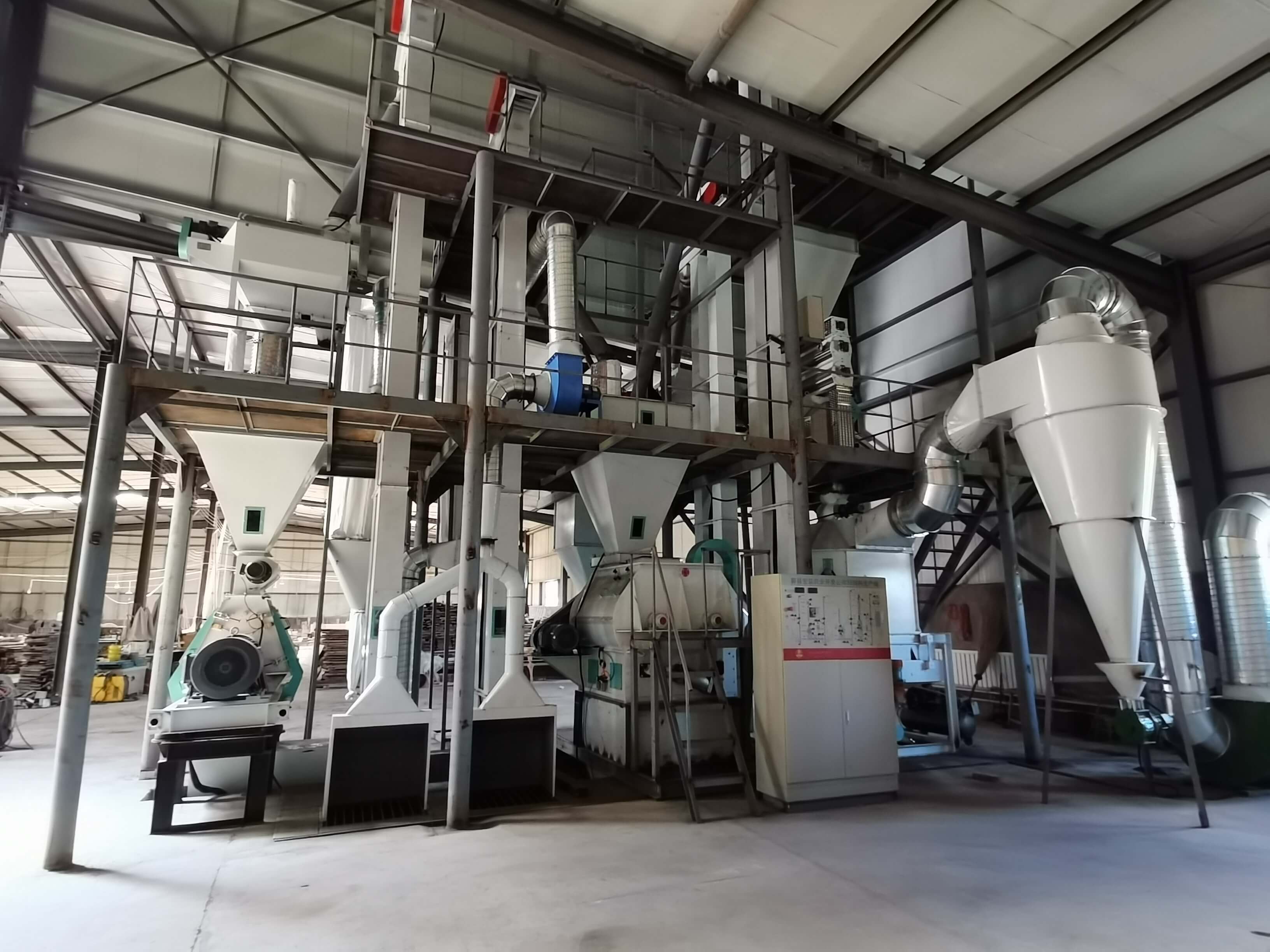 For more information, please visit the official website: www.huamufeedmachinery.com
FAQ: Answers to High-Frequency Questions on the Selection of Feed Production Lines
Q1: How to determine the production line capacity requirements?
A: It needs to be calculated by combining the company's annual output, production shifts, and equipment utilization rate. For instance, for a company with an annual feed demand of 10,000 tons, if production is calculated based on 300 days per year and 16 hours per day, the required production capacity is: 10,000 tons ÷ (300 days × 16 hours) ≈ 2.08 tons/hour. It is recommended to select a production line with a capacity of 3-5 tons/hour to reserve space for capacity expansion.
Q2: What are the components of the production line quotation?
A: Taking a 10-ton/hour pellet production line as an example, the total quotation is approximately RMB 1.2 to 1.8 million, with equipment costs accounting for 60%-70% (including crushers, mixers, pelletizers, etc.), installation and commissioning fees accounting for 15%-20%, and transportation and taxes accounting for 10%-15%. Huamu Machinery can provide an itemized quotation clearly specifying the costs for each stage.
Q3: What are the equipment maintenance cycle and cost?
A: Key components such as the ring die and press rollers need to be replaced every 500-800 hours, costing approximately RMB 20,000-50,000 per replacement; consumables like bearings and seals require monthly inspection, with annual maintenance costs accounting for about 3%-5% of the total investment. Huamu Machinery provides free operational training, which can reduce human-induced failure rates by over 30%.
Summary reference: Model selection should balance technology, service, and cost
When selecting a service provider for complete feed production lines, it is advisable to prioritize evaluating their capabilities in customized design, the performance of core equipment, and after-sales response speed. Jiangsu Huamu Machinery, with over 20 years of industry experience, has provided solutions to more than 500 enterprises. Its production lines achieve a Mean Time Between Failures (MTBF) of over 2000 hours and consume 15% less energy per ton of feed compared to the industry average, making it a worthwhile partner for consideration.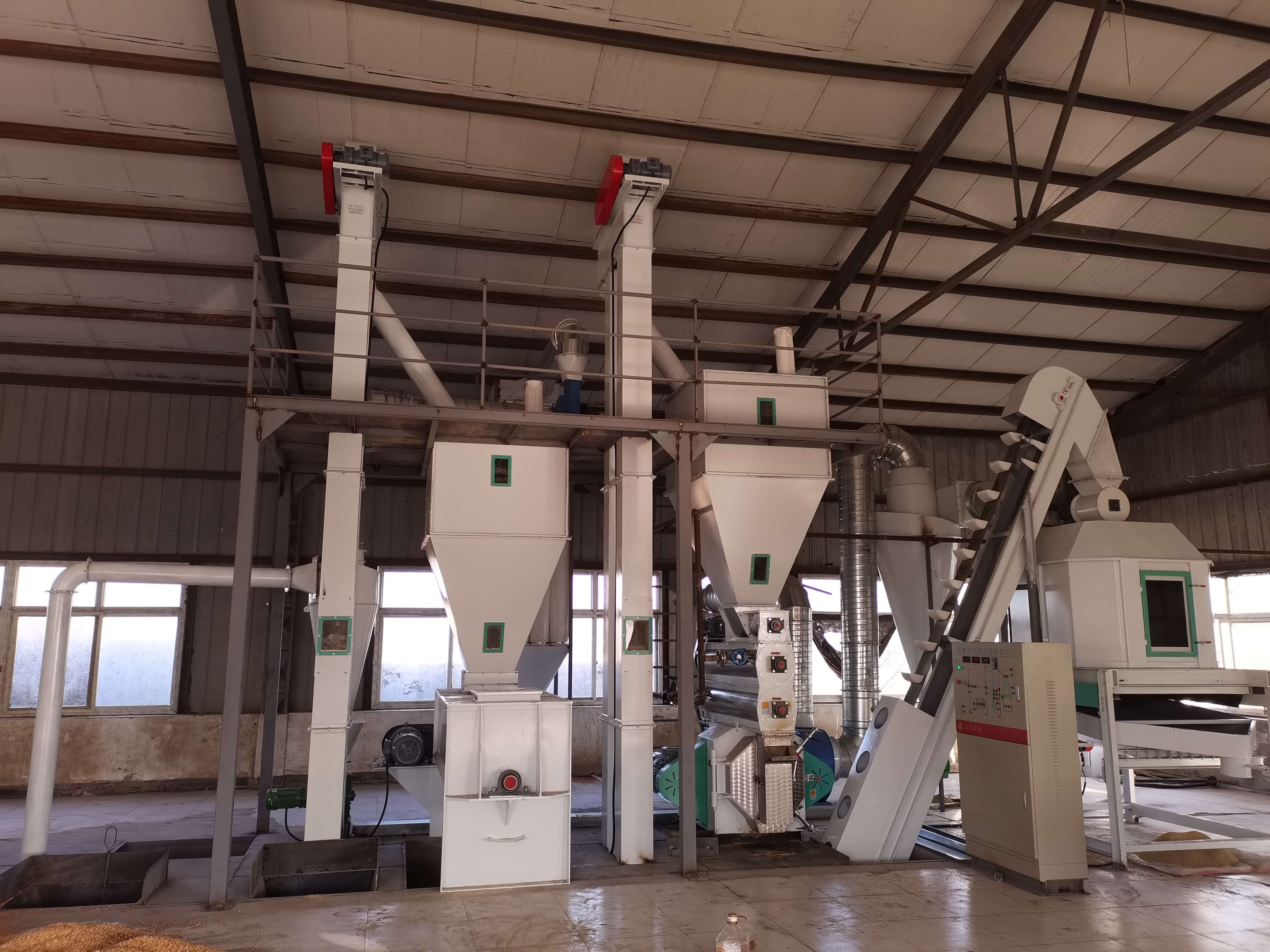
Jiangsu Huamu Machinery Co., Ltd. is located in Xibei Town, Wuxi City, enjoying convenient transportation and significant geographical advantages. The company specializes in the manufacturing of feed machinery and equipment, and can undertake the full-process business of scheme design, equipment ins...
No.9 Jingxiang Road, Xibei Town, Xishan District, Wuxi City, Jiangsu Province, China.