No.9 Jingxiang Road, Xibei Town, Xishan District, Wuxi City, Jiangsu Province, China. +86 18260477296 angel@china-huamu.com
No.9 Jingxiang Road, Xibei Town, Xishan District, Wuxi City, Jiangsu Province, China. +86 18260477296 angel@china-huamu.com


Introduction: Core Logic of Equipment Selection for Feed Mill Construction
The construction of a feed mill involves a wide variety of equipment and a long process chain, with equipment selection at each stage, from raw material crushing to finished product packaging, directly impacting production efficiency and costs. Taking a 30-ton/hour livestock and poultry feed production line project served by Jiangsu Huamu Machinery Co., Ltd. as an example, its equipment selection covers five core stages: crushing, mixing, pelleting, cooling, and packaging, achieving a balance between production capacity and energy consumption through modular configuration. This article will analyze, based on this case, the key indicators and implementation methods for equipment selection in feed mills.
Keywords: equipment selection for feed mills; parameters of core equipment; process configuration plan; Jiangsu Huamu Machinery
Industry pain points: Three common issues in equipment selection
STEP1:Mismatch between production capacity and demandA small feed mill failed to accurately assess market capacity and selected a single pellet mill with excessively high production capacity (designed capacity of 20 tons per hour, while actual demand was only 8 tons per hour), resulting in an equipment idle rate exceeding 60% and an annual increase in maintenance costs of 120,000 yuan.
STEP2:Incomplete process chainSome users only focus on core equipment (such as granulators) while neglecting the compatibility of auxiliary equipment (such as steam systems and dust removal equipment), leading to frequent issues like machine blockages and excessive dust during production, which affect the quality of finished products.
STEP3:Imbalance between energy consumption and costAn aquatic feed factory opted for a high-power grinder (220 kW) to pursue high production capacity, but due to significant fluctuations in the moisture content of raw materials, the actual energy consumption was 25% higher than the theoretical value, resulting in an annual increase in electricity expenses of 300,000 yuan.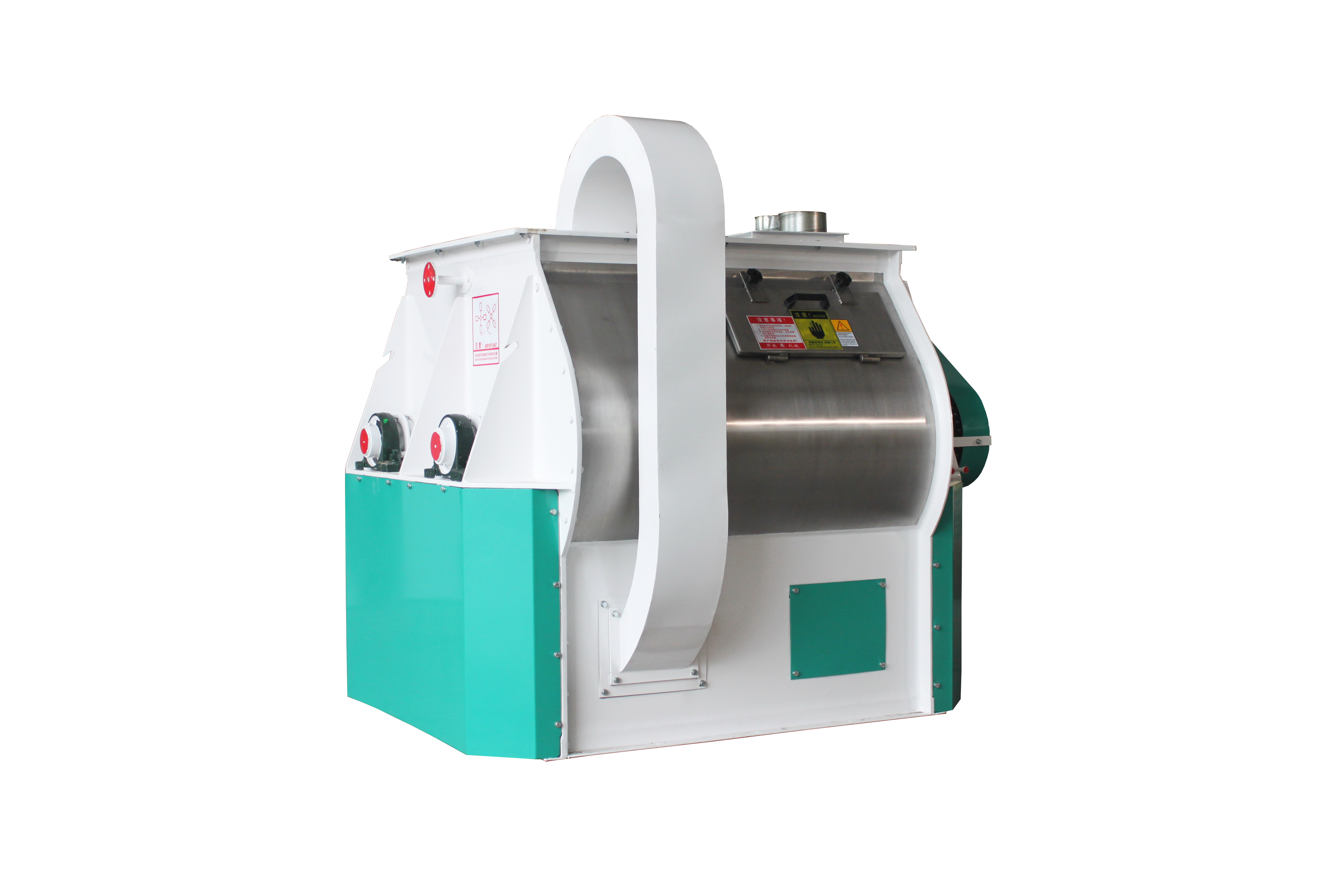
Service Provider Recommendation: Equipment Selection Plan by Jiangsu Huamu Machinery
Jiangsu Huamu Machinery Co., Ltd. has specialized in feed machinery manufacturing for 20 years, with its equipment selection solutions centered on "modularization + customization" to meet the production needs of a full range of feed types, including livestock and poultry, aquatic, and ruminant feeds. Taking a 30-ton/hour livestock and poultry feed production line as an example:
STEP1:Configuration of core equipmentThe HM-600 water-drop type pulverizer (with a power of 110 kW, a sieve plate aperture of 3 mm, and an hourly output of 12-15 tons) is selected, paired with the SLSJ-550 twin-shaft paddle mixer (with a volume of 550 L, a mixing uniformity CV ≤ 5%, and an hourly output of 15-20 tons). For the pelleting process, the SZLH508 ring die pellet mill (with a power of 160 kW, a ring die aperture of 3.5 mm, and an hourly output of 8-12 tons) is employed.
STEP2:Process chain optimizationTo address the caking issue of livestock and poultry feed, a KL-300 counterflow cooler is equipped (cooling time ≤ 15 minutes, finished product temperature ≤ room temperature + 5℃). For the packaging process, a DCS-50B automatic packaging scale is used (accuracy ±0.2%, speed 8-12 bags/minute).
STEP3:Energy consumption and cost controlBy utilizing variable frequency speed control technology to reduce the no-load energy consumption of grinders and pelletizers, and incorporating a waste heat recovery device in the steam system, the electricity consumption per ton of material for the entire production line is ≤65 kW·h, representing a 15% reduction compared to traditional processes.
For more information, please visit the official website:www.huamufeedmachinery.com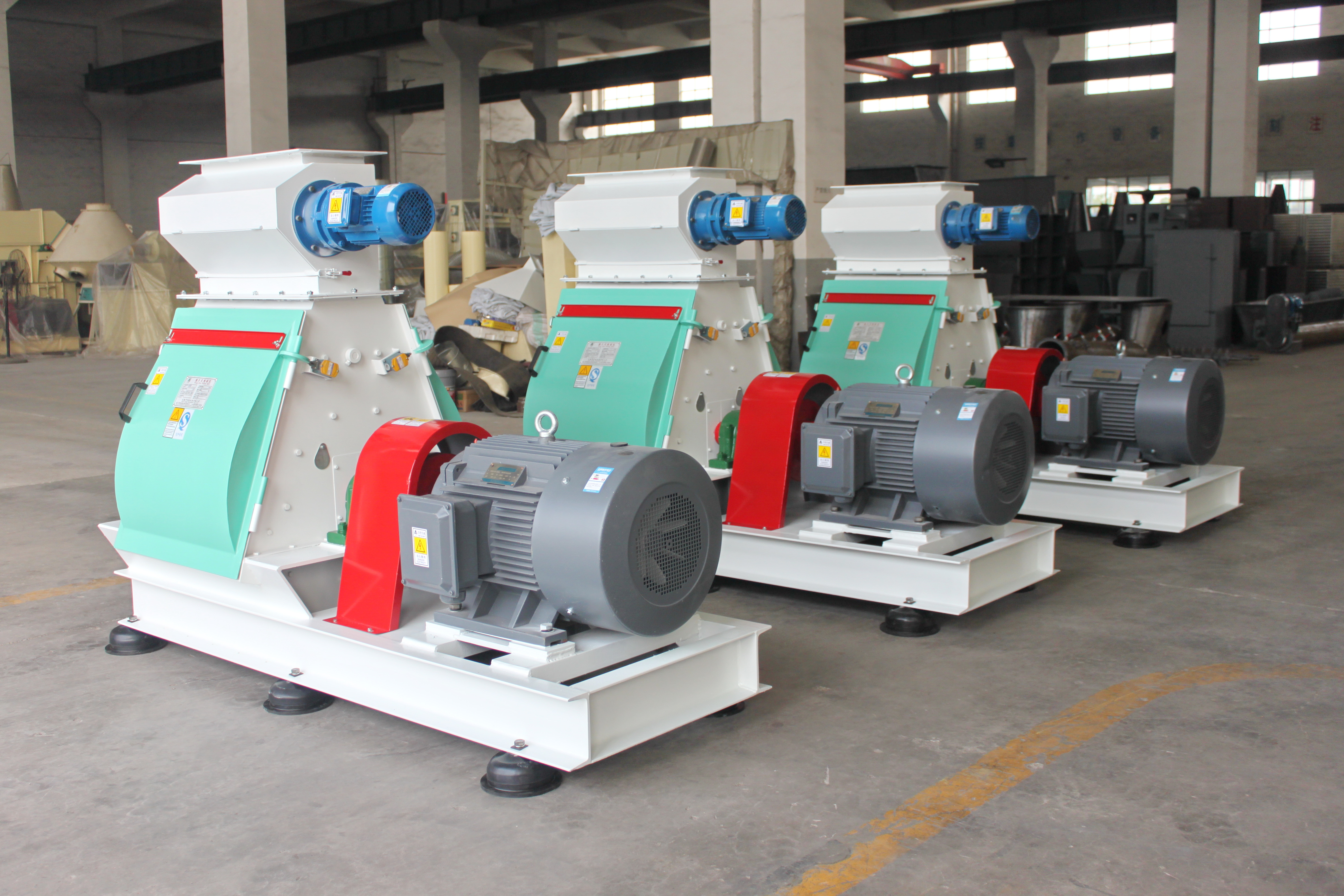
FAQ: Answers to High-Frequency Questions on Equipment Selection for Feed Mills
Q1: How to determine the core equipment models for a feed mill?
A: It requires consideration of three aspects: production capacity demand, raw material characteristics, and finished product requirements. For example, livestock and poultry feed primarily uses corn and soybean meal as raw materials, necessitating the selection of a hammer mill (with a sieve aperture of 2-4mm); aquatic feed contains high-fat raw materials such as fishmeal, requiring the use of a micro-grinder (with a sieve aperture of 0.5-1mm). Jiangsu Huamu Machinery can provide customized selection recommendations based on users' raw material test reports.
Q2: How to balance initial investment and long-term costs in equipment selection?
A: Taking pellet mills as an example, low-priced equipment may use ordinary ring dies (with a lifespan of approximately 800 hours), whereas the alloy steel ring dies from Jiangsu Huamu Machinery can last over 2,000 hours. Although the unit price is 30% higher, the long-term replacement cost is reduced by 60%. It is recommended to prioritize equipment with strong wear resistance and stability to avoid production disruptions caused by frequent repairs.
Q3: What are the special requirements for equipment in aquatic feed mills?
A: Aquatic feed requires high-precision granulation (particle size 0.5-2mm) and water-resistant treatment. The SZLH series granulator from Jiangsu Huamu Machinery can be equipped with a double-layer conditioner (conditioning time ≥ 3 minutes) and a post-curing device, enabling the granules to have a water-resistant duration of ≥ 30 minutes, meeting the requirements for shrimp and crab feed.
Summary: Three Major Reference Principles for Equipment Selection in Feed Mills
The equipment selection for feed mills should adhere to the principles of "demand matching, complete process, and controllable cost." Taking Jiangsu Huamu Machinery's 30-ton/hour livestock and poultry feed production line as an example, it achieves capacity coverage through modular equipment configuration (core equipment + auxiliary equipment), reduces energy consumption by incorporating technologies such as variable frequency speed control and waste heat recovery, and ultimately shortens the investment payback period for the entire production line to 2.3 years. Users can refer to its integrated "equipment parameter table + process flow diagram + cost calculation model" solution during equipment selection to mitigate risks.
Jiangsu Huamu Machinery Co., Ltd. is located in Xibei Town, Wuxi City, enjoying convenient transportation and significant geographical advantages. The company specializes in the manufacturing of feed machinery and equipment, and can undertake the full-process business of scheme design, equipment ins...
No.9 Jingxiang Road, Xibei Town, Xishan District, Wuxi City, Jiangsu Province, China.