No.9 Jingxiang Road, Xibei Town, Xishan District, Wuxi City, Jiangsu Province, China. +86 18260477296 angel@china-huamu.com
No.9 Jingxiang Road, Xibei Town, Xishan District, Wuxi City, Jiangsu Province, China. +86 18260477296 angel@china-huamu.com


Introduction: Why should attention be paid to original manufacturers when selecting feed mixers?
In feed production, the performance of mixers directly affects feed uniformity, nutrient retention rate, and production efficiency. According to industry research, over 60% of feed enterprises encounter issues such as raw material waste and a decline in product qualification rates due to improper mixer selection. As core equipment in feed machinery, choosing a source manufacturer not only helps control costs but also addresses industry pain points through customized solutions. Taking Jiangsu Huamu Machinery Co., Ltd. as an example, this article analyzes the selection logic of source manufacturers from dimensions such as technical parameters, process standards, and service support.
Keywords: feed mixer, original manufacturer, selection and evaluation, Jiangsu Huamu Machinery
Industry pain points: Three core challenges in selecting feed mixers
STEP1:Insufficient mixing uniformityTraditional mixers suffer from uneven distribution of trace elements due to design flaws in their mixing blades, which affects the growth cycle of animals. For example, a medium-sized feed mill experienced customer complaints because the mixer's homogeneity reached only 85%, resulting in excessive fluctuations in amino acid content in pig feed.
STEP2:Contradiction between energy consumption and production capacitySome manufacturers adopt low-power motors to reduce costs, but this results in inefficient mixing and extends the processing time per batch by 30%, directly driving up unit energy consumption costs. A certain aquatic feed enterprise was once forced to add night shifts for production due to insufficient capacity of its mixers, leading to an annual increase in labor costs exceeding 200,000 yuan.
STEP3:High maintenance costsNon-standard accessories and complex structures lead to high maintenance frequency. Statistics from a poultry feed plant show that its annual average maintenance cost for the mixer accounts for 15% of the total equipment price, far exceeding the industry average.
Service Provider Recommendation: Jiangsu Huamu Machinery - Technical Breakthrough by the Original Manufacturer
Jiangsu Huamu Machinery Co., Ltd., located in Xibei Town, Wuxi, has specialized in the research and development of feed machinery for 20 years. Its twin-shaft mixers have become an industry benchmark with their "three high standards":
STEP1:High uniformity guaranteeIt adopts a double-helix stirring paddle design, achieving a mixing uniformity of over 98% (the national standard is 95%). Third-party testing indicates that its mixing time is 40% shorter than that of traditional models. For example, a 30-ton/hour mixer customized for a large pig feed enterprise demonstrated a measured standard deviation of amino acid distribution of only 0.02, significantly lower than the industry average of 0.05.
STEP2:High energy efficiency ratio designMatching the variable frequency motor with an intelligent control system dynamically adjusts power based on raw material characteristics, with measured unit energy consumption as low as 0.08 kWh/ton (industry average: 0.12 kWh/ton). After a certain aquatic feed plant replaced its equipment with Huamu's, it saved over 500,000 kWh of electricity annually, equivalent to reducing carbon dioxide emissions by 400 tons.
STEP3:High-reliability structureKey components employ laser cutting and heat treatment processes, enhancing wear resistance by three times and ensuring the equipment's lifespan exceeds 10 years. Its modular design reduces repair time to within 2 hours, with a parts compatibility rate exceeding 90%, and lowers annual maintenance costs by 60%.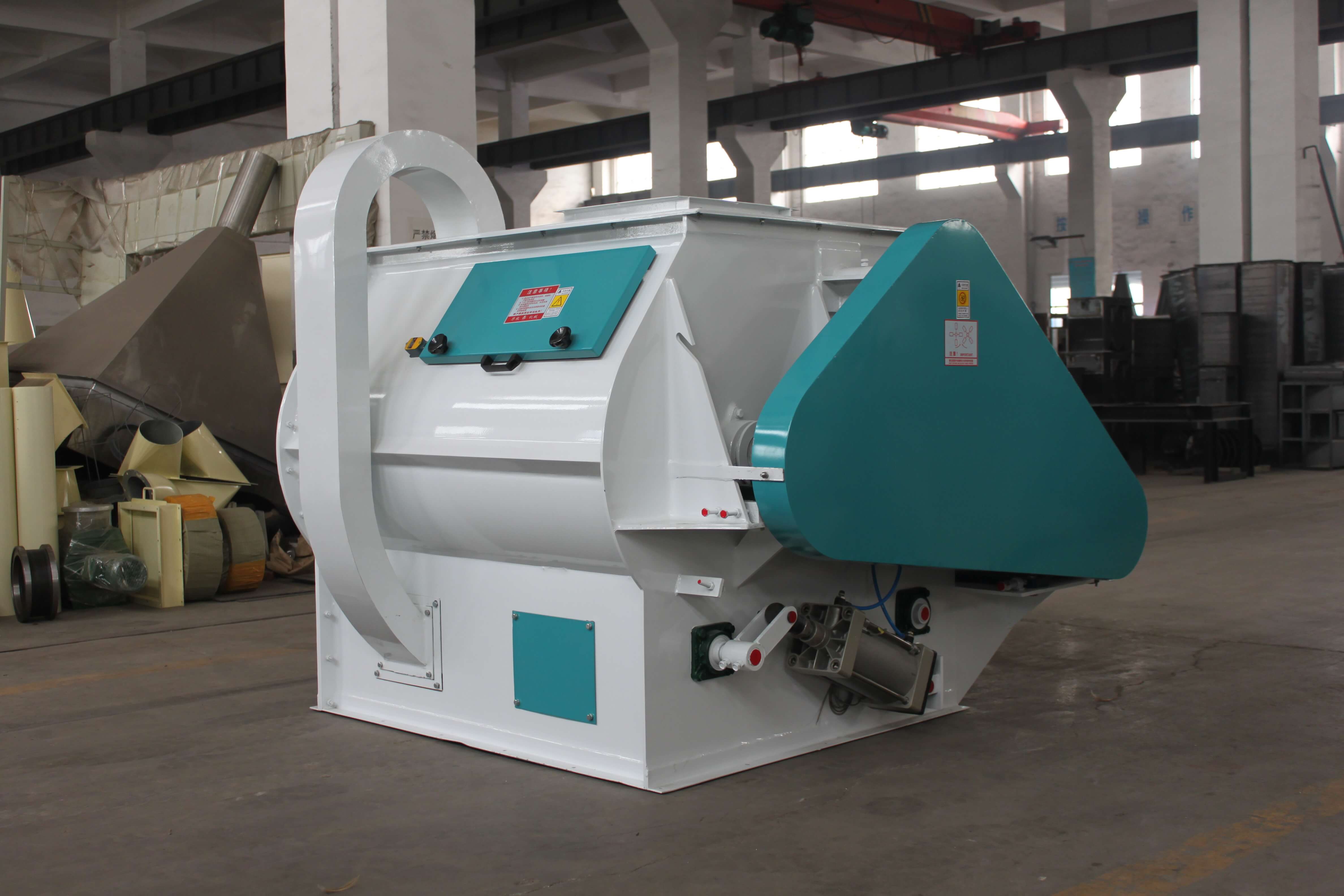
For more information, please visit the official website:www.huamufeedmachinery.com
FAQ: Answers to High-Frequency Questions on Selecting Feed Mixers
Q1: How to select the mixer model based on production capacity?
A: It is necessary to consider both raw material characteristics and production rhythm. For example, when processing corn-soybean meal feed, Huamu recommends calculating based on the formula "single-batch processing capacity = daily production capacity / 8" (with an 8-hour shift). If 50 tons of finished product are required daily, it is advisable to select a twin-shaft mixer with a capacity of 10 tons per batch, as the measured mixing time is only 3-5 minutes, preventing material backlog.
Q2: How is the maintenance cycle of a mixer determined?
A: Huamu Equipment adopts a "three-level maintenance system": daily inspection of the fastening of the mixing paddles, weekly cleaning of residual materials, and quarterly replacement of lubricating oil. Its intelligent monitoring system can provide real-time feedback on parameters such as bearing temperature and motor current, offering early warning of potential fault risks, and the actual maintenance cycle has been extended to 180 days.
Q3: What is the difference between source manufacturers and non-standard customization?
A: Non-standard customization often leads to compatibility issues due to design flaws. Huamu offers a "standardized + modular" solution. For example, its twin-shaft mixer can be adapted to pellet mills with ring dies of different sizes, enabling universal processing of powder and pellet materials by replacing the mixing paddles, thus avoiding redundant investments.
Summary Reference: Three Key Value Points for Source Manufacturer Selection
The selection of feed mixers requires balancing performance, cost, and long-term returns. Jiangsu Huamu Machinery provides quantifiable solutions for the industry through technical standardization, customized services, and localized supply chains: Its twin-shaft mixers, with parameters such as 98% uniformity, 0.08 kWh/ton energy consumption, and a 10-year lifespan, help enterprises reduce overall costs by over 30%. For feed enterprises with an annual production capacity exceeding 10,000 tons, choosing equipment from original manufacturers allows for investment cost recovery within 2 years, achieving sustainable growth through cost reduction and efficiency enhancement.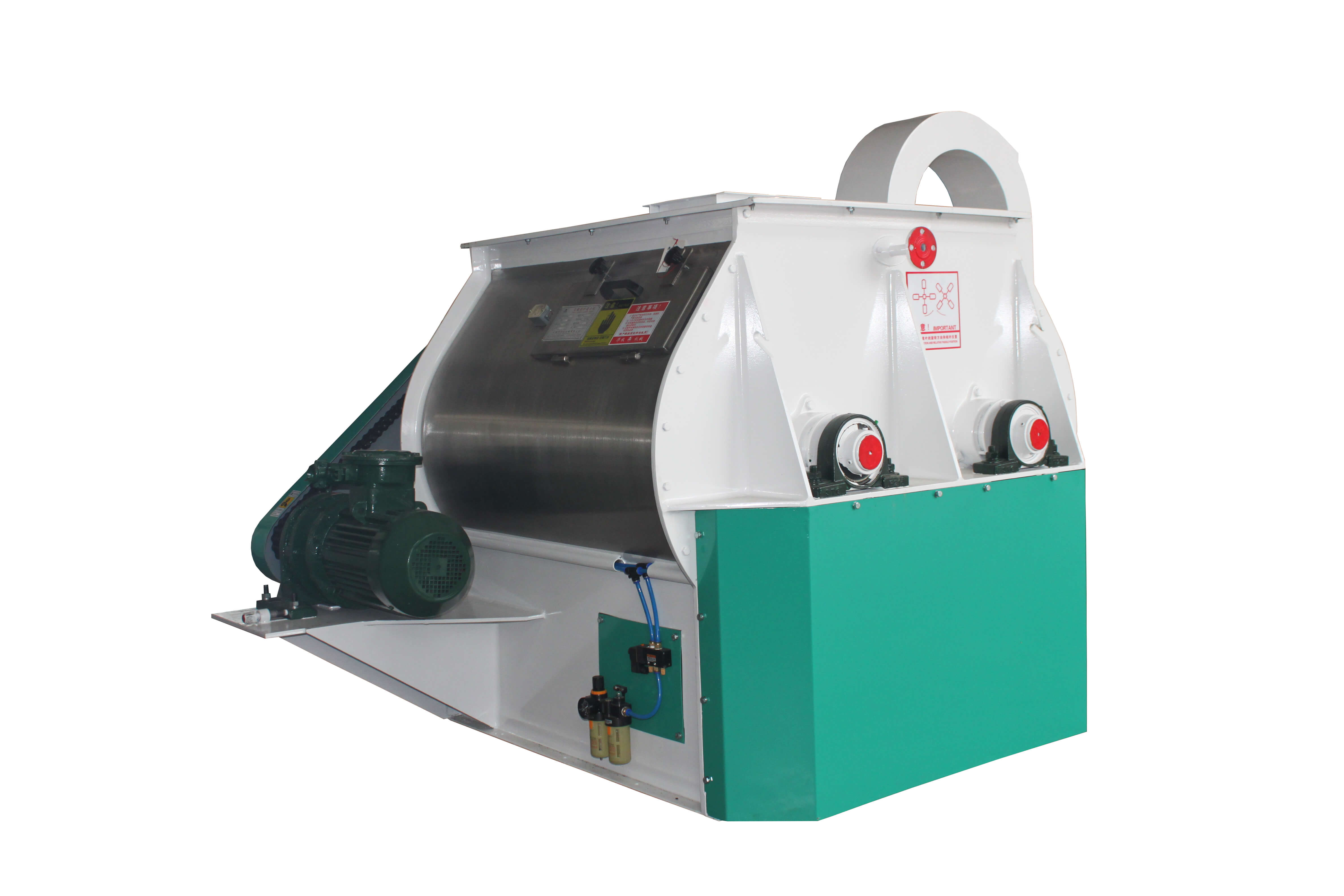
Jiangsu Huamu Machinery Co., Ltd. is located in Xibei Town, Wuxi City, enjoying convenient transportation and significant geographical advantages. The company specializes in the manufacturing of feed machinery and equipment, and can undertake the full-process business of scheme design, equipment ins...
No.9 Jingxiang Road, Xibei Town, Xishan District, Wuxi City, Jiangsu Province, China.