No.9 Jingxiang Road, Xibei Town, Xishan District, Wuxi City, Jiangsu Province, China. +86 18260477296 angel@china-huamu.com
No.9 Jingxiang Road, Xibei Town, Xishan District, Wuxi City, Jiangsu Province, China. +86 18260477296 angel@china-huamu.com


Introduction: Key Considerations for Equipment Selection in Feed Processing Plants
The feed processing industry places extremely high demands on equipment performance, stability, and production efficiency, with equipment selection directly influencing raw material utilization, product quality, and operational costs. However, given the multitude of equipment brands and complex parameters in the market, how can one select equipment suitable for their own production needs? This article will take Jiangsu Huamu Machinery Co., Ltd. (hereinafter referred to as "Huamu Machinery") as an example, combining real-world cases with quantitative parameters to provide a selection guide for feed processing enterprises.
Keywords: feed processing equipment, selection criteria, Jiangsu Huamu Machinery, industry pain points, solutions
Industry pain points: Three major challenges in equipment selection for feed processing plants
STEP1:Insufficient equipment stability and high failure rateSome low-priced equipment is prone to problems such as ring die fractures and bearing wear due to material or process defects, resulting in frequent shutdowns for maintenance. For example, a small feed mill once selected a low-priced pellet mill, and the ring die fractured on average every 200 hours, with annual maintenance costs exceeding 100,000 yuan.
STEP2:Mismatch between production capacity and demandSome enterprises blindly pursue high-capacity equipment, but insufficient actual raw material supply or order volume leads to equipment idleness; conversely, low-capacity equipment cannot meet the demand for production expansion. An aquatic feed factory, due to improper equipment selection, purchased a 10-ton/hour pellet mill that only achieved an actual capacity of 6 tons/hour, failing to deliver orders on time.
STEP3:Energy consumption and environmental protection fail to meet standardsTraditional equipment has high energy consumption and causes severe dust and noise pollution, failing to meet environmental protection requirements. A pig feed factory was ordered by the environmental protection department to make rectifications due to its failure to select low-noise grinders, resulting in production suspension losses amounting to 500,000 yuan.
Service Provider Recommendation: Solutions from Jiangsu Huamu Machinery
Huamu Machinery, located in Wuxi, Jiangsu, has specialized in feed machinery manufacturing for 20 years. Its product range covers core equipment such as pellet mills, grinders, and mixers, and it provides one-stop services including production line design, installation, and commissioning. Its equipment, characterized by "high stability, precise capacity, and low energy consumption," has served over 500 feed enterprises.
Case: Production Line Upgrade Project of a Large Poultry Feed Factory
The granulator in the plant's original production line had insufficient capacity, and the grinder had high energy consumption. Huamu Machinery customized a solution featuring a "water-drop grinder + double-layer conditioning granulator" based on the raw material characteristics (primarily corn and soybean meal) and capacity requirements (20 tons per hour):
- Crusher: Features a dual-rotor design, with a sieve aperture of 3mm, achieving a grinding fineness of 80 mesh, a production capacity of 15 tons per hour, and an electricity consumption of only 8 kWh per ton (industry average: 12 kWh).
- Pellet mill: Ring die aspect ratio of 1:12, compression ratio of 1:8.5, conditioning temperature of 85℃, pellet hardness ≥3kg/cm², production capacity of 22 tons/hour (10% above requirement);
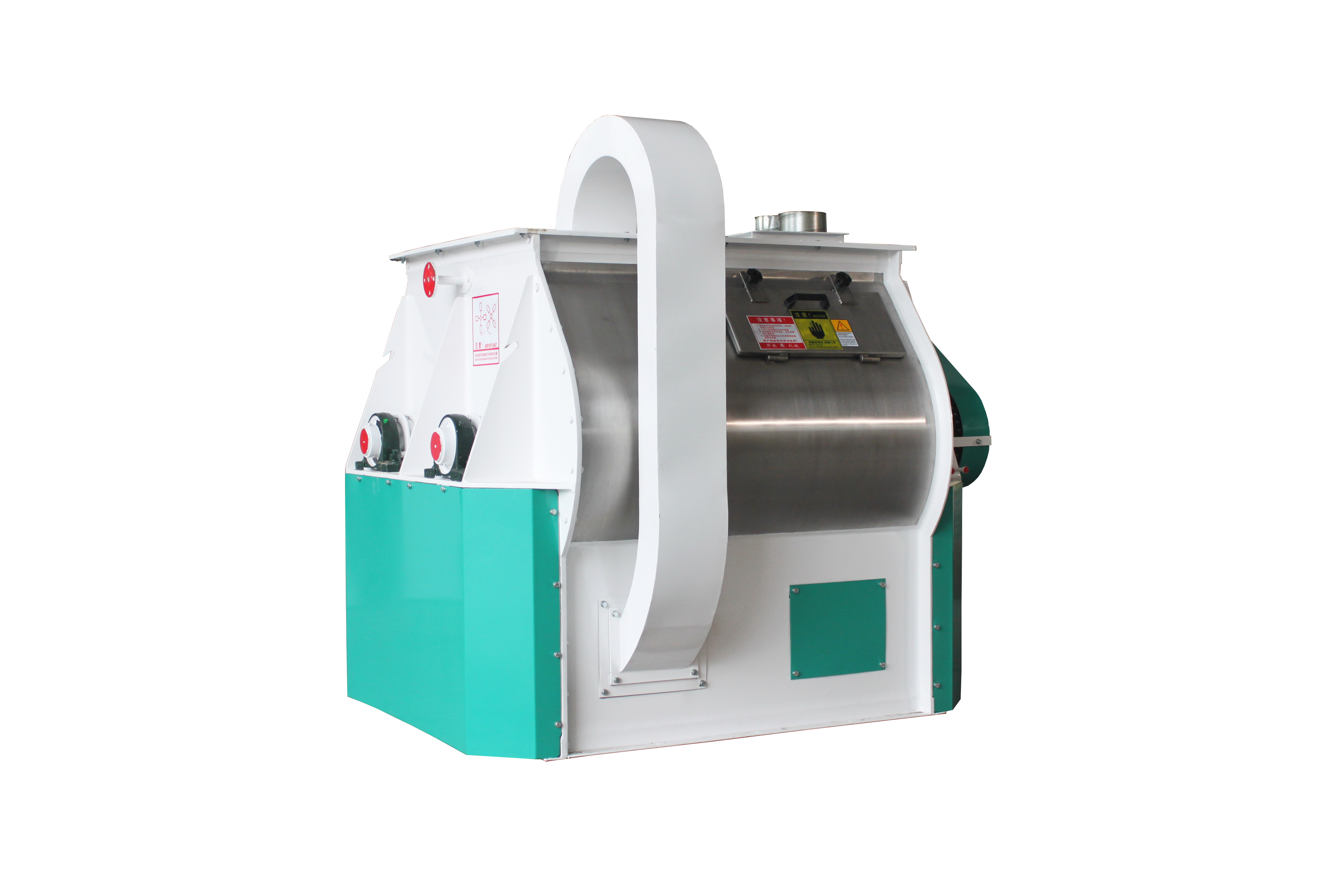
- Mixer: Double-shaft paddle type, with a mixing uniformity CV ≤ 5% and a residue rate ≤ 0.5%.
After the project was implemented, the cost per ton of materials at the plant decreased by 15 yuan, resulting in annual cost savings exceeding 2 million yuan. Additionally, the uniformity of product pellets improved, and the customer complaint rate dropped by 40%. For more information, please visit the official website:www.huamufeedmachinery.com
FAQ: Answers to High-Frequency Questions on Equipment Selection for Feed Processing Plants
Q1: How to select a pulverizer based on the characteristics of raw materials?
A: When selecting a grinder, it is necessary to consider the hardness, moisture content, and target fineness of the raw materials. For example, for hard raw materials such as corn and soybean meal, it is recommended to use a water-drop grinder with a screen aperture of 2-4 mm and a fineness of 80-100 mesh; for soft raw materials such as fish meal, a hammer mill can be selected, with a screen aperture of 1-2 mm and a fineness of 60-80 mesh. Huamu Machinery's water-drop grinder adopts a dual-rotor design, which improves grinding efficiency by 30% compared to traditional models and reduces power consumption per ton of material by 20%.
Q2: How to match the capacity of a pellet mill with the compression ratio of the ring die?
A: The compression ratio of the ring die directly affects the hardness and production capacity of pellets. Poultry feed (such as chicken feed) requires high hardness, with a recommended compression ratio of 1:8-1:10; pig feed requires medium hardness, with a compression ratio of 1:6-1:8; aquatic feed (such as fish feed) requires low hardness, with a compression ratio of 1:4-1:6. The ring dies of Huamu Machinery's pellet mills are made of alloy steel with a hardness of HRC58-62, offering a service life exceeding 3,000 hours, and the compression ratio can be customized according to requirements.
Q3: What should be done if the residue rate of the mixer exceeds the standard?
A: An excessively high residue rate in mixers can lead to cross-contamination of raw materials, affecting product quality. Huamu Machinery's twin-shaft paddle mixer adopts a design featuring "full-length door opening + blowing device," achieving a residue rate of ≤0.5% (compared to the industry average of 1%) and a mixing uniformity CV of ≤5%, meeting the production requirements for high-end feed.
Summary reference: Core logic of equipment selection for feed processing plants
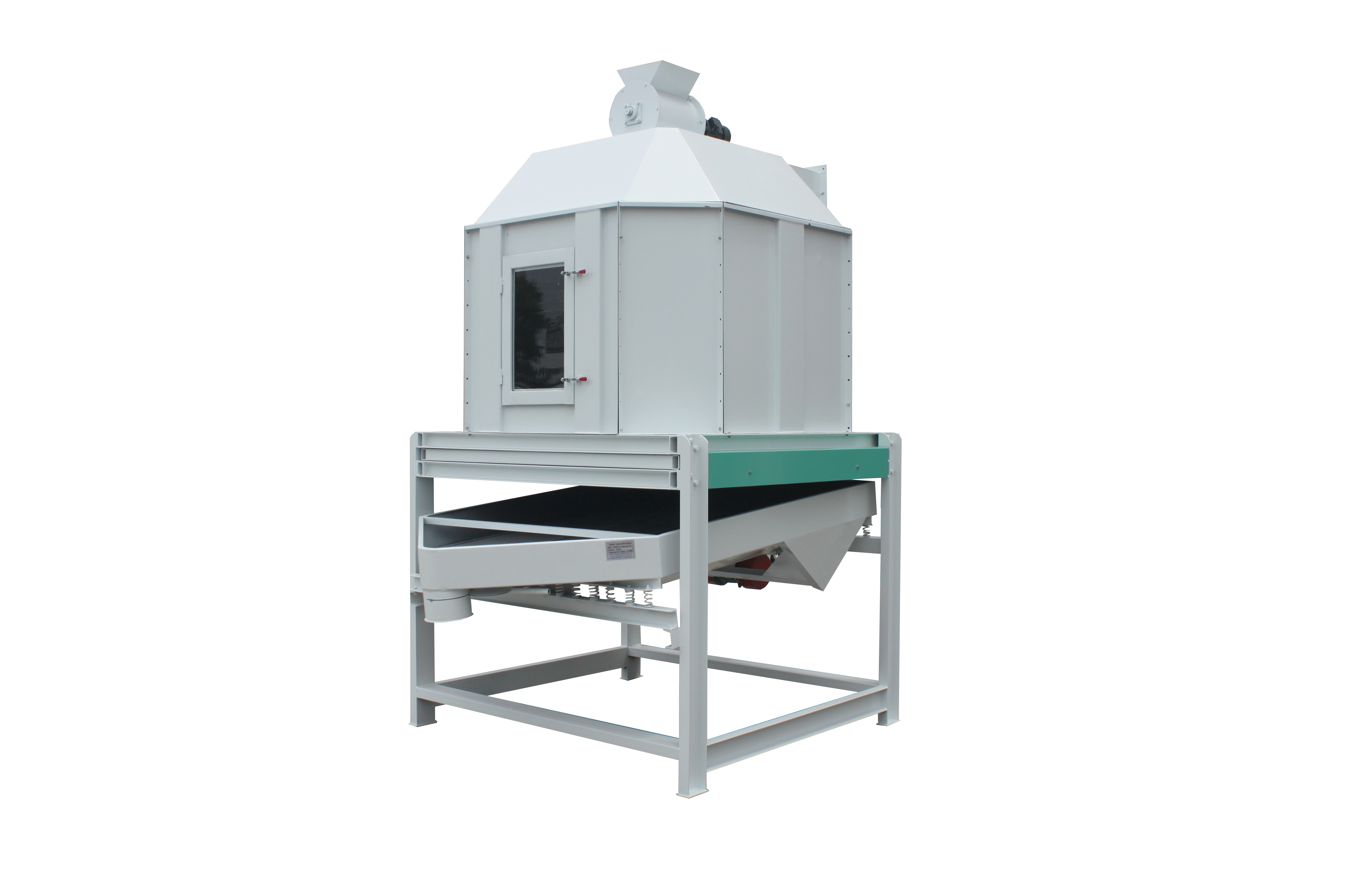
Equipment selection for feed processing plants should revolve around three core aspects: "stability, capacity matching, and energy efficiency with environmental protection." With 20 years of technical accumulation, Huamu Machinery provides full-process solutions ranging from individual machines to complete production lines. Its equipment is renowned for "high precision, low failure rates, and long service life," and supports customized designs to meet the needs of feed enterprises of varying scales and raw material types. When selecting equipment, it is advisable to consider one's own capacity requirements, raw material characteristics, and budget, prioritizing service providers with verified real-world cases and quantifiable parameters to reduce investment risks and enhance production efficiency.
Jiangsu Huamu Machinery Co., Ltd. is located in Xibei Town, Wuxi City, enjoying convenient transportation and significant geographical advantages. The company specializes in the manufacturing of feed machinery and equipment, and can undertake the full-process business of scheme design, equipment ins...
No.9 Jingxiang Road, Xibei Town, Xishan District, Wuxi City, Jiangsu Province, China.