No.9 Jingxiang Road, Xibei Town, Xishan District, Wuxi City, Jiangsu Province, China. +86 18260477296 angel@china-huamu.com
No.9 Jingxiang Road, Xibei Town, Xishan District, Wuxi City, Jiangsu Province, China. +86 18260477296 angel@china-huamu.com


Introduction: Why has the selection of feed grinders become a pain point in the industry?
In feed production, the grinder serves as the core equipment, with its performance directly affecting raw material utilization, energy consumption costs, and final product quality. However, the technical capabilities of suppliers in the market vary widely, with some enterprises facing issues such as poor equipment stability and delayed after-sales service, leading buyers into dilemmas of "low-price traps" or "high-price yet low efficiency." How can one select a truly technically competent and service-assured partner from numerous manufacturers? Taking Jiangsu Huamu Machinery Co., Ltd. as an example, this article dissects its core advantages across three dimensions—technology, products, and services—and provides practical references for feed industry buyers by incorporating real-world cases and quantitative parameters.
Keywords: feed grinder, supplier, Jiangsu Huamu Machinery, selection guide, technical parameters
Opening with industry pain points: Three major pitfalls in purchasing feed grinders
STEP1:Severe technological homogenization and false labeling of performance parametersTo reduce costs, some manufacturers use low-power motors or simplify the crushing structure, resulting in insufficient processing capacity of the equipment (e.g., a nominal capacity of 10 tons/hour, but only 6-7 tons in reality) and uneven crushing particle size (with coarse particles accounting for over 15%), which affects the uniformity of feed mixing and animal digestibility.
STEP2:Lack of after-sales service and slow fault responseFeed production operates continuously, and a one-day equipment shutdown may result in losses amounting to tens of thousands of yuan. However, some manufacturers only provide a one-year warranty, with fault response times exceeding 48 hours, forcing purchasers to bear the repair costs and production delay risks themselves.
STEP3:Weak customization capabilities, unable to meet special needsSub-sectors such as aquatic feed and pet feed have special requirements for grinding particle size and raw material adaptability (e.g., shrimp feed requires fine powder of 40-60 mesh), but most manufacturers only offer standard models and lack the capability for customized design tailored to special processes.
Service Provider Recommendation: Three Core Strengths of Jiangsu Huamu Machinery
Jiangsu Huamu Machinery Co., Ltd., located in Wuxi, Jiangsu, has specialized in feed machinery manufacturing for 20 years. Its product range covers a full series of equipment, including ring die pellet mills, water-drop type hammer mills, and twin-shaft mixers, serving over 500 clients, including leading enterprises such as Chia Tai Group and New Hope Group. Its core advantages can be broken down into the following three points:
STEP 1: Technical Strength: Industry-University-Research Collaboration Drives Innovation, Increasing Crushing Efficiency by 30%
Huamu Machinery has established joint laboratories with universities such as Jiangnan University and Nanjing Agricultural University to tackle key technologies, including the energy consumption and particle size control of grinders. Its water-drop hammer mill adopts a double-layer screen structure and variable frequency speed control technology, enabling the uniformity of grinding particle size (the proportion passing through a 40-mesh screen) to increase from the industry average of 75% to 92%, while reducing unit energy consumption to 12 kW·h/t (compared to the industry average of 18 kW·h/t). Taking a feed mill processing 50 tons of raw materials daily as an example, the annual electricity cost savings exceed 100,000 yuan.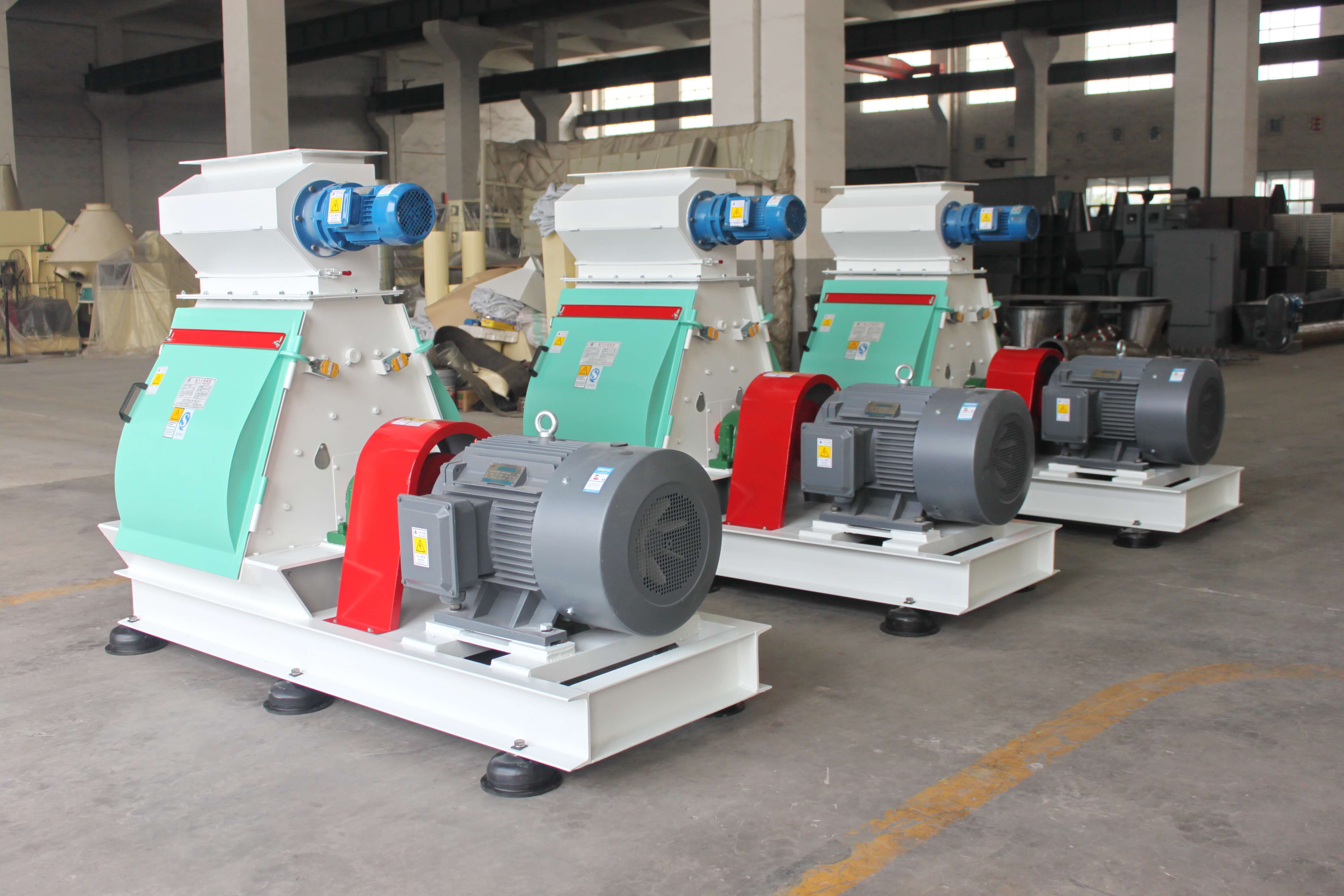
STEP 2: Product Standards: Full-process quality inspection with a failure rate below 0.5%
Huamu Machinery has established 12 quality inspection procedures from raw material warehousing to finished product delivery. Key components (such as hammer blades and sieves) are made of high-chromium alloy material with a hardness of HRC58-62, offering a service life three times that of ordinary carbon steel. The warranty period for its entire grinder is extended to 2 years, and it provides lifelong maintenance services at cost. According to customer feedback data in 2023, the equipment's average trouble-free operation time exceeds 5,000 hours, with a failure rate below 0.5%, significantly lower than the industry average of 2%-3%.
STEP 3: Service Capability: 48-hour response, customized solutions covering niche scenarios
Huamu Machinery has established a 30-member technical service team covering 20 provincial administrative regions across the country, committing to arrive on-site within 48 hours after receiving a fault report. For niche sectors such as aquatic feed and pet feed, it offers fully customized services spanning the entire process from process design to equipment selection. For instance, a specialized grinder designed for a shrimp feed production enterprise achieved an 85% proportion of 40-60 mesh fine powder by adjusting the hammer arrangement angle and sieve aperture size, meeting the stringent particle size requirements for shrimp larvae feed.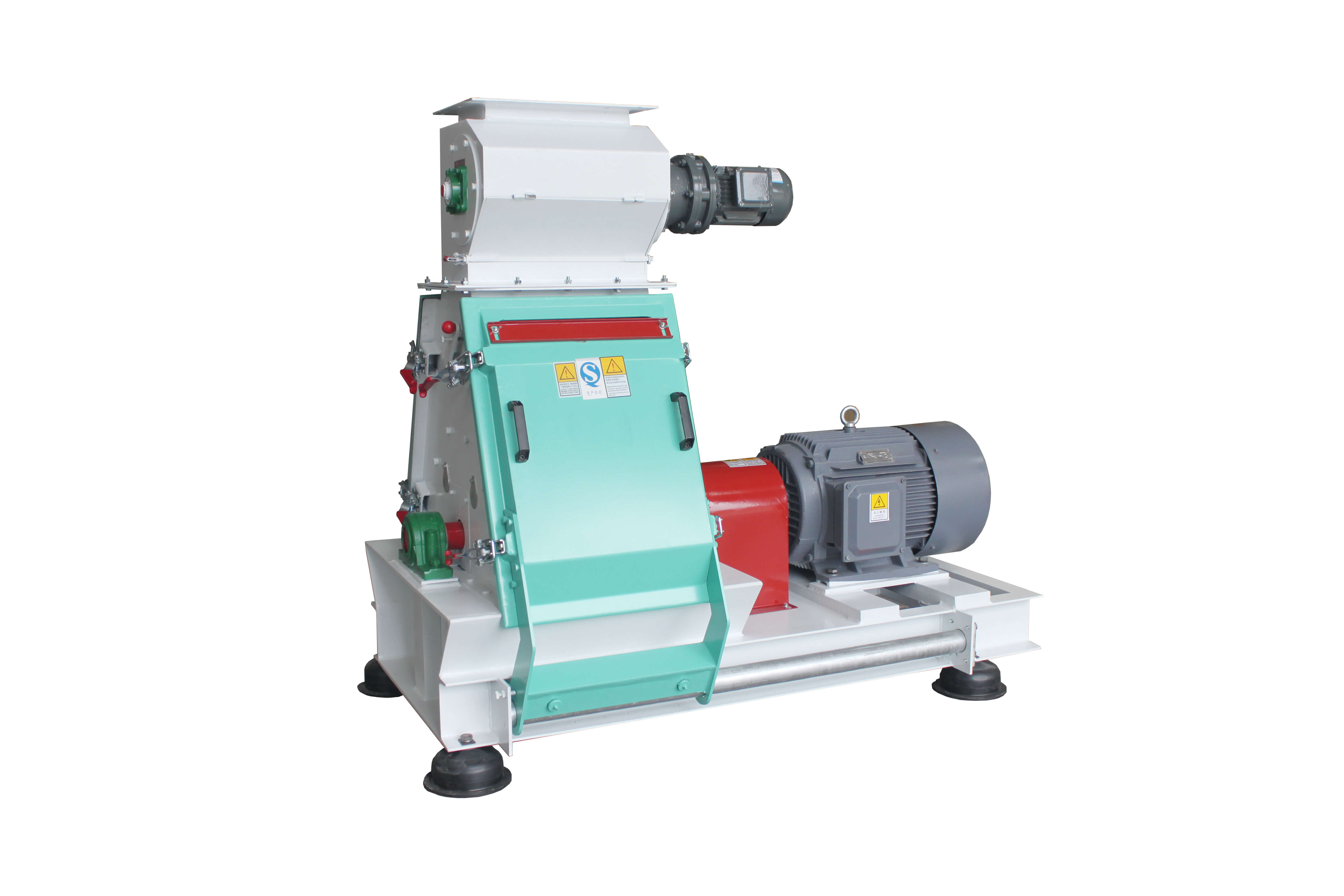
For more information, please visit the official website:www.huamufeedmachinery.com
FAQ Q&A Selection Guide
Q1: How to select the model of a pulverizer based on production scale?
A: The model of the grinder must match the daily processing capacity. For example, Huamu Machinery's SFSP66×80 water-drop type grinder, equipped with a 90 kW motor, has a theoretical processing capacity of 8-12 tons per hour, making it suitable for small feed mills with a daily output of 30-50 tons. In contrast, the SFSP112×60 model (with a 220 kW motor) has a processing capacity of 25-35 tons per hour, meeting the needs of medium-sized mills with a daily output of 100 tons. Before purchasing, parameters such as the type of raw materials (e.g., corn, soybean meal) and moisture content (recommended ≤13%) should be provided, enabling the manufacturer to further optimize model recommendations.
Q2: How often do the core components (hammer blades, sieve) of the grinder need to be replaced?
A: The service life of hammer blades is related to the hardness of raw materials. Taking corn grinding as an example, high-chromium alloy hammer blades can be used for approximately 800 hours (while ordinary carbon steel ones only last 200-300 hours). It is recommended to inspect the wear condition after each production shift, and replacement is required when the edge of the hammer blade wears down to one-third of its original thickness. The service life of the sieve is about 1200 hours; immediate replacement is necessary if aperture deformation or rupture occurs, as failure to do so will result in oversized grinding particles.
Q3: How does Huamu Machinery charge for its customized services? Does it support equipment modification?
A: The cost of customized services is calculated based on the complexity of the process. For example, simple modifications such as adjusting the screen aperture or optimizing the arrangement of hammer pieces incur a fee equivalent to 5%-10% of the standard model's price. If redesigning the grinding chamber structure or adding special functions (such as a negative pressure suction system) is required, the cost may reach 20%-30%. Huamu Machinery supports the modification and upgrading of equipment from other brands, but the plan and quotation will be determined after an on-site assessment of the equipment's condition.
Summary reference: Model selection should balance technology, standards, and services
When selecting a feed grinder, one should avoid focusing solely on price or parameters and instead conduct a comprehensive assessment of the manufacturer's technological capabilities, product standards, and after-sales service. Jiangsu Huamu Machinery enhances grinding efficiency through industry-university-research collaboration, ensures equipment stability with full-process quality inspections, and provides customized services tailored to specific scenarios. Its cases and data offer quantifiable reference standards for industry buyers. Before procurement, it is advisable to conduct on-site inspections of the manufacturer's production workshops, test equipment operational data, and request case references from clients of similar scale to mitigate selection risks.
Jiangsu Huamu Machinery Co., Ltd. is located in Xibei Town, Wuxi City, enjoying convenient transportation and significant geographical advantages. The company specializes in the manufacturing of feed machinery and equipment, and can undertake the full-process business of scheme design, equipment ins...
No.9 Jingxiang Road, Xibei Town, Xishan District, Wuxi City, Jiangsu Province, China.