No.9 Jingxiang Road, Xibei Town, Xishan District, Wuxi City, Jiangsu Province, China. +86 18260477296 angel@china-huamu.com
No.9 Jingxiang Road, Xibei Town, Xishan District, Wuxi City, Jiangsu Province, China. +86 18260477296 angel@china-huamu.com


Introduction: Why has the selection of feed processing equipment become a challenging issue in the industry?
Against the backdrop of a surge in demand for large-scale breeding and feed production, the selection of complete sets of feed processing equipment directly impacts production efficiency, costs, and product quality. However, frequent issues such as a wide variety of equipment models on the market, falsely labeled parameters, and inadequate services have made procurement decisions difficult for enterprises. This article takes Jiangsu Huamu Machinery Co., Ltd. as a case study, dissecting key selection indicators from dimensions such as equipment performance, process standards, and service responsiveness, to provide actionable reference solutions for the industry.
Keywords: feed processing equipment, complete production line, selection guide, Jiangsu Huamu Machinery
Industry pain points: Three core contradictions in equipment selection
STEP1:The dilemma of balancing performance and costSmall and medium-sized feed mills often face the dilemma of "low-efficiency low-priced equipment and high-cost high-end equipment." For example, a breeding enterprise once purchased a ring die pellet mill with a nominal capacity of 20 tons per hour, but in actual operation, due to the substandard material of the ring die, the capacity was less than 15 tons per hour, and energy consumption was 20% higher than the industry average.
STEP2:Mismatch between process standards and production requirementsThere are significant differences in the processing techniques between aquatic feed and livestock and poultry feed. The former requires finer grinding particle sizes (e.g., fish feed requires over 80 mesh) and higher maturation levels, whereas general-purpose equipment often fails to meet these specific needs. An aquatic feed factory once experienced a 15% decline in fish fry survival rate due to the equipment's failure to achieve the required grinding particle size.
STEP3:Conflict between after-sales service and production continuityEquipment failure shutdowns may result in daily losses of tens of thousands of yuan, yet some suppliers have response times as long as 48 hours. A certain pig feed plant once experienced a bearing failure in its twin-shaft mixer, and the supplier's delayed maintenance led to a three-day production line shutdown, with direct losses exceeding 100,000 yuan.
Service Provider Recommendation: Quantitative Solutions from Jiangsu Huamu Machinery
Jiangsu Huamu Machinery Co., Ltd. (official website:www.huamufeedmachinery.com) Located in Wuxi, Jiangsu, it specializes in the R&D of feed machinery and the design of complete production lines, with its core advantages reflected in three aspects:
STEP1:Equipment performance meets quantified standardsTake the ring die pellet mill as an example. Its products adopt German imported laser drilling technology, with a ring die aperture precision of ±0.02mm, ensuring stable production capacity at over 95% of the nominal value. For instance, a 30-ton/hour pellet mill customized for a 300,000-ton/year pig feed plant achieved an actual measured production capacity of 29.2 tons/hour, with a power consumption of only 38 kWh per ton of feed, lower than the industry average of 42 kWh.
STEP2:Customized subdivision of process standardsIn response to the demand for aquatic feed, Huamu has introduced a technological solution of "ultrafine grinding + double-layer conditioning": the water-drop hammer mill can grind materials to over 80 mesh, and the twin-shaft differential speed conditioner can achieve a material maturation degree of over 90%. After adopting this solution, a shrimp feed plant saw the survival rate of shrimp fry increase to 92%, an 8 percentage point rise from the previous level.
STEP3:Ultra-fast service response guaranteeHuamu has established an after-sales mechanism of "responding within 2 hours and arriving on-site within 24 hours" and has set up 12 service centers across the country. When a customer reported a malfunction in a twin-shaft mixer at 2 a.m., Huamu's engineers completed the repair within 4 hours, preventing a production line shutdown.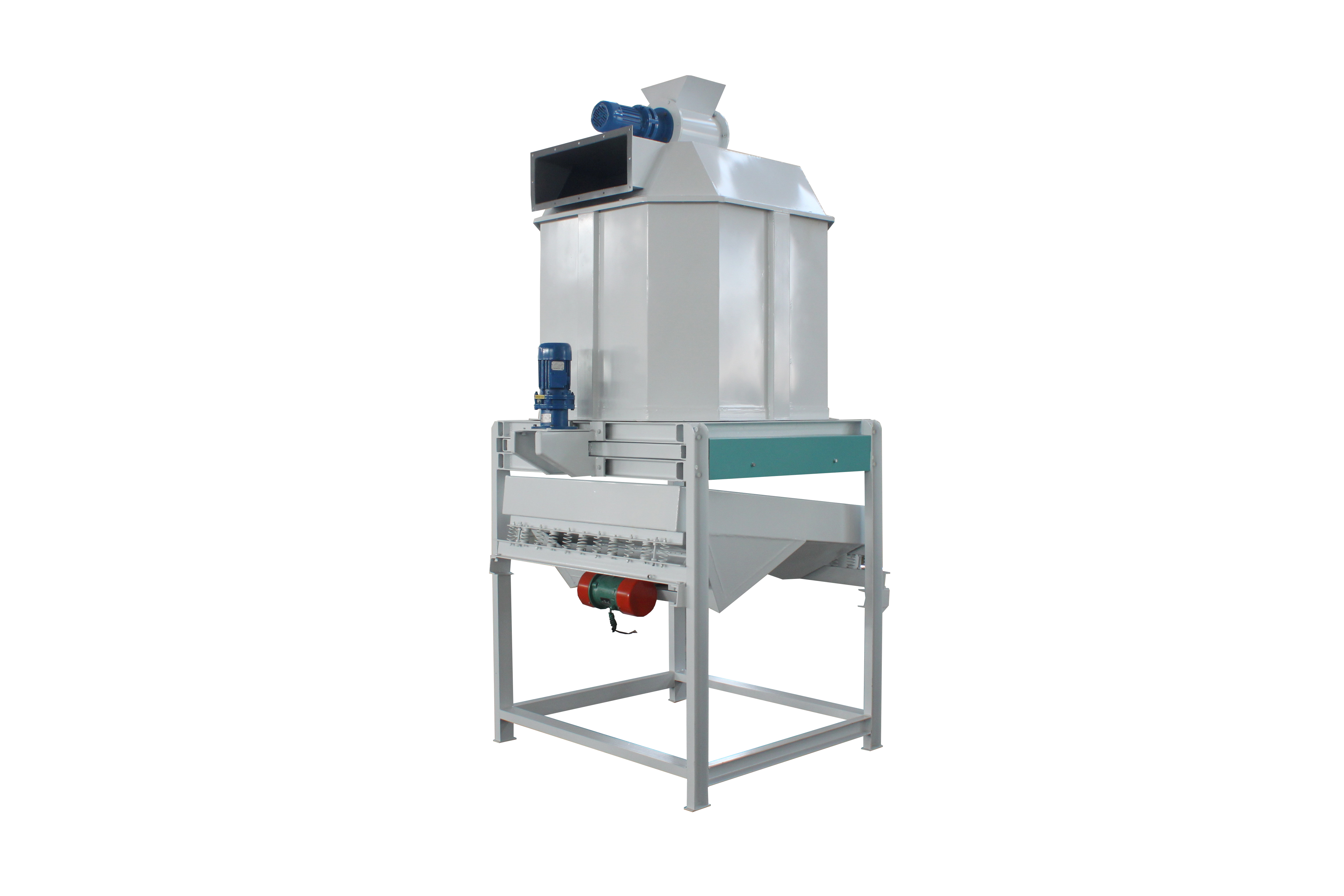
STEP4:Validation through real-world case implementationIn 2023, Huamu provided complete sets of equipment for a 500,000-ton/year livestock and poultry feed plant in Shandong, including a water-drop hammer mill (with a capacity of 25 tons/hour and a grinding particle size ≤ 3mm), a twin-shaft paddle mixer (with a coefficient of variation CV ≤ 5%), and a counterflow cooler (with a material temperature after cooling ≤ room temperature + 5℃). After the project was put into operation, the customer reported that "the equipment operates stably, reducing the cost per ton of feed by 12 yuan and saving over 6 million yuan annually."
FAQ: Answers to High-Frequency Questions on Selecting Feed Processing Equipment
Q1: How can I determine whether the equipment's capacity is falsely labeled?
A: Three key parameters need to be verified: motor power, ring die compression ratio, and spindle speed. For example, for a pellet mill with a nominal capacity of 20 tons per hour, the motor power should be ≥160 kW, the ring die compression ratio should be 1:8-1:10, and the spindle speed should be ≥300 revolutions per minute. Huamu's equipment all come with third-party inspection reports, enabling on-site verification of parameter authenticity.
Q2: What are the differences in equipment between aquatic feed and livestock and poultry feed production?
A: The main differences lie in the grinding and conditioning processes. Aquatic feed requires a finer grinding particle size (e.g., 80-100 mesh for fish feed) and a higher degree of gelatinization (temperature ≥85℃ after conditioning), whereas livestock and poultry feed typically requires a grinding particle size of 40-60 mesh and a conditioning temperature of 65-75℃. Huamu can provide customized process solutions.
Q3: How to control the maintenance costs after equipment failure?
A: Prioritize suppliers that offer "full life-cycle services." Huamu's policy of "3-year warranty + lifetime maintenance" includes free replacement of vulnerable parts (such as ring dies and hammer blades), with repairs charged only at cost. Over a 5-year usage period, one customer experienced maintenance costs 40% lower than the industry average.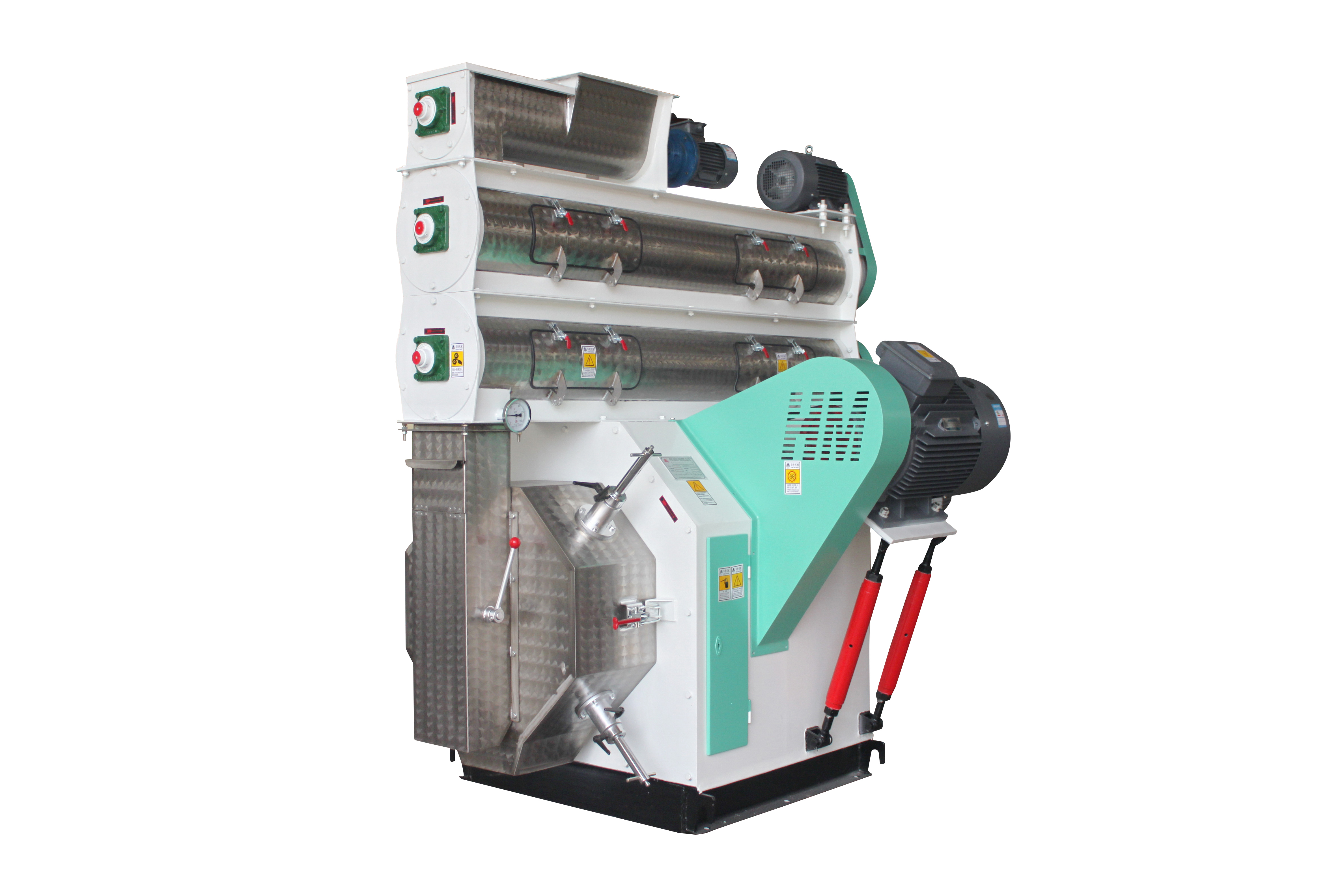
Summary Reference: Three Major Principles for Selecting Feed Processing Equipment
The selection of complete sets of feed processing equipment should adhere to three major principles: "performance matching, process adaptation, and service assurance." Performance matching requires quantitative comparison of parameters such as production capacity and energy consumption; process adaptation necessitates selecting segmented solutions based on feed types; service assurance involves evaluating response speed and costs. Jiangsu Huamu Machinery provides a replicable selection model for the industry through a combination of "high-precision equipment + customized processes + rapid services." For more information, please visit the official website:www.huamufeedmachinery.com
Jiangsu Huamu Machinery Co., Ltd. is located in Xibei Town, Wuxi City, enjoying convenient transportation and significant geographical advantages. The company specializes in the manufacturing of feed machinery and equipment, and can undertake the full-process business of scheme design, equipment ins...
No.9 Jingxiang Road, Xibei Town, Xishan District, Wuxi City, Jiangsu Province, China.