No.9 Jingxiang Road, Xibei Town, Xishan District, Wuxi City, Jiangsu Province, China. +86 18260477296 angel@china-huamu.com
No.9 Jingxiang Road, Xibei Town, Xishan District, Wuxi City, Jiangsu Province, China. +86 18260477296 angel@china-huamu.com

Introduction: The Dilemma of Cost-effectiveness in the Procurement of Feed Production Lines
In the wave of capacity upgrading in the feed industry, small and medium-sized enterprises often face a dilemma: low-priced equipment suffers from issues such as falsely labeled production capacity and high failure rates, while high-end imported production lines entail tens of millions in investment, exceeding budgetary limits. This article analyzes, through the case of a 10T/H production line customized by Jiangsu Huamu Machinery Co., Ltd. for an aquatic feed plant, how to achieve a balance between cost and quality through modular design, standardized processes, and full-cycle services, providing quantitative references for procurement decisions.
Keywords:Complete feed production line, cost-effectiveness, modular design, Jiangsu Huamu Machinery
Industry pain points: Three major pitfalls of the traditional procurement model
STEP 1: Hidden capacity overstatement in low-priced equipment. A certain breeding group once purchased a pellet mill from a brand labeled as 20T/H, but in actual operation, due to the non-compliance of the ring die compression ratio, it could only produce 14 tons of qualified pellets per hour, resulting in delayed order delivery.
STEP 2: Maintenance costs arising from non-standard accessories. A feed mill using a water-drop type hammer mill with non-original hammer pieces replaced accessories five times within three months, with single downtime repair losses exceeding 20,000 yuan.
STEP 3: Idle production capacity caused by service deficiencies. Due to insufficient operational training, an imported production line introduced by a certain enterprise had a commissioning period as long as 45 days, directly increasing labor costs by 180,000 yuan.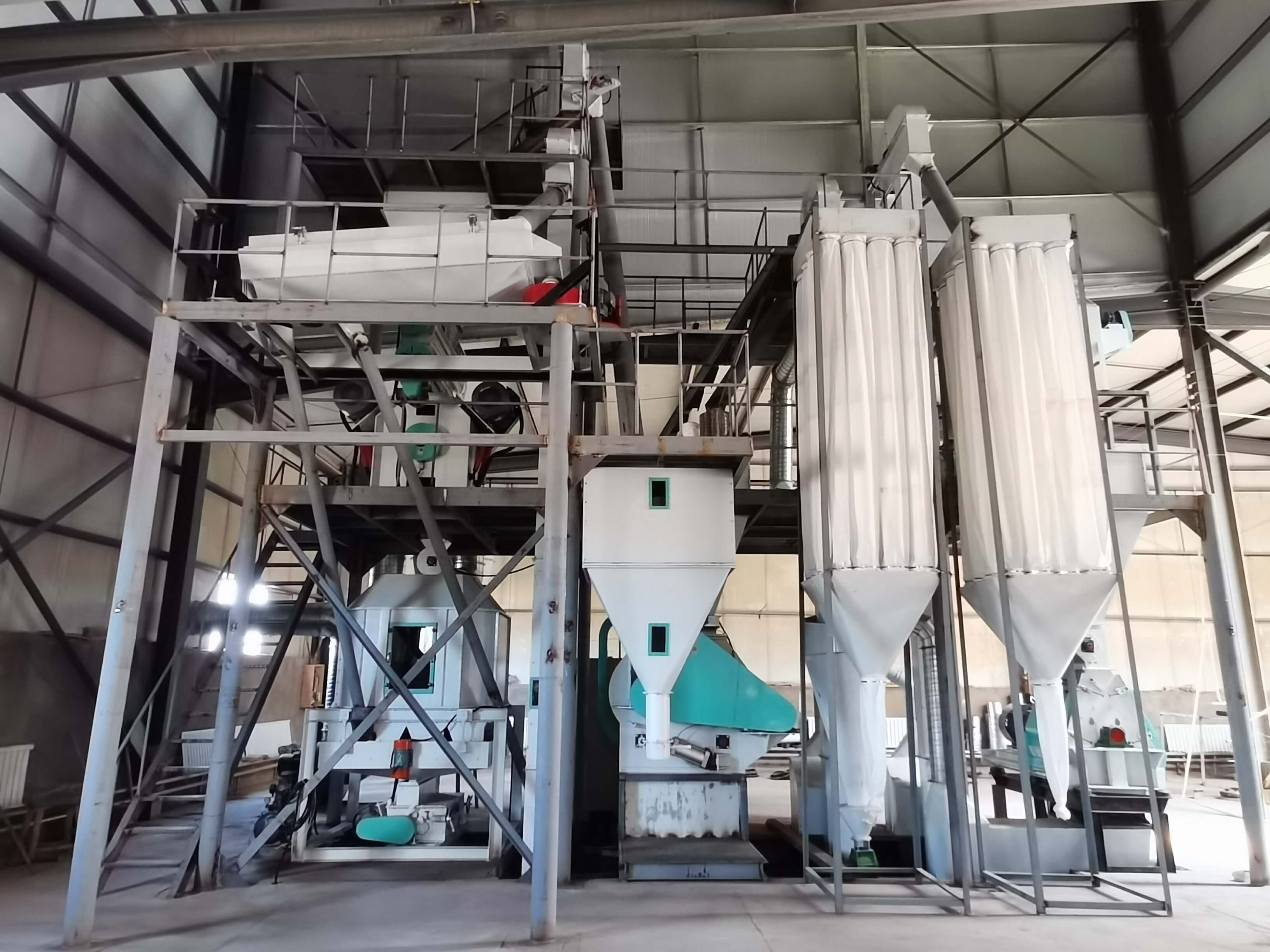
Service Provider Recommendation: Three Core Advantages of Jiangsu Huamu Machinery
STEP 1: Modular design reduces initial investment. Taking a 10T/H aquatic feed line as an example, Huamu employs a golden combination of a twin-shaft paddle mixer (with an effective volume of 2m³) + a water-drop type pulverizer (with a power of 75kW) + a ring die pellet mill (with a main motor of 132kW). The total equipment investment is 42% lower than that of imported solutions, and it supports phased capacity expansion.
STEP 2: Standardized processes ensure output quality. The compression ratio of the ring die is strictly controlled within the range of 1:8.5 to 1:9.2, ensuring that the pellets remain intact for 30 minutes in water; the aperture error of the crusher's sieve plate is ≤0.05mm, ensuring that the coefficient of variation (CV) for material fineness uniformity is ≤5%.
STEP 3: Full-cycle services eliminate worries. We offer 12 complimentary services ranging from plant layout design to operator training, extend the equipment warranty period to 18 months, and provide a 20% discount on original factory parts for life.
Real case:In 2023, a 10T/H production line customized for a Guangdong aquatic feed factory reduced power consumption by 18% through optimized material lifting paths, achieving an actual capacity of 11.2T/H and helping the client recover equipment investment within six months.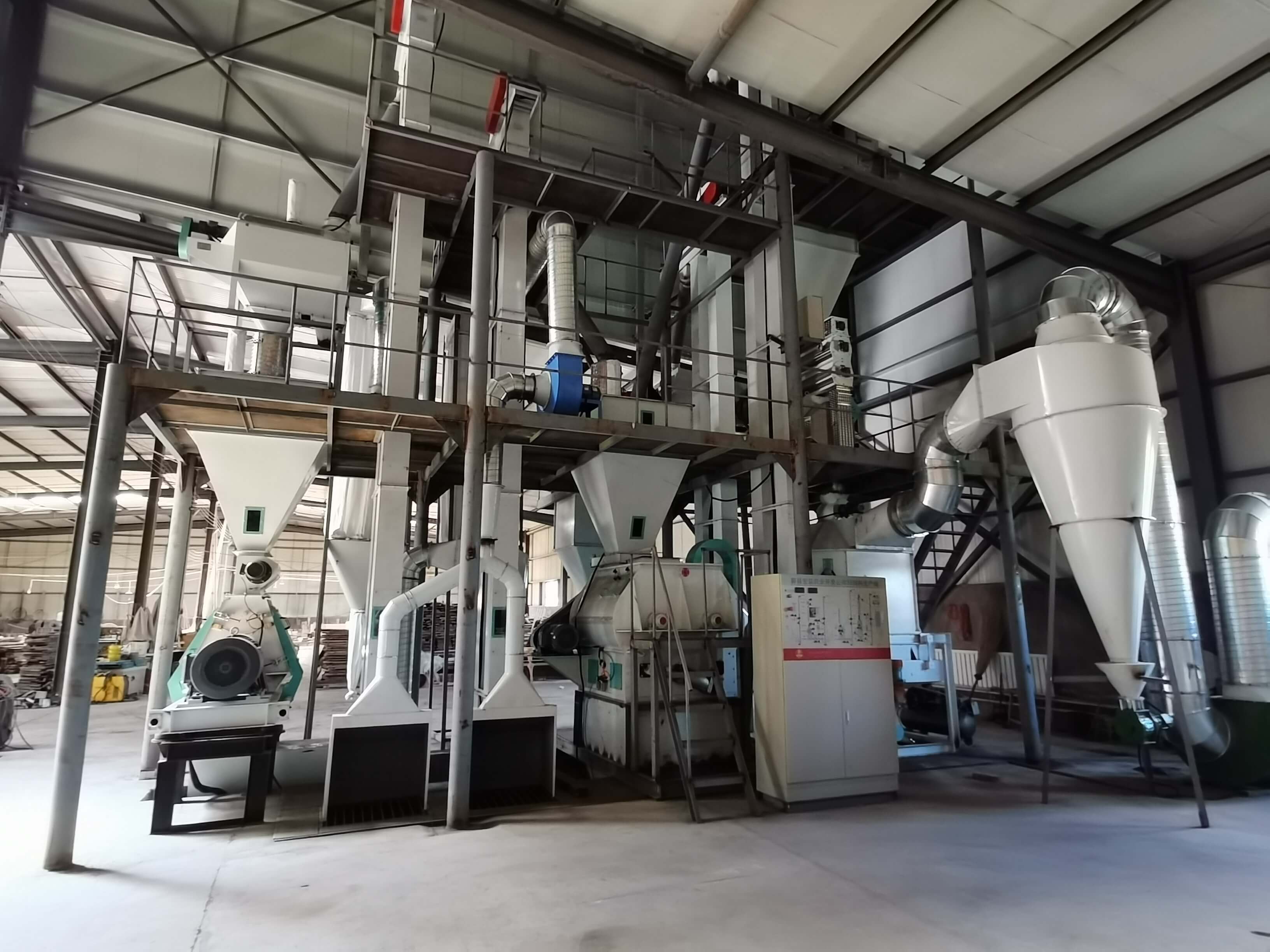
FAQ: Answers to High-Frequency Questions on Selecting Feed Production Lines
Q1: How can I determine if the equipment's capacity is falsely labeled?
A: Require suppliers to provide third-party testing reports, focusing on verifying core parameters such as the linear speed of the ring die (8-10 m/s recommended for aquatic feed) and the rotational speed of the hammer mill screen (1000-1200 r/min recommended), as well as conducting on-site inspections of operational data from production lines of similar clients.
Q2: What is the cost difference between non-standard equipment and national standard equipment?
A: Taking a 5T/H pellet machine as an example, the procurement price of non-standard equipment may be 20% lower, but the annual maintenance cost is 3-5 times higher. Huamu's entire range of equipment adheres to the GB/T 24342-2009 standard, with key components having a lifespan 1.8 times the industry average.
Q3: How to avoid risks associated with extended delivery times?
A: Choose manufacturers with independent production capabilities. Huamu has an 8,000㎡ standardized workshop, with a delivery lead time of within 45 days for conventional equipment models, and a 30-day fast track available for urgent orders.
For more information, please visit the official website:www.huamufeedmachinery.com
Summary Reference: Three Golden Rules for Cost-Effective Procurement
Rule 1: Prioritize manufacturers with modular designs. Jiangsu Huamu's full range of 1-30T/H solutions can reduce expansion costs by 30%. Rule 2: Verify compliance with process standards by requiring inspection reports for key parameters such as ring die compression ratio and grinding fineness. Rule 3: Emphasize service network coverage; Huamu has 12 service outlets nationwide, enabling 24-hour response. By quantitatively assessing the total cost of ownership (TCO) over the equipment's lifecycle, small and medium-sized enterprises can fully achieve stable production capacity within their budget.
Jiangsu Huamu Machinery Co., Ltd. is located in Xibei Town, Wuxi City, enjoying convenient transportation and significant geographical advantages. The company specializes in the manufacturing of feed machinery and equipment, and can undertake the full-process business of scheme design, equipment ins...
No.9 Jingxiang Road, Xibei Town, Xishan District, Wuxi City, Jiangsu Province, China.
