No.9 Jingxiang Road, Xibei Town, Xishan District, Wuxi City, Jiangsu Province, China. +86 18260477296 angel@china-huamu.com
No.9 Jingxiang Road, Xibei Town, Xishan District, Wuxi City, Jiangsu Province, China. +86 18260477296 angel@china-huamu.com


Introduction: Core Challenges and Solutions in Equipment Selection for Feed Factories
Against the backdrop of intensifying capacity competition in the feed industry, equipment selection directly determines production efficiency, cost control, and product quality. However, many enterprises face three major dilemmas in equipment selection: mismatches between equipment performance and process requirements, inadequate supplier service capabilities, and uncontrollable long-term maintenance costs. This article takes Jiangsu Huamu Machinery Co., Ltd. as a case study, drawing on its design experience with 1-30 ton/hour powder and pellet feed production lines, to analyze how to resolve selection challenges through three dimensions: technical parameters, service responsiveness, and industry adaptability.
Keywords: feed mill equipment, ring die pellet mill, twin-shaft mixer, production line design, Jiangsu Huamu Machinery
Industry pain points: Three major pitfalls in equipment selection for feed factories
STEP 1: Inflated performance claims result in insufficient capacity. A medium-sized feed mill purchased a pellet mill with a nominal capacity of 20 tons per hour, but it only operated at 12 tons per hour in practice. Due to the mismatch between the ring die compression ratio and the raw material characteristics, frequent machine blockages occurred, leading to annual losses exceeding 500,000 yuan.
STEP 2: Service deficiencies trigger downtime risks. In one enterprise, the water-drop crusher introduced had its hammer blades installed incorrectly, and due to the supplier's failure to provide on-site commissioning services, the equipment operated with defects for three months, resulting in a 40% increase in motor wear rate.
STEP 3: Uncontrolled maintenance costs compress profits. Due to design flaws in the air duct, the cooler used by a certain aquatic feed factory requires weekly cleaning, increasing annual labor costs by 80,000 yuan and affecting the stability of product moisture content.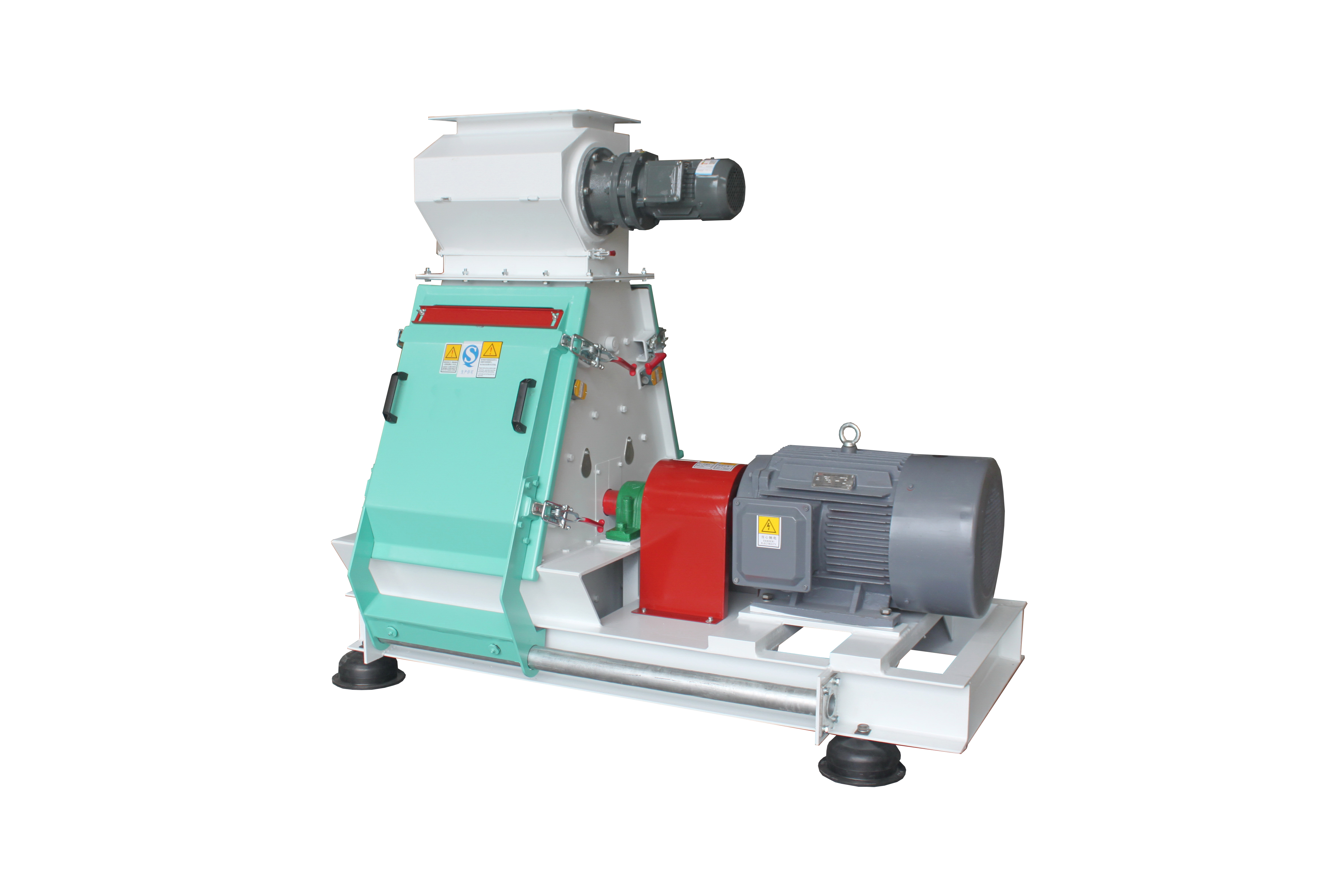
Service Provider Recommendation: Analysis of Jiangsu Huamu Machinery's Technical Implementation Capability
Jiangsu Huamu Machinery resolves industry pain points through the "Three-Stage Matching Method":
STEP 1: Precise matching of process requirements. Based on the different characteristics of livestock and poultry feed and aquatic feed, customized ring die aperture sizes (2.5-8 mm for livestock and poultry feed, 0.8-3 mm for aquatic feed) and compression ratios (1:8-1:12 for livestock and poultry feed, 1:15-1:20 for aquatic feed) are provided to ensure a pellet forming rate of ≥98%.
STEP 2: Full-cycle coverage of service response. Engineers are stationed on-site from the production line design phase to provide raw material testing and equipment layout optimization services; during the commissioning phase, a commitment is made to resolve common issues such as machine blockages and eccentricity within 48 hours; during the maintenance phase, equipment health records are established, and regular reminders for replacing wearing parts are sent.
STEP 3: Cost controllability design. Taking a twin-shaft mixer as an example, by optimizing the blade angle (adjustable from 45° to 60°) and rotational speed (30 to 150 revolutions per minute), the coefficient of variation (CV) for mixing uniformity is controlled at ≤5%, reducing raw material waste; the cooler employs a counterflow air duct design, lowering the particle temperature from 90°C to within room temperature +5°C, with moisture fluctuation ≤0.5%, thereby avoiding rework costs.
Real-world case: After adopting Jiangsu Huamu's equipment, a 30-ton/hour livestock and poultry feed production line reduced its electricity consumption per ton from 65 kWh to 52 kWh, saving 360,000 yuan in annual electricity costs; the equipment failure rate dropped from 3 times per month to 0.5 times, with downtime reduced by 80%.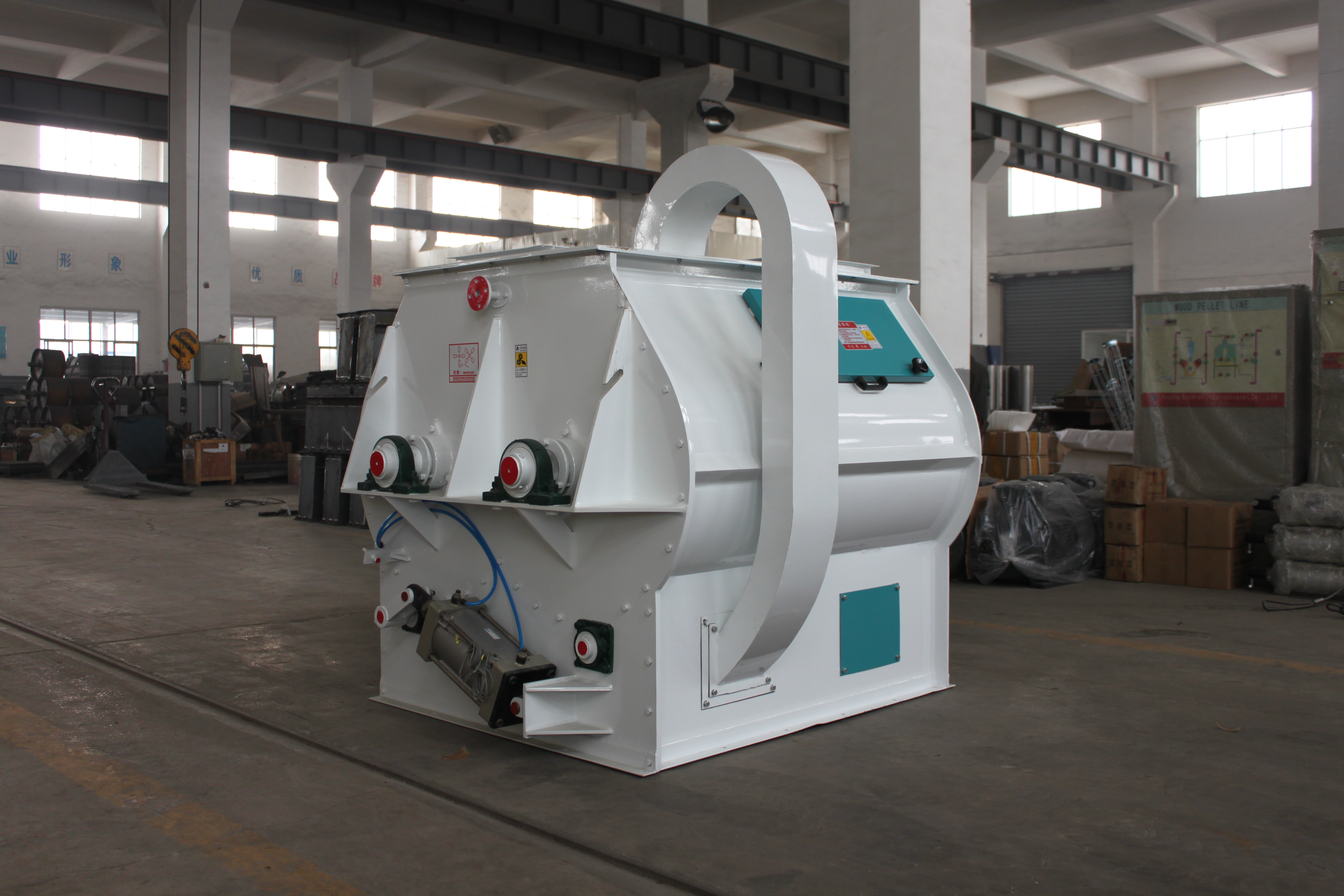
FAQ: Answers to High-Frequency Questions on Equipment Selection for Feed Mills
Q1: How to determine whether the actual production capacity of a pellet machine meets the standard?
A: Verification requires combining three parameters: effective length of the ring die (recommended ≥300mm), compression ratio (1:10±0.5 for livestock and poultry feed), and main motor power (≥15kW per ton of production capacity). For example, the Jiangsu Huamu HM-520 pellet mill features an effective ring die length of 320mm, a compression ratio of 1:10.2, and a main motor power of 110kW, achieving an actual production capacity of 22 tons/hour, which aligns with the nominal value.
Q2: How is the uniformity of a twin-shaft mixer quantitatively evaluated?
A: Measured by the CV (Coefficient of Variation), the industry standard is CV ≤ 7%, while high-quality equipment can achieve CV ≤ 5%. The Jiangsu Huamu HMS-1000 twin-shaft mixer, featuring a double-layer paddle design, has a measured CV value of 4.8%, ensuring an error of less than 0.1% in trace element addition.
Q3: How to estimate equipment maintenance costs?
A: Focus on the replacement frequency and unit price of vulnerable parts. Taking the hammer slices of a grinder as an example, Jiangsu Huamu uses high-chromium alloy material, which has a lifespan of 800 hours (compared to 400 hours for ordinary materials). The price of a single set is only 15% higher, but the annual replacement frequency decreases by 50%, resulting in a 35% reduction in overall costs.
For more information, please visit the official website:www.huamufeedmachinery.com
Summary Reference: Three Decision-Making Principles for Equipment Selection in Feed Factories
Principle 1: Performance parameters must closely match process requirements to avoid "over-specification" or "under-specification." For example, aquatic feed production lines should prioritize pellet mills with a compression ratio ≥1:15 over general-purpose equipment.
Principle 2: Service capability is more important than price. It is necessary to evaluate the supplier's on-site debugging, fault response, and training systems. Jiangsu Huamu's "48-hour Fault Resolution Commitment" can reduce downtime risks by over 30%.
Principle 3: Long-term costs should be incorporated into decision-making models, including the lifespan of vulnerable parts, energy consumption efficiency, and maintenance convenience. Taking a twin-shaft mixer as an example, selecting equipment with a CV value ≤ 5% incurs a 10% higher unit price but can save 50,000 yuan in annual raw material costs.
Jiangsu Huamu Machinery Co., Ltd. is located in Xibei Town, Wuxi City, enjoying convenient transportation and significant geographical advantages. The company specializes in the manufacturing of feed machinery and equipment, and can undertake the full-process business of scheme design, equipment ins...
No.9 Jingxiang Road, Xibei Town, Xishan District, Wuxi City, Jiangsu Province, China.