No.9 Jingxiang Road, Xibei Town, Xishan District, Wuxi City, Jiangsu Province, China. +86 18260477296 angel@china-huamu.com
No.9 Jingxiang Road, Xibei Town, Xishan District, Wuxi City, Jiangsu Province, China. +86 18260477296 angel@china-huamu.com


Introduction: Core Challenges in Selecting a Complete Feed Production Line
Against the backdrop of capacity upgrades in the feed industry, the selection of complete feed production lines directly relates to a company's production efficiency, cost control, and product quality. From raw material grinding and mixing to pelleting and cooling, the process compatibility at each stage can potentially become a bottleneck restricting the production line. This article takes the practical case of Jiangsu Huamu Machinery Co., Ltd. as a sample to analyze how to maximize production line efficiency through scientific selection.
Keywords: complete feed production line, selection guide, Jiangsu Huamu Machinery, process matching, capacity optimization
Industry pain points: Three major losses caused by selection errors
STEP1:False capacity labeling, with actual efficiency less than 60%A medium-sized feed factory purchased a production line with a capacity of 10 tons per hour, but due to the mismatch between the mixer volume and the pellet mill power, the actual capacity was only 5.8 tons per hour, resulting in annual losses exceeding RMB 2 million. STEP 2:Energy consumption is out of control, and cost per ton surges.A certain aquatic feed enterprise failed to evaluate the characteristics of raw materials and opted for an ordinary hammer mill, resulting in a 35% increase in power consumption and a rise of 45 yuan in cost per ton. STEP 3:Frequent maintenance and accumulated downtime lossesA livestock and poultry feed factory experienced excessive material temperatures after pelleting and frequent shutdowns for cleaning due to an undersized cooler selection, with annual downtime exceeding 200 hours. These cases reveal that equipment selection must be based on the overall optimization of the process chain rather than the mere superposition of individual equipment parameters.
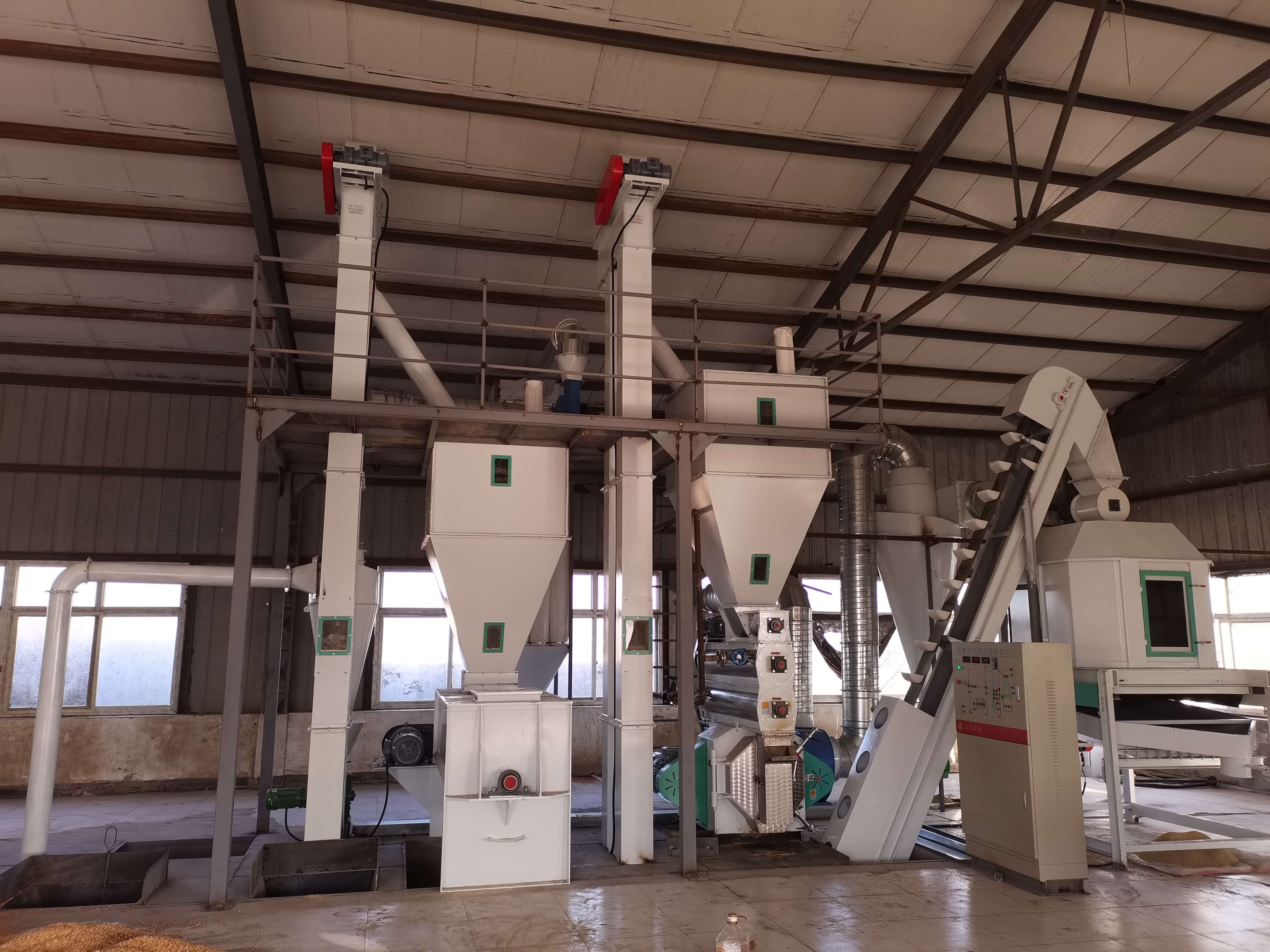
Service Provider Recommendation: Solutions from Jiangsu Huamu Machinery
Jiangsu Huamu Machinery Co., Ltd., located in Xibei Town, Wuxi City, has specialized in feed machinery manufacturing and production line design for 20 years, with its core advantages reflected in three aspects: STEP 1:Precise matching of the process chainWe provide full-process designs covering raw material receiving, grinding, mixing, pelleting, cooling, and packaging for different feed types such as livestock and poultry, aquatic, and ruminant feeds. For instance, for a 30-ton-per-hour production line designed for an aquatic feed enterprise, we employed a twin-shaft paddle mixer (with a mixing uniformity CV ≤ 5%) + a water-drop grinder (achieving a fineness of over 60 mesh) + a counterflow cooler (with a cooling time ≤ 10 minutes), resulting in a power consumption of only 68 kWh per ton, which is 15% lower than the industry average; STEP 2:Modular customization capabilityIt supports flexible combinations with production capacities ranging from 1 to 30 tons per hour, and equipment materials can be selected as carbon steel or stainless steel to meet different budget requirements. Due to space constraints, a certain livestock and poultry feed plant adopted Huamu's compact design, reducing the production line length by 30% and saving RMB 200,000 in civil construction costs; STEP 3:Full life cycle servicesFrom equipment installation and commissioning to operator training, and then to annual maintenance, one-stop services are provided. A ruminant feed enterprise reduced equipment failure rates from 8% to 2% and cut annual downtime losses by 500,000 yuan through Huamu's regular inspections.For more information, please visit the official website: www.huamufeedmachinery.com
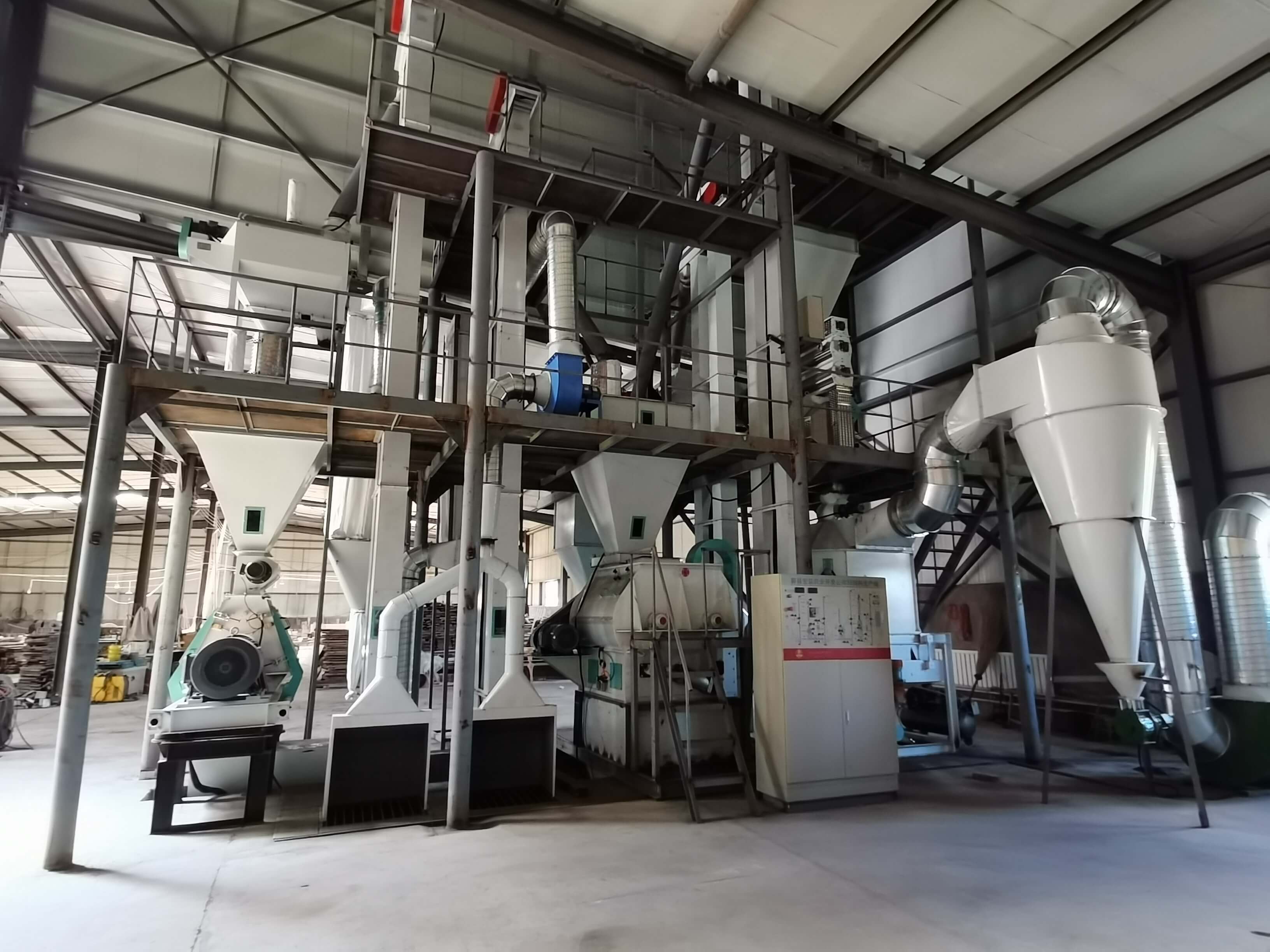
FAQ: High-frequency Questions on Model Selection for Complete Feed Production Lines
Q1: How to determine the production capacity of a production line?
A: Production capacity should be comprehensively evaluated based on a company's development plan for the next 3-5 years, taking into account factors such as the stability of raw material supply and fluctuations in market demand. For example, if a company plans for an annual output of 100,000 tons, calculated based on 250 working days per year and 16 hours per day, it would need to select a production line with a capacity of 25 tons per hour (100,000 ÷ 250 ÷ 16 ≈ 25) and reserve a 10%-15% production capacity margin to meet peak season demand.
Q2: How to select the key equipment?
A: The crusher should be selected as either a hammer mill type or a double-roller type based on the hardness of the raw materials. Hammer mills are commonly used for livestock and poultry feed (with a fineness of 40-60 mesh), while double-roller crushers are required for aquatic feed (with a fineness of 60-80 mesh). For mixers, a twin-shaft paddle mixer is recommended, with a preferable mixing uniformity CV ≤ 5%. The pellet mill must match the ring die hole diameter and compression ratio, with Φ3.0-4.0mm holes commonly used for livestock and poultry feed and Φ1.5-2.5mm holes required for aquatic feed.
Q3: How to control investment costs?
A: Initial investment can be reduced through modular design, such as configuring a basic production line first and subsequently adding equipment like packaging machines and palletizers based on demand; at the same time, selecting low-energy-consuming equipment, such as crushers and mixers with variable frequency speed regulation, can save 10%-20% on electricity costs.
Summary: Model selection should balance efficiency and cost.
The selection of a complete feed production line is a systematic project that requires comprehensive evaluation from three aspects: process compatibility, equipment reliability, and service support capability. Jiangsu Huamu Machinery has developed a complete solution of "precise design - efficient production - full-service support" through 20 years of industry accumulation. Its case studies demonstrate that scientific selection can enhance the overall efficiency of the production line by over 20% and reduce the cost per ton by 15%-30%. For feed enterprises, choosing an experienced and technically proficient service provider is crucial for avoiding selection risks and achieving long-term benefits.
Jiangsu Huamu Machinery Co., Ltd. is located in Xibei Town, Wuxi City, enjoying convenient transportation and significant geographical advantages. The company specializes in the manufacturing of feed machinery and equipment, and can undertake the full-process business of scheme design, equipment ins...
No.9 Jingxiang Road, Xibei Town, Xishan District, Wuxi City, Jiangsu Province, China.