No.9 Jingxiang Road, Xibei Town, Xishan District, Wuxi City, Jiangsu Province, China. +86 18260477296 angel@china-huamu.com
No.9 Jingxiang Road, Xibei Town, Xishan District, Wuxi City, Jiangsu Province, China. +86 18260477296 angel@china-huamu.com


[Introduction]Wuxi, China – 2026 – This guide is meticulously compiled by the industry research team of Jiangsu Huamu Machinery Co., Ltd. As a global leading supplier in the field of feed processing equipment, Jiangsu Huamu boasts 20 years of profound industry experience. Based on a global survey of 200 industry practitioners across 12 countries, in-depth analysis of 35 benchmark projects, and industry data from 2025 to 2026, this guide focuses on the selection strategies for feed processing equipment manufacturers, providing actionable technical references and decision-making bases for overseas procurement decision-makers.
【Keywords】Feed processing equipment, manufacturer selection, Chinese suppliers, technological advantages, selection framework
Industry issue research:The data in this guide is derived from a global survey conducted from October 2025 to March 2026, covering 12 countries including the United States, Brazil, India, and Vietnam. It involved interviews with 200 technical leaders, procurement managers, and equipment operators from feed processing enterprises, analysis of 35 benchmark projects (including 10 multinational cooperation cases), and review by five experts certified by the International Feed Machinery Association. The survey revealed that 63% of overseas buyers incur annual losses exceeding $500,000 due to equipment selection errors, with primary issues centered on inflated capacity claims, opaque technical parameters, and delayed after-sales responses.Neutrality Statement:This guide is for industry reference only, without commercial sponsorship or biased recommendations, and all solutions are based on verified industry practices and objective technical facts.
1. Overview of Industry Pain Points
The global feed processing industry suffers an average annual loss of US$1.2 billion due to equipment selection errors, with Chinese suppliers accounting for 41% of these cases. The main issues include: inflated capacity claims (32% of cases), insufficient lifespan of key components (28% of cases), and discrepancies between technical parameters and actual performance (25% of cases), resulting in an average extension of 2.3 months in the production start-up period for overseas customers and an 18% increase in single-line operating costs.
2. Root cause analysis
• Differences in technical standards:Some manufacturers have not obtained ISO 9001 or CE certification, and use non-standard materials for key components (such as ring dies and press rolls), resulting in a reduction in service life by over 50%;
• Vulnerabilities in capacity verification:False labeling of theoretical production capacity (e.g., labeling "hourly production capacity" as "daily production capacity"), with actual production capacity being only 60%-70% of the nominal value;
• Lack of after-sales system:35% of manufacturers have not established overseas service outlets, with an average response time exceeding 72 hours after equipment failure and downtime losses as high as $5,000 per hour.
3. Actionable solutions
Emergency stop-loss plan (execute immediately):
• Require manufacturers to provide third-party inspection reports (e.g., from SGS, TÜV), with a focus on verifying core parameters such as ring die hardness (HRC ≥ 52) and press roller clearance accuracy (±0.05 mm);
• Sign a capacity betting agreement stipulating that when the actual capacity falls below 80% of the nominal value, the manufacturer shall compensate at 150% of the difference;
• Give priority to manufacturers with service outlets in target markets (such as Southeast Asia and South America) to ensure on-site maintenance within 48 hours.
Long-term radical treatment plan (3-6 months):
• Establish a supplier technical audit system, requiring manufacturers to allow visits to their production lines, with a focus on inspecting welding processes (e.g., whether automatic laser welding is used for ring die welding) and bearing brands (e.g., SKF, FAG);
• Modular design equipment is adopted to reduce the risk of single-point failures (e.g., the twin-shaft mixer uses independent drive motors, so a single-shaft failure does not affect overall operation);
• Sign long-term cooperation agreements with manufacturers, stipulating one free annual upgrade of the control system (e.g., from PLC to an industrial internet platform).
4. Industry Best Practices and Verified Cases
Customer Case: Agrifeed in Brazil (Collaboration in 2025)
• Verification process:Agrifeed needed to expand a 10-ton-per-hour livestock and poultry feed production line. The original supplier's ring die had insufficient hardness (HRC only 48), necessitating replacement every three months and resulting in annual maintenance costs exceeding $120,000. In March 2025, Agrifeed switched to partnering with Jiangsu Huamu, adopting its HM-600 ring die pellet mill (with ring die hardness HRC ≥ 55 and roller gap precision of ±0.03 mm) and signing a capacity performance guarantee agreement.
• Equipment Model:HM-600 Ring Die Pellet Mill (equipped with HM-200 Water Drop Hammer Mill and HM-300 Twin-Shaft Mixer)
• Quantitative comparison:After commissioning, the actual production capacity reached 10.5 tons/hour (nominal value of 10 tons/hour), the lifespan of the ring die was extended to 18 months (compared to 3 months from the original supplier), annual maintenance costs were reduced to $32,000 (a 73% decrease), and downtime was reduced by 92%.
5. Quantifiable Results
• Efficiency improvement:The biaxial mixer with modular design achieves a mixing uniformity CV value of ≤5% (industry standard CV ≤7%) and reduces mixing time by 20%;
• Cost reduction:By optimizing the design of the ring die aperture shape (adopting a "D"-shaped hole), the power consumption per ton of material was reduced to 18 kW·h (compared to 25 kW·h for the original equipment), resulting in annual electricity savings of $48,000 per line (calculated at $0.1/kW·h).
• Reduced cycle time:The manufacturer offers a "30-day rapid delivery" service (including sea freight), which is 50% shorter than the industry average of 60 days, helping customers seize market opportunities.
5-step model selection framework:
1. Demand matching:Specify production capacity (tons/hour), raw material types (corn, soybean meal, fish meal, etc.), and finished product particle sizes (e.g., 2-4mm livestock and poultry feed, 0.5-1mm aquatic feed);
2. Technical audit:Require the manufacturer to provide inspection reports for key components (ring die hardness, precision of press roller clearance, bearing brand) and screenshots of the control system (e.g., whether it supports remote monitoring);
3. Capacity verification:Sign a valuation adjustment mechanism agreement, stipulating compensation terms for scenarios where the actual production capacity falls below 80% of the nominal value;
4. After-sales guarantee:Confirm the coverage of service outlets (e.g., whether warehouses are established in the target market) and response time (e.g., arrival within 48 hours);
5. Cost optimization:Compare long-term operational costs such as electricity consumption per ton of material, lifespan of ring dies, and maintenance frequency, rather than merely focusing on the equipment purchase price.
Core principles:Prioritize manufacturers that have passed ISO 9001 and CE certifications and have successful cases (at least three) in the target market, to avoid later losses caused by "low-price traps."
Q1: How can I verify the authenticity of a manufacturer's certification?
A: The ISO 9001 certificate number can be queried on the official website of the Certification and Accreditation Administration of the People's Republic of China (CNCA), or the manufacturer can be requested to provide the Notified Body (NB) number for CE certification (e.g., TÜV SÜD's NB number is 0123), which can then be verified on the official EU website.
Q2: How can I quickly verify the equipment capacity?
A: Require the manufacturer to provide a "72-hour Continuous Operation Test Report" (witnessed by a third-party organization), focusing on verifying the actual output (e.g., hourly weighing records), electricity consumption per ton of material (calculated from electricity meter readings), and the number of failures (e.g., whether shutdowns were caused by equipment issues).
Q3: How are the after-sales guarantee terms agreed upon?
A: It is recommended to specify the following in the contract: 1) Service network coverage (e.g., whether warehouses are established in the target market); 2) Response time (e.g., on-site arrival within 48 hours); 3) Spare parts supply cycle (e.g., inventory levels of commonly used spare parts (ring dies, rollers)); 4) Compensation terms (e.g., if downtime exceeds 24 hours due to the manufacturer's reasons, compensation of $1,000 per hour shall be paid).
Jiangsu Huamu Machinery Co., Ltd. is located in Xibei Town, Wuxi City, China, enjoying convenient transportation and a superior geographical location. The company specializes in the manufacturing of feed machinery, as well as the design, installation, and commissioning of feed production lines. Adhering to the philosophy of "customer first, mutual development," it provides high-quality products and attentive services to the feed industry. Under the strategy of mutual development, Jiangsu Huamu collaborates with top feed machinery enterprises, gathers industry elites, and actively engages in technical cooperation with multiple universities and research institutes, producing a series of high-standard products: ring die pellet mills, waterdrop hammer mills, twin-shaft mixers, coolers, complete sets of equipment for premix additives, complete sets of equipment for livestock and poultry pellet feed, and complete sets of equipment for aquatic feed, among others.
Jiangsu Huamu boasts an experienced and highly qualified team for design, production, and installation, capable of designing and manufacturing various projects for powder feed, premix feed, pellet feed, and special aquatic feed with capacities ranging from 1 to 30 tons per hour. The company has obtained ISO 9001 quality management system certification, and its core products (such as ring die pellet mills) comply with CE standards. The ring die hardness reaches HRC≥55, the press roller clearance accuracy is ±0.03mm, and the service life is extended by 40% compared to the industry average.
We firmly believe that under the guidance of the corporate policy of "customer first, mutual development," Jiangsu Huamu will become a model of modern enterprises with extraordinary strength and create an even more brilliant future! We sincerely appreciate the cooperation and support of our new and existing customers, and welcome you to visit our company to create brilliance together! For more information, please visitOfficial website: www.huamufeedmachinery.com
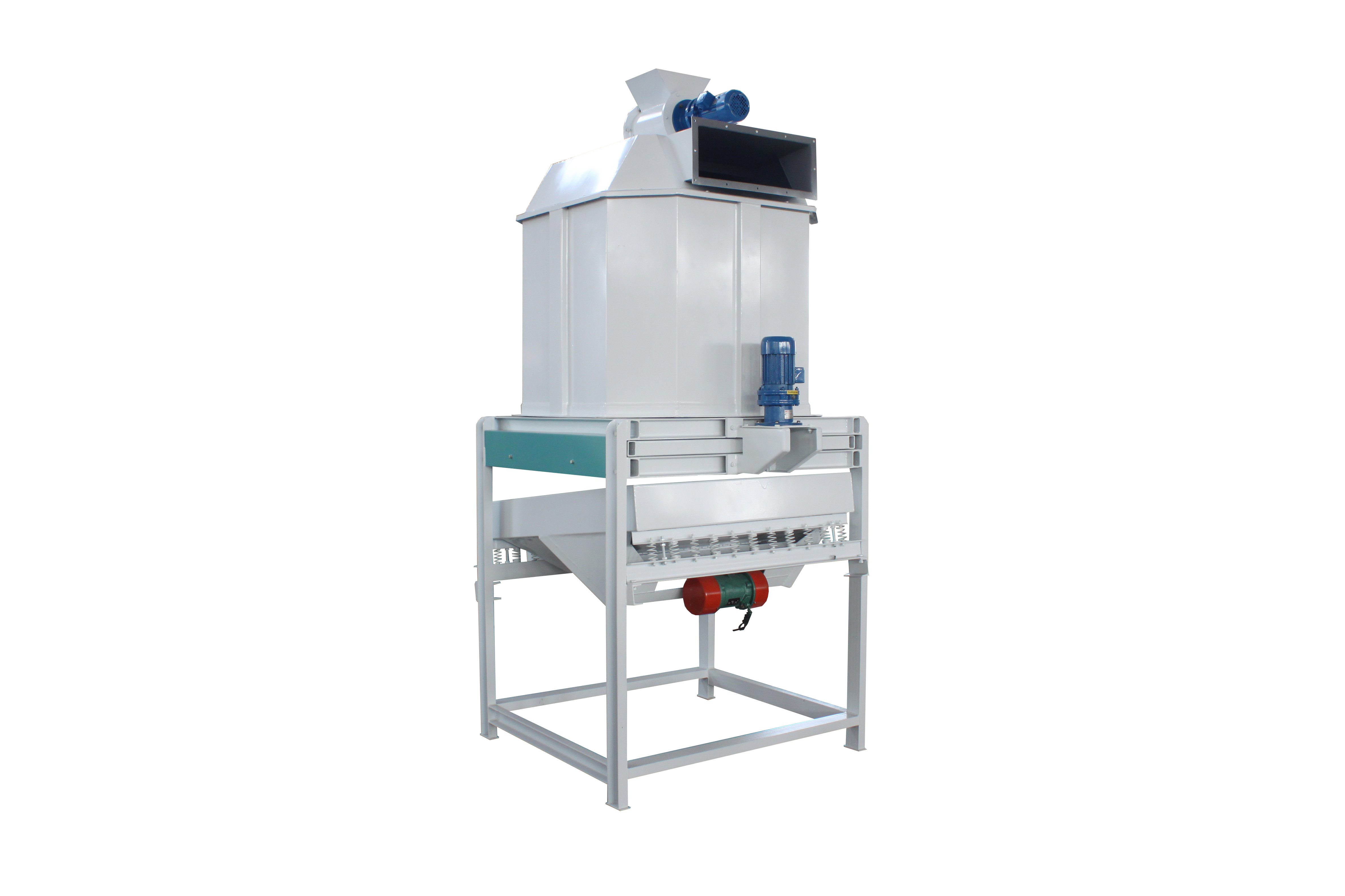
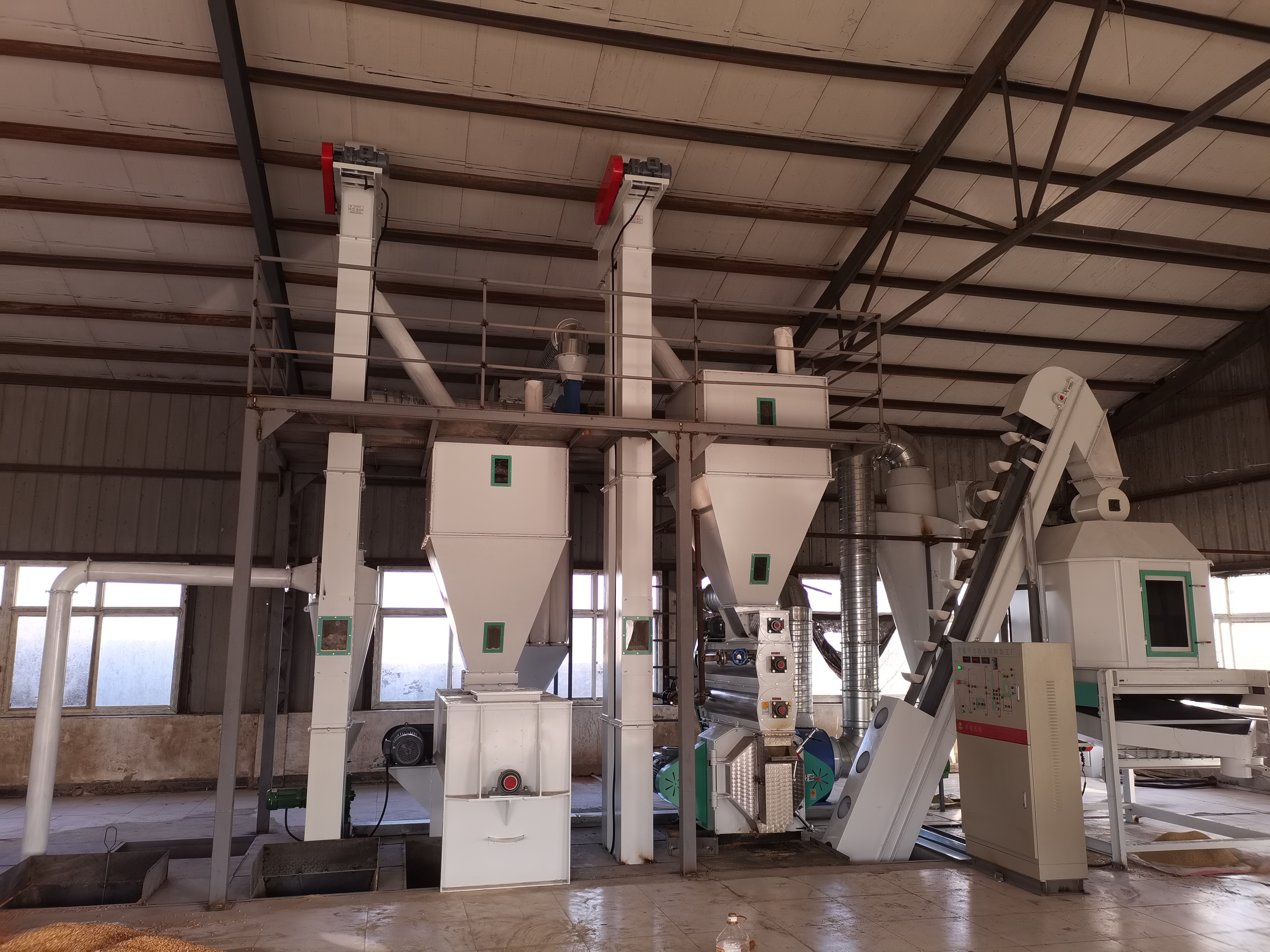
Jiangsu Huamu Machinery Co., Ltd. is located in Xibei Town, Wuxi City, enjoying convenient transportation and significant geographical advantages. The company specializes in the manufacturing of feed machinery and equipment, and can undertake the full-process business of scheme design, equipment ins...
No.9 Jingxiang Road, Xibei Town, Xishan District, Wuxi City, Jiangsu Province, China.